Showing posts with label anger. Show all posts

Tuesday, October 09, 2018

Cut Hearts

Image: Pixabay
TODAY’S SPECIAL: Acts 7-8; Psalm 122

TO CHEW ON:
“‘You stiff-necked and uncircumcised in heart and ears! You always resist the Holy Spirit; as your fathers did, so do you’ … When they heard these things they were cut to the heart, and they gnashed at him with their teeth.” Acts 7:51,54

Eloquent Stephen concluded his speech of defense to the high priest and the council by condemning them. His description of them as “stiff-necked and uncircumcised in heart and ears” certainly stirred them up, though not in a safe way. It was the last speech Stephen ever made.

A couple of things snag attention here.
1. We can be in the presence of God’s truth, as the religious Jews were, and still not be touched by it. Our unregenerate hearts readily filter out what our ears don’t want to hear.

2. If and when we are “cut” by God’s truth about us and our lives, our reaction can be negative or positive.
Stephen’s speech to the council cut their hearts not to “circumcise” or alter them in the way of being marked for God’s kingdom, but to make them angry; they “gnashed at him with their teeth.” In this way they sealed their own fates—though young Saul at whose feet the stoning people laid their clothes (Acts 7:57)* later had his own heart circumcision encounter.

Let’s take seriously the fact that being in the presence of God’s truth about us isn’t enough. We still have the choice to resist the Spirit or let His words to us cut and mark us as His own.

PRAYER: Dear Father, help me to have a heart and ears that are sensitive to what Your Holy Spirit says to me. Amen.
PSALM TO PRAY: Psalm 122


* A note in my NKJV Cultural Background Study Bible comments on the stone throwers laying clothes at a Saul’s feet (Acts 7:57):
“Because the activity was physically strenuous, they could lay aside their outer garments, as was customary during exercise. … Ancient practice, however, specified not the stripping of the executioners but rather the stripping of the person being executed. Luke may ironically emphasize their stripping themselves to remind the reader who is really on trial” - Kindle Location 206,939.

 *********
Unless otherwise noted all Scripture quotations are taken from the New King James Version®. Copyright © 1982 by Thomas Nelson, Inc. Used by permission. All rights reserved.

Thanks for reading! This year we are using The Bible Project "Timeless Reading Plan" to read through the Bible in 2018. If you'd like to read along in your own Bible, you can download a pdf of the reading plan HERE.

Saturday, June 09, 2018

Some do's and don'ts for a successful life

TODAY'S SPECIAL: Proverbs 22-24; Psalm 5

TO CHEW ON: "Incline your ear and hear the words of the wise,
And apply your heart to my knowledge;
For it is a pleasant thing if you keep them within you;
Let them all be fixed upon your lips,
So that your trust may be in the Lord..." Proverbs 22:17-19


Even though its wisdom is ancient, the advice in Proverbs is as relevant today as ever. The issues addressed in one chapter of today's reading (Proverbs 22) are wide-ranging—from bringing up children to having a good work ethic. Yet the theme of SUCCESS runs through them all. The writer is telling us, to have a successful life you must do some things and refrain from doing others.

DO:
  • Seek to have a good reputation - Proverbs 22:1
  • Understand your times and guard yourself against possible catastrophe - Proverbs 22:3.
  • Live humbly and fear God - Proverbs 22:4,5.
  • Train children from the earliest age - Proverbs 22:6
  • Be generous and give to the poor - Proverbs 22:9
  • Remove cynical contentious people as partners or associates - Proverbs 22:10.
  • Love purity and speak with grace - Proverbs 22:11.
  • Actively seek wisdom and knowledge - Proverbs 22:17,18.
  • Trust in the Lord - Proverbs 22:19
  • Work hard to be the best you can be - Proverbs 22:29.

DON'T:
  • Live a wilfully sinful life - Proverbs 22:8.
  • Be lazy - Proverbs 22:13.
  • Ignore the foolishness that is found in your child's heart - Proverbs 22:15.
  • Take advantage of the poor and downtrodden - Proverbs 22:23.
  • Become intimate with angry people - Proverbs 22:24,25.
  • Borrow money or underwrite someone else's loan - Proverbs 22:7, 26, 27.
  • Move the borders of your property to increase the size of your plot - Proverbs 22:28

Though living by these do's and don'ts may sound like common sense, some are anti-intuitive—at least anti-intuitive to our 21st century minds. To put them into practice we need to have faith in God and that what He says through Solomon is really wise.
- Being generous makes you rich?
- Gracious speech has more impact than bullying, angry words?
- Borrowing and going into debt is bad?
- Innocent little children need correction and discipline?

Especially when God's wisdom clashes with our modern 'wisdom' we need to cling to Him as we resist going along with the crowd:
"Let them all be fixed on your lips
So that your trust may be in the Lord.
"

PRAYER: Dear God, help me to trust You and take seriously the wisdom in Your word, especially when it goes against what my peers think, believe, and live by. Amen.

PSALM TO PRAY:
Psalm 5

MORE: Are you foolish enough?
"When looking back on the lives of men and women of God the tendency is to say - What wonderfully astute wisdom they had! How perfectly they understood all God wanted! The astute mind behind is the Mind of God, not human wisdom at all. We give credit to human wisdom when we should give credit to the Divine guidance of God through childlike people who were foolish enough to trust God's wisdom and the supernatural equipment of God." - Oswald Chambers, from the October 26th reading of My Utmost for His Highest.
***************
Unless otherwise noted all Scripture quotations are taken from the New King James Version®. Copyright © 1982 by Thomas Nelson, Inc. Used by permission. All rights reserved.


Monday, July 31, 2017

A legacy of dysfunction

Mandrake roots
Mandrake roots (Source: Wikipedia)
TODAY'S SPECIAL: Genesis 30:1-24

TO CHEW ON:
"Now when Rachel saw that she bore Jacob no children, Rachel envied her sister, and said to Jacob, 'Give me children or else I die.'" Genesis 30:1


Jacob's harem was not a happy place. Rachel envied Leah's fruitfulness and blamed Jacob for her lack of conceiving. This provoked Jacob's anger. The rivalry between the sisters soon drew their maids into the competitive struggle and enlarged the circle of bigamy. In these women's eyes, even God chose sides, favoring one and then the other with sons. This all sunk to a new low when Rachel and Leah showed their superstitious side as they haggled over some supposedly aphrodisiac mandrake plants for a night with the man.

Some thoughts on this depressing installment of the story:

1. We see the wisdom of God's design of one man + one woman (Genesis 2:24) by the mess in homes where men had several wives (like this one and see also the story of Elkanah, Peninnah and Hannah - 1 Samuel 1:1-7).

2. Individual sinful tendencies and family strife are readily passed from one generation to the next. The tensions of Isaac & Rebekah's relationship are only magnified in Jacob's family.

Do we find such generational weaknesses in our homes too? Probably, to some extent at least. But do they have to carry on? How can we put a stop to such a  legacy of dysfunction? Here are some ideas. Can you think of more?
  • Ask God to show us where we are duplicating the sins of our fathers. We may be blind to these and need to grow sensitive again. One way is to read and apply what God's word says about attitudes to avoid (Exodus 20:1-17; Galatians 5:17-21) and those to cultivate (1 Corinthians 13:1-13, Galatians 5:22-26). Another way to gain insight is to ask close friends and family members what they see in our relationships and homes.
  • We need to beware that kids interpret  "normal" from what they see at home, and by God's grace set a different example than, perhaps, we saw in our own homes growing up. Emulate the good; reject the bad.
  • Remember that with God there are new beginnings.
" … put off … the old man … and be renewed in the spirit of your mind and that you put on the new man which was created according to God, in true righteousness and holiness" - Ephesians 4:22-24.

"Therefore, if anyone is in Christ, he is a new creation; old things have passed away; behold, all things have become new" - 2 Corinthians 5:17


PRAYER: Dear God, please help me not to make excuses for sinful attitudes and tendencies which have been part of my family. With Your enabling, I'm never too old to change. Amen.

**********
Unless otherwise noted all Scripture quotations are taken from the New King James Version®. Copyright © 1982 by Thomas Nelson, Inc. Used by permission. All rights reserved.

Sunday, January 29, 2017

The peacemaking gene

TODAY'S SPECIAL: Matthew 5:1-12

TO CHEW ON: "Blessed are the peacemakers
For they shall be called the sons of God." Matthew 5:9


When a new baby is born we study its face to see who it looks like—Mom or Dad. Children who never knew their parents, though happy in their adoptive homes, still often experience a strong urge to find their birth parents and discover their blood lines. There is something inside us humans that longs to be part of a family—to know where we come from. When we find our roots, we begin to understand where some of our distinguishing features of body and personality originate.

Being part of God's family is not so different. For just like human children inherit physical features and aspects of temperament from their ancestors, the children of God bear a family likeness. Jesus highlights one trait of the "sons of God" in the part of the Sermon on the Mount that we read today. It's peacemaking.

A sidebar article in my Bible elaborates:

"In our relationship with the heavenly Father, we display our family likeness by manifesting the fruit of the Spirit of peace and in doing what is important to Him: making peace. Jesus said, 'Blessed are the peacemakers for they shall be called the sons of God,' and He also said, 'I must be about My Father's business' (Luke 2:49). His last will and testament was, 'Peace I leave with you, My peace I give to you' (John 14:27). He came to bring peace, made peace through the blood of the Cross, and calls us to be peacemakers. Peacemaking is the family business we all need to share" - Loyd Ogilvie in "Call to Unity," New Spirit-Filled Life Bible, p. 1297.

How does this family trait work itself out in everyday life? From the Bible we see that peacemakers:

  • Are slow to get angry, and in this way stifle contention (Proverbs 15:18).
  • Defuse potentially explosive situations with wisdom (Proverbs 16:14).
  • Hesitate to take a perceived wrong to court, preferring to do all in their power to rectify a situation themselves before bringing in the strong arm of the law (Proverbs 25:8).
  • Practice conciliation, even under extreme pressure (Ecclesiastes 10:4).
  • Make reconciliation with others a priority (Matthew 5:24), allowing the sensitive conscience of their brother or sister trump their own rights (Romans 14:19-21).
  • Show themselves to be spiritually wise by being peaceable (James 3:17).

I ask myself, do I carry this family characteristic? Do you? Would people be able to tell that we're children of God because we are peacemakers?

PRAYER: Dear God, please show me where my habits and reactions work against making and keeping peace. Help me to be more of a peacemaker. Amen.

MORE: "My Father's Eyes" by Amy Grant


**********

Unless otherwise noted all Scripture quotations are taken from the New King James Version®. Copyright © 1982 by Thomas Nelson, Inc. Used by permission. All rights reserved.


Bible Drive-Thru

Wednesday, September 07, 2016

Anger—a red-light emotion

Image: Pixabay.com
TODAY'S SPECIAL: James 1:19-2:17

TO CHEW ON:
"So then, my beloved brethren, let every man be swift to hear, slow to speak, slow to wrath; for the wrath of man does not produce the righteousness of God." James 1:19,20


Any Christian who struggles with losing their temper has probably noticed, pondered, even memorized the above verses.

[The word translated wrath is the Greek word orge. It means anger, the natural disposition, temper, movement or agitation of the soul, impulse, desire, any violent emotion but especially anger.

The dictionary defines anger: a strong feeling of annoyance, displeasure, or hostility.]


But anger has many shades. We can see its range when we look at a list of synonyms. Here is only a partial list from Dictionary.com:  acrimony, animosity, annoyance, antagonism, blow up, cat fit, enmity, exasperation, fury, hatred, hissy fit, huff, impatience, indignation, irritability, outrage, peevishness, petulance, resentment, stew, temper, violence.

The Bible talks about anger in many places.

  • Naaman's anger almost kept him from being healed -2 Kings 5:11.
  • The anger of Sanballat, Tobiah & Co. over Nehemiah rebuilding the Jerusalem wall led to focused prayer, renewed vigilance by the builders and eventual success - Nehemiah 4:7.
  • Jonah's anger at God not destroying Nineveh led to God teaching him a lesson under the hot Nineveh sun - Jonah 4:1-11.
  • The writers of Psalms and Proverbs say about anger:
- It causes harm - Psalm 37:8.
- It is foolish - Proverbs 14;7; Ecclesiastes 7:9.
- Self control is noble - Proverbs 16:32; 19:11.
- Anger is a liability in friendship - Proverbs 22:24.
  • Jesus pronounced harsh judgment against people who curse others in anger - Matthew 5:22.
  • Paul named anger as one of the works of the flesh to put off - Colossians 3:8.
  • He also listed a quick temper as a quality that disqualified a person for church leadership - Titus 1:7.

I love how the Amplified Bible puts meat on the bones of what anger and its opposite look like:
"Let everyone be quick to hear [be a careful, thoughtful listener], slow to speak [patient, reflective, forgiving]; for the [resentful, deep seated] anger of man does not produce the righteousness of God [that standard of behaviour which He requires of us] - James 1:19,20 AMP.

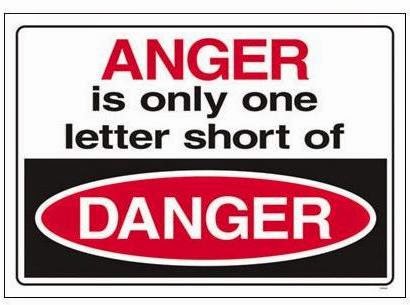
The Bible minces no words about the danger of anger. It's definitely a red light emotion for the Christian!

PRAYER: Dear Father, help me to recognize when anger is growing in me and to deal with the self-centered attitudes that are so often at its root. Amen.

 *********
Unless otherwise noted all Scripture quotations are taken from the New King James Version®. Copyright © 1982 by Thomas Nelson, Inc. Used by permission. All rights reserved.

Scripture quotations marked AMP are taken from the Amplified® Bible,
Copyright © 1954, 1958, 1962, 1964, 1965, 1987 by The Lockman Foundation
Used by permission." (www.Lockman.org)


Wednesday, March 23, 2016

Sinister entry

"Judas returns the money" - James Tissot
TODAY’S SPECIAL: Luke 22:1-23

TO CHEW ON: “Then Satan entered Judas, surnamed Iscariot, who was numbered among the twelve. So he went his way and conferred with the chief priests and captains how he might betray Him to them." Luke 22:3-4

How chilling those words, “Then Satan entered Judas…” How sobering their continuation, “… (Judas) Iscariot, who was numbered among the twelve.” If a member of Jesus’ closest circle was not immune to Satan’s entrance how all the more must we be vigilant against it.

The tendency is to think of Satan’s entering and controlling someone as a bizarre paranormal thing, evidenced by spooky behaviors  or a cursed, sickly life (Luke 8:26-33, 1-3). But I believe it can be a lot subtler than that.

We need only think of our “besetting sin.” Do we struggle with anger, or find ourselves often covering our tracks with deceit, or letting bitterness cloud our outlook? There is a section in Ephesians which mentions specific sins Holy Spirit-controlled followers of Jesus are to “put away.”

These are common, run-of-the-mill sins that we all have no doubt been caught in at some time or other: lying, anger, stealing, corrupt talk, bitterness, wrath, clamor, evil speaking with malice. Right in the middle of that list (immediately after the reference to anger) are these words: “nor give place to the devil” (Ephesians 4:24-32). Doesn’t this warning imply that we are at risk of giving Satan entrance when we cultivate these behaviors and attitudes?

How tiny it starts as the devil squeezes into that sliver-thin crack of our dissatisfaction, takes more territory as we augment our complaints with imaginings, then cements them in us when we voice them to others (compounding our sin as we influence them to join us on this destructive path). How big it eventually ends. In Judas’s case he betrayed his best friend. It earned him the very woe of Jesus (Luke 22:22).

We do well to follow Peter’s warning: "Be sober, be vigilant, because your adversary the devil walks about like a roaring lion, seeking whom he may devour.” 1 Peter 5:8

PRAYER: Dear God, I want no one but You in my life. Please sensitize my “spiritual antennae” to the presence of anything that would give Satan opportunity or entrance into my life. Amen.

MORE: What happened in Judas’ mind and heart to make him regret what he’d done (Matthew 27:3-10)? Once the betrayal was accomplished, did the devil’s strong influence leave him? Or had he rationalized that his action would force Jesus’ hand to reveal Himself as king and when that didn’t happen, he realized the immensity and gravity of what he’d done? What do you think?


***********

The Holy Bible, New King James Version Copyright © 1982 by Thomas Nelson, Inc. - Used with permission.

Bible Drive-Thru

Friday, April 17, 2015

Deal with anger

TODAY'S SPECIAL: Psalm 4:1-8

TO CHEW ON: "Be angry, and do not sin.
Meditate within your heart on your bed, and be still." Psalm 4:4


What makes you angry? People who cut you off in traffic? People who make you wait? Rudeness? Young people? Old people? People who have different beliefs from yours in religion, in social customs, in politics?

There are probably, in each of our lives, dozens of flash points every day—places where we get rubbed against the grain and could easily erupt into anger.

Psalm 4:4 gives us one way to deal with anger [the word used here is ragas which means to tremble, quake, quiver, be agitated, perturbed, disquieted]. It is to meditate [amar: to say, speak, utter, think, command, promise] and be still [damam: be silent, still, struck dumb].

The picture is of someone who is still shaking mad at bedtime. Perhaps it's the psalmist himself. He does seem to be talking to himself here. Instead of lashing out—what he probably feels like doing—he answers his anger, thinks twice, and reasons himself into silence and stillness.

Here are some more places Bible writers speak of dealing with anger. Let's notice the actions words:

"Cease from anger and forsake wrath; Do not fret—it only causes harm" - Psalm 37:8.

"He who is slow to anger is better than the mighty
And he who rules his spirit than he who takes a city" - Proverbs 16:32.

"But now you yourselves are to put off all these: anger, wrath…" Colossians 3:8.

"But then, my beloved brethren, let every man be swift to hear, slow to speak, slow to wrath" - James 1:19.

Do you see the common thread that runs through all these verses? There's a sense that this is something over which we have control. We can rein ourselves in. We don't have to let anger run away with us and take us to that hot speech, door banging, pot throwing place. Why? As David reminds us, anger only causes harm and God has us and our situation in hand: "…put your trust in the Lord. … For You alone, O LORD make me dwell in safety" - Psalm 4:5,8.

PRAYER: Dear God, please heighten my awareness of things that anger me. Help me to rule my spirit with Your Spirit. Amen.

 *********
Unless otherwise noted all Scripture quotations are taken from the New King James Version®. Copyright © 1982 by Thomas Nelson, Inc. Used by permission. All rights reserved.


Tuesday, September 07, 2010

Rooting out anger


TODAY'S SPECIAL: Ecclesiastes 7:1-8:1

 TO CHEW ON: "Do not hasten in your spirit to be angry,
For anger rests in the bosom of fools." Ecclesiastes 7:9

I will never be one of those people of whom their kids can say, 'Mom never said an angry word.' Because I've been known to lose it.

The battle with anger is probably harder for some people than others. But no matter how unnatural it feels to stay even-tempered, the Bible makes it clear that anger is seldom a good thing.

- It leads to evil (Psalm 37:8).
- It leads to unwise decisions and actions (Proverbs 14:17).
- It is in our control (Proverbs 16:32).
- Patience and overlooking another person's wrongs are a better response (Proverbs 19:11).
- It sets us up for judgment (Matthew 5:22).
- It is on the list of carnal qualities to "put off" along with malice, blasphemy, and filthy language (Colossians 3:8).
- It disqualifies us for positions of leadership (Titus 1:7).
- It is not conducive to a righteous life: "God's righteousness does not grow from human anger" - Message (James 1:19-20).

Anger begins in the thought life and is often a symptom of other problems: unmet expectations, impatience, hurt pride, selfishness, self-centredness. You can probably think of more.

Discovering the root of one's anger is an important insight. Those of us with an anger problem can ask for God's help to determine what is triggering those bouts of temper. Only as we attack anger's root will we finally overcome this foolish and impulsive response to people and circumstances.

PRAYER: Dear God, please give me insights into the anger that still lurks in my heart and explodes at the most inopportune times. Amen.

MORE: Circumstances and my thoughts
"...circumstances do not make men; it is their reaction to circumstances that determines what kind of men they will be...


...The mental stuff of the Christian can be and should be modified and conditioned by the Spirit of Christ which indwells his nature. God wills that we think His thoughts after Him. The Spirit-filled, prayerful Christian actually possesses the mind of Christ, so that his reactions to the external world are the same as Christ's. He thinks about people and things just as Christ does. All life becomes to him the raw nectar which the Spirit within him turns into the honey of paradise.


Yet this is not automatic. To do His gracious work God must have the intelligent cooperation of His people. If we would think God's thoughts we must learn to think continually of God. 'God thinks continuously of each one of us as if He had no one but ourselves,' said Francois Malaval; 'it is therefore no more than just if we think continuously of Him as if we had no one but Himself.'


We must think of the surrounding world of people and things against the background of our thoughts of God..." — A. W. Tozer, "The Sanctification of Our Minds" from That Incredible Christian.


Do your 8-12-year-olds have daily devotions? Point them to Bible Drive-Thru.

Related Posts Plugin for WordPress, Blogger...