Showing posts with label spiritual fruit. Show all posts

Monday, June 18, 2018

The fruit of our thoughts

pomegranate fruit tree
TODAY'S SPECIAL: Jeremiah 4-6; Psalm 14

TO CHEW ON: "Hear O earth!
Behold, I will certainly bring calamity on this people—
the fruit of their thoughts,
Because they have not heeded My words." Jeremiah 6:19


Any gardener or farmer knows that each plant can only produce the fruit that it was created to produce. He will never get apples from a corn plant or blackberries from a rose bush.

Fruiting plants can be a good picture of our lives. We might say that the type of plant we are is determined by our thoughts. Jeremiah predicted that the fruit of Judah's natural, anxious, idol-trusting thoughts would be calamity. As a plant they had turned from trusting God back to their old wild-vine status of trusting in themselves and idols.

What sort of fruit do our thoughts produce? If the seed of new life has been planted in our hearts (Ezekiel 36:25-27), we should be operating in a new thought paradigm. With Jesus as our Shepherd, Lord, King, Master, we will think differently than we did when we were wild vines or bushes.

  • We "bring every thought into the captivity and obedience of Christ" - 2 Corinthians 10:4,5.
  • We dwell on thoughts that will lead to Spirit fruit (Galatians 5:22)—thoughts that are pure, lovely, loveable, kind, winsome, gracious, virtuous, excellent and praiseworthy (Philippians 4:8).
  • We ask for God's wisdom and act on His answers (James 1:5-8).
  • We refuse to dwell on worrisome, anxious thoughts. Instead we unload those thoughts on Jesus in prayer and we reap the peace of God (Philippians 4:6-7).

I ask myself, do the above habits characterize my thought life? Yours? If Jeremiah 6:19 were written about us, what crop would describe the fruit of our thoughts?

Behold, I will certainly bring ___________ on ____(insert your name here)___,
The fruit of his/her thoughts.


PRAYER: Dear God, please help me to align my life with Kingdom principles, starting with my thoughts. I want the Spirit fruit of love, joy, peace, long-suffering, kindness, goodness, faithfulness, gentleness, and self-control to describe my life.  


PSALM TO PRAY: Psalm 14


***********

The Holy Bible, New King James Version Copyright © 1982 by Thomas Nelson, Inc. - Used with permission.


Tuesday, May 08, 2018

Sowing and reaping

TODAY'S SPECIAL: Hosea 6-10; Psalm 123


TO CHEW ON: "Sow for yourselves righteousness;
Reap in mercy;
Break up your fallow ground,
for it is time to seek the Lord
Till He comes and rains righteousness on you." - Hosea 10:12


Hosea is full of the imagery of farming and nature. Here are some images from Hosea 10.

Hosea 10:1 talks about how Israel has enjoyed good harvests of the vine. But they have spent it on themselves and on improving idol altars and poles.

Hosea 10:4 talks about their system of justice. It's faulty and as a result "...judgment springs up like hemlock in the furrows of the field." I see weeds sprouting in newly plowed fields. But these aren't just any weeds. These are hemlock — a deadly poison that destroys the land's fruitfulness.

Hosea 10:7-8 talks about how Samaria will become desolate. Her king will be "cut off like a twig on the water" (a severed tree branch floating downriver?). Her idol altars for worshiping idols at Aven will no longer be used but will become the home of thorns and thistles. ("Aven" is short for Beth Aven a play on the name Bethel. Beth Aven means "House of Iniquity." Bethel which means "House of God.")

Hosea 10:10-11 tells us that as a result of their sins, the Israelites will be punished by other nations ("Peoples shall be gathered against them / When I bind them for their two transgressions"). Instead of enjoying the fruit of their work in an independent way ("Ephraim is a trained heifer / that loves to thresh grain"), they will now be forced to do menial work. "Ephraim will pull a plow...Jacob shall break his clods."

In the middle of these gloomy predictions God begs them to again take up farming His way:


"Sow for yourselves righteousness;
Reap in mercy;
Break up your fallow ground
For it is time to seek the Lord,"
It would result in His blessing of rain:

"Till He comes and rains
righteousness on you" - Hosea 10:12.

Instead of complying this is what they have done: "...plowed wickedness...reaped iniquity...eaten the fruit of lies / Because you trusted in your own way..." Hosea 10:13.

It all comes back to the old truism, for us as it did for them:

We reap what we sow.

This is true in nature and it's true spiritually. Let's ask ourselves:
  • What are we sowing personally — watching, reading, listening to, thinking and meditating about?
  • What are we sowing in our families — modeling for our kids and grand-kids, saying with our words and attitudes, spending our money on?
  • What are we sowing in our communities, our churches, cities, the nation? How do we care for the poor? Is our justice system really just? I think about how much our governments depend on income streams from questionable sources like gambling. This can't be a good thing, can it?

PRAYER: Dear God, it's easy to shrug off warnings like we have in Hosea as applicable to people in a different time and place. Help me to take these personally and do what I can about sowing good things in my life, my family's life, my community. Help me to remember to pray for my country and other big areas where I feel like I have little influence. Amen.

PSALM TO PRAY: Psalm 123

MORE: "Someday we will be amazed"
"We never know what God might be growing in the fields of obscurity we are tending. What might God do through the child whose diaper you’re changing, or the grandchild of the boy in your Sunday school class, or the bored teen in your small church, or the coworker who currently mocks your faith in Jesus, or the hardened inmate who looks impossible to reach? We can be confident of this: he is doing more than we can see. He always is. Someday we will be amazed." - Excerpt from a Bethlehem Baptist Church Newsletter "You Never Know What God is Growing"  by Jon Bloom, December 2007. Read entire...   © Desiring God. Website: desiringGod.org 

****************
Unless otherwise noted all Scripture quotations are taken from the New King James Version®. Copyright © 1982 by Thomas Nelson, Inc. Used by permission. All rights reserved.

Monday, April 02, 2018

Staying green

TODAY’S SPECIAL: 2 Samuel 19-21; Psalm 92

TO CHEW ON: "Those who are planted in the house of the Lord
Shall flourish in the courts of our God.
They shall still bear fruit in old age;
They shall be fresh and flourishing (green)." Psalm 92:13-14.


As I was cleaning tables after the last Alpha session of the season, one of the leaders came up to me and began talking about the testimonies of the people who had attended. “Even women your age were telling how they came to the Lord,” he said. My thought was: I wonder how old he thinks I am!

In our culture which so values youth, beauty and vitality, aging is not something we eagerly await. Retirement – maybe, if we are weary of work. More free time, a slower pace, the excuse to migrate south, and the seniors’ discounts may awaken some sense of anticipation. But generally we dread growing old.

It’s hard to avoid the physical realities – graying hair, lines and wrinkles, aches and pains. The social facts are even more sobering. We’re shunted off to a siding at work. More and more of our friends die. We realize we’re no longer the generation that’s pushing society’s limits but rather the one that longs to hold onto tradition. How did that happen?!

The comforting thing is that God still values us in old age. Here are some things the Bible says about aging:
  • Gray hair is a crown of glory (Proverbs 16:31; 20:29)
  • God promises to carry us, bear us, and deliver us “even to your old age.” (Isaiah 46:4)
  • The way we act and conduct ourselves can give our lives dignity and impact. (Titus 2:2-3).

I find this comforting – exciting even. I’m not about to be put in the compost bin. I can still look forward to useful, productive years. May it be so!

PRAYER: Lord, I claim Your promise of greenness and fruitfulness for all my days. Amen.

PSALM TO PRAY: Psalm 92

MORE: Chris Tomlin sings “All the Way My Savior Leads Me


************

Unless otherwise noted all Scripture quotations are taken from the New King James Version®. Copyright © 1982 by Thomas Nelson, Inc. Used by permission. All rights reserved.

Wednesday, September 13, 2017

Jog your memory

"Fruit of the Spirit" wall hanging - Photo: V. Nesdoly
TODAY’S SPECIAL: Exodus 13:1-22

TO CHEW ON:
“It shall be as a sign to you on your hand and as a memorial between your eyes, that the LORD’s law may be in your mouth; for with a strong hand the LORD has brought you out of Egypt.” Exodus 13:9

To help us remember the special days in our lives we use oral and written story-telling, paper and electronic calendars, eating and gift-giving. In today’s reading we see it’s altogether biblical to use concrete things as reminders of our history with God. God instructed the Israelites on this.

The ban on leaven each year at Passover was a reminder of the morning of their hurried exit from Egypt (Exodus 13:4-7).

They were to pass their story on to their children (Exodus 13:8).

And they were to solidify the fact that they were God’s people with an act that was even more radical. They were to redeem the firstborn males of their own families and animals (Exodus 13:1,11-15)—another reminder of the tenth plague, when the death angel killed the Egyptians’ firstborn sons and animals. (The redemption of the Israelites’ firstborn sons is described in Numbers 3:40-51.)

These memorials were to be as visible and obvious as wearing a reminder on a hand or forehead (Exodus 13:9).

Did God expect the people to literally wear such reminders? The Israelites took no chances. My Bible’s study notes on Exodus explain:
“The later Jewish practice of wearing phylacteries while praying is based on these verses. Phylacteries are two small leather boxes attached by leather straps, one to the left hand and one to the forehead of an Israelite. They contain passages of the law” J.C.Tollett, New Spirit-Filled Life Bible, p. 93.

We customarily remember birthdays, wedding anniversaries, and holidays—some religious, some secular (the stores don’t let us forget even if we’d want to!). Perhaps we could also put more emphasis on remembering episodes and milestones of our personal walk with God—spiritual birthdays, the date of our baptism, dates of significant answers to prayer, and foundational passages of our faith and practice.

Do you memorialize such things? How?

PRAYER: Dear Father, thank You for the stories in the Bible that have given me a record of Your dealings with humankind over thousands of years. Help me to carry it on as I remind myself of what’s important to You and recall and tell the stories of your activity in my life to my children and grandchildren. Amen.

 *********
Unless otherwise noted all Scripture quotations are taken from the New King James Version®. Copyright © 1982 by Thomas Nelson, Inc. Used by permission. All rights reserved.


Monday, July 31, 2017

A legacy of dysfunction

Mandrake roots
Mandrake roots (Source: Wikipedia)
TODAY'S SPECIAL: Genesis 30:1-24

TO CHEW ON:
"Now when Rachel saw that she bore Jacob no children, Rachel envied her sister, and said to Jacob, 'Give me children or else I die.'" Genesis 30:1


Jacob's harem was not a happy place. Rachel envied Leah's fruitfulness and blamed Jacob for her lack of conceiving. This provoked Jacob's anger. The rivalry between the sisters soon drew their maids into the competitive struggle and enlarged the circle of bigamy. In these women's eyes, even God chose sides, favoring one and then the other with sons. This all sunk to a new low when Rachel and Leah showed their superstitious side as they haggled over some supposedly aphrodisiac mandrake plants for a night with the man.

Some thoughts on this depressing installment of the story:

1. We see the wisdom of God's design of one man + one woman (Genesis 2:24) by the mess in homes where men had several wives (like this one and see also the story of Elkanah, Peninnah and Hannah - 1 Samuel 1:1-7).

2. Individual sinful tendencies and family strife are readily passed from one generation to the next. The tensions of Isaac & Rebekah's relationship are only magnified in Jacob's family.

Do we find such generational weaknesses in our homes too? Probably, to some extent at least. But do they have to carry on? How can we put a stop to such a  legacy of dysfunction? Here are some ideas. Can you think of more?
  • Ask God to show us where we are duplicating the sins of our fathers. We may be blind to these and need to grow sensitive again. One way is to read and apply what God's word says about attitudes to avoid (Exodus 20:1-17; Galatians 5:17-21) and those to cultivate (1 Corinthians 13:1-13, Galatians 5:22-26). Another way to gain insight is to ask close friends and family members what they see in our relationships and homes.
  • We need to beware that kids interpret  "normal" from what they see at home, and by God's grace set a different example than, perhaps, we saw in our own homes growing up. Emulate the good; reject the bad.
  • Remember that with God there are new beginnings.
" … put off … the old man … and be renewed in the spirit of your mind and that you put on the new man which was created according to God, in true righteousness and holiness" - Ephesians 4:22-24.

"Therefore, if anyone is in Christ, he is a new creation; old things have passed away; behold, all things have become new" - 2 Corinthians 5:17


PRAYER: Dear God, please help me not to make excuses for sinful attitudes and tendencies which have been part of my family. With Your enabling, I'm never too old to change. Amen.

**********
Unless otherwise noted all Scripture quotations are taken from the New King James Version®. Copyright © 1982 by Thomas Nelson, Inc. Used by permission. All rights reserved.

Sunday, February 19, 2017

The love gene

Image: Pixabay
TODAY’S SPECIAL: Matthew 5:38-48

TO CHEW ON: ‘But I say to you, love your enemies, bless those who curse you, do good to those who hate you, and pray for those who spitefully use you and persecute you that you may be sons of your Father in heaven.'”  Matthew 5:44,45


The list of do’s and don’ts in our passage today reminds us a lot of yesterday’s list from Leviticus 19. There is even the same motivation: love (Leviticus 19:18; Matthew 5:44).

However, Jesus goes further than the command to love one’s neighbor (hard enough) to say that disciples—we—should love even our enemies.

How can He expect this of us?

He showed us how by His example

  • By what He said: John 3:16; Matthew 5:44
  • Through His life:
 * He had compassion on the crowds, whatever their beliefs (Matthew 9:36; 14:14).

* He cried over Jerusalem whose citizens were rejecting Him (Matthew 9:36).

* He healed the ear of one of the soldiers who came to arrest Him and prayed for forgiveness of those who mocked Him while on the cross (Luke 22:41; 23:34).

  • In His death: 
* It’s how His followers (here Paul) understood His death: “ For when we were still without strength, in due time Christ died for the ungodly. For scarcely for a righteous man will one die; yet perhaps for a good man someone would even dare to die. But God demonstrates His own love toward us, in that while we were still sinners, Christ died for us”  Romans 5:6-8.

The Holy Spirit gives us this heart transplant. 
It is only through the Holy Spirit that we become carriers of this family love gene.


* “'But you shall receive power when the Holy Spirit has come upon you; and you shall be witnesses to Me in Jerusalem, and in all Judea and Samaria, and to the end of the earth'” - Acts 1:8

*“Now hope does not disappoint, because the love of God has been poured out in our hearts by the Holy Spirit who was given to us.” Romans 5:5.

*“But the fruit of the Spirit is love…” Galatians 5:22


*“Since you have purified your souls in obeying the truth through the Spirit in sincere love of the brethren, love one another fervently with a pure heart, 1 Peter 1:22.

Perhaps the extent to which we do (or don’t) love our neighbors and our enemies says something about how much of our lives the Holy Spirit has access to.

PRAYER: Dear Jesus, the command to display this family trait of love, even when it feels entirely unnatural, is a wake-up call to me to allow Your Spirit greater control of my life. Please help me in this. Amen.

 *********
Unless otherwise noted all Scripture quotations are taken from the New King James Version®. Copyright © 1982 by Thomas Nelson, Inc. Used by permission. All rights reserved.


Friday, September 02, 2016

Spiritual hygiene and diet

Image: Pixabay.com
TODAY'S SPECIAL: Psalm 1:1-6

TO CHEW ON: "And whatever he does shall prosper." - Psalm 1:3


A lot leads up to the righteous person's success. There is conscious avoidance—no walking in step with, standing in the way of, or sitting in the company of the wicked, sinners or mockers. (Does even keeping social company with God's enemies imply a certain sympathy with them?)

Instead there is wilful keeping company with the things of God—meditating on His ways (for David the "law," for us the Bible), letting His presence saturate us to the roots so we stay vital and yield fruit.

This speaks to me of the dailiness of good life habits that, once set, need to be maintained. I love the title of a Eugene Peterson book that expresses it well: A Long Obedience in the Same Direction.

I am writing this while on holiday. I confess I am not always faithful, while on vacation, in having a daily time of reading the Bible, finding something relevant for life, and praying over the day.

I know that doing this is not something that gets me points with God. Neither do I sense His frown when I miss. But what I do sense in myself is a spiritual weakening, a lack of spiritual energy as I feel a lack of physical spunk when I skip a meal.

We know eating is daily. We can't eat for the future (we can accumulate fat which will keep us nourished for a while, but not forever). Neither can we be lively and fruitful spiritually when we don't guard our spiritual health and eat and drink His words.

PRAYER: Dear Father, help me to put into daily practice these Psalm 1 habits of spiritual hygiene and diet. Amen.

 *********
Unless otherwise noted all Scripture quotations are taken from the New King James Version®. Copyright © 1982 by Thomas Nelson, Inc. Used by permission. All rights reserved.


Saturday, August 13, 2016

Unfruitful, or fruitful?

TODAY'S SPECIAL: Isaiah 5:1-7


TO CHEW ON: "He dug it up and cleared out its stones,
And planted it with the choicest vine.
He built a tower in its midst,
And also made a winepress in it;
So He expected it to bring forth good grapes,
But it brought forth wild grapes." - Isaiah 5:2

The disappointment in Isaiah's voice as he tells this parable is impossible to miss. The plea in the voice of the vineyard's owner (God) as He addresses the people directly sounds like someone at wit's end:
"What more could have been done to my vineyard
That I have not done in it?"
Of course we know Isaiah is not talking about a literal vineyard but about the nation of Israel (Isaiah 5:7) and her moral failures. The "good grapes" God is hoping for are a people of holiness. Instead, he gets "wild grapes"—a people characterized by injustice and unrighteousness.

Unfruitfulness is a sobering Bible theme.
  • Jesus identifies two of its causes as worldliness (Matthew 13:22) and a failure to invest life's resources (Luke 19:20).
  • It results in the Master's disappointment (Luke 13:6), judgment (Matthew 3:10), and rejection (Hebrews 6:8).
I ask, what kind of vineyard song would God sing over us? Over me? Let's take John 15:1-8 as our vineyard prayer and challenge to fruitfulness:
"Abide in Me and I in you. As the branch cannot bear fruit of itself, unless it abides in the vine, neither can you, unless you abide in Me .... If you abide in Me and My words abide in you, you will ask what you desire and it shall be done for you. By this is my Father glorified, that you bear much fruit, so you will be My disciples (John 15:4, 7-8).

PRAYER: Dear God, like literal vines, I have only a season—a short lifespan—to bear fruit. I don't want to be a disappointment to You. Help me to abide in You and bear much fruit. Amen.

MORE: What fruit?
"What is fruit-bearing? What is the fruit you are called to bear—indeed must bear? I think fruit in this chapter (John 15:1-16) is a broad term and embraces two things: love for people and the conversion of sinners. If you bear fruit, you love people and win people to Christ" - John Piper (from "I Choose You to Bear Fruit"  © Desiring God. Website: desiringGod.org).
*******
Unless otherwise noted all Scripture quotations are taken from the New King James Version®. Copyright © 1982 by Thomas Nelson, Inc. Used by permission. All rights reserved.


Friday, May 13, 2016

Abide

TODAY'S SPECIAL: John 15:1-17

TO CHEW ON: "'Abide in Me and I in you. As the branch cannot bear fruit of itself unless it abides in the vine, neither can you unless you abide in Me.'" John 15:4

The word "abide" occurs nine times in the span of eight verses of today's reading (John 15:4-10) all in red-letters in my Bible, i.e. the teachings of Jesus as John recalls them. When Jesus repeats a word that many times, we do well to take notice.

The English word "abide" means: 1] to remain, continue, stay; 2] to have one's abode, dwell, reside; 3] to continue in a particular condition.

The Greek word transliterated abide (meno) means to remain, abide: 1] in reference to a place, to sojourn, tarry; 2] to continue to be present; 3] to be held, kept, continually; 4] in reference to a station or condition, to remain as one, not become another or different.


Keeping these definitions in mind, let's burrow down a bit into what Jesus tells us about abiding.

1. It goes both ways. We abide in Jesus and He abides in us - John 15:4.

2. Abiding in Him is the only way we can bear fruit (He uses the metaphor of the branch connected to the vine) - John 15:4,5. The fruit we bear out of this abiding brings glory to God - John 15:8.

3. If we don't abide in Him—aren't connected to Him in a branch-vine way—we'll wither and find ourselves "'...cast out...'" - John 15:6.

4. Abiding in Him changes us at a very foundational level
—a thought level ("'…My words abide in you…'")that leads to right praying and answered prayer - John 15:7.

5. This abode is a home of love - John 15:9.

6. This love leads to our obedience
- John 15:10.

John talks about abiding in his letters as well. References there add even more depth to our understanding of what it means to abide:

7. When we abide in Jesus, He is our example of how to live - 1 John 2:6.

8. Our abiding in Him helps us to face the future with confidence, including looking forward, without shame, to His return - 1 John 2:28.

9. Abiding in Him equals not sinning
- 1 John 3:6. I read this as not that we will never sin, but that we aren't cavalier about sin, we don't live in sin, it isn't our lifestyle.

10.  Abiding includes believing the doctrine Jesus taught about His connection to God - 2 John 1:9.

I love the peace, contentment, loyalty, and perseverance the word abide conveys. When we abide in Christ we're stable, rooted, not looking to move to another spiritual home. Not only that, but as we live with the sap of our creator God flowing through us, our prayers are answered and we bear fruit!

PRAYER:
Dear Jesus, help me to realize, day to day, this abiding connection with You in love, obedience, answered prayer, and fruitfulness. Amen.

 *********
Unless otherwise noted all Scripture quotations are taken from the New King James Version®. Copyright © 1982 by Thomas Nelson, Inc. Used by permission. All rights reserved.


Tuesday, October 13, 2015

What kind of a plant are you?

A cluster of green and red grapes
Photo © 2015 by V. Nesdoly
TODAY'S SPECIAL: Hebrews 5:11-6:12

TO CHEW ON: "For the earth which drinks in the rain that often comes upon it and bears herbs useful for those by whom it is cultivated, receives blessing from God; but if it is bears thorns and briers it is rejected and near to being cursed, whose end is to be burned." - Hebrews 6:7,8


The Bible has many references to the life of a plant as a metaphor for the spiritual life of a person or nation.
  • Isaiah pictures God caring for His nation Israel as a gardener cares for his vineyard. He expects a healthy batch of wine, but the vines disappoint with their wild grapes. So He withdraws his protective care - Isaiah 5:2,6,7.
  • John the Baptist picks up this warning about the judgment on unfruitfulness in his sermon on the banks of the Jordan, where he warns that unfruitful trees will be chopped off at the root - Matthew 5:10-12.
  • Jesus talks about the unfruitful life in his Parable of the Sower. He blames the thorns of worldliness—"the cares of this world and the deceitfulness of riches"—for a lack of spiritual fruit - Matthew 13:22.
  • In another parable, we see that fruitfulness is expected in trees that are part of God's orchard - Luke 13:6-9.
  • Jesus describes His relationship with the plants in His garden in His True Vine talk (John 15). He shows God the gardener removing the branches that don't grow fruit and pruning the ones that do so they'll produce an even bigger crop (John 15:2). The secret of fruit-bearing, He says, is to stay attached to the vine. That attachment results in answered prayers and God being glorified - John 15:5-8.
  • What a contrast this is to our passage from Hebrews which talks about the backslider—the once-fruitful person who has turned his or her back on the things of God. The writer says if this one who has "tasted the good word of God and the power of the age to come" falls away, it is almost impossible for them to return. He warns of a fate that is likely to be the same as a patch of thorns and briers "whose end is to be burned" - Hebrews 6:8.

We can apply these pictures to our lives as plants in God's garden.


* We realize that life's circumstances—both good and bad (His walls around us, His pruning of us)—are His way of ensuring and increasing our fruitfulness.

*We are aware of the part that our focus and priorities play on our fruitfulness (and guard against worldliness).

* We know that to stay fruitful we need to stay connected to Him.

* We are also aware of the fate of the once-fruitful person who has turned away from following Him and…  well, we don't want to go there!

PRAYER:
Dear God, please help me to be a healthy, fruit-producing plant in Your garden. Amen.

*********
Unless otherwise noted all Scripture quotations are taken from the New King James Version®. Copyright © 1982 by Thomas Nelson, Inc. Used by permission. All rights reserved.


Thursday, September 10, 2015

Faith stuck on the demonic level

Gargoyles
Gargoyles - RGBStock.com
TODAY'S SPECIAL: James 2:18-3:12

TO CHEW ON: "You believe that there is one God.You do well. Even the demons believe—and tremble!" James 2:19

When James states "Even the demons believe…" he is implying different types or levels of belief. One is a level even demons have achieved.

To understand what the demonic level of belief consists of, let's take a look at some of the times demons interact with Jesus and other people. These interactions show that demons:

1. Acknowledge Jesus as God, calling Him the "Son of God" (Matthew 8:29; Luke 4:41; Mark 3:11), the "Holy One of God" (Mark 1:24; Luke 4:34), and "Son of the Most High God" (Mark 5:7).

2. Want nothing to do with Him (Matthew 8:29; Mark 1:24; Mark 5:7; Luke 4:34).

3. Know their destiny, referring to it as "torment" (Matthew 8:29; Luke 8:28) and "destruction" (Mark 1:24; Luke 4:34).

4. Fall down before Him (Mark 3:11) and are at His mercy (Mark 5:10).

5. Must obey Jesus
in giving their names (Mark 5:9), becoming silent  (Luke 4:35, 41),  and leaving people (Mark 1:25,26; Luke 4:35; Mark 5:8,10-13), though they almost always argue (Mark 6:10-13) or have some sort of hissy fit before they obey (Mark 1:25-27; Luke 4:35).

6. Can discern between Jesus' true followers and imposters (Acts 16:17; 19:16). They obey His true followers but resist those who aren't (Acts 19:16).

In our passage James uses demonic belief as an example of incomplete or inadequate faith that we too could have. It might acknowledge who Jesus is but want nothing to do with His life-changing power. It is not saving faith in that it doesn't change one's life or destiny. And the proof is in the fruit (bad fruit; lack of good fruit) of one's life.

Perhaps there are aspects of that level of incomplete faith in our own lives. Yes, we admit that Jesus is the Son of God, but we haven't made Him Lord of our lives. We really don't want that much to do with Him. When we do obey, it's with a big fuss.

Let's press in to take our faith to the higher level of acknowledging who Jesus is not only with our heads but with our lives. Let's spend time with Him. Let's make Him our Lord before whom we live our lives in joyful obedience.

PRAYER: Dear God, please help me to put my complete trust in You, proving my faith by the way I live. Amen.

 *********
Unless otherwise noted all Scripture quotations are taken from the New King James Version®. Copyright © 1982 by Thomas Nelson, Inc. Used by permission. All rights reserved.


Sunday, June 14, 2015

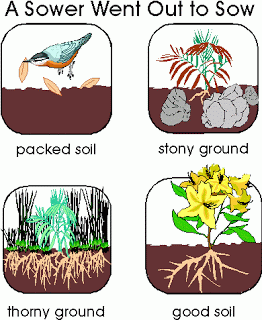
The Seed—a modern parable

"A Sower Went Out to Sow" - Four types of soil
Four types of soil
TODAY'S SPECIAL: Mark 4:1-20

TO CHEW ON: "
' Listen! Behold, a sower went out to sow.' " Mark 4:3

Behold a movie called Jesus was shown at First Church. And many people of the town were gathered in the church gym. As the story of Jesus' birth, teachings, death, and resurrection played on the screen, the seed was scattered on the multitude of them sitting on folding chairs.

After the movie, Pastor Smith invited each to enter the Kingdom of God. He explained how this came to pass by trusting in Jesus' death as the penalty paid for the sins each had committed. He entreated all who would enter to declare it by coming to the front.

There was a woman there, Chantelle, who hardened her heart. She hearkened to the voice of unbelief which said unto her, "This is only a tale."

But Peter, Marissa, and Clyde with a host of others came. Indeed, the multitude was so great, there was not even room for them all to kneel on the carpeted area. Then the members of the prayer team gave each a Bible and sent them on their way.

So Peter, Marissa, Clyde and the others departed, rejoicing over the good news of the Kingdom. And each was eager to grow and bring forth the fruit of this new life.

Peter took his Bible and put it on his bedside table. But in the days that followed, he read it only once. For his friends Troy and Jason, when them came to visit and saw the Bible, made great sport of it.

Lo, they prevailed upon Peter to join them in their revelry as they went to the bar. That night when Peter returned home and saw the Bible, his conscience was pricked and he took it from the table and put it out of his sight under the bed.  After many days when someone from First Church sent him a text message offering him a ride to Youth Group, he never replied.

Marissa too took the Bible home and put it next to her bed. Monday, Tuesday, and Wednesday night she read in it. And the words thereof nurtured the life which had begun the night of the movie.

But on Thursday, wearied by her job, housework, and the demands of her kids, at the appointed hour she was too sleepy to take up the book and read. On the next day, even Friday, she got a babysitter and went with her friends to a movie, not returning home till midnight. "I will take up the book and reading in the morning," she said. But on Saturday at the twelfth hour she was still asleep while her children breakfasted on cereal and chips.

The rest of the weekend continued in like manner with shopping, cleaning, laundry, and TV. Lo on Sunday night, when the fullness of time had come for her to plan her next week, she had still not opened the book.

Behold the next week too was pressed down and overflowing with many things. So her Bible lay untouched. And it came to pass that a few weeks later, when she cleaned an abundance of clutter off her bedside table, she removed the Bible to the bookshelf.

Clyde also took his Bible home. Morning by morning he read in it. When it was again the first day of the week, he prevailed upon his friend Jeffrey to go with him to First Church. There he learned more about Jesus and the Kingdom of God, and his heart was glad and refreshed. "This is good news!" he said. "I cannot keep it to myself."

Immediately he rose and organized a home Bible study where he introduced 30 neighbours to Jesus. Lo  at the appointed time he planned First Church's men's outreach where 60 came. Indeed, so zealous was he that by the time one year had passed, he had brought 100 into the Kingdom.

PRAYER: Dear God, I ask myself, is Your word bearing fruit in my life? And what kind of yield is it achieving? Help me to be more intentional about living a life rich in the fruit of the Kingdom of God. Amen.


 *********
Unless otherwise noted all Scripture quotations are taken from the New King James Version®. Copyright © 1982 by Thomas Nelson, Inc. Used by permission. All rights reserved.


Thursday, May 14, 2015

The Promise—kept!

Holy Spirit as a Dove - Artist unknown
TODAY'S SPECIAL: Acts 1:1-11

TO CHEW ON: "And being assembled together with them, He commanded them not to depart from Jerusalem but to wait for the Promise of the Father, 'which,' He said, 'you have heard from Me.' " Acts 1:4

Here Jesus, in His last goodbyes to His disciples, gives them some explicit instructions . They are not to leave Jerusalem but to wait for the "Promise of the Father." What is this "Promise of the Father"?

[The word "promise" here is the Greek word epangalia. It refers to "both a promise and the thing promised, an announcement with a special sense of promise, pledge and offer" - Dick Mills, Word Wealth, New Spirit-Filled Life Bible, p. 1516.]

In the next verse, Jesus tells them what this promise is: the Holy Spirit.

What sort of expectation does this raise in the disciples, who are familiar with the law, psalms and prophets (our Old Testament)? Here are some OT scriptures that may have come to their minds, and the expectations they raised:

Isaiah 32:15 - "Until the Spirit is poured upon us from on high and the wilderness becomes a fruitful field…" = Fruitfulness.

Isaiah 59:21 - "… this is My covenant with them: My Spirit who is upon you…" and the verse continues with a promise = Believing Generations.

Ezekiel 39:29 - "And I will not hide my face from them anymore for I shall have poured out My Spirit…" = a New Intimacy with God.

Joel 2:28 - "I will pour out My Spirit on all flesh and your sons and your daughters shall prophesy, your old men shall dream dreams, your young men shall see visions" = Supernatural Insight and Communication.

Zechariah  12:10 - "And I will pour on the house of David and on the inhabitants of Jerusalem the Spirit of grace and supplication…" = a New Favor with Man and Power with God.

As we look at these OT promises, we see that every one of them is fulfilled at the coming of the Spirit on and beyond the day of Pentecost.

  • Fruitfulness: 3,000 people become believers after Peter's sermon that day and the church only keeps growing from there.
  • Believing Generations: The church that begins on the day of Pentecost continues till today.
  • A New Intimacy: Through the Spirit believers through the centuries have assurance of a vital connection to God as His children. Paul and John express this well in Romans 8:16; Galatians 4:6; and 1 John 4:13.
  • Supernatural Insight and Communication: Peter refers to the passage in Joel in his sermon, interpreting the coming of the Spirit as fulfillment of Joel's prophecy (Acts 1:16-21). The book of Acts continues with many examples of this: Acts 5:1-11; 8:14-23; 9:10-16; all of Acts 10.
  • Favor with People, Power with God: The early church has "favor with all the people" - Acts 2:47 and power when they pray - Acts 4:31.

The wonderful thing is that the same Holy Spirit is still available to us and working in and through Christ-followers all around the world. His presence and activity in our lives is still able to energize us and make us powerful and effective in these ways.

The question becomes: Are we making ourselves available to Him?

PRAYER: Dear Holy Spirit, all of You is available to me but I fear I often don't make all of myself available to You and so I stifle Your activity in my life. Help me to be better at giving myself to You for whatever You would do through me. Amen.

MORE: Ascension Day

Today the church celebrates the day Jesus ascended to heaven--Ascension Day. The day's liturgy begins with this collect:

Almighty God, whose blessed Son our Savior Jesus Christ ascended far above all heavens that he might fill all things: Mercifully give us faith to perceive that, according to his promise, he abides with his Church on earth, even to the end of the ages; through Jesus Christ our Lord, who lives and reigns with you and the Holy Spirit, one God, in glory everlasting. Amen.

 *********
Unless otherwise noted all Scripture quotations are taken from the New King James Version®. Copyright © 1982 by Thomas Nelson, Inc. Used by permission. All rights reserved.


Monday, May 11, 2015

Day and night

Day and Night clipart
Day and Night (from WPClipart)
TODAY'S SPECIAL: Psalm 1:1-6

TO CHEW ON: "But his delight is in the law of the Lord,
And in His law he meditates day and night" - Psalm 1:2


"…meditates day and night." That would be continually. Why would we think about God and the revelation of Him in His word ("law of the Lord") so much?
  • Growth and fruitfulness: 
Here in Psalm 1 the writer compares this continuous meditating on God to a tree that draws constant nourishment from the stream beside which it grows (Psalm 1:3). Se we see it's for the tree's growth and fruitfulness.

In another place Paul advises Christians  to: "Rejoice always, pray without ceasing, and in everything give thanks" (1 Thessalonians 5:17)—more ways to help growth and productivity.

Continuous connection with God happens in other places in the Bible too, where it serves other purposes:
  • Perspective:
Being closely connected to God helps us gain and maintain a realistic perspective. The writer of Psalm 71 reflects on God's lifelong presence with him and says, "My praise shall continually be of You"  - Psalm 71:6.
When studying creation, the writer praises God as creator: "I will sing to the Lord as long as I live…" Psalm 104:33.

David, at the outset of his psalm about God's attributes and His activity in history begins: "I will extol You my God, O King; And I will bless Your name forever and ever." Psalm 145:1

  • Help:
Another time we may find ourselves turning often to God is when we're in danger. When thinking of his enemies and their evil designs on his life, the writer of Psalm 71 turns to God as a place to put his hope for survival: "I will hope continually and I will praise you yet more and more" - Psalm 71:13,14.

  • He is worthy:
We witness the continuous God-conscious activity that goes on in eternity and it hits us—this is reality.  The heavenly beings in John's vision who "do not rest day or night saying 'Holy, Holy, Holy'" (Revelation 4:8) are praising the One who is truly worthy of that kind of praise.

Whatever place we're in today is a good one to meditate often and long on God and His activity, will, capabilities, accomplishments, and worthiness. Let's do it for our spiritual growth, to gain realistic perspective of life, to SOS Him when we're in trouble, and because He's worthy of it!

PRAYER: Dear God, help me to turn my thoughts to You continually, day and night. Amen.

 *********
Unless otherwise noted all Scripture quotations are taken from the New King James Version®. Copyright © 1982 by Thomas Nelson, Inc. Used by permission. All rights reserved.


Saturday, October 25, 2014

Fruit Test

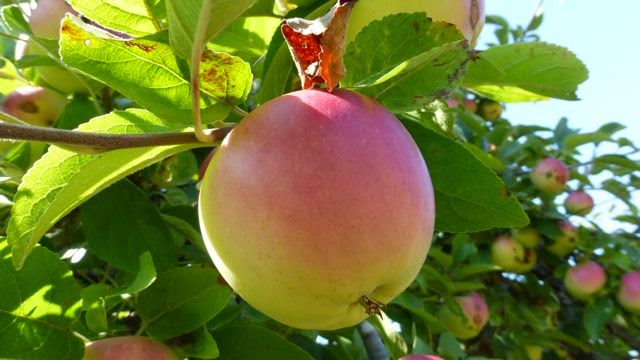
apple on an apple tree
TODAY'S SPECIAL: Matthew 7:15-29

TO CHEW ON:
" 'You will know them by their fruits. Do men gather grapes from thorn bushes or figs from thistles? Even so, every good tree bears good fruit but a bad tree bears bad fruit.' " Matthew 7:16,17

Comparing a life to fruit-bearing plants, Jesus points out how ludicrous it is to expect edible fruit from weeds. And by the fruit, He suggests, one evaluates a life.

Good fruit—what is it?
What is the fruit of a life? Surely Jesus isn't talking about how many physical children we have, or the multitude of things with which we surround ourselves? Most likely not. There is a fruit list in Galatians 5. Paul says there is no law against these Spirit-fruits: love, joy, peace, long-suffering, kindness, goodness, faithfulness, gentleness, self-control Galatians 5:22.

Good fruit—how do we bear it?
How do we find it within ourselves to produce such crops? Well, we don't. In John 15 Jesus gives instructions about fruit-bearing as a metaphor where God is the Vine, and individuals are branches. To bear good fruit it is necessary for us individuals to "abide" or live in the Vine. Abiding in the Vine will line up our will with the Vinedresser's so that prayers will be answered, because they are what He wants too. The branch's  abundance will glorify God even as it brings the branch joy.

Fruit-bearing—it's serious business.

In John 15:6 Jesus also alludes to something sobering which He mentions in our passage as well—that non-fruit-bearing branches and plants will eventually be "cut down and thrown into the fire." (Matthew 7:19, see also Matthew 13:7).

What can fruit-bearing branches expect?

Pruning (John 15:2). But pruning is cutting! Ouch! Indeed, pruning may come in many ways: through circumstances, through people that challenge, irritate, and sand us to smoothness. We may do some pruning ourselves as we cut extraneous, non-fruit-bearing activities out of our lives.

As we go into today, let's reflect on what kind of fruit our life-plant is bearing. If it's not good, let's examine our attachment to the Vine; do we need re-attaching? If we're producing a measly crop, let's ask ourselves what we might do to increase that yield.

PRAYER: Dear God, please help me to be an abiding branch that allows Your fruit-producing activities of prayer and obedience flow through me even as I submit to Your pruning.  Amen.

 *********
Unless otherwise noted all Scripture quotations are taken from the New King James Version®. Copyright © 1982 by Thomas Nelson, Inc. Used by permission. All rights reserved.

Bookmark and Share


Friday, May 23, 2014

What is spiritual fruit?

cluster of grapes growing on a fence
TODAY'S SPECIAL: John 15:1-17

TO CHEW ON: "'By this My Father is glorified, that you bear much fruit; so you will be My disciples.'" John 15:8

In today's reading Jesus, using the metaphor of vine and branches, teaches the importance of His followers bearing fruit. What fruit is He talking about? The many people one has won to Christ? Good works one has done, as in the number of people fed, poor helped, orphans parented, prisoners visited?

I believe it could include these things. But a brief Bible overview of spiritual fruit and fruitfulness shows that its presence in one's life encompasses more than that,

Spiritual fruit:

  • Needs good receptive soil - Matthew 13:8. We could say that the person who wants to be spiritually fruitful must be spiritually receptive.
  • Is the product of heavenly wisdom. James describes it as "… pure, peaceable, gentle, willing to yield, full of mercy and good fruits, without partiality and without hypocrisy" - James 3:17.
  • Comes in many varieties. The "fruit of the Spirit" is listed in Galatians 5:22-23: "… love, joy, peace, long-suffering, kindness, goodness, faithfulness, gentleness, self control…" Paul calls them the "fruits of righteousness" - Ephesians 5:9.
  • Is meant to glorify God - Philippians 1:11 and our focus verse (John 15:8) explicitly state that. 
  • Is perennial (Ezekiel 47:12) and those who bear it have no age limit: "…They shall still bear fruit in old age; They shall be fresh and flourishing" - Psalm 92;13,14.

Our John 15 reading shows four more things about spiritual fruitfulness:

  • When we are "in" Jesus the vine, we're expected to bear fruit. If we don't we'll be removed  - John 15:2,6.
  • We may experience pruning (ouch!) but that is so we will bear more fruit - John 15:2.
  • We don't produce this fruit on our own initiative or through our own resources. In fact we can't. It develops in us as Jesus lives His life and and through us - John 15:4,5.
  • This abiding-in-Jesus-the-vine life guarantees us answered prayers. Jesus says: "'… ask what you desire and it shall be done for you'" - John 15:7. Of course under such intimate conditions we'll be asking for things that are in line with His will.

I ask myself, what sort of branch am I? Does my life fall in line with the conditions of fruitfulness? Am I attached to the Vine?  Have I recognized God's pruning in the difficulties and setbacks of life? Do I welcome it for what it is?  Am I producing fruit? What about you?

PRAYER:
Dear Jesus, please teach me more of what it means to abide n You and allow You to bear fruit through me. Amen.

 *********
Unless otherwise noted all Scripture quotations are taken from the New King James Version®. Copyright © 1982 by Thomas Nelson, Inc. Used by permission. All rights reserved.


Bookmark and Share


Saturday, March 01, 2014

Your life house

TODAY'S SPECIAL: 2 Peter 1:1-21

TO CHEW ON: "...add to your faith virtue, to virtue knowledge, to knowledge self-control, to self-control perseverance, to perseverance godliness, to godliness brotherly kindness and to brotherly kindness love." 2 Peter 1:5-7

If we think of our life as a house, faith would be its foundation  and the things listed in 2 Peter 1:5-7 would be the building materials to make the upper structure. The studs and rafters; the roof, walls, windows and doors; the plumbing and wiring; the gyprock, flooring, paint and trim of my life house and yours should be constructed of:

Knowledge (gnosis): knowledge signifies in general intelligence, understanding, also:
  1. the general knowledge of Christian religion
  2. the deeper more perfect and enlarged knowledge of this religion.
  3. the knowledge of things lawful and unlawful for Christians
  4. moral wisdom, such as is seen in right living

Self-control (egkrateia): mastery; self-control (the virtue of one who masters his desires and passions, especially sensual appetites) 
 
Perseverance (hupomone) - remaining behind, a patient enduring also:
  1. steadfastness, constancy, endurance
    1. in the NT this is the characteristic of a man who is not swerved from his deliberate purpose and loyalty to faith and piety by even the greatest trials and sufferings
    2. patientence, and steadfastness
  2. a patient, steadfast waiting 
  3. a patient enduring, sustaining, perseverance
Godliness (eusebeia) pious, devout
  1. reverence, respect
  2. piety towards God, godliness
Brotherly kindness (philadelphia): the love of brothers
  1. love of brothers or sisters, brotherly love
  2. in the NT the love which Christians cherish for each other as brethren
Love (agape)
  1. brotherly love, affection, good will, love, benevolence
  2. love feasts

Because of our various life situations, personalities, histories and circumstances, how we use these materials in our lives will differ. Only you know where you need to shore up your house with more perseverance, improve the wiring with self-control, soften the decor with brotherly kindness, or freshen the air with love.

To what purpose do we build our lives out of these things? Peter tells us in verse 8: To be fruitful: "For if these things are yours and abound, you will be neither barren nor unfruitful in the knowledge of our Lord Jesus Christ" (2 Peter 1:8).

PRAYER: Dear God, thank You for the Bible which leaves no aspect of life untouched. Help me to translate this knowledge into action. Amen.

***********
Unless otherwise noted all Scripture quotations are taken from the New King James Version®. Copyright © 1982 by Thomas Nelson, Inc. Used by permission. All rights reserved.


Bookmark and Share


Thursday, February 06, 2014

Three types of people

Pulsating spiritual symbols
The Bible—a living book.
TODAY'S SPECIAL: 1 Corinthians 2:10-16

TO CHEW ON: "But the natural man does not receive the things of the Spirit of God, for they are foolishness to him; nor can he know them because they are spiritually discerned. But he who is spiritual judges all things, yet he himself is rightly judged by no one." 1 Corinthians 2:14,15

If you came to Christ as an adult, or even a teen, you may have experienced what verse 14 talks about. As a "natural man" or woman, the Bible made no sense to you. You couldn't understand its appeal.

But then, however it came about, you accepted Christ. After that perhaps almost mysteriously, the Bible came alive. You began to see that it is a story in which you have a part—and you were eager to understand that story and more fully grasp your part in it.

Those are two types of people Paul names here: natural and spiritual. Here's how Donald Pickerill, the writer of my Bible's notes on 1 Corinthians describes them:

NATURAL: "… unregenerate and devoid of the Spirit has no appreciation for the gospel" Donald Pickerill, New Spirit-Filled Life Bible, p. 1582.

SPIRITUAL: "… regenerate and possessing spiritual maturity, as seen in freedom from sectarian strive (1 Corinthians 3:3,4), has a nature that responds to the truth and unbelievers find him difficult to understand" - Ibid.

There's a third type. Paul talks about it in the next chapter—the carnal. These people have accepted Christ but you'd hardly know it by their lives. Paul calls them "babes in Christ," the kind that need milk, not solids. You can tell who they are by their behaviour—characterized by envy, strife, divisions "behaving like mere men." Mr. Pickerill's description:

CARNAL: "The carnal man, regenerate but living much like an unregenerate, is a believer with childish ways, as seen in a jealous and sectarian spirit. An immature Christian lives more for human opinion than for Christ" - Ibid.

The question each of us needs to ask is—which person describes me? And if we are Christ's but find ourselves more like the carnal than the spiritual, at what point did we stop growing? 

Let's ask the Holy Spirit to do the things Paul says He does: search, impart and teach (1 Corinthians 2:10,12,13) so we can again grow and mature.

PRAYER: Dear God, please help me to be tuned in to the deep things of the Spirit, teachable, obedient and growing. Amen.

 *********
Unless otherwise noted all Scripture quotations are taken from the New King James Version®. Copyright © 1982 by Thomas Nelson, Inc. Used by permission. All rights reserved.


Bookmark and Share


Friday, September 13, 2013

Foolish or wise?

TODAY'S SPECIAL: Jeremiah 4:19-31

TO CHEW ON: "'For My people are foolish,
They have not known Me.
They are silly children,
And they have no understanding.
They are wise to do evil,
But to do good they have no knowledge.'" Jeremiah 4:22

Bible writers didn't hesitate to label certain folks fools or foolish, describing them as being without understanding. Some of the people who earned that description were (linked words lead to four versions of the passage on Bible Gateway):
- The person who spent his time on frivolous pursuits instead of work (Proverbs 12:11).
- The lazy person (Proverbs 24:30).
- The haughty person (Proverbs 18:12).
- The oppressive ruler (Proverbs 28:16).
- The person who made an idol and fuel out of the same block of wood (Isaiah 44:19).
- And those people who did not have the sense to seek after and know God (our focus verse today).

Isn't that a little harsh, we ask. We humans have knowledge that spans the disciplines from Archeology to Zoology and know lots about the human body, mind, and psyche. Does none of this count as wisdom?

God's word tells us it doesn't count for much. In God's economy, the vast sum of things we know is of little account - I Corinthians 1:25. But what we do with the things of wisdom matters a great deal.

So when we hear God's voice (through His word or His servants) teaching, correcting, scolding, advising, chiding, we have a choice. We can refuse to listen (Zechariah 7:11-13) and become confirmed and stuck in our foolish ways (Romans 1:28), or we can take what we hear to heart, letting it root and fruit in our lives (Matthew 13:23).

PRAYER: Dear God, help me to put more stock in what You say than what so-called wise but godless people say. I want to be wise in Your ways. Amen.

MORE: Foolish or wise foundation?

At the end of the Sermon on the Mount, Jesus tells this little story (Matthew 7:24-27):

Therefore whoever hears these sayings of Mine, and does them, I will liken him to a wise man who built his house on the rock: and the rain descended, the floods came, and the winds blew and beat on that house; and it did not fall, for it was founded on the rock.
“But everyone who hears these sayings of Mine, and does not do them, will be like a foolish man who built his house on the sand: and the rain descended, the floods came, and the winds blew and beat on that house; and it fell. And great was its fall.”

Wednesday, July 03, 2013

Kindness

Good Samaritan at the Inn - Alexandre Bida
TODAY'S SPECIAL: Galatians 5:7-26

TO CHEW ON: "But the fruit of the Spirit is … kindness" - Galatians 5:22

Tucked in amongst the heady graces of love, joy, peace, and faithfulness is common, everyday kindness.

My Bible's Word Wealth article defines it:
[Kindness  - chrestotes - is goodness in action, sweetness of disposition, gentleness in dealing with others, benevolence, kindness, affability. The word describes the ability to act for the welfare of those taxing your patience.. The Holy Spirit removes abrasive qualities from the character of one under His control - Dick Mills, New Spirit-Filled life Bible, p. 1638.]

This fruit-of-the-Spirit list is not the only place that kindness is prescribed and expected of God's people:
  • The "upright" are described as "gracious and full of compassion" in Psalm 112:4.
  • "What is desired in a man is kindness…" says wise Solomon - Proverbs 19:22.
  • Paul includes kindness in several more of his instructions about the Christian life:
- "Be kindly affectionate to one another…" Romans 12:10.
- "Love … is kind …" - 1 Corinthians 13:4.
- "Be kind to one another, tenderhearted, forgiving one another" - Ephesians 4:32.
- "… as the elect of God … put on … kindness" - Colossians 3:12.
What does kindness look like? Here are seven examples of kindness from the Bible:
  1. It is taking the needy into one's home to feed and clothe them - Isaiah 58:7.
  2. It is shown by how we ourselves speak and how we train our children. Proverbs describes the excellent wife: "She opens her mouth in wisdom and the teaching of kindness is on her tongue" - Proverbs 31:26 (NASB).
  3. It is forgiveness. Joseph showed mercy and spoke kindly to his brothers who had sold him into slavery - Genesis 50:21.
  4. It is standing up for the weak and picked on, as Moses did for the daughters of Jethro - Exodus 2:17.
  5. It is a kept promise. David was kind to Mephibosheth, a descendant of Saul keeping his promise to his friend Jonathan - 2 Samuel 9:1.
  6. It is gentleness with foreigners, shown in the way Boaz treated Ruth - Ruth 2:15,16.
  7. It is getting involved, like the Good Samaritan cared for the beat-up traveler in Jesus' story - Luke 10:34.

I'm sure you get the idea…

Let's be on the lookout for opportunities to show kindness today—as we interact with family members, talk to each other in person, on the phone or online, drive, shop, eat out—whatever we do.

PRAYER:
Dear God, help me to forsake my brusque, demanding tendencies. I need You to keep sanding my abrasiveness of spirit to a smooth patina of kindness. Amen. 

***********

The Holy Bible, New King James Version Copyright © 1982 by Thomas Nelson, Inc. - Used with permission.
Bible Drive-Thru


Bookmark and Share


Related Posts Plugin for WordPress, Blogger...