Showing posts with label celebration. Show all posts

Monday, June 25, 2018

Together again

"Prodigal Son" - Artist unknown
TODAY'S SPECIAL: Jeremiah 30-32; Psalm 21

TO CHEW ON: "Again I will build you and you shall be rebuilt,
O virgin of Israel!
You shall again be adorned with your tambourines,
And shall go forth in the dances of those who rejoice."  Jeremiah 31:4


A family feud, a rift between you and an old friend, a church split, a betrayal by a business partner… Most of us have experienced the severing of a trusted relationship and know its fallout of sadness, disillusionment and the ache of an empty place at the table, empty pews in church, the empty office.

Israel and Judah had split into two nations during the reign of Solomon's son Rehoboam. That was about 300 years before Jeremiah's time. Though the crisis pain of that split had no doubt long healed, the desire that the two nations of God's chosen people be reunited lingered. In today's reading we hear it in Jeremiah's prediction of  together again: "I will be the God of all the families of Israel and they shall all be my people" - Jeremiah 31:1.

Let's look at the bright picture Jeremiah paints of that reuniting:

This is a worldwide ingathering "I will bring them from the north country, And gather them from the ends of the earth…" Jeremiah 31:8, 10.

There is repentance and renewed spiritual sensitivity: "They shall come with weeping, And with supplications I will lead them" - Jeremiah 31:9.

There is celebration, singing and dancing - "You shall again be adorned with your tambourines, And shall go forth in the dances of those who rejoice …. Then shall the virgin rejoice in the dance, And the young men and the old together;  For I will turn their mourning to joy…" Jeremiah 31:4,13.

There is vibrant praise and worship - " ' Sing with gladness for Jacob, And shout among the chief of the nations; Proclaim, give praise and say, "O Lord, save Your people…" ' "  Jeremiah 31:7.

There is hope: "Again I will build you and you shall be rebuilt" - Jeremiah 31:4.

There is new life and productivity - "You shall yet plant vines on the mountains of Samaria …. Their souls shall be like a well-watered garden…" Jeremiah 31:5, 12.

Over it all there is a sense of God's love, protection, and care - "Yes, I have loved you with an everlasting love; Therefore with lovingkindness I have drawn you … He who scattered Israel will gather him, and Keep him as a shepherd does his flock … And My people shall be satisfied with My goodness says the Lord" - Jeremiah 31:3, 10-11,14.

The picture of God reclaiming His people Israel can be compared to what it's like when He brings humanity back to Himself, healing the rift that split us and God apart when Adam and Eve sinned.

He brings us from wherever we are and accepts us no matter what our condition. Our tears of repentance and renewed spiritual sensitivity soon change to joy, singing, celebration, praise, and worship as we realize our happy condition. Our relationship with our Creator leads to renewed life and creativity. In the Shepherd's care we find security and satisfaction.

If you haven't come home to the Father, He calls to you today: "Yes, I have loved you with an everlasting love; Therefore with lovingkindess I have drawn you…"

Come to Him today!.

PRAYER: Dear God, thank You for wanting me back and making a way. Help me today to appreciate and enjoy the benefits of being Your child. Amen.

PSALM TO PRAY: Psalm 21

 *********
Unless otherwise noted all Scripture quotations are taken from the New King James Version®. Copyright © 1982 by Thomas Nelson, Inc. Used by permission. All rights reserved.


Sunday, December 17, 2017

Brought back

Welcome Home
TODAY'S SPECIAL: Psalm 126:1-6

TO CHEW ON: "When the Lord brought back the captivity of Zion
We were like those who dream.
Then our mouth was filled with laughter,
And our tongue with singing." Psalm 126:1-2


It's doubtful whether most of us will experience the joy of a return from physical exile like the Psalm-writer describes here. But we do know other kinds of captivity—the prison of sickness, the pain of alienation from family members and friends, the feeling of being estranged from God…

When we come down to it, our times of exile are meant to drive us to God in the first place or back to Him if we have wandered away. In a little study of  what it means to be "brought back" spiritually I discovered four things:

1. Exile from God is called backsliding. Sin and neglecting to follow God's rules frequently led to actual exile in the OT. When writing about backsliding, the Bible writers often refer to it as an illness that needs healing - Isaiah 54:15, 18; Jeremiah 3:22; Hosea 14:4.

2. God is the One who instigates and does the restoring (Psalm 23:3). One of the things He does is deal with our sin (Micah 7:19) so that His anger toward us is placated (Psalm 84:5).

3. He also uses people in the restoration process. Paul, with the language of childbirth, describes his work of restoration among the Galatians (Galatians 4:19). He also enlists lay people to help restore those who have fallen into sin (Galatians 6:10).

4. Restoration is a party! Look at the story of the Prodigal Son - Luke 15:22-24;32. David prays for restored joy after confessing his sin with Bathsheba - Psalm 51:12. The people in our psalm are in a pinch-me-is-this-really-happening? state of ecstasy, their mouths filled with laughter, their tongues with singing.

Do we find ourselves in exile? If we are, let's respond to God who wants us back. He will restore us spiritually and has the power to restore to us other things as well (like health and relationships - Joel 2:12-14; 25).

PRAYER:
Dear God, the joy of restoration in these verses is palpable.  I pray that You will bring back those who read here from whatever exile they are in and restore that joy. Amen.

MORE: Vagabonds by Stuart Townend


Today is the Third Sunday of Advent.

The liturgy today begins with this collect prayer:

Stir up your power, O Lord, and with great might come among us; and, because we are sorely hindered by our sins, let your bountiful grace and mercy speedily help and deliver us; through Jesus Christ our Lord, to whom, with you and the Holy Spirit, be honor and glory, now and for ever. Amen.


********

Unless otherwise noted all Scripture quotations are taken from the New King James Version®. Copyright © 1982 by Thomas Nelson, Inc. Used by permission. All rights reserved.

Bible Drive-Thru


Wednesday, September 13, 2017

Jog your memory

"Fruit of the Spirit" wall hanging - Photo: V. Nesdoly
TODAY’S SPECIAL: Exodus 13:1-22

TO CHEW ON:
“It shall be as a sign to you on your hand and as a memorial between your eyes, that the LORD’s law may be in your mouth; for with a strong hand the LORD has brought you out of Egypt.” Exodus 13:9

To help us remember the special days in our lives we use oral and written story-telling, paper and electronic calendars, eating and gift-giving. In today’s reading we see it’s altogether biblical to use concrete things as reminders of our history with God. God instructed the Israelites on this.

The ban on leaven each year at Passover was a reminder of the morning of their hurried exit from Egypt (Exodus 13:4-7).

They were to pass their story on to their children (Exodus 13:8).

And they were to solidify the fact that they were God’s people with an act that was even more radical. They were to redeem the firstborn males of their own families and animals (Exodus 13:1,11-15)—another reminder of the tenth plague, when the death angel killed the Egyptians’ firstborn sons and animals. (The redemption of the Israelites’ firstborn sons is described in Numbers 3:40-51.)

These memorials were to be as visible and obvious as wearing a reminder on a hand or forehead (Exodus 13:9).

Did God expect the people to literally wear such reminders? The Israelites took no chances. My Bible’s study notes on Exodus explain:
“The later Jewish practice of wearing phylacteries while praying is based on these verses. Phylacteries are two small leather boxes attached by leather straps, one to the left hand and one to the forehead of an Israelite. They contain passages of the law” J.C.Tollett, New Spirit-Filled Life Bible, p. 93.

We customarily remember birthdays, wedding anniversaries, and holidays—some religious, some secular (the stores don’t let us forget even if we’d want to!). Perhaps we could also put more emphasis on remembering episodes and milestones of our personal walk with God—spiritual birthdays, the date of our baptism, dates of significant answers to prayer, and foundational passages of our faith and practice.

Do you memorialize such things? How?

PRAYER: Dear Father, thank You for the stories in the Bible that have given me a record of Your dealings with humankind over thousands of years. Help me to carry it on as I remind myself of what’s important to You and recall and tell the stories of your activity in my life to my children and grandchildren. Amen.

 *********
Unless otherwise noted all Scripture quotations are taken from the New King James Version®. Copyright © 1982 by Thomas Nelson, Inc. Used by permission. All rights reserved.


Saturday, July 01, 2017

Happy 150th Birthday Canada!

My patriotic planter
TODAY’S SPECIAL: Psalm 72:1-20

TO CHEW ON: “He shall have dominion also from sea to sea,
And from the River to the ends of the earth.” Psalm 72:8


Today is Canada’s 150th birthday! That’s the reason I diverge from the suggested Canadian Bible Society reading to suggest, instead, Psalm 72. For Psalm 72 played a big part in Canada’s history.

“When the fathers of confederation were assembled discussing the terms and conditions of Confederation and the drafting of the British North America Act there had been considerable discussion the day before and many suggestions as to what the new United Canada should be called, and no conclusion had been reached. The discussion on the name stood over until the next day. The next morning, as was Sir Leonard (Tilley)’s custom, he read a chapter from the Bible and that particular morning he read Psalm 72. When reading verse eight of the said Psalm, 'He shall have Dominion also from sea to sea'—the thought occurred to him, what a splendid name to give Canada. When he went back to the sitting of the convention that morning he suggested the word 'Dominion,' which was agreed to, and Canada was called the 'Dominion of Canada'” - Michael Clarke, in Canada, Portraits of Faith, p. 61.

Let’s take a moment to look at Leonard Tilley (1818-1896).

This pharmacist entered public life in support of the temperance movement (after seeing a young mother murdered by her drunken husband). He eventually served as Premier of New Brunswick, navigating the province into the new union that became Canada. He also helped write the British North America Act.

He came to faith at 21, was active in the Church of England, and stood firm in his convictions on temperance, proposing and passing a bill against alcohol in New Brunswick which resulted in insults and attack: “… burned in effigy, his house attacked, his life threatened, he never flinched” - Michael Clarke, source as above.

Later he became a federal Minister of Customs in John A. MacDonald’s government. When that government fell under charges of corruption, Tilley was not one of the guilty.

I find many points of inspiration for us 21st century Canadians in Tilley’s story.

  • His social concerns increased his influence as he supported his convictions about temperance with action.
  • He wasn’t swayed from his principled stand by insults, threats, intimidation, and attack.
  • When in federal politics he didn’t join in the corruption.
  • His faith remained simple and practical. It included reading the Bible every day and paying attention to what it said to the extent of applying its words and ideas to everyday challenges.

It’s easy to think that life in Canada 150 years ago was a piece of cake for people of faith. Mr. Tilley’s story helps us see that wasn’t the case. Let’s continue supporting our beloved Dominion of Canada with Bible-based faith, prayer, and action.

PRAYER: Dear Father, thank You for Canada! I pray for my homeland today, that You would bless her with righteousness, justice, and peace (Psalm 72:2,3). Help her to continue to experience Your blessings of flourishing and abundance (Psalm 72:6,7,15,16). May she become more of a haven for the poor and needy (Psalm 72:4). May the fear of God grow in Canada (Psalm 72:5). Help her to be a place on earth that is filled with Your glory (Psalm 72:9). May You truly have dominion in Canada from sea to sea (Psalm 72:8). Amen.

 *********
Unless otherwise noted all Scripture quotations are taken from the New King James Version®. Copyright © 1982 by Thomas Nelson, Inc. Used by permission. All rights reserved.


Monday, October 31, 2016

Celebrating darkness

Halloween jack-o-lanterns (pixabay.com)
TODAY’S SPECIAL: John 8:31-47

TO CHEW ON: ‘And you shall know the truth, and the truth shall make you free.’” John 8:32

Today is Halloween. Tonight children dressed up in all kinds of costumes, cute to ghoulish, will knock on doors and expect us to toss candy into their plastic jack-o-lanterns or pillow cases. It’s a lot of fun for the kids. Many consider it the highlight celebration of the year.

Halloween’s roots are not quit as innocent. The Samhain holiday observed by the Celts on this day was a time that spirits of those who had died in the last year were believed to roam. People offered food and drink to ward off these spirits.

When the Romans conquered Britain, the holiday morphed into a harvest celebration honouring the fruit tree goddess Pamona. During the Middle Ages, the day—though officially abandoned—took on religious overtones linked to the Christian belief in evil spirits (info from The Christian Almanac by George Grant & Gregory Wilbur, p. 639).

The modern celebration seems to get bigger each year with store displays for Halloween set up earlier and targeting a wider age range. Though it is mostly lighthearted and fun for the children, the creatures associated with it—skeletons, witches, ghosts, vampires, werewolves etc.—honor death, fear, the occult, the paranormal.

Because of the above, I have always felt uneasy about celebrating Halloween. It seemed contradictory to me to honor forces and beings of darkness when I claimed to belong to the creator and bringer of light. A friend of mine who works in the deliverance ministry recently asked for more prayer covering because she deals with a lot of deep and real darkness rooted in occult involvement.

And so this Halloween day, let’s focus on Jesus who said earlier in John 8: "'I am the light of the world. He who follows Me shall not walk in darkness but have the light of life'" - John 8:12,   'I am the way, the truth and the life'” - John 14:6 and 'You shall know the truth and the truth shall set you free.'” - John 8:32.


PRAYER: Dear Jesus, thank You for defeating all the power of the evil one. Your shed blood on the doorposts of my life means he can’t touch me. I pray protection on families, homes and communities tonight when darkness is celebrated as innocent fun. Amen.

MORE: The Vigil for All Saints Day
Some churches celebrate a Vigil for All Saints Day. An article on the Share Faith site describes the vigil and what it means in different denominations:

"All Saints Day begins with a vigil, the observance of which originated with the Antioch Church. The night time hours of All Saints are devoted to prayer and fasting. The Catholic ceremony for the day is a solemn one, and includes the observance of Mass, followed by prayers offered to the Virgin Mary and all the saints. Lutherans and Episcopalians remember the day by giving thanks to God for all saints, living and dead. The Orthodox Churches continue to honor all Christian martyrs on the first Sunday after Pentecost." Read the entire article...
*************
Unless otherwise noted all Scripture quotations are taken from the New King James Version®. Copyright © 1982 by Thomas Nelson, Inc. Used by permission. All rights reserved.

Tuesday, October 06, 2015

Purim

TODAY'S SPECIAL: Esther 9:20-10:3

TO CHEW ON:

"And Mordecai wrote these things and sent letters to all the Jews, near and far, who were in all the provinces of King Ahasuerus, to establish among them that they should celebrate yearly the fourteenth and fifteenth days of the month of Adar, as the days on which the Jews had rest from their enemies, as the month which was turned from sorrow to joy for them, and from mourning to a holiday; that they should make them days of feasting and joy, of sending presents to one another and gifts to the poor." - Esther 9:20-22

Every time I log onto Facebook I get a little reminder of whom among my friends is celebrating a birthday on this day. Sending people greets and having parties on birthdays is one way we celebrate individuals in our culture.

We also celebrate special days: love on Valentine's Day, all things Irish on St. Patrick's Day, Mothers and Fathers on their respective days, our country on our national holiday...

God is a great believer in celebrations. The Old Testament is full of parties (called "Feasts") that He instituted for the Israelites to celebrate. In some ways they were a lot like our holidays. The Israelites were to take time off work and they often ate special food.

But these feasts were also different. Most of our celebrations are only a day or a weekend long. Some of the Israelites' feasts lasted a whole week or longer. And while our celebrations are often all about us–what gifts we’ll get, what we’ll eat, how much fun we’ll have–the Israelites’ holidays helped them focus on God.

Some of them, like the Passover, helped them remember how God had helped in the past. Others, like the Feast of First fruits, were times they gave God the first things they harvested. The Feast of Purim (instituted by Mordecai here) reminded them of the miraculous turn of events that began when Queen Esther took her life in her hands to approach the king and beg for the life of her people.

In addition to helping the people remember what God had done, celebrations were also one way the Israelites were to fulfill God's command to teach His ways to their children. Moses instructed them on this in Deuteronomy 6. Not only were parents to explain God's laws to their children in the course of everyday life (Deuteronomy 6:6-9) but they were also to explain God's miracle interventions in the context of His testimonies, statutes and judgements (which included observing the special feasts - Deuteronomy 6:20-22).

Perhaps it wouldn't be a bad idea to add some spiritual celebrations to our secular ones—having  parties, for example, commemorating the day we were born again, the day we were baptized, or the day God answered a significant prayer for us or our family. Because we also need to keep these memories strong and pass the stories on to our kids!

PRAYER: Dear God, thank You for reasons to celebrate and times of celebration. Help me to take time to recall and retell the stories of how You have worked in my life and the life of my family. Amen.

MORE: Purim

The Jewish people still celebrate the Feast of Purim. Here are some things they do on that day:


1. They read the story of Esther from the Hegillah (the Scroll). They cheer whenever Esther’s name is mentioned, boo at Haman’s name and wave graggers or noisemakers. They also act out the story in plays.


2. They wear costumes, disguises and masks to remind them of how Esther had to hide the fact that she was Jewish.


3. They send gifts to each other and the poor. They also invite people to join them in a special Purim meal.


4. They make special food. One treat is called Hamantaschen (Haman’s Hat). It is a three-cornered pastry filled with poppy seeds or prunes.

(Adapted from the Bible Drive-Thru devotion "From Sadness to Celebration")

The Feast of Purim is celebrated on the 14th of Adar (Hebrew calendar), which changes from year to year on the secular calendar. 
2015 - March 3 & 4; 
2016 - March 23 & 24; 
2017 - March 9 & 12.

***********

Unless otherwise noted all Scripture quotations are taken from the New King James Version®. Copyright © 1982 by Thomas Nelson, Inc. Used by permission. All rights reserved.

Bible Drive-Thru


Monday, February 24, 2014

Keeping feasts

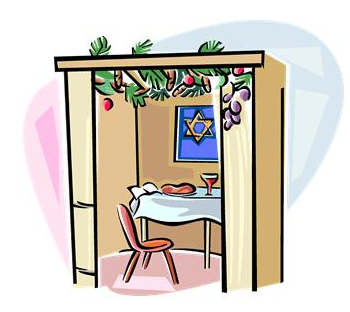
Booth for the Feast of Tabernacles celebration
Feast of Tabernacles - still celebrated today
TODAY'S SPECIAL: Exodus 23:1-19

TO CHEW ON: "Three times you shall keep a feast to Me in the year."  Exodus 23:14


What did it mean to "keep a feast"? My Bible has a word meaning article about that.

[To keep a feast, chagag: To celebrate, keep a feast, be festive, dance, assemble for rejoicing. This verb occurs 15 times. It is translated as 'Dancing' in 1 Samuel 30:16 and 'kept a pilgrim feast' in Psalm 42:4. An important derivative is chag, 'feast,' especially referring to the seven feasts God gave Israel. … The OT abounds in feasts and celebrations ordained by God and resulting in human happiness" - Dick Mills, Word Wealth, New Spirit-Filled Life Bible, p. 106.]

The three feasts mentioned in our reading combined the natural, the historical, and the spiritual in celebration.

The Feast of Unleavened Bread commemorated the Israelites coming out of Egypt and slavery. It was mainly of historical and spiritual significance.

The Feast of Harvest (also called the Feast of Weeks or the Day of Pentecost) was held in the third month (our May to June) 50 days after the Feast of Unleavened Bread. It commemorated the early harvest. (For us, of course, the Day of Pentecost also has significance as the day the Holy Spirit fell on the church - Acts 2:1).

The Feast of Ingathering (also called the Feast of Tabernacles or Booths) happened in the autumn of the year (our September to October) and commemorated the end of the harvest as well as their years of tent living in the wilderness, reminding them of how God had kept them through that time.

Notice how God's directive continues: "… keep a feast to Me …"

These feasts were to celebrate God—His goodness, faithfulness, generosity, grace—more than to entertain and please the people, though they did that too.

I think about our big celebrations—Easter, Thanksgiving, Christmas—and how we tend to focus most of the attention on ourselves: the candy, the food, the presents, and the folk characters  that we've connected with these days (the Easter Bunny, Santa Claus). Yes, somewhere in there we give God a quick wave and prayer of thanks. But our celebrations are not primarily to "Me."

Perhaps we can change this, for ourselves and our families at least, so that our "feasts" focus first on God and then on our festivities with each other. Any practical ideas of how we could do this?

PRAYER: Dear God, thank You for the balance between work and play that You mandate here. Thank You, too, for this model of regular remembering. Help me to give much space in my life to celebrating You. Amen.

 *********
Unless otherwise noted all Scripture quotations are taken from the New King James Version®. Copyright © 1982 by Thomas Nelson, Inc. Used by permission. All rights reserved.


Bookmark and Share


Wednesday, May 16, 2012

Applause

TODAY'S SPECIAL: Psalm 47:1-9

TO CHEW ON: "Oh clap your hands all you peoples!
Shout to God with the voice of triumph!" Psalm 47:1

Clapping hands is an action we commonly associate with applause. We clap in appreciation and admiration after an artistic or athletic performance. We clap because we want more. It's a gesture of approval and support.

[The Hebrew word taqa, here  translated "clap" means to make all kinds of noise: "... clatter, clang, sound blow (trumpets), clap, strike. Taqa describes pitching a tent or fastening a nail probably due to the striking of the hammer used for both tasks .... Taqa indicates energy and enthusiasm. Here all nations are commanded to clap their hands and shout triumphantly to God ... God has built into the human being an almost instinctive urge to clap and shout when victory is experienced" - Dick Mills, Word Wealth, New Spirit-Filled Life Bible, p. 724.]

My Bible's notes tell me that Psalm 47 was quoted at the Hebrew New Year. It expressed the Hebrews' hope and prayer that God would rule over the nations in the coming year.

Christians have applied Psalm 47 to Jesus' resurrection and ascension (Acts 1:9-10). The church celebrates this event as a special day tomorrow (Ascension Day).

Compare Psalm 47:5 "The Lord has gone up with a shout, / The Lord with the sound of a trumpet..."

with

"...according to the working of His mighty power which He worked in Christ when He raised Him from the dead and seated Him at His right hand in the heavenly places" - Ephesians 1:19, 20.

I ask myself, does my exuberance over these things (Jesus' victory over death, His presence in heaven now, His promise of eventual victory) bring me to a place of spontaneous taqa, as in clapping banging noisemakers, blowing trumpets, stamping feet (think of the type of noise at a hockey, football or basketball game)? It could. It should. For:

"God has gone up with a shout ...
God is the King of all the earth...
God reigns over the nations
God sits on His holy throne" Psalm 47:5,7,8.

PRAYER: Dear God, thank You for sending Jesus to conquer death. Thank You that He lives in heaven now. Help me to applaud Your victory in faith as I wait for the day You triumph over nations and the systems of earth as we know them. Amen.

MORE: "Crown Him with Many Crowns" sung by Robin Mark


Bible Drive-Thru


Bookmark and Share

Related Posts Plugin for WordPress, Blogger...