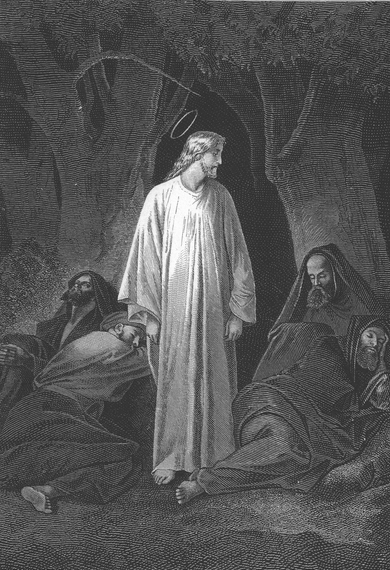
Showing posts with label prayer. Show all posts

Tuesday, December 18, 2018

Light some incense today!

TODAY’S SPECIAL: Revelation 7-9; Psalm 42

TO CHEW ON: “Then another angel having a golden censer, came and stood at the altar. He was given much incense, that he should offer it with the prayers of all the saints upon the golden altar which was before the throne. And the smoke of the incense with the prayers of the saints, ascended before God from the angel’s hand.” Revelation 8:3-4

In John’s vision, events in heaven continue to play out. He (the Lamb) opens the seventh seal to reveal an expanding vista of seven trumpets. The seven judgments they announce (8:2-11:18) are cataclysmic. The first four (found in our reading today) affect the natural world and remind us of the Egyptian plagues (hail, blood, polluted water, death to living creatures, darkness).

What I find fascinating are the two verses about the saints’ prayers that precede the fateful trumpet blasts. They seem almost out of place. Here, as earlier (Revelation 5:8), an angel presents these prayers to God as incense.

Incense has been associated with deity and worship since ancient times. Divination by interpreting the shapes that rose from incense smoke was an inexpensive way for poor people to determine the will of the gods. The Egyptians and other Gentile nations used it in their worship. Still today it is part of the practice of Buddhism, Christian Orthodoxy and other religions.

  • In Old Testament religious practice, only the priests were allowed to offer incense. Moses’ instructions to Aaron included strict regulations concerning its makeup and use (Exodus 30:34-36). 
  • God specifically forbade the personal mixing and use of the incense designed for worship (Exodus 30:37-38). 
  • David first likened prayers to incense (Psalm 141:2). 
  • God warned the Israelites through Isaiah that offerings, including the burning of incense, done while clinging to known sin were offensive to Him (Isaiah 1:13).  
  • In Malachi its use symbolized the universal worship of God: “In every place incense shall be offered to My name…” Malachi 1:11

That the prayers of the saints (us!) should be equated with something as integral to worship as incense tells us how important they are to God. Here they are directly connected to the judgments that follow. For after presenting the incense prayers to God, the angel takes the golden censer that held them, fills it with fire from the altar, throws it to earth, and the action begins.

This focus on prayer makes me want to spend more time on this aspect of my relationship with God. As Barbara Billet expresses it:
I ask You, Lord, that You would fill me with Your consuming fire today. I desire to be used as a house of prayer so that I can pray heartfelt, fervent, effectual prayers that will cause my prayer life to have much power, available, dynamic in its working.” Barbara Billet, Praying With Fire, p. 19

PRAYER: Dear God, please teach me to pray. Amen

PSALM TO PRAY: Psalm 42

*****************
Unless otherwise noted all Scripture quotations are taken from the New King James Version®. Copyright © 1982 by Thomas Nelson, Inc. Used by permission. All rights reserved.


Monday, December 17, 2018

No-holds-barred worship


TODAY’S SPECIAL: Revelation 4-6; Psalm 41

TO CHEW ON:
 “The twenty-four elders fall down before Him who sits on the throne and worship Him who lives forever and ever, and cast their crowns before the throne saying”
‘You are worthy, O Lord
To receive glory and honor and power
for You created all things
And by your will they exist and were created.’” Revelation 4:10-11


The scene John describes in today’s reading is beyond comprehension and difficult even to imagine. It is not unlike other glimpses we get of God and the activity in heaven. There are striking similarities. Note the “sea of glass” in Revelation 4:6 and the sapphire-like pavement under God's feet when He showed Himself to Moses (Exodus 24:9,10) and the 70 elders on Mount Sinai. Note the exotic creatures (Revelation 4:7,8) here and described similarly in Ezekiel’s vision (Ezekiel 1:10). Note the abundance of eyes in both places.(Revelation 4:8; Ezekiel 1:18)

What does it all mean? An end-note in my Bible suggests that the sea of glass denotes the unapproachableness of God. The four creatures speak of majesty (lion), courage and strength (ox), intelligence (man) and speed (eagle) “in the service of the Creator.” The abundance of eyes symbolizes God’s unceasing watchfulness.(New Spirit Filled Life Bible p.1824)

These visions evoked fear, awe and above all, worship in those who saw them.

Worship (proskuneo; pros= toward, kuneo = kiss; kiss toward - "to kiss like a dog licking his master's hand") means to prostrate oneself, bow down, do obeisance, show reverence, homage, worship, adore. We worship only God and the risen and ascended Jesus – not angels, saints, shrines, relics or religious people.

Although we’re not currently in heaven, privy to these description-taxing scenes, where worshipers fall down before God and present their crowns to Him, we can also worship on earth in the here-and-now.

1. We can assume physical postures of worship as twenty-four Elders do here – kneeling, bowing, lying on the ground before God during our times of private prayer and even in church. Perhaps it would do us good to remind ourselves of our lowness in relation to God in this way more often than we do.

2. We can give our everyday lives to God (Romans 12:1) – your “ordinary life – your sleeping eating, going-to-work, and walking-around life—and place it before God as an offering” (Message). This is called your “reasonable (rational, intelligent) service and spiritual worship.” (Amp)

3. We can adhere to His standards and live obediently as people of His covenant - Isaiah 56:6,7 (inviting people of all nations to Christ, observing the pattern of life He has set out - like keeping one day of rest - and preserving our assembly place as a "house of prayer for all nations.")

4. We can be part of His plan by aligning ourselves with other Christians as “living stones” (1 Peter 2:4,5 NIV) members of His spiritual house.

Will we do these things with the same willingness and abandon that the saints in heaven worship in the awe-inspiring presence of God?

PRAYER:
Dear God, please give me a sense of Your otherness. I so easily take You down to my level. Help me to worship You with all I am and have. Amen.
The Bible Project VIDEO: Day of the Lord (Theme series)


MORE: I love John's comparison of God and heaven with precious gems, stones, and metals. Trouble is, I have no experience with many of these jewels. Here is a little about the ones mentioned in this passage.


Jasper

Sardius (similar to Carnelian, only harder and darker)


Emerald


Gold

Crystal

*************
Unless otherwise noted all Scripture quotations are taken from the New King James Version®. Copyright © 1982 by Thomas Nelson, Inc. Used by permission. All rights reserved.

Unless otherwise noted all Scripture quotations are taken from the New King James Version®. Copyright © 1982 by Thomas Nelson, Inc. Used by permission. All rights reserved.

Scripture quotations marked AMP are taken from the Amplified® Bible, Copyright © 1954, 1958, 1962, 1964, 1965, 1987 by The Lockman Foundation. Used by permission." (www.Lockman.org)

Scripture quotations marked MSG are taken from The Message. Copyright © 1993, 1994, 1995, 1996, 2000, 2001, 2002. Used by permission of NavPress Publishing Group.

Saturday, December 15, 2018

Spiritual bodybuilding

TODAY'S SPECIAL: Jude 1-25; Psalm 39

TO CHEW ON: "But you, beloved, building yourselves up on your most holy faith, praying in the Holy Spirit, keep yourselves in the love of God, looking for the mercy of our Lord Jesus Christ unto eternal life." Jude 20-21

Jude, the brother of James wrote the short letter of Jude. It's a letter of warning to an unnamed church or churches. False teachers were the problem.

Jude talks of the havoc these teachers had created by comparing them to Bible characters. They acted in the spirit of:
Cain: destruction. Cain murdered his brother instead of caring for him (Genesis 4:8).

Balam: greed. Balam was a prophet who consented to try to curse Israel for King Balak in return for money (Numbers 21:1-22:41).

Korah: rebellion. Korah led a rebellion against Moses (Numbers 16:1-24).

How can the people resist these teachers? Jude says by "building yourselves up on your most holy faith."

The phrase "building yourselves up" brings to mind the gym. There people do multiple repetitions of exercises (sit-ups, crunches, leg lifts, bench presses, cycling, etc.) to build up different parts of the body. What would a spiritual workout look like? It could consist of reading, studying and memorizing the Bible, praying in the Holy Spirit (praise, thanksgiving, petition, intercession, worship), and singing.

The crowd of runners we pass on our way to church Sunday morning have tapped into another effective way to work out physically. They do it together for companionship, accountability, even safety. In our spiritual workout program, this would compare to being part of a faith community — a church, home group or Bible study group. (Of course Jude's letter, written out of the need to warn church members about false teachers within tells us that such togetherness also has its hazards.)

We know that in order for a physical workout program to accomplish what we want it to, it has to be consistent. That's where we get tested. For no matter how exciting a fitness program is at the beginning, it's hard to stick with it. Doing the same exercises over and over can get boring. Sometimes we're tired and don't feel like exercising. We may not notice any difference in our body and wonder if it's actually making us stronger.

Sticking with a spiritual fitness program is just as challenging. Some parts of the Bible are hard to understand. We may wonder if our prayers are making any difference. We may get discouraged by the spiritually immature tendencies we still see in ourselves and feel disheartened when temptations still trip us up. But just like sticking with a physical fitness program eventually brings about changes in our bodies, so sticking with regular routine of spiritual fitness will strengthen us spiritually.

Do you work out spiritually? If not, decide to make such a program a part of your routine. Life is full of challenges. You'll want to face them with a well-toned faith.

PRAYER: Dear God, thank You for being my teacher and trainer. Help me to be as devoted to developing my faith as I am to caring for my body. Amen.

PSALM TO PRAY: Psalm 39

The Bible Project VIDEO: Jude (Read Scripture Series)


*************
Unless otherwise noted all Scripture quotations are taken from the New King James Version®. Copyright © 1982 by Thomas Nelson, Inc. Used by permission. All rights reserved.

Thursday, December 13, 2018

The "we know"s of John


TODAY'S SPECIAL: 1 John3-5; Psalm 37


TO CHEW ON: "And we know that the Son of God has come and has given us an understanding that we may know Him who is true..." 1 John 5:20

As we read 1 John 5, the phrase "we know" keeps popping up. What are the things John told his readers way back in the first century, and tells us now, that "we know"?

1. "We know that we love the children of God, when we love God and keep His commandments" (1 John 5:2).

[Know here and in its last appearance (in 1 John 5:20) is ginosko which means to learn to know, come to know, get a knowledge of, perceive, feel, understand.]

2. "These things I have written to you who believe in the name of the Son of God that you may know that you have eternal life..." (1 John 5:13).

[Know here is oida from horao which means to see with the eyes, see with the mind, perceive, know, become acquainted with by experience, to see, look, take heed, be aware.]

3. "... we know that He hears us, whatever we ask..." (1 John 5:15)

4. "...we know we have the petitions we have asked of Him" (1 John 5;15).

5. "We know that whoever is born of God does not sin" (1 John 5'18).

6. "We know that we are of God and the whole world lies under the sway of the wicked one" (1 John 5:19).

7. "We know that the Son of God has come and has given us an understanding..." (1 John 5:20a).

8. "...that we may know Him who is true and we are in Him who is true..." (1 John 5:20b).

As I read this list of certainties posed by John, I am again impressed with how the Christian life is a push-and-pull of faith and experience. Notice how our lists of knows (the know of experience) is bracketed by two knows (learning to know, getting a knowledge or perception of).

I ask myself, which of these knows can I declare with confidence? Which do I need to grow in? Most of all, am I progressively advancing in knowing Him (1 John 5:20b)? I do that by buttressing my faith through experience in all the ways John lists.

PRAYER: Dear God, help me to have the confident knowledge of You that John expresses. Above all, help me to know You.


PSALM TO PRAY: Psalm 37

*************
Unless otherwise noted all Scripture quotations are taken from the New King James Version®. Copyright © 1982 by Thomas Nelson, Inc. Used by permission. All rights reserved.

Monday, November 26, 2018

Invocation for a project—even a life

Cross on a banner
Cross on a banner - RGB Stock Image
TODAY'S SPECIAL: 1 Timothy 3-4; Psalm 20

TO CHEW ON: "May He grant you according to your heart's desire;
And fulfill all your purpose.
We will rejoice in your salvation,
And in the name of our God we will set up our banners!
May the Lord fulfill all your petitions." Psalm 20:4,5


This psalm of David's has three margin notes in my Bible:
- Book project Bezalel - 2009
- Entered Word Alive Contest - 2011
- Finishing edit - March 2012

It was obviously a significant passage for me as I worked on, completed and published my novel Destiny's Hands. I can see why. It touches on four elements that make it a sustaining prayer passage for any project, season, or even a life:

  • Desire: "May He grant you according to your heart's desire…"
What a wonderful thought—that God might give us our desires!  While this could easily degenerate into something selfish, other passages help us sort out what worthy desires look like. Passages like: "Delight yourself also in the Lord,
And He shall give you the desire of your heart" - Psalm 37:4 (see also Psalm 27:4; Isaiah 26:9; Luke 6:21).

  • Purpose: "…And fulfill all your purpose…"
Is this saying our lives have a point—there is a reason we're here? Yes—a purpose that may be way older and more established than we have ever imagined, according to Paul: "For we are His workmanship, created in Christ Jesus for good works which God prepared beforehand that we should walk in them" - Ephesians 2:10.

  • Battle: "We will rejoice in your salvation / And in the name of our God we will set up our banners!" - Psalm 20:5
[Banner: "Generally a standard raised in battle as a rallying point for armies. God is described as Israel's banner in recognition of his powerful defence of his people" - The Dictionary of Bible Themes.]

Here is the celebration of victories in the skirmishes where we've been successful and the invocation of God's presence and help through the battles yet to come, as we rally under His banner: "The Lord will fight for you, and you shall hold your peace" - Exodus 14:14.
  • Prayer: "May the Lord fulfill all your petitions"
Don't we all want to claim this promise. it's a promise reiterated in many places in the Bible, often with the condition we find in 1 John 5:14,15:"… if we ask anything according to His will He hears us. And if we know that He hears us, whatever we ask, we know that we have the petitions that we have asked of Him" (emphasis added).

May these words be the prayer of our hearts today over our still incomplete projects, seasons, and lives

PRAYER: Dear God, thank You for promises of Your presence through our projects to cover everything including our very lives. Help me to continue to claim this victory passage for my works in progress. Amen. 

PSALM TO PRAY: Psalm 20

The Bible Project Video: Public Reading  of ScriptureTheme


*********
Unless otherwise noted all Scripture quotations are taken from the New King James Version®. Copyright © 1982 by Thomas Nelson, Inc. Used by permission. All rights reserved.


Sunday, November 25, 2018

Pray for authorities

TODAY'S SPECIAL: 1 Timothy 1-2; Psalm 19

TO CHEW ON: "Therefore I exhort first of all that supplications, prayers, intercessions, and giving of thanks be made for all men, for kings and all who are in authority, that we may lead a quiet and peaceable life in all godliness and reverence." 1 Timothy 2:1-2


The instructions to pray for rulers and authorities must have been especially difficult for members of the early church. Their rulers were often cruel and repressive with no qualms about giving Christians a bad time. Followers of "The Way" were frequently scapegoats, accused of and then killed for crimes they had never committed.

In spite of this, Paul tells Timothy to instruct the people in his congregation to intercede and give thanks for all in leadership and authority positions. Still today, whether we like them or not, agree or disagree with their politics and decisions, we are to pray for those who rule and have authority — in our land and all over the world.

Dick Eastman in his book Love On Its Knees gives us some specific ways we can pray for leaders and authorities. First, he lays out a general "Micah Plan." It is based on praying out of Micah 6:8 — Micah's description of the lifestyle and conduct of a leader:
"He has shown you, O man, what is good; and what does the Lord require of you but to do justly, to love mercy, and to walk humbly with your God?" 

From this Eastman suggests:

"- We must pray that a particular leader will do justly....that he or she will govern truthfully with a spirit of sincerity.
- We may pray that a leader will love mercy. This means he or she will govern compassionately with a spirit of generosity.
- We may pray that the leader will walk humbly with God. This means he or she will govern modestly and with a spirit of sensitivity."

Eastman then goes on to list seven specific things we can pray for leaders of our country and countries around the world:

1. That unjust leaders will make mistakes that help advance the Gospel of Jesus Christ (Psalm 109:26-29).

2. That tyrannical leaders will fall from power by receiving unsound advice (Psalm 5:10).

3. That godly leaders will discover spiritual wisdom to govern their nations (Proverbs 28:2).

4. That all leaders will receive a personal message of God's love (Isaiah 52:7).

5. That leaders in troubled nations will grow weary of continuing bloodshed in their lands (1 Kings 5:3-4).

6. That corrupt leaders will recognize their evil ways and turn to God (2 Chronicles 33:11-13).

7. That all leaders will realize that God alone gave them their positions of authority (Daniel 2:20-21) — Dick Eastman (Dick Eastman On Prayer: Love On Its Knees, excerpted from pages 97-101).

Let's spend some time praying for those in authority today.

PRAYER: Dear God, I confess I have often neglected to pray for the leaders of my land, province and city. Today I pray for my Prime Minister (or president or king...), the premier of my province (or governor of my state...), and the mayor of my city. May they be blessed with Your wisdom, have a personal sense of Your love, and acknowledge Your role in bringing them to their position and helping them carry out their responsibilities. Amen.

PSALM TO PRAY: Psalm 19

The Bible Project VIDEO: 1 Timothy (Read Scripture Series)


MORE: More authorities to pray for...

Elected, appointed, or self-appointed political rulers are not society's only authorities. Many other people have such positions, not formally recognized perhaps but by reason of their influence. Other authority figures for which we can and should pray could be:

1. Judges and members of law enforcement, including the police and the military.

2. Educators which would include teachers, college and university professors, even our kids' sports coaches.

3. Cultural authorities such as entertainers and sports figures.

4. Commercial authorities such as business leaders, and members of the media.

Perhaps you can think of even more...

**************
Unless otherwise noted all Scripture quotations are taken from the New King James Version®. Copyright © 1982 by Thomas Nelson, Inc. Used by permission. All rights reserved.

Friday, November 16, 2018

The smells God loves

Image: Pixabay
TODAY’S SPECIAL: Ephesians 5-6; Psalm 10

TO CHEW ON:
“And walk in love, as Christ also has loved us and given Himself for us, an offering and a sacrifice to God for a sweet-smelling aroma.” Ephesians 5:2

Paul's description of Christ’s sacrifice as a “sweet smelling aroma” only makes sense when we put it into the context of the Old Testament.

The first instance we have of the connection between God and the smell of a sacrifice is when Noah left the ark and made a burnt offering. Then “… the LORD smelled a soothing aroma…” and determined to never again curse the ground or wipe out humanity - Genesis 8:20,21.

The Old Testament sacrifice system was full of smells;
  • The aroma of sacrificed (burning) animals, animal parts (like fat), and grain (Leviticus 1:9, 8:21).
  • The aroma of a specially concocted anointing oil to be used exclusively for setting  aside people and things as holy (it contained the fragrances of myrrh, cinnamon, sweet-smelling cane, and cassia) - Exodus 30:22-33.
  • The aroma of incense, burned on a special altar—the Altar of Incense in the Tabernacle and in censers which only authorized people were to offer in the prescribed way (Leviticus 10:1,2).

Here, in Ephesians, when Paul speaks of Christ in His death as being a “sweet-smelling aroma,”  keeping all the above in mind, we get it.  Jesus’ death was the appeasing smell of sacrifice to God like the smell of the OT animal, grain, and incense offerings had been. (Of course we realize this is metaphorical because Jesus wasn’t burned; there was no literal smell of smoke involved in His death.)

  • Paul also speaks of aroma as it applies to our witness in 2 Corinthians 2:15,16.
  • In Hebrews 13:15, 16 the writer speaks of us bringing a “sacrifice of praise” (though no smell is actually mentioned).
  • And in Revelation 5:8, the prayers of the saints are described as “golden bowls full of incense.”

What strikes me about the connection of fragrance with worship is what it signifies of being set apart (in the case of the anointing oil) and destruction (sacrifice, burning) of the thing being sacrificed (animals, grain, incense).

Romans 12:1 comes to mind:

“I beseech you therefore brethren by the mercies of God, that you present your bodies a living sacrifice, holy, acceptable to God, which is your reasonable service.”

I ask myself, I ask you: are we that “sweet-smelling aroma” to God in death to self, holiness, witness, worship, and prayer?

PRAYER:
Dear Father, I pray that my life will be a “sweet-smelling aroma” to You today. Amen.

PSALM TO PRAY: Psalm 10

 *********
Unless otherwise noted all Scripture quotations are taken from the New King James Version®. Copyright © 1982 by Thomas Nelson, Inc. Used by permission. All rights reserved.


Tuesday, October 02, 2018

Specific prayers

 "Healing of Bartimaeus" by Alexandre Bida
(Though the blind man isn't named in Luke's telling, 
he is named in Mark's - Mark 10:46-52)

TODAY’S SPECIAL: Luke 17-18; Psalm 119:33-64

TO CHEW ON: “So Jesus stood still and commanded him to be brought to Him. And when he had come near, He asked him, saying, ‘What do you want me to do for you?’ He said, ‘Lord, that I may receive my sight.’” Luke 18:40


Surely Jesus knew the man was blind and that he wanted to see. Yet He asked the blind man to say it, to pinpoint exactly what he wanted Jesus to do for him.

This incident says something to us about prayer (talking to God—that’s what the blind man was doing):

1. It seems our prayers are the catalyst that moves God’s hand.
Though God knows everything—knows our needs better than we do, He has invented prayer for us to tell Him what we need and want. I’m reminded of a scene in C.S. Lewis’s The Magicians Nephew. At one point the children, Digory and Polly, are hungry but all there is to eat is grass—good for Fledge the horse but not them. (Remembering that Aslan the Lion is the Christ figure):

“‘Well, I do think someone might have arranged about our meals,’ said Digory.

‘I’m sure Aslan would have, if you’d asked him,’ said Fledge.

‘Wouldn’t he know without asking?’ said Polly.

‘I’ve no doubt he would,’ said the Horse (still with his mouth full). ‘But I’ve a sort of idea he likes to be asked.’”
 
- C. S Lewis, The Chronicles of Narnia, Kindle Location 1898 (emphasis added).

2. What we ask for is linked to our faith.
Jesus replied to the blind man’s ask: ‘Your faith has made you well.’ And then He healed him on the spot.

This incident encourages us to pray, and when we do, put into words what we specifically want Jesus to do for us. We are invited to pray ("'What do you want Me to do for you?'"), not in vague generalities (“Bless my family”) but specifics (“Please help my grandson with his math test”).

Do we have the faith for such praying?


PRAYER:
Dear Jesus, praying in specifics is a little scary because it reveals the state of my faith and makes prayer’s answers so measurable. Help me to trust the wisdom and love of all your answers, whether they’re “Yes,” “No,” or “Wait.” Amen.

PSALM TO PRAY: Psalm 119:33-64

 *********
Unless otherwise noted all Scripture quotations are taken from the New King James Version®. Copyright © 1982 by Thomas Nelson, Inc. Used by permission. All rights reserved.


Wednesday, September 26, 2018

Jesus woos us

Jesus Preaches from a Ship - Alexandre Bida
Jesus Preaches from a Ship - A. Bida
TODAY'S SPECIAL: Luke 4-5; Psalm 114

TO CHEW ON:
"So when they had brought their boats to land, they forsook all and followed Him." Luke 5:11


It's fascinating to watch Jesus woo the disciples (who were not yet disciples) in this passage.

His popularity with the crowd needed a bit of a stage that provided both visibility and distance. A boat would be just the thing. He chose Simon's (Peter's), asked him to interrupt his net-washing and "put out a little from the land" and taught the crowds from there.

Imagine being the one from whom this upstart asked such a favor. I wonder, did Peter feel annoyed that Jesus just commandeered his boat for several hours, or honored and flattered?

It didn't end there, though. After the teaching session, Jesus turned His attention from the crowds to the boat owner. He told Peter to move to deep water and start fishing. Peter, probably still smarting from the previous unsuccessful night, started to argue but then changed his mind and did as Jesus said.

A great miraculous catch followed. "They" (Peter and probably his brother Andrew) got help from partners James and John to haul in the multitudes of fish. At Jesus' next words "'Do not be afraid. From now on you will catch men,'" Peter was completely smitten. He (and his partners) "...brought their boats to land, they forsook all and followed Him" - Luke 5:11.

I would love to have interviewed Peter and asked him, what was going on in his mind and heart that synchronized with Jesus' actions and words to cause this life change in him.

Perhaps he was wondering how he could continue looking after his family's needs with such unpredictable fishing luck. Jesus had just showed him His supernatural power in that department.

Perhaps he'd been wishing, all his life, to live for something bigger and had for some time been questioning the usefulness of what he was doing. Jesus told him he would "catch men." Peter may not have completely understood, but would surely have been intrigued.

We don't know. But we do know that on that particular day in Peter's life, Jesus ticked all the boxes and the decision to follow Him was easy.

On listening to people's stories of how they come to Jesus, I've noticed something similar. Jesus woos us in different ways. Sometimes it's through unaccountable blessing. Sometimes it's via an inner search for more purpose and meaning. Sometimes Jesus is the last option to stop a downward spiral that, if something doesn't change, will lead to destruction.

Let's pray for friends, colleagues, and loved ones who have yet to meet Jesus, that He will continue to work His wooing ways in their lives and that they will respond like Peter did.

PRAYER:
Dear Jesus, I see how You won Peter and his crew over in a few well-timed interventions and actions. Please continue to work that way in the lives of my loved ones who don't know You. Amen. 

PSALM TO PRAY: Psalm 114

The Bible Project VIDEO: Luke ch. 3-9 (Gospel of Luke series)


*********
Unless otherwise noted all Scripture quotations are taken from the New King James Version®. Copyright © 1982 by Thomas Nelson, Inc. Used by permission. All rights reserved.


Monday, September 24, 2018

Our prayers—part of God's eternal purposes


"Gabriel Visits Zacharias" - by Julius Schnorr von Carolsfeld
(Courtesy of the Digital Image Archive, Pitts Theology Library, 
Candler School of Theology, Emory University”)


TODAY'S SPECIAL: Luke 1; Psalm 112

TO CHEW ON: "But the angel said to him, 'Do not be afraid, Zacharias, for your prayer is heard; and your wife Elizabeth will bear you a son, and you shall call his name John.'" Luke 1:13


This story of John the Baptist's beginnings give us a sense of God putting into action ancient and detailed plans. God used the assignment of a lifetime—Zacharias's one opportunity to burn incense in the Holy Place—to deliver, through Gabriel, a life-changing message.

From Zacharias's viewpoint, this was an answer to a very earthly, marriage-long prayer—to have a son.

To God, though, it was way bigger. It was an essential part of preparing for the climax of a plan first announced in Genesis 3:15. Bits of this plan are strewn through the Old Testament. Picking out elements from our story:

Nazirite:
Gabriel, in his description of John's style of life ("...drink neither wine nor strong drink" - Luke 1:15) referred back to the lifestyle of a person separated to God, a Nazirite described way back in Numbers 6:2,3.

Elijah:
Gabriel went on to say that Zacharias's offspring (John) would prepare the way for Him (God's special messenger) "… in the spirit and power of Elijah" - Luke 1:17.

We remember Elijah, the prophet who wasn't afraid to confront Ahab. He lived out of the public view during a three-year drought, and then clashed with the prophets of Baal on Mt. Carmel and begged the Israelite onlookers to again follow God. After that, we remember how Queen Jezebel threatened his life.

John too would end up living in seclusion and then calling people to repentance, pointing out Jesus as Messiah, and baptizing Him. His bold confrontation of Herod for his immorality ended in him being beheaded at the request of Herodias, another royal consort.

The prophecy of Malachi:
Gabriel quoted the Old Testament prophet Malachi (who also referenced Elijah) " 'He (John) will also go before Him "… to turn the hearts of the fathers to the children…" ' " Luke 1:17.
Compare with Malachi's words:
"Behold I will send you Elijah the prophet
Before the coming of the great and dreadful day of the Lord.
And he will turn
The hearts of the fathers to the children,
And the hearts of the children to their fathers" - Malachi 4:5,6.

John's birth was indeed an answer to Zacharias's prayer but it was also so much more!

I like to believe that God's purposes are similarly interwoven into the lives of us believers; that the things we pray for (and if we're attached to Jesus—He in us, us in Him—even our prayers are His ideas - John 15:7) lead to answers that help complete His work and purposes on earth just as Zacharias's prayers for a son did.

PRAYER:
Dear Father, thank You for this glimpse into the workings of Your ways. Help me to trust that You are similarly working Your eternal purposes through the prayers and answers to pray in my life. Amen. 

PSALM TO PRAY: Psalm 112

The Bible Project VIDEO: Luke - Part 1 (Read Scripture Series)


 *********
Unless otherwise noted all Scripture quotations are taken from the New King James Version®. Copyright © 1982 by Thomas Nelson, Inc. Used by permission. All rights reserved.


Wednesday, September 19, 2018

Do our lives reveal the works of God?

Image: Pixabay
TODAY’S SPECIAL: John 9-10; Psalm  107

TO CHEW ON:
“And His disciples asked Him, saying, ‘Rabbi, who sinned, this man or his parents, that he was born blind?’

Jesus answered, ‘Neither this man nor his parents sinned, but that the works of God should be revealed in Him.’” John 9:23


This little story raises a question. We ask, did God allow this man’s congenital blindness, which he suffered with for many years before Jesus healed him, just so Jesus’ power could be on display at this moment in time?

Jesus’ entry into his life at this moment and saying what He did implies to me that all of the man’s life—even the time he was blind, was part of God’s plan for him.

God didn’t create the world with flaws. These things entered when Adam and Eve chose disobedience and rebellion. However, the disciples believed that the man’s blindness was caused by specific sins he or his parents had committed. Jesus said “no” to that. The writer of my Bible’s study notes explains:

“Assuming that an individual case of suffering was due to specific sin, the disciples inquired into the cause of the man’s blindness. Jesus, however, notes that beyond the tragedy of human defects, which result in a general way from man’s fall and the consequent entry of sin, sickness, affliction, and death into the world, God’s merciful and sovereign grace is available” - Siegfried Schatzmann, New Spirit-Filled Life Bible, p. 1460.

What does this mean for us today? How do we square the fact that God does heal some, but not everyone who prays for healing gets healed? Is it that some don’t have enough faith? That they’re praying the wrong way? That there’s sin in the life?

For me the answer lies in Jesus explanation of why the man was born blind in the first place: '… that the works of God should be revealed.' In this man’s case it was a work of miraculous healing. But we also see the works of God displayed in lives lived under lifelong clouds of sickness, pain, debilitation—any one of the heavy consequences of the fall. To me the life of Joni Earickson Tada is an example of such a work of God on display in a many-year quadriplegic.

Here's Paul talking about a similar situation:
 "And lest I should be exalted above measure by the abundance of the revelations, a thorn in the flesh was given to me, a messenger of Satan to buffet me, lest I be exalted above measure. Concerning this thing I pleaded with the Lord three times that it might depart from me. And He said to me, “My grace is sufficient for you, for My strength is made perfect in weakness.” Therefore most gladly I will rather boast in my infirmities, that the power of Christ may rest upon me. 10 Therefore I take pleasure in infirmities, in reproaches, in needs, in persecutions, in distresses, for Christ’s sake. For when I am weak, then I am strong. - 2 Corinthians 12:7-10.


PRAYER: Dear Father, on this side of seeing You, it’s easy to be puzzled by our health (and other) problems. Help me to live by faith that You have a good reason for everything that You allow into my life. May Your presence within me reveal the works of God, whether works of healing or works of trust, faith, and rejoicing in and through pain, suffering, and sickness. Amen.

PSALM TO PRAY: Psalm 107

*********
Unless otherwise noted all Scripture quotations are taken from the New King James Version®. Copyright © 1982 by Thomas Nelson, Inc. Used by permission. All rights reserved.


Thursday, September 13, 2018

The fight between sleep and prayer

The Sleep of the Disciples - Alexandre Bida

TODAY'S SPECIAL: Mark 13-14; Psalm 101

TO CHEW ON:
"And He came and found them sleeping, and said to Peter, 'Simon, are you sleeping? Could you not watch one hour? Watch and pray, lest you enter into temptation' … And when He returned, He found them asleep again, for their eyes were heavy; and they did not know what to answer Him." Mark 14: 37,38,40

No doubt the disciples' sleep was a legitimate physical response to physical fatigue. Yet one gets the sense that there is also a spiritual component to their napping here, while a few feet away, Jesus agonizes in prayer.

Several thoughts...

On prayer:
1. Jesus, the very Son of God, who had unprecedented access to the Father, still desired the disciples' prayer company and support. " 'Could you not watch one hour?' "  Mark reports Jesus saying (Mark 14:37). Matthew adds " 'Could you not watch with me one hour?' " (Matthew 26:40).

2. Jesus' desire for them to be praying was also for their benefit: " 'Watch and pray, lest you enter into temptation. The spirit indeed is willing but the flesh is weak' " Mark 14:38.

On sleep:
1. The persistence of the disciples' sleep, even after Jesus' warning, alerts us to the fact this may have been more than mere fatigue. They were seemingly embarrassed and perhaps even puzzled by their inability to stay awake: " … they did not know what to answer Him" - Mark 14:39.

2. Luke's account says: "He found them sleeping from sorrow" - Luke 22:45. This suggests their sleep may also have been a form of escapism.

Some insights for our lives as modern disciples from this part of the passion story:
- Prayer: 

  • It aids us even as it supports others.

- Sleep:

  • We do need a healthy amount to function. But could an inordinate sleepiness at times when we set out to pray be an aspect of spiritual warfare?
  • When we're overwhelmed by life situations, maybe we should more often escape into prayer than sleep!
  • Could our inability to stay awake during prayer be a symptom of a dull spiritual state? Perhaps spiritual things just don't seem real enough; prayer doesn't seem important enough to keep us alert and awake. The Bible uses sleep as a metaphor to illustrate spiritual dullness and oblivion:
"… now it is high time to awake out of sleep; for now our salvation is nearer than when we first believed" - Romans 13:11.

"Therefore let us not sleep as others do, but let us watch and be sober" - 1 Thessalonians 5:6.


See also Mark 13:35,36  |  Romans 11:8  |  Ephesians 5:14.

PRAYER: Dear Jesus, I confess I have often slept when I should be praying. Please help me to understand what's at stake in maintaining times of prayer. Amen. 

PSALM TO PRAY: Psalm 101

 *********
Unless otherwise noted all Scripture quotations are taken from the New King James Version®. Copyright © 1982 by Thomas Nelson, Inc. Used by permission. All rights reserved.


Thursday, September 06, 2018

Are there doubters in the house?

Image - Pixabay
TODAY’S SPECIAL: Matthew 27-28; Psalm 94

TO CHEW ON: “When they saw Him, they worshiped Him; but some doubted.” Matthew 28:17

I often wish I’d been with Jesus and had seen Him with my own eyes. Then, I imagine, it would be easy to believe no matter what.

Or, maybe not. Here we have disciples who had been with Jesus for the better part of three years. Yet we read “some doubted.

I wonder what they doubted. That the man who appeared to them as Jesus after the resurrection was actually Jesus? That He had really died and come back to life? That His time on earth had accomplished what He said?

These were not their first moments of doubt. Jesus had often addressed the doubts of those around Him.
  • He talked about trusting God to meet needs of daily living - Matthew 6:30.
  • Doubt caused Peter to sink under the waves after he started out walking on the water - Matthew 14:31.
  • Doubt was at the root of their inability to understand Jesus’ teaching in metaphors and symbols - Matthew 16:8-12.
  • Doubt made the disciples powerless to heal - Matthew 17:17.
  • Doubt had the disciples panicking in a storm - Mark 4:40.
  • Doubt kept the disciples from understanding Jesus’ explanation of how He had fulfilled prophecy - Luke 24:25.
  • Doubt caused Martha to demur when Jesus told them to take away the stone from Lazarus’ grave - John 11:39.
  • Doubt caused Thomas to ask for proof that Jesus was who He said He was - John 20:25.

Jesus’ reaction to the doubt in our passage was to ignore it. Instead of scolding the doubters or launching into an apologetic explanation of how He had fulfilled Scripture, He carried on by giving them their assignment, promising His presence every step of the way - Matthew 8:18-20.

Maybe that’s the antidote to our doubts too—to get busy, exercise some faith, and we’ll find that He does have authority, He continues to attract disciples. He is with us every day.

PRAYER: Dear Jesus it seems to be in my human DNA to doubt. Please help me step out in faith wherever You lead and so prove Your reality. Amen.

PSALM TO PRAY: Psalm 94

 *********
Unless otherwise noted all Scripture quotations are taken from the New King James Version®. Copyright © 1982 by Thomas Nelson, Inc. Used by permission. All rights reserved.


Wednesday, August 22, 2018

Fighting life's battles

Image: Pixabay
TODAY’S SPECIAL: 2 Chronicles 32-34; Psalm 79

TO CHEW ON:
“‘Be strong and courageous; do not be afraid nor dismayed before the king of Assyria, nor before all the multitude that is with him; for there are more with us than with him. With him is an arm of flesh; but with us is the Lord our God to help us and to fight our battles.’” 2 Chronicles 32:7,8

Judah’s King Hezekiah gave the encouragement, above, to his subjects in the face of Sennacherib’s (king of Assyria) invasion of Judah. But before he said these things, he was busy doing what he could to fortify and protect his territory from the Assyrian threat.

  • He stopped the flow of water to the land (2 Chronicles 34:3,4).
  • He repaired the Jerusalem wall (2 Chronicles 34:5).
  • He manufactured and distributed new arms (2 Chronicles 34:5). 
  • He organized the army (2 Chronicles 34:6).

Then he gathered the people for the pep talk.

Not surprisingly, Sennacherib reaction to Hezekiah’s speech was to mock it and Hezekiah’s faith in God. Sennacherib sent a delegation to Jerusalem to challenge Yahweh and  instill fear (2 Chronicles 34:10-15).

Sennacherib’s mockery and threats brought Hezekiah and Isaiah (the prophet) to their knees: they “prayed and cried out to Him…” 2 Chronicles 34:20.

Then God intervened supernaturally: “… sent an angel who cut down every mighty man of valor, leader, and captain in the camp of the King of Assyria" (2 Chronicles 34:21).

I think Hezekiah here demonstrates some great life principles for us too. When we’re under attack or in trouble—physically, financially, socially or in whatever way we:
  • Do all we can. We follow doctors’ orders, put our financial house in order, attempt to make peace with our enemies, or whatever the situation dictates.
  • Encourage ourselves in God, refusing to give in to the fear and what-ifs of the situation, reminding ourselves that “there are more with us than there are with them.”
  • Pray. Though we've done all we can, in the end our trust is in God and His coming through for us. In His time He will, as He did for Hezekiah and his subjects.  

PRAYER: Dear Father, help me to remember that I have more than the “arm of flesh” with me; I have the Lord, God of heaven and earth. Amen.

PSALM TO PRAY:
Psalm 79

 *********
Unless otherwise noted all Scripture quotations are taken from the New King James Version®. Copyright © 1982 by Thomas Nelson, Inc. Used by permission. All rights reserved.

Thanks for reading! This year we are using The Bible Project "Timeless Reading Plan" to read through the Bible in 2018. If you'd like to read along in your own Bible, you can download a pdf of the reading plan HERE.

Friday, August 17, 2018

Community transformation—is it possible?

Image: Pixabay
TODAY’S SPECIAL: 2 Chronicles 13-17; Psalm 74

TO CHEW ON: “… and the children of Judah prevailed, because they relied on the LORD God of their father.” 2 Chronicles 13:18

“O God, how long will the adversary reproach?
Will the enemy blaspheme Your name forever?” Psalm 74:10


Three things come together for me in today’s readings:

1. In the recitation of good and bad kings from 2 Chronicles, what stands out is that all the bad kings were guilty of occultism, idolatry, and seeking to do things on their own without God. God’s blessing flowed again when godly kings destroyed these things and returned to true worship.

2. In the psalms reading, psalmist Asaph’s pleading with God (to again make His name famous, to make His cause prevail, to restore sincere worship and purity to the land) resonates. It’s how I would pray for my own land and people in the 21st century.

3. I watched a video about community transformation last night. In it the filmmakers tell the story of several communities (one in Mexico, one in Guatemala, and one in California) that experienced community-wide spiritual revival in the 1990s. It happened when the church and concerned pastors became modern-day Asaphs and pleaded for their cities, with prayer and fasting.

When God revealed to them the occultic roots of their community’s enslavement to the drug cartels (Mexico), poverty, drunkenness, and abuse (Guatemala), and addiction (California) they confronted and took authority over dark forces with, again, prayer and fasting.

If we are burdened for our land and community like Asaph was, let’s follow the example of the Christians of the 1990s and contend (with prayer, fasting, church unity etc.) for another transformation!

PRAYER:
Dear Father, I believe the kind of turnaround You brought to Judah and Israel under godly kings, and the transformation witnessed in the 1990s is possible today. Help me to contend for it in my country and town. Amen.
PSALM TO PRAY: Psalm 74

MORE: Transformations (the documentary film)


 *********
Unless otherwise noted all Scripture quotations are taken from the New King James Version®. Copyright © 1982 by Thomas Nelson, Inc. Used by permission. All rights reserved.

Thanks for reading! This year we are using The Bible Project "Timeless Reading Plan" to read through the Bible in 2018. If you'd like to read along in your own Bible, you can download a pdf of the reading plan HERE.

Sunday, August 12, 2018

Your sin hurts more than just you

"Deliverance from the flood" - Psalm 69:15
Engraver Melchior Kussell
Artist SL
From the Pitts Theology Library.

Deliverance from the flood - Psalm 69:15 - Engraving by Melchior Kussel - Artist SL
TODAY'S SPECIAL: 1 Chronicles  22-24 Psalm 69

TO CHEW ON:
"Let not those who wait for You,
O Lord God of hosts, be ashamed because of me;
Let not those who seek you be confounded because of me,
O God of Israel." Psalm 69:6


What a desperate cry for help David makes in this psalm! In picturesque language he describes the feeling of drowning in trouble and being sucked into the mire of problems (Psalm 69:1-2; 14-15). His enemies seem numberless and his treatment unfair (Psalm 69:4). The message that comes through is, 'None of this is my fault!'

And then we come to verse 5:

"O God you know my foolishness / And my sins are not hidden from you."
Maybe he isn't as blameless as he let on at the beginning.

I really appreciate his thoughts relating to the potential fallout of his actions in verse 6:

"Let not those who wait for You
O Lord of hosts, be ashamed because of me;
Let not those who seek you be confounded because of me,
O God of Israel."
The sad truth is that we are often at least a little to blame for our own problems. And when we sin we hurt those who view us as examples and mentors—our children, young Christians, our friends and colleagues, those who look to us for instruction and inspiration etc. Our broken marriages, involvements in pornography, illegal money schemes, theft, child sexual abuse—whatever—especially if we are leaders, impact much more than just our own lives.

Let's keep that in mind before we yield to temptation. Let's let our love for the body of Christ be another reason not to sin in the first place.

PRAYER: Dear God, help me to realize how my sin affects Your body (the church) and resist temptation. Help me, at the same time, to refrain from harsh judgment when my brothers and sisters sin. I want to be a restorer of the broken. Amen.

PSALM TO PRAY: Psalm 69

MORE: Second most-quoted psalm
The NIV Study Bible's introduction to this psalm names it the second most-quoted psalm in the New Testament:

"The authors of the NT viewed this cry of a godly sufferer as foreshadowing the sufferings of Christ; no psalm except Psalm 22 is quoted more frequently in the NT" - NIV Study Bible, p. 855.

Those quotes:

  • Psalm 69:4 - John 15:25
  • Psalm 69:9 - John 2:17; Romans 15:3
  • Psalm 69:21 - Matthew 27:34
  • Psalm 69:25 - Acts 1:20
  • Psalm 69:33 - Luke 4:18 
**************
Unless otherwise noted all Scripture quotations are taken from the New King James Version®. Copyright © 1982 by Thomas Nelson, Inc. Used by permission. All rights reserved.


Thursday, August 09, 2018

Foxhole prayers

Soldier in a foxhole
TODAY'S SPECIAL: 1 Chronicles 11-14Psalm 66

TO CHEW ON: "I will pay You my vows,
Which my lips have uttered
And my mouth has spoken when I was in trouble."  Psalm 66:13,14


Have you ever prayed, God something like, If You help me out of this situation I'll ______ (go to Africa; never do this thing again; do whatever You ask; etc.)'? Then after the crisis passed, did you follow through with your promise?

The practice of making vows to God when in trouble is thousands of years old. My Bible dictionary defines Bible vows:
"A vow may be either to perform or abstain from an act in return for God's favour or as an expression of zeal or devotion towards God. It is no sin to vow or not to vow, but if made—presumably uttered—a vow is as sacredly binding as an oath. Therefore a vow should not be made hastily" - New Bible Dictionary p. 1313.

Bible characters certainly took vows seriously.
  • Israel's judge Jephthah vowed that whatever came out of his house to meet him after victory in battle he would sacrifice—and was shocked when that turned out to be his daughter (Judges 11:30,40).
  • Saul was ready to kill his own son when it was discovered Jonathan had eaten honey during battle after Saul had sworn the people to fast all day (1 Samuel 14:24-45).
  • Here the psalmist promises to pay the vow he spoke while in trouble. Does the need for such a statement imply that he may have considered not keeping his promise to God?

What troubles me about making vows is the undertone of manipulation—as if our potential action will convince God to come through for us. (Jesus alludes to the futility of our vow-making in Matthew 5:33-37).

Still, when our backs are against the wall and we're desperate, I would hazard most of us would not be above praying frantic foxhole prayers. Whether we follow through with the promises we make in them is a measure of how seriously we take God and our word to Him.

PRAYER: Dear God, please help me not to use manipulation in my relationship with You. When I do make promises, help me to act with as much integrity toward You as I would if I had made those promises to a person. Amen.

PSALM TO PRAY: Psalm 66

***********

New King James Version (NKJV) Used with permission. The Holy Bible, New King James Version Copyright © 1982 by Thomas Nelson, Inc.


Wednesday, August 01, 2018

Prayer—fighting the darkness

robed and hooded warrior holding a sword
TODAY'S SPECIAL: Daniel 10-12; Psalm 58

TO CHEW ON: "Then he said to me, 'Do not fear, Daniel, for from the first day that you set your heart to understand, and to humble yourself before your God, your words were heard; and I have come because of your words. But the prince of the Kingdom of Persia withstood me twenty-one days.'" Daniel 10:12,13


Daniel 10 tells the interesting story of Daniel spending a considerable time in mourning-prayer and fasting as he seeks to understand a message he has received.  After three full weeks he gets a heavenly visitor, a "man"—obviously an angel (Daniel 10:5-6)—who appears to him and says, "...from the first day that you set your heart to understand, your words were heard..."

So why does this angel wait three weeks before coming?

Because he himself was  tied up, fighting spiritual forces (Daniel 10:13).

The writer of my Bible's notes on Daniel explains this section:

"This is one of the clearest OT examples that demonic armies oppose God's purposes and that earthly struggles often reflect what is happening in the heavenlies, and that prayer with fasting may affect the outcome" - Coleman Cox Phillips, New Spirit-Filled Life Bible, p. 1136 (emphasis added).

What does this glimpse into the spiritual realm mean for us? Dick Eastman in his book Love On Its Knees makes the following points about the Christian's mission, and fighting spiritual resistance with prayer:
1. "It is God's desire to see every person on earth provided access to the Gospel of Jesus Christ... (2 Peter 3:9; Mark 13:10; Matthew 24:14).

2. "It is Satan's plan to prevent every unbeliever from receiving access to the Gospel of Jesus Christ... (2 Timothy 2:25-26; Ephesians 2:1,2).

3. "It is the Church's duty to take the Gospel of Jesus Christ to every person on earth ... (Matthew 28:18-20; Mark 16:15).

4. "It is the intercessor's responsibility to hold back the unseen forces of satanic darkness wherever the Gospel of Jesus Christ is shared ... (Ephesians 6:10-12; 2 Thessalonians 3:1,2).

"... intercessors who contend for lost souls do indeed help add names to the Lamb's Book of Life. They may not be aware that they are sweeping through the heavenlies on their knees, or that they are contending against the darkness for a soul who has just been confronted with the claims of Christ, but their prayers make the harvest possible." - Dick Eastman, excerpts from Love On Its Knees, pages 166-171).

We don't need to know the names or territories of the demonic forces we fight, but being aware that our prayers are Kingdom warfare, and that spiritual battles take time is crucial, I believe, to our preparedness and perseverance.

PRAYER:
Dear God, please convict me of the importance and effectiveness of intercessory prayer for the advancement of Your Kingdom. Help me not to be discouraged when the answers take long time to come. Amen.

PSALM TO PRAY: Psalm 58

MORE: Prayer is...

"Prayer is God's supreme gift to assist the Church in establishing His Kingdom throughout the earth" - Dick Eastman, Love On Its Knees, p. 161.
***********

New King James Version (NKJV) Used with permission. The Holy Bible, New King James Version Copyright © 1982 by Thomas Nelson, Inc.

Wednesday, July 25, 2018

I'm sorry. Please forgive me

"David Asking Forgiveness" by Julius Schnorr Von Carolsfeld (1851-60)

TODAY'S SPECIAL: Nehemiah 10-11; Psalm 51

TO CHEW ON: "The sacrifices of God are a broken spirit,
A broken and a contrite heart—
These, O God, You will not despise. Psalm 51:17


Psalm 51 is David's eloquent prayer of repentance, prayed after the prophet Nathan confronted him with God's reaction to his role in the Bathsheba affair. I wonder, had he been avoiding God in the interim? Or had he carried on as usual, pretending everything was fine between them? Now that he knew things weren't fine, a lot of seemingly pent-up realizations came bubbling to the surface:

  • He's been feeling dirty: "wash me thoroughly ... purge me with hyssop ... wash me..." (Psalm 51:2, 7, 10). My Bible's footnotes explain, "The Hebrew word for wash (vs. 10)  is not the one used for the simple cleansing of a dish in water but rather the washing of clothes by beating and pounding them" - New Spirit-Filled Life Bible p. 727.
  • His sin has been bothering him—even if he squelched it down pretending it was no big deal: "...my sin is always before me..." (Psalm 51:3,4).
  • He admits that he deceived himself and needs God's help for that not to happen again: "Behold You desire truth in the inward parts / And in the hidden part you will make me know wisdom" (Psalm 51:6).
  • His sin has sucked the joy out of life: "Make me hear joy and gladness .... Restore to me the joy of Your salvation" (Psalm 51:8,12).
  • It has silenced his praise: "O Lord, open my lips / And my mouth shall sing aloud of Your righteousness" (Psalm 51:15).
  • He fears God's Spirit has left or will leave him: "Do not cast me away from Your presence / And do not take Your Holy Spirit from me" (Psalm 51:11).
  • He has a renewed realization that God is holy and not someone with whom to toy: "Have mercy upon me, O God ... Deliver me from the guilt of bloodshed" (Psalm 51:1, 14).
  • No bargaining, he gives God carte blanche to deal with him over this sin: "Do good in Your good pleasure to Zion" (Psalm 51:18).

I would suggest that David's reactions to his uncovered sin are frequently ours as well. That's why Psalm 51 is often our destination when we've sinned and we're needing to confess and repent.

May our words be as sincere, our spirits as broken, our hearts as contrite as David's appear to be when we read or recite this sacrifice of confession and repentance.

PRAYER: Dear God, You know how easily and often I sin and feel the same emotions as David expresses here. Help me to be as repentant as he was. May I learn from these times so that "truth in the inner parts" and wisdom in the "hidden part" become my lifestyle. Amen.

PSALM TO PRAY: Psalm 51


**********
Unless otherwise noted all Scripture quotations are taken from the New King James Version®. Copyright © 1982 by Thomas Nelson, Inc. Used by permission. All rights reserved.


Related Posts Plugin for WordPress, Blogger...