Showing posts with label truth. Show all posts

Wednesday, December 19, 2018

The most profound miracle and mystery of the universe

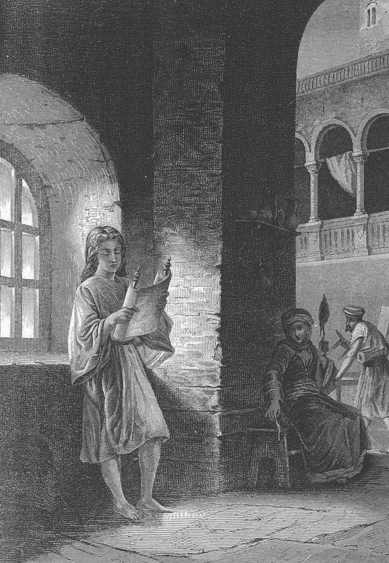
The Child Jesus by Alexandre Bida
"The Child Jesus" - Alexandre Bida
For the next week, we're going to take a Christmas break from our Bible reading schedule to focus on Christmas and the Christmas story.

(We'll still make it reading through the Bible this year, as the schedule we're following has one week of grace built into it!)


TODAY'S SPECIAL: Psalm 85:1-13

TO CHEW ON: "Mercy and truth have met together,
Righteousness and peace have kissed." Psalm 85:10


This meeting of mercy and truth, righteousness and peace playing out in the incarnation has fascinated philosophers and theologians ever since there have been such people. They have tried to understand how it works, argued over its fine points, and parted ways over differences of belief. It is really the point of the whole Bible—the Gospel, good news.  I love how Wayne Grudem sums it up at the end of the chapter "The Person of Christ" in his Systematic Theology:

"It (the incarnation) is by far the most amazing miracle of the entire Bible—far more amazing than the resurrection and more amazing even than the creation of the universe. The fact that the infinite, omnipotent, eternal Son of God could become man and join himself to a human  nature forever, so that infinite God became one person with finite man, will remain for eternity the most profound miracle and the most profound mystery in all the universe" - p. 563.

PRAYER: Dear God, thank You for this mystery and miracle and what it means for me: I have Your mercy, I have peace with You. Thank You!

 *********
Unless otherwise noted all Scripture quotations are taken from the New King James Version®. Copyright © 1982 by Thomas Nelson, Inc. Used by permission. All rights reserved.


Saturday, November 24, 2018

A guard against deception

TODAY’S SPECIAL: 2 Thessalonians 1-3; Psalm 18

TO CHEW ON: “The coming of the lawless one is according to the working of Satan, with power, signs, and lying wonders, and with all unrighteous deception among those who perish, because they did not receive a love of the truth, that they might be saved.” 2 Thessalonians 2:9,10


In this interesting chapter of 2 Thessalonians, Paul gives his readers (who are confused about whether Jesus has already returned) some signs to watch for that will precede “that day.”

  • It will be a time of “falling away”—people losing their faith in Jesus and the gospel - 2 Thessalonians 2:3.
  • A charismatic leader will come on the scene. He will demand everyone’s allegiance, even worship. He will work miracles by Satan’s power - 2 Thessalonians 2:3,4,9,10.
  • People will be gullible because restraint has been removed - 2 Thessalonians 2:6,7. (There are varying opinions about “what is restraining” [vs. 6] and “He [or he] who now restrains” [vs. 7] is—the Holy Spirit, the church, human government. I think it is safe to say whatever that restraining power, God is behind it being in place and then being removed.)
  • People will be ripe for deception because they’ve rejected the truth. Paul’s words are explicit here: “The coming of the lawless one is according to the working of Satan, with all power, signs, and lying wonders, and with all unrighteousness deceptions among those who perish, because they did not receive the love of the truth, that they might be saved.”

What we can take for our lives from this passage is that a love of the truth is a guard against deception. This is more than just a head knowledge or intellectual assent, though. John Piper expresses it well in this sermon on 2 Thessalonians 2:

“Notice: it is not merely an issue of knowing or believing in a merely mental sense: it is an issue of loving….Therefore the only defense against this appeal (signs and miracles of the man of lawlessness) will be a deeper desire for God. If Christ is our portion and our treasure, if he satisfies our longings, and if we love the glory of his gospel, then the mystery of lawlessness will not overcome us, and our love will not grow cold and we will endure to the end and be saved”  
- John Piper, quote from message on the DesiringGod website (emphasis added). Read or listen to entire…

PRAYER: Dear God, help me to know, love, and live by the truth of Your word. Please make me sensitive to deception in whatever form it comes. Amen.

PSALM TO PRAY: Psalm 18

The Bible Project VIDEO: 2 Thessalonians (Read Scripture Series)


*********
Unless otherwise noted all Scripture quotations are taken from the New King James Version®. Copyright © 1982 by Thomas Nelson, Inc. Used by permission. All rights reserved.

Friday, November 02, 2018

The church's brain

brain tree
TODAY'S SPECIAL: 1 Corinthians 11-12; Psalm 146

TO CHEW ON: "For by one Spirit we were all baptized into one body—whether Jews or Greeks, whether slaves or free—and have all been made to drink into one Spirit." 1 Corinthians 12:13


In our physical bodies, there is one organ, I would submit, that is more important than all the others. It is the brain.

The brain is the body's command center. It is only through a properly functioning brain that we see, hear, taste, smell, move about, and think. There is a section in the brain where even our seemingly automatic functions like breathing and heart beating are controlled. We can live minus a hand or foot, eyes or even without our heart and lungs (if we're hooked up to artificial ones) but we can't live without the brain. When someone is "brain dead" the line between death and life has been crossed.

In 1 Corinthians 12:12-31, where Paul likens the church to the body with all its members having differing, complementary, mutually beneficial functions, I think we could say that the Holy Spirit is the brain. He is the life-giver and coordinator of the body of Christ, the church. Here are some things for which the Holy Spirit is responsible:

  • He gives life - John 6:63. Through Him we become part of the body - 1 Corinthians 12:13.
  • The baptism of the Spirit is for each one - Acts 2:3; 10:44; 1 John 2:20.
  • The Spirit gives us assurance that we are part of this body - Romans 8:16.
  • Life in the Spirit is for each one - Galatians 4:6; 1 John 3:24.
  • We are intimately connected to Him - John 14:17.
  • He teaches us - 1 John 2:27. The promise is that in a time of pressure, He'll even give us the words to say - Mark 13:11; Luke 12:12; John 14:26.
  • He guides us into truth - John 16:13.
  • He orchestrated the movements of the Apostles in the early church - Acts 8:39; 10:19,20; 16:6.
  • He appointed individuals for specific tasks - Acts 13:2.

Just like the smooth functioning of a body part is impacted when its connection to the brain is damaged or severed, so our use to the church body is impacted when our connection to the Holy Spirit is interrupted by:
  • Lying to the Spirit (see the story of Ananias and Sapphira in Acts 5).
  • Blaspheming against the Spirit - Mark 3:29.
  • Resisting the Spirit - Acts 7:51.
  • Grieving the spirit - Ephesians 4:30.
  • Quenching the Spirit - 1 Thessalonians 5:19.
  • Insulting the Spirit - Hebrews 10:29.

We are probably unaware of our brain activity—though essential to life. Similarly we may be unaware of the Spirit's work in and through us. But like we sense something amiss in our physical bodies when that connection to the brain is broken or damaged, we may sense something is wrong spiritually when our connection to the Holy Spirit is damaged.

The good news is, this connection can be re-established. It's done not through medicine or surgery, but by confessing our sin and turning from it - Psalm 51:1-11; Ephesians 4:25-32.

PRAYER: Dear Holy Spirit, help me to preserve a healthy connection to You, so I will be a functioning and useful member of the body of Christ on earth. Amen.

PSALM TO PRAY: Psalm 146

*********
Unless otherwise noted all Scripture quotations are taken from the New King James Version®. Copyright © 1982 by Thomas Nelson, Inc. Used by permission. All rights reserved.


Tuesday, June 19, 2018

Will He know you?

TODAY'S SPECIAL: Jeremiah 7-9; Psalm 15

TO CHEW ON:
"'And like their bow they have bent their tongue for lies.
They are not valiant for the truth on the earth.
For they proceed from evil to evil
And they do not know Me,' says the Lord." Jeremiah 9:3


These chilling words from today's focus verse snag my attention: "And they do not know Me." Why does God claim these people — citizens of Judah and members of His chosen race -- don't know Him? In this case the peoples' lies show that they don't know God in any life-changing way.

These words set me on a search to find other places God talks about our estrangement from Him and His from us.

Jesus echoes the sentiment from Jeremiah in Matthew 7 when he says that those who do the will of God are the ones God recognizes:

“Not everyone who says to Me, ‘Lord, Lord,’ shall enter the kingdom of heaven, but he who does the will of My Father in heaven. Many will say to Me in that day, ‘Lord, Lord, have we not prophesied in Your name, cast out demons in Your name, and done many wonders in Your name?’ And then I will declare to them, ‘I never knew you; depart from Me, you who practice lawlessness!’ (Matthew 7:21-23 - emphasis mine).

Jesus also talks plainly about not knowing those who try to come to God in any but the given way - the "narrow gate":

Then one said to Him, “Lord, are there few who are saved?”
And He said to them, 'Strive to enter through the narrow gate, for many, I say to you, will seek to enter and will not be able. When once the Master of the house has risen up and shut the door, and you begin to stand outside and knock at the door, saying, ‘Lord, Lord, open for us,’ and He will answer and say to you, ‘I do not know you, where you are from,’ then you will begin to say, ‘We ate and drank in Your presence, and You taught in our streets.’ But He will say, ‘I tell you I do not know you, where you are from. Depart from Me, all you workers of iniquity.’ "(Luke 13:23-27 - emphasis mine).

There is a disturbing trend in modern Christianity to dilute Christ's claim that He is the only way to God. Perhaps it seems too narrow, exclusive, and intolerant. Or maybe it comes from a desire for novelty and finding a new and improved way to connect with God. The result is a tendency toward syncretism, a blending of our worship of God with the practices of other religions. It borrows from various faith streams to make a hybrid way to God, which includes Christ and/or a little meditation, asceticism, mysticism etc. These practices are rooted in Gnosticism and eastern religions such as Buddhism, Hinduism, Shintoism etc.

In this context the warning words of Moses ring across the ages. They apply to the church today:

“When the LORD your God cuts off from before you the nations which you go to dispossess, and you displace them and dwell in their land, take heed to yourself that you are not ensnared to follow them, after they are destroyed from before you, and that you do not inquire after their gods, saying, ‘How did these nations serve their gods? I also will do likewise.’ You shall not worship the LORD your God in that way..." (Deuteronomy 12:29-31a - emphasis mine).

In our quest for a new and improved way to connect with God, to experience spiritual thrills and chills, let's be ever aware of Jesus' words: "I am the way, the truth, and the life. No one comes to the Father except through Me" (John 14:6).

PRAYER: Dear God, at the end of my life I do not want to hear You say, "I do not know you." Please alert me, by Your Spirit, to disobedience and wandering in me. Amen.

PSALM TO PRAY: Psalm 15

***************
Unless otherwise noted all Scripture quotations are taken from the New King James Version®. Copyright © 1982 by Thomas Nelson, Inc. Used by permission. All rights reserved.

Monday, June 04, 2018

When the wise speak

Curse
TODAY'S SPECIAL: Proverbs 7-9; Psalm 150

TO CHEW ON: "Listen, for I will speak of excellent things,
And from the opening of my lips will come right things." Proverbs 8:6


One of my favourite down-time activities is to watch reality shows on the Food Network. I love the contestants' ingenuity with food and seeing the amazing creations they come up with in limited time. But there is one thing I don't enjoy—the profanities used by many contestants. The beeper is busy and still some leak through.

These brilliant cooks may be wise about food but according to the writer of today's reading, could they be lacking in other wisdom? For wisdom here identifies herself largely by what comes out of one's mouth.

What does come out of the mouth of a wise person?

Right things, excellent things, truth, words spoken with righteousness, nothing perverse or crooked, plain understandable speech, instruction, knowledge.

The Bible speaks of speech in other places too:

  • A wise person "spares his words"  and is "of a calm spirit" - Proverbs 17:27.
  • Jesus advises us to make simple promise which are kept - Matthew 5:37.
  • Paul tells the Colossians that their speech should be "always with grace" - Colossians 4:6.
  • However, James reminds us that none of us is perfect in this department - James 3:2-18.

Oops! Maybe I'd better take a closer look at myself. What is my speech like when I get upset, am under pressure, on the offensive? Always gracious and excellent? Never perverse? I know too that unwise words nurtured in my thoughts may one day spill out. Perhaps I'd better attend to my own unwise thoughts and words before I point fingers at others.

What about you?

PRAYER: Dear God, help me with my pesky tongue. Actually, help me to go one step back and root out unwise thoughts that, if allowed to grow, will produce a harvest of unwise words. Amen. 

PSALM TO PRAY: Psalm 150


***********

The Holy Bible, New King James Version Copyright © 1982 by Thomas Nelson, Inc. - Used with permission.


Friday, April 27, 2018

Truth—is there such a thing?

Image: Pixabay

TODAY’S SPECIAL: Isaiah 36-38; Psalm 117

TO CHEW ON:
“For His merciful kindness is great toward us,
And the truth of the LORD endures forever.” Psalm 117:2


Our reading today contains the shortest chapter in the Bible (Psalm 117). But its subject is neither small nor transitory but vast and eternal: “The truth of the LORD endures forever.” 


The Hebrew word for “truth” is  - emeth: sureness, reliability, stability, continuance, faithfulness. It includes truth as spoken; of testimony and judgment; of divine instruction; truth as a body of ethical or religious knowledge; true doctrine.

The English dictionary’s first three definitions of truth are: 1] The true or actual state of a matter; 2] Conformity with fact or reality; 3] A verified or indisputable fact, proposition, principle or the like.


This sounds cut-and-dried. However, truth has come to have a muddied meaning in our culture. We talk about “your truth” and “my truth.” If something seems true to you, it’s your truth, and has as much validity as my truth. Many scorn the possibility of, especially, objective moral truth—something that’s true despite human opinion. (The article “Objective truth is one thing but objective moral truth is another” by J. Warner Wallace discusses this subject.)

The Bible's use of truth, however, would lead us to believe that it exists independent of human opinion and acceptance. Here are some of the facets of truth found just in some Psalms that use the same Hebrew word for truth that's used in our passage.

Truth is:


  • Found in God - Psalm 86:15.
  • Intrinsic in all of God’s initiatives: the “works of His hands” (Psalm 111:7,8; Psalm 57:10; 85:10,11; 108:4) and his communication (“precepts”) - Psalm 111:7-8.
  • Identified with God’s judgments, laws, commandments, and word - Psalm 19:9; 119:142, 151, 160.
  • Mankind’s salvation and preservation - Psalm 69:13; 40:10,11.
  • Inspiration to worship - Psalm 43:3.
  • The subject of human praise - Psalm 71:22; 115:1.In fact, truth evokes praise from  all people on earth - Psalm 117:1,2 (our today’s reading).
  • A quality God wants to find within us - Psalm 51:6
  • A path we can follow and walk in - Psalm 25:10; 26:3.
  • Something we can speak - Psalm 119:43
 Let's make our lives a search for and pursuit of God's truth!

PRAYER: Dear Father, help me to recognize and acknowledge Your truth, and make it the foundation of my life. Amen. 

PSALM TO PRAY: Psalm 117

 *********
Unless otherwise noted all Scripture quotations are taken from the New King James Version®. Copyright © 1982 by Thomas Nelson, Inc. Used by permission. All rights reserved.


Wednesday, February 21, 2018

Write your way through feeling to faith

TODAY'S SPECIAL: Numbers 35-36; Psalm 52

TO CHEW ON: "But I am like a green olive tree
in the house of God;
I trust in the mercy of God forever and ever.
I will praise You forever,
Because You have done it;
And in the presence of Your saints
I will wait on Your name for it is good." Psalm 52:8-9

When I journal, I often find myself using David's method of writing the psalms. He starts with troubled thoughts, spilling them all onto the page—the distress, the anger, the outrage, the desire for revenge. (When he wrote these, I wonder if he had any idea that thousands of years later people would still be reading and finding comfort and enlightenment.) Then he writes his way back through his feelings to faith in God.

Psalm 52 is such a cathartic entry. According to an epigram in my Bible, it is a "Contemplation of David when Doeg the Edomite went and told Saul and said to him, 'David has gone to the house of Ahimelech." The story, (found in 1 Samuel 21 and 22) is of the time David was running from King Saul. Saul, jealous of David's popularity and fearful that the people would want him to be their king, was trying to kill him.

David went from his hideout to the town of Nob to get food for his men from Ahimelech the priest. Doeg, a servant of Saul's, saw him and reported to Saul that Ahimelech had helped David. Saul summoned Ahimelech and his sons, scolded them for helping his enemy and ordered them all killed. Doeg did the deed. He even went so far as to  kill the families of Ahimelech and his sons.

Is it any wonder David cries, "God shall likewise destroy you (probably referring to Doeg) forever. He shall take you away and pluck you out of your dwelling place and uproot you from the land of the living"?

But his focus doesn't stay on the villain. Instead, he writes his way back to mental and spiritual tranquility as he expresses his trust in God. He reminds himself of his position as God's responsibility: "I am like a green olive tree in the house of God," and the attributes of the God he worships:  "I trust in the mercy of God forever and ever. I will praise You forever…. I will wait on Your name, for it is good" (vs. 8-9).

Are you troubled and distressed about something that's going on in your life? Try David's way of talking yourself down from whatever ledge you're on by writing about it. Any ordinary scribbler will do as a journal. As you diarize your path from feeling to faith, you may be writing your very own psalms. They may someday encourage someone else. Even if they don't, looking back on the experience of finding your way back to faith in God will buoy you up

PRAYER: Dear God, thank You for the writings of David that show me it's normal to experience the gamut of emotions and okay to express them. As I do this, please help me, by Your Spirit, to find my way to truth and trust. Amen.

PSALM TO PRAY: Psalm 52

MORE: Spiritual Journals

If journaling, or the thought of keeping a spiritual journal is new to you, here are a few links to give you ideas of how to go about it:

"How to Develop a Spiritual Journal"

"Journal for You" (page contains links to more resources)

*********
Unless otherwise noted all Scripture quotations are taken from the New King James Version®. Copyright © 1982 by Thomas Nelson, Inc. Used by permission. All rights reserved.

Tuesday, February 20, 2018

Discovering the truth about ourselves

David and Nathan - Matthias Scheits
"David and Nathan" - Matthias Scheits
TODAY'S SPECIAL: Numbers 33-34; Psalm 51

TO CHEW ON: "Behold You desire truth in the inward parts,
And in the hidden part You will make me know wisdom." Psalm 51:6


David prayed this prayer after the uncanny experience of having Nathan the prophet come to him and expose his sin with Bathsheba (2 Samuel 12).

Had Nathan caught him in the act?

No. It was God who revealed David's sin to Nathan—the God who:
  • spotted Noah as righteous - Genesis 7:1.
  • whispered the secrets of Saul to Samuel - 1 Samuel 9:19.
  • alerted Elisha to Gehazi's sin of lying to Naaman - 2 Kings 5:26.
  • kept Jesus in-the-know about the thoughts and attitudes of those around Him - Matthew 22:18; Mark 2:8; Luke 6:8; 11:17.
  • gave the disciples confidence to offer the gospel to the Gentiles - Acts 15:8.

But David was a Spirit-filled man, wasn't he? Why did God need to send someone else to tell him how displeasing his sin was?

Perhaps because his involvement in that sin had opened him up to deception. Whenever his sin bothered him, which it no doubt did, he silenced the pangs of conscience or the voice of God with, 'It's no big deal' or, 'I had no other option,' or any number of other excuses we too give for committing sin. Then it took someone else, someone who heard God's voice clearly, to bring him to his senses. It was only after Nathan confronted him that he confessed to his sin (2 Samuel 12: 7,13).

God wants us to be just as scrupulously honest with ourselves—to live in truth at the deepest level. He can show us the state of our hearts. I love another David psalm where he prays: "Search me O God, and know my heart; Try me and know my anxieties; And see if there is any wicked way in me, And lead me in the way everlasting" - Psalm 139:23,24.

But if we insist on living in deception, God can also send someone—our own Nathan—to tell us the truth about ourselves. The question is, will we be as receptive to such an exposé as David was? However it happens may we be as quick to acknowledge our sin and repent.

PRAYER: Dear God, please alert me to self deception. I want to have a life of truth and wisdom. Amen.

PSALM TO PRAY: Psalm 51

MORE:  Repentance
"Repentance always brings a man to this point: I have sinned. The surest sign that God is at work is when a man says that and means it. Anything less than this is a remorse for having made blunders, the reflex action of disgust at himself.

The entrance into the Kingdom is through the panging pains of repentance crashing into a man's respectable goodness; then the Holy God, who produces these agonies, begins the formation of the Son of God in the life. The new life will manifest itself in conscious repentance and unconscious holiness, never the other way about" - Oswald Chambers, My Utmost for His Highest, October 7 reading.

*********
Unless otherwise noted all Scripture quotations are taken from the New King James Version®. Copyright © 1982 by Thomas Nelson, Inc. Used by permission. All rights reserved.
 

Friday, January 12, 2018

Surrounded by Favour

Image: Pixabay
TODAY’S SPECIAL: Genesis 38-40

TO CHEW ON:
“So Joseph found favour in his (Potiphar’s) sight and served him. Then he made him overseer of his house, and all that he had he put under his authority.”  Genesis 39:4.

“But the LORD was with Joseph and showed him mercy and He gave him favour in the sight of the keeper of the prison.” Genesis 39:21


One of the notable things of Joseph’s life was the favour that was upon it. This favour was evident despite his circumstances. We read he found favour with his Egyptian boss, Potiphar, then later with the prison keeper, and eventually with Pharaoh himself. What is this “favour” that surrounded his life?

The English word “favour” (noun) has many definition nuances. Quoting the first three definitions from Dictionary.com,  favour is:
1] something done out of good will rather than from justice of remuneration.
2] friendly or well-disposed regard.
3] the state of being approved or held in regard

The Hebrew word translated “favour” is chen, also translated grace, elegance, and acceptance.


A look at some other places the Bible speaks of “favour” helps us understand its dynamics. We see that:
  • God’s favour can be seen on someone’s life as early as childhood. That was the case with Samuel (1 Samuel 2:26) and Jesus (Luke 2:52).
  • Favour can be part of one’s inheritance. God favoured Israel because of His covenant with their patriarchs (2 Kings 13:23).
  • David praises God for His presence, which brings favour (Psalm 21:6).
  • The writer of Proverbs connects favour with mercy and truth (Proverbs 3:3,4), finding wisdom (Proverbs 8:35), goodness (Proverbs 12:2), and living in ways that please God (Proverbs 16:7).

I like Barbara Billett’s description of the potency of God’s favour:
“The favour of God will open doors that men say are impossible to open. It will change regulations and give you preferential treatment to get you where God wants you to go (Esther 2:17; 5:8; 8:5). … Favour will … cause you to be noticed and cause people to be drawn to you like a magnet” - Barbara Billett, Praying With Fire, p. 88.

God’s favour is something we long for. Let’s pray for favour for us and our children. Let’s pay attention to the principles of Godly living connected with receiving it. But let’s also desire it for the right reasons—not for personal gain or promotion but so that we will be in positions of usefulness for God’s kingdom and glory.

PRAYER: Dear Father, thank You for Your favour on my life and the life of my family, seen in many ways. I pray that it will increase so that I will realize the purpose and destiny for which You have placed me here on earth. Amen.


PSALM TO PRAY: Psalm 12

 *********
Unless otherwise noted all Scripture quotations are taken from the New King James Version®. Copyright © 1982 by Thomas Nelson, Inc. Used by permission. All rights reserved.

Thanks for reading! This year we are using The Bible Project "Timeless Reading Plan" to read through the Bible in 2018. If you'd like to read along in your own Bible, you can download a pdf of the reading plan HERE.

Saturday, December 30, 2017

Discerning truth and error

Image: Pixabay
TODAY’S SPECIAL: 2 JOHN 1-13

TO CHEW ON: “Whoever transgresses and does not abide in the doctrine of Christ does not have God. he who abides in the doctrine of Christ has both the Father and the Son.” 2 John 9


This short book/letter of only 13 verses is nevertheless deep and thought provoking. Its key words are “love” (four occurrences) and “truth” (five occurrences). Its main themes are truth and error—concepts we’d expect to see addressed by the philosophical Apostle John. With efficiency John lays out the territory of each.

What is truth and how does it relate to the believer? *
  • It unites them in fellowship - 2 John 1
  • It lives in them forever - 2 John 2.
  • They remind each other of the truth they believe and affirm it in their greeting of each other - 2 John 3.
  • It manifests itself in their obedience to God - 2 John 4-6.  

What is error?
  • Its advocates are deceitful - 2 John 7.
  • They deny Christ’s incarnation - 2 John 7.
  • They ignore the teachings of Jesus and disobey Him - 2 John 9.
  • They are to be guarded against, even shunned (John tells his readers to not even invite them into their homes) - 2 John 8, 11.

In our time when a smorgasbord of Bible teaching is available through books and online, maybe we should keep some of John’s points in mind as we evaluate who speaks truth and whose teachings come with shades of deceit and error. Some questions we might ask as we evaluate what we read and hear:
  • Does this teacher acknowledge the deity of Jesus?
  • Does he/she teach what Jesus taught, or are they selective, leaving out controversial bits?
  • Is their teaching clear or filled with questions and an unwillingness to state clearly what they believe (so that what they really believe remains fuzzy; we can’t pin them down)?
  • What does their lifestyle say about their beliefs?

Such spiritual perception implies a familiarity with the Bible and Jesus' teachings on our part in the first place, so we can tell what’s off. Let’s be studious and biblically literate so we can be discriminating in choosing what teachers to put ourselves under.

PRAYER: Dear Father, please fill me with Your Spirit of wisdom so I will recognize truth and error. Amen.

* These points are taken from the Study Notes on 2 John from the NKJV Thompson Chain Bible, p. 2099.

 *********
Unless otherwise noted all Scripture quotations are taken from the New King James Version®. Copyright © 1982 by Thomas Nelson, Inc. Used by permission. All rights reserved.


Wednesday, December 27, 2017

Darkness

TODAY'S SPECIAL: 1 John 1:1-2:2

TO CHEW ON: "If we say that we have fellowship with Him and walk in darkness, we lie and do not practice the truth." 1 John 1:6

I live on a part of the planet in which, during this season, darkness is increasing daily. I'm talking about life in the northern hemisphere and physical darkness which, from June 21st to December 21st (this year), progressively takes over more of each day. Thus I am no stranger to darkness and can say without hesitation, I prefer light.

The Bible is full of talk about light and dark. Metaphorically light equals life with God and everything good. Today let's look briefly at what the Bible says about the dark.

First a definition: [Darkness - scotia - is gloom, evil, sin, obscurity, night, ignorance, moral depravity. The NT especially uses the word in a metaphorical sense of ignorance of divine truth, man's sinful nature, total absence of light and a lack of spiritual perception. Light equals happiness. Scotia as spiritual darkness basically equals everything earthly or demonic that is at enmity with God" - "Word Wealth" - New Spirit-Filled Life Bible, p. 1467.]

A brief stroll through the Bible illustrates some of the things darkness signifies.

  • Losing one's way: "...they shall walk like blind men..." - Zephaniah 1:17; "In the darkness they shall be driven on and fall in them" - Jeremiah 23:12; "They are blind leaders of the blind...both will fall into a ditch" - Matthew 15:14; "But if one walks in the night, he stumbles, because the light is not in him" John 11:10.
  • Imprisonment: "Say to the prisoner, 'Go forth, to those who are in darkness, 'Show yourself' - Isaiah 49:9.
  • Death: "...Those who sat in darkness and in the shadow of death..." - Psalm 107:10
  • Natural human preference: "...men loved darkness rather than light" - John 3:19.
  • Consequences: - "Therefore you shall have night without vision. And you shall have darkness without divination" - Micah 3:6; "There will be no light" - Zechariah 14:6; "If your eye is bad, your whole body will be full of darkness" - Matthew 6:23.
  • Competition: "And the Light shines on in the darkness, for the darkness has never overpowered it [put it out or absorbed it or appropriated it, and is unreceptive to it]" - John 1:5 AMP (See also Psalm 139: 11-12.)
  • Choice: "...cast off the works of darkness" and "put on the armour of light" - Romans 13:12; "Walk as children of light" - Ephesians 5:8.
  • Opposite (of all God stands for): "...God is light and in Him is no darkness at all" - 1 John 1:5

And it is here John brings us to a point of confrontation when he says, "If we say that we have fellowship with Him and walk in darkness, we lie and do not practice the truth" 1 John 1:6.

Let's examine our lives today for such darkness. Then let's bring any and all of it into the light so we can live with integrity before God and people.

PRAYER: Dear God, please show me where I'm hiding a dark past, storing dark attitudes, and still doing dark actions. Help me to "cast off the works of darkness and put on the armour of light." Amen.

MORE: Feast of St. John
Today the church celebrates the Feast of St. John the Apostle. The day's liturgy begins with this prayer:

Shed upon your Church, O Lord, the brightness of your light, that we, being illumined by the teaching of your apostle and evangelist John, may so walk in the light of your truth, that at length we may attain to the fullness of eternal life; through Jesus Christ our Lord, who lives and reigns with you and the Holy Spirit, one God, for ever and ever. Amen.
*************
Unless otherwise noted all Scripture quotations are taken from the New King James Version®. Copyright © 1982 by Thomas Nelson, Inc. Used by permission. All rights reserved.

Bible Drive-Thru


Friday, October 20, 2017

All knees will bow

TODAY'S SPECIAL: Isaiah 45:14-25

TO CHEW ON: "I have sworn to Myself;
The word has gone out of My mouth in righteousness,
And shall not return,
That to Me every knee shall bow,
Every tongue shall take an oath." Isaiah 45:23

Our reading today is a continuation of Isaiah's prophecy to Cyrus—a Persian king who would not be born for about another 100 years. The way Isaiah addresses him by name (Isaiah 45:1) has caused some scholars to question whether Isaiah really wrote this prophecy. Of course, people who believe in the supernatural character of prophecy and the divine inspiration of Scripture have no trouble trusting that God can make such predictions.

Today we read how Cyrus will dominate Egypt and Arabia (the Sabeans) (Isaiah 45:14). But he will prove to be God's instrument of freedom for the exiled Jews in Babylon (Isaiah 45:17).

This prophecy was fulfilled. In 539 B.C. Cyrus came to power. First he returned the temple valuables to the Jews (the Babylonians had taken them, along with the people, when they looted Jerusalem) and let some exiles return to rebuild the temple. Eventually he let them all return to their land. The book of Ezra is the story of that return. (Read Cyrus's decree in Ezra 1:1-5.)

From predicting the specifics of using Cyrus for His purposes, God declares (through Isaiah) His dominion over all the earth.
- He is the only God - Isaiah 45:21.
- He is the only Saviour - Isaiah 45:22
- It is only to Him that every knee will bow and tongue take an oath (of allegiance) (Isaiah 45:23, see also Philippians 2:9-11).

As a citizen of a nation that prides itself on tolerance, openness to, and acceptance of any and all religious creeds as equally true, I find myself, despite knowing better, cringing at such bold pronouncements. The way I have been influenced by my prevailing culture demonstrates how I need as much faith to believe this as the Israelites did at the time it was spoken. 

The Hebrews of the exodus needed faith that God had sent Moses and that he would indeed lead them out of Egypt, slavery and eventually to the Promised Land.

The Jews of the Babylonian exile needed faith that Yahweh was God over the idols of their captors.

We in our time need faith that the God of the Bible is who He says He is and will show Himself the only God, in the face of our culture's intolerance toward claims of objective truth.


PRAYER: Dear God, I believe You when You say that every knee will someday bow to You and every tongue confess that You are Lord. Help me to work out what this means in regard to how I interact with people all around me who don't believe. Amen.

**********
Unless otherwise noted all Scripture quotations are taken from the New King James Version®. Copyright © 1982 by Thomas Nelson, Inc. Used by permission. All rights reserved.

Saturday, August 19, 2017

"... in whom is the Spirit of God"

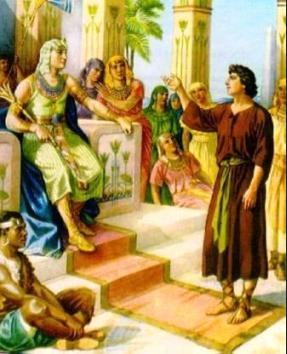
Pharaoh & Joseph - Artist unknown
TODAY'S SPECIAL: Genesis 41:-25-52

TO CHEW ON: "And Pharaoh said to his servants, 'Can we find such a one as this, a man in whom is the Spirit of God?'" - Genesis 41:38


The answer to Pharaoh's rhetorical question—'No we can't find another man like this'—led to Joseph rising in one day from a prisoner to Pharaoh's assistant. Pharaoh recognized there was something different about this man. He identified it as "the Spirit of God" (some scholars say that the correct translation should be "the spirit of a god").

The possibility of God's Spirit living in people is a theme that runs through both Old and New Testaments.

  • The prophet Ezekiel promised it for help in keeping God's laws - Ezekiel 36:27.
  • Like Joseph, Daniel's ability to tell the meanings of dreams came from the Spirit of God - Daniel 4:8.
  • Jesus called Him the Spirit of truth who dwells with and in disciples - John 14:17.
  • Paul talked about how we can overcome the carnal nature through the Spirit's indwelling presence - Romans 8:9.
  • The Spirit helps us to do the good we know we should - 2 Timothy 1:14.
  • He teaches us - 1 John 2:27.
  • In fact, He lives in us. We are His "temple" - 1 Corinthians 3:16; 6:19.

What an awesome privilege to welcome into the home of our feeble, failing bodies the Spirit of the living God. Let's meditate on, claim, and live in this amazing truth as we go through this day!

PRAYER: Dear God, thank You for making possible this way of experiencing You. Help me not to quench or inhibit Your work in my life through Your Spirit today.  Amen.

 *********
Unless otherwise noted all Scripture quotations are taken from the New King James Version®. Copyright © 1982 by Thomas Nelson, Inc. Used by permission. All rights reserved.

**********
Subscribe to my newsletter. Next one coming September 1st. 

Get book recommendations, Bible study tips, and author news.

Sign up below:


Wednesday, July 12, 2017

Eternally settled, exceedingly broad

TODAY'S SPECIAL: Psalm 119:81-96

TO CHEW ON: "Forever, O Lord,
Your word is settled in heaven....
Your commandment is exceedingly broad." Psalm 119:89,96

Asking one to accept the eternal verity of any set of facts or truths in our day of advancing knowledge and shifting values seems nervy. Yet that's what the psalmist declares here — the eternal certainty of God's word.

Contrast this with the way standards change all around us. For example, when I was growing up there was no whisper of the possibility of homosexual people marrying. Now you can lose your job if you take a stand against such marriages. That's only one example of others we could give.

In contrast to the shifting and changing of "truth" around us, God's words are "forever...settled in heaven." J. I. Packer says God's words to us "...are the index of reality. They show us things as they really are, and as they will be for us in the future according to whether we heed God's words to us or not" - Knowing God, p. 124.

The second verse I've picked to focus on says that God's words are also "exceedingly broad." Broad enough to speak to every aspect of life? I would say yes.

Nancy Pearcey says:

"To say that Christianity is the truth about total reality means that it is a full-orbed worldview. The term means literally a view of the world; a biblically informed perspective on all reality. A worldview is like a mental map that tells us how to navigate the world effectively. It is the imprint of God's objective truth on our inner life....God's word becomes a set of glasses offering a new perspective on all our thoughts and actions" - Total Truth, p. 23,24

Whether we are aware of it or not, each one of us has a worldview. Let's be watchful that ours is based on the truth of God's eternally settled, exceedingly broad word.


PRAYER: Dear God, thank You for Your word. Help me to study it, understand its implications for my life, and then apply it in obedience. Amen.


MORE: Thinking Christianly
"'Thinking Christianly' means understanding that Christianity gives the truth about the whole of reality, a perspective for interpreting every subject matter. Genesis tells us that God spoke the entire universe into being with His word — what John 1:1 calls the Logos. The Greek word means not only Word but also reason or rationality, and the ancient Stoics used it to mean the rational structure of the universe.
Thus the underlying structure of the entire universe reflects the mind of the Creator. There is no fact/value dichotomy in the scriptural account. Nothing has an autonomous or independent identity, separate from the will of the Creator. As a result, all creation must be interpreted in light of its relationship to God. In any subject area we study, we are discovering the laws or creation ordinances by which God structured the world" - Nancy Pearcey, Total Truth, p. 34.

***************
Unless otherwise noted all Scripture quotations are taken from the New King James Version®. Copyright © 1982 by Thomas Nelson, Inc. Used by permission. All rights reserved.


Bible Drive-Thru


Friday, June 30, 2017

Leaders who lie

Hananiah confronting Jeremiah - St. Takla.org
TODAY’S SPECIAL: Jeremiah 28:1-17

TO CHEW ON: “‘As for the prophet who prophesies of peace, when the word of the prophet comes to pass, the prophet will be known as the one whom the LORD has truly sent.’” Jeremiah 28:9

In today’s reading, we witness a showdown between two prophets, Jeremiah and Hananiah. The drama becomes even more tense when we’re aware of its context.

Nebuchadnezzar, Babylon’s king, was gaining power. His army had already swept into Jerusalem and taken away many temple accessories. He was adding other nations to his kingdom as well. In Jeremiah 27:2, God told Jeremiah to put on “bonds and yokes” to symbolize Judah’s subservience to Babylon. And God told Jeremiah to advise the people not to resist Nebuchadnezzar, for those nations that “bring their necks under his yoke” would be able to stay in their land - Jeremiah 27:11.

There were more prophets than Jeremiah in Judah. They were obviously contradicting what Jeremiah had said, because at least four times in Jeremiah 27 God told him not to listen to these prophets (Jeremiah 27:9, 14, 16, 17).

In Jeremiah 28, then, we witness a showdown between one of the nay-saying prophets, Hananiah, and Jeremiah. Who was Hananiah?
  • He was born of good prophetic stock - Jeremiah 28:1.
  • He sounded like a prophet with his “Thus says the Lord” - Jeremiah 28:2,11.
  • He even acted like a prophet, dramatically taking the wooden yoke God had told Jeremiah to wear from off his neck and breaking it - Jeremiah 28:10.

Jeremiah wished what Hananiah said was true: “'Amen! The LORD do so; the LORD perform your words…'" etc. - Jeremiah 28:6. But keeping in mind God’s warning to him and the tenor of prophecies delivered previously, Jeremiah expressed his doubts - Jeremiah 28:8,9.

Later God came to Jeremiah and told him that Hananiah was indeed a false prophet and to relay to him that his act of freeing Jeremiah from the wooden yoke only strengthened Nebuchadnezzar’s grip on the nation under an iron yoke. Also, because Hananiah was deluding the people, he would die within the year - Jeremiah 28:13-16

It happened - Jeremiah 28:17.

What a chilling story! What is there here for us to learn? Four things come to mind:
  • Just because someone comes from a line of ministers and sounds like one doesn’t mean he’s reliable.
  • It’s a modern tendency too for leaders and people in ministry to tell people what they want to hear. Modern examples: there’s no hell; God is OK with sexual perversion.
  • Given time, what is true will distinguish itself from the false: “… when the word of the prophet comes to pass, the prophet will be known as one whom the LORD has truly sent” - Jeremiah 28:9.
  • In this era of the Bible and the Holy Spirit available to all believers, we need the teaching of the whole Bible, applied under the direction of the Holy Spirit to discern what is true and what is a lie.


PRAYER:
Dear Father, help me not to be taken in by smooth speakers whose message is appeals to my human preferences and wishes. Please give me the discernment to recognize what is true and what is false. Amen.

 *********
Unless otherwise noted all Scripture quotations are taken from the New King James Version®. Copyright © 1982 by Thomas Nelson, Inc. Used by permission. All rights reserved.


Sunday, May 21, 2017

A home for God

TODAY'S SPECIAL: John 14:15-31

TO CHEW ON: "Jesus answered and said to him, 'If anyone loves Me, he will keep My word; and My Father will love him and We will come to him and make Our home with him.'" John 14:23

What a delightful possibility—to make a home with God, to have God make His home with us. This is what we have when we have the Holy Spirit. Our passage today gives us some ideas of what God at home with us is like.


1. We live with a Helper - John 14:16, 26
[Helper - parakletos 3875. Para = beside. Kaleo = to call. Called to one's side, intercessor, comforter, helper, advocate, counsellor. In nonbiblical literature parakletos had the technical meaning of an attorney who appears in court in another's behalf. The Holy Spirit leads believers to a greater apprehension of gospel truth. In addition to general help and guidance, He gives the strength to endure the hostility of the world system. - New Spirit-Filled Life Bible, p. 1472.]
What are some of the ways He helps us? He will teach all things and bring Jesus' sayings to mind. For the disciples one way this promise was fulfilled was by the Holy Spirit bringing to mind the sayings of Jesus so Matthew, Mark, Luke and John could write them down in the Gospels. For us, it is words, ideas, songs, and memorized Scriptures that come to mind to encourage us in everyday life.


2. We live with truth - John 14:17
When the Holy Spirit lives with us we have within us a spiritual and moral compass based on what is real, true and unchanging. No longer is there any question about whether it's okay to lie, cheat, spread gossip, or nurture jealousy and unforgiveness.

3. We live with family - John 14:19-20
Jesus said, "I will not leave you orphans," implying that when He imparts the Holy Spirit, He comes with an aspect of family—of parenting. He also said, "I am in My Father and you in Me and I in you." This reminds us of how we carry the characteristics of our ancestors in our very DNA. Oh that we would carry God's characteristics in our makeup to that extent!


4. We live in a mutual relationship - John 14:21, 23-24
Our mutual relationship with God is characterized by revelation and love on the Father's part, obedience and love on our part. Revelation comes through His commandments (God's word - the Bible) and His promise to "manifest" Himself to us. We keep our end of the relationship when we become familiar with and obey His words, and thus demonstrate that we really do love Him.

A home is not made in a day. It is something that lasts and can endure a lifetime of day-to-days, of experiences, of walking through life together. That's what God wants to do with us—make a home with us, do life with us.

PRAYER: Dear God, thank You for the Holy Spirit — in a way the oxygen, blood and synapses of my life with You. Help me to be a worthy, compliant and obedient host for Your life in me. Amen.

MORE: My Heart Christ's Home

I have in my packrat collections, a little booklet called "My Heart Christ's Home" by Robert Boyd Munger. A few years ago, I posted several sections of it on my personal blog promptings. Munger has done a wonderful job of extending the metaphor of our life being a home for God. The booklet is longer than these two sections, but they will give you an idea:

Heart cleaning — the library

Heart cleaning — the dining room

**********

Unless otherwise noted all Scripture quotations are taken from the New King James Version®. Copyright © 1982 by Thomas Nelson, Inc. Used by permission. All rights reserved.

Saturday, January 28, 2017

The Key to God's wisdom

Jesus Baptism - Artist unknown

"... and a voice came from heaven which said, 
'You are My beloved Son; in You I am well pleased.'" Luke 3:22

TODAY'S SPECIAL: 1 Corinthians 1:18-31

TO CHEW ON: "For the Jews request a sign, and the Greeks seek after wisdom; but we preach Christ crucified, to the Jews a stumbling block and to the Greeks foolishness, but to those who are called, both Jews and Greeks, Christ the power of God and the wisdom of God." 1 Corinthians 1:22-24


If Paul wrote to us moderns today he would still be bang-on. For we still search all over the place—from old religions to nature, outer space to inner thoughts—for spiritual reality and truth. It seems we're willing to accept anything but Jesus.

However, it's in Jesus, Paul tells us, that God's opinion on the matter is in full display: "…but we preach Christ … the power of God and the wisdom of God."

[To be wise is to see clearly what is right and just, to have sound judgment, to be shrewd and calculating. When someone has wisdom they act according to their true and right discernment so that what they do is conformed to and dictated by it - paraphrased from Funk & Wagnalls Dictionary.]

In other words, wisdom acts. So we might say that if Christ is the wisdom of God, the reality of the matter is we humans needed a saviour—Someone to pay the penalty of our sin, that Someone not a sinner Himself,  that Someone being Jesus Christ (1 Peter 3:18).

Once we've bought into this and accepted Christ's substitutionary atonement, applying God's wisdom to our lives doesn't end. For the wisdom of God, seen in Jesus, now becomes part of us as we live under the direction of the Holy Spirit. How?

Through God's Word, the Bible (2 Timothy 3:15). In it we discover not only how to be saved but how the means of our salvation—Jesus, God's wisdom incarnate—lived, the things He demonstrated and taught about what is important and what isn't, what is true riches and what will disappoint, what will last and what will decay, etc.

I love how Leslyn Musch sums it up in the "Truth-In-Action Through 1 Corinthians" article:
"As believers we are made righteous and holy in Jesus alone. Corinthians tells us that, having been sanctified, we are called to live holy lives. Holy living requires that we rely fully on the Lord's wisdom and not the wisdom of the world. … Find true wisdom, power, and holiness in Jesus. Reject living in your own wisdom and ability" - New Spirit-Filled Life Bible, p. 1606 (emphasis added).

Let's let Paul have the last word:

"He (Christ) is the key that opens all the hidden treasures of God's wisdom and knowledge" Colossians 2:3 GNT.


PRAYER: Dear God, thank You for Your wise, all-encompassing plan of sending Jesus to be and show Your wisdom. Help me, through the Holy Spirit, to translate what I see in Him and read about His teachings into my life. Amen. 

***********

Unless otherwise noted all Scripture quotations are taken from the New King James Version®. Copyright © 1982 by Thomas Nelson, Inc. Used by permission. All rights reserved.

Scripture quotations marked GNT are taken from the Good News Translation® (Today’s English Version, Second Edition). Copyright © 1992 American Bible Society. All rights reserved. 


Friday, January 27, 2017

Your words = your character

Image: Pixabay
TODAY’S SPECIAL: Psalm 15:1-5

TO CHEW ON:
“Who may abide in Your tabernacle? … He who … speaks truth in his heart.” Psalm 15:1,2


In this short psalm, titled in my Bible “The Character of Those Who May Dwell with the LORD,” it is interesting to note how many of these items that show off character involve speech.

A person of good character, according to David, demonstrates it largely by what he or she says and doesn’t say. A person of good character:
  • Cultivates a truthful heart.
Character starts with what we say to ourselves: “LORD, who may abide in Your tabernacle? … He who … speaks truth in his heart” (Psalm 15:1,2). We must begin by speaking honestly with ourselves and, from that inner place, acknowledge and agree with God in what He says about Himself and us.

  • Does not “backbite with his tongue” - Psalm 15:3.
The Amplified Bible renders “backbite” “slander”: “He who does not slander with his tongue” - Psalm 15:3 AMP.

  • Does not “take up a reproach against a friend” - Psalm 15:3.
A “reproach” (noun) means blame, censure, disgrace, discredit. The person with character shows his/her character by refusing to receive such blame, censure, disgrace, discredit (what we might call gossip) about his friend or neighbor and then pass it on.

  • Honors good people, specifically “those who fear the LORD” - Psalm 15:4.
This honor could be shown with actions but certainly could involve words too.

  • “… swears to his own hurt and does not change” - Psalm 15:4.
A sidebar article in my Bible rephrases this as a personal application: “Honor commitments and your word even when it is costly to do so” - Leslyn Musch, Truth-In-Action-Through Psalms, New Spirit-Filled Life Bible, p. 719.

Despite the saying “Actions speak louder than words,” judging by how often speech is mentioned in this character-defining psalm, what we say or don’t say is undeniably important in displaying our own and discerning another’s character. We do well to ask ourselves, what do my words tell me, what do they tell you of my character?

PRAYER:
Dear Lord, “Let the words of my mouth and the meditation of my heart / Be acceptable in Your sight, / O LORD, my strength and my Redeemer” (Psalm 19:14). Amen.
************

 Unless otherwise noted all Scripture quotations are taken from the New King James Version®. Copyright © 1982 by Thomas Nelson, Inc. Used by permission. All rights reserved.

Scripture quotations marked AMP are taken from the Amplified® Bible. Copyright © 1954, 1958, 1962, 1964, 1965, 1987 by The Lockman Foundation. Used by permission." (www.Lockman.org)

Monday, October 31, 2016

Celebrating darkness

Halloween jack-o-lanterns (pixabay.com)
TODAY’S SPECIAL: John 8:31-47

TO CHEW ON: “‘And you shall know the truth, and the truth shall make you free.’” John 8:32

Today is Halloween. Tonight children dressed up in all kinds of costumes, cute to ghoulish, will knock on doors and expect us to toss candy into their plastic jack-o-lanterns or pillow cases. It’s a lot of fun for the kids. Many consider it the highlight celebration of the year.

Halloween’s roots are not quit as innocent. The Samhain holiday observed by the Celts on this day was a time that spirits of those who had died in the last year were believed to roam. People offered food and drink to ward off these spirits.

When the Romans conquered Britain, the holiday morphed into a harvest celebration honouring the fruit tree goddess Pamona. During the Middle Ages, the day—though officially abandoned—took on religious overtones linked to the Christian belief in evil spirits (info from The Christian Almanac by George Grant & Gregory Wilbur, p. 639).

The modern celebration seems to get bigger each year with store displays for Halloween set up earlier and targeting a wider age range. Though it is mostly lighthearted and fun for the children, the creatures associated with it—skeletons, witches, ghosts, vampires, werewolves etc.—honor death, fear, the occult, the paranormal.

Because of the above, I have always felt uneasy about celebrating Halloween. It seemed contradictory to me to honor forces and beings of darkness when I claimed to belong to the creator and bringer of light. A friend of mine who works in the deliverance ministry recently asked for more prayer covering because she deals with a lot of deep and real darkness rooted in occult involvement.

And so this Halloween day, let’s focus on Jesus who said earlier in John 8: "'I am the light of the world. He who follows Me shall not walk in darkness but have the light of life'" - John 8:12,   “'I am the way, the truth and the life'” - John 14:6 and “'You shall know the truth and the truth shall set you free.'” - John 8:32.


PRAYER: Dear Jesus, thank You for defeating all the power of the evil one. Your shed blood on the doorposts of my life means he can’t touch me. I pray protection on families, homes and communities tonight when darkness is celebrated as innocent fun. Amen.

MORE: The Vigil for All Saints Day
Some churches celebrate a Vigil for All Saints Day. An article on the Share Faith site describes the vigil and what it means in different denominations:

"All Saints Day begins with a vigil, the observance of which originated with the Antioch Church. The night time hours of All Saints are devoted to prayer and fasting. The Catholic ceremony for the day is a solemn one, and includes the observance of Mass, followed by prayers offered to the Virgin Mary and all the saints. Lutherans and Episcopalians remember the day by giving thanks to God for all saints, living and dead. The Orthodox Churches continue to honor all Christian martyrs on the first Sunday after Pentecost." Read the entire article...
*************
Unless otherwise noted all Scripture quotations are taken from the New King James Version®. Copyright © 1982 by Thomas Nelson, Inc. Used by permission. All rights reserved.

Thursday, September 08, 2016

The potent tongue

Image: Pixabay.com
TODAY'S SPECIAL: James 2:18-3:12

TO CHEW ON:
"For we all stumble in many things. If anyone does not stumble in word, he is a perfect man, able also to bridle the whole body." James 3:2

In our reading, James uses some picturesque speech to illustrate the potency of the tongue. He likens the tongue to:

- A bit - that small piece of metal put in a horse's mouth. Attached to reins it is the bit that makes it possible to turn a horse to go in one direction or another - James 3:3.

- A ship's rudder - that movable appendage at the bottom of a ship that steers its course in the water - James 3:4.

- A hellish fire that "sets on fire the course of nature and it is set on fire by hell" - James 3:6.

- A confused spring that sends out "fresh water and bitter from the same opening" - James 3:11.

- An impossible tree that yields both figs and olives - James 3:12.

I don't know about you, but I have tongue problems. I'm not the perfect (wo)man who doesn't stumble in word.

How to do better? Here are some scriptural pointers:
  • Speak less, with more thought, suppress passion, "bridle" the tongue and thus control the whole body - Proverbs 17:27; and our focus verse - James 3:2.
  • Speak simply and truthfully - Matthew 5:37.
  • Speak with grace having the "salt" of the gospel in mind - Colossians 4:6; Ecclesiastes 10:12.
  • Pattern our speech on Jesus—His love and our faith in Him - 2 Timothy 1:13.
  • Speak encouragement and inspiration - Ecclesiastes 12:11.
  • Speak words of comfort - Isaiah 50:4.
  • Guard our mouths from speech that corrupts (curses, dirty jokes, lying etc.) - Ephesians 4:29.

I'm sure this will continue to be a lifelong project!

PRAYER: "Let the words of my mouth and the meditation of my heart be acceptable in Your sight, O LORD" - PSALM 19:14.

 *********
Unless otherwise noted all Scripture quotations are taken from the New King James Version®. Copyright © 1982 by Thomas Nelson, Inc. Used by permission. All rights reserved.


Related Posts Plugin for WordPress, Blogger...