Showing posts with label Mary. Show all posts

Thursday, September 20, 2018

Our very costly oil

Arab perfume bottles
Image: debdebdeb / pixabay.com
TODAY'S SPECIAL: John 11-12; Psalm 108

TO CHEW ON: "Then Mary took a pound of very costly oil of spikenard, anointed the feet of Jesus and wiped His feet with her hair. And the house was filled with the fragrance of the oil." John 12:3

Some of the questions that come to me as I read this story are:
- What was special about spikenard oil and why did Mary have it on hand?
- What was she intending to do with it?
- Why anoint Jesus' feet?
- What would motivate her to give such an extravagant gift?

Study Bibles to the rescue!

According to my New Spirit-Filled Life Bible, "Spikenard was a valuable and fragrant ointment derived from the dried roots of the herbal plant called nard. By the first century A.D. it was already being imported from its native India in alabaster boxes because of its costliness" - Siegfried Schatzmann, New Spirit-Filled Life Bible p. 1465.

Why did Mary have this oil? According to the Quest Study Bible, she had purchased it to anoint Jesus' body when He did die (I'm sure not expecting it to be mere weeks later). "It was not uncommon for family or friends to spend enormous sums of money on strong perfumes and spices to mask the door of a decaying body" - Quest Study Bible, p. 1486.

As for anointing Jesus' feet, the custom was to wash a guest's feet and anoint his head. QSB suggests that Mary (and another woman who also anointed Jesus' feet—Luke 7:37-38) felt unworthy to anoint His head.

Recalling what had recently happened in Mary's life (Jesus' resurrection of her brother Lazarus), we can understand the gratitude and love and respect, and frankly awe, she had for Jesus. Her lavish gift (calculated to be "equivalent to the annual income of a labourer" - QSB, Op. Cit.) was her way of expressing all these feelings to the living Jesus.

As the scene played out, what started as a private gesture soon became very public as the perfume scent filled the house, leading to both ridicule and praise.

Applying this story to life, we in the 21st century have no physical Jesus on whom to pour our love and gratitude—for changed lives, hope for the future, help with our day to day living, healing (both physical and spiritual), etc. But we can still say thank you with the most precious gift we have—our lives. Paul makes the very comparison of our lives to perfume in 2 Corinthians 2:14:

"Now thanks be to God who always leads us in triumph in Christ, and through us diffuses the fragrance of His knowledge in every place."

For most of us this is a private gift—a habitual and daily "yes" to what He asks of us. The perfume of this gift may not seem to be going anywhere. But there are sacrificed lives—which were also given in private—whose fragrance has "filled the house." people like David Livingstone, David Brainard, Jim Elliot and many others. I believe heaven will be full of the fragrance the the "very costly oil" of lives poured out for Jesus. May ours be among them!

PRAYER: Dear Jesus, help me to continually give you my most valuable possession, my life, with words and actions that say "Yes, help Yourself to me." Amen. 

PSALM TO PRAY: Psalm 108

 *********
Unless otherwise noted all Scripture quotations are taken from the New King James Version®. Copyright © 1982 by Thomas Nelson, Inc. Used by permission. All rights reserved.


Monday, December 25, 2017

Review your Christmas story

Children in a Christmas Tableau
Christmas tableau at my church. (Photo © V. Nesdoly)

TODAY'S SPECIAL: Luke 2:1-20

TO CHEW ON:
"And it came to pass in those days …" - Luke 2:2

One of the things I love to do as a writer is read and review books. So it's no surprise, I guess, when my reviewer persona kicks in as I'm reading stories from the Bible. Today I find myself reading the Christmas story—the story of how Christ came to earth, to Mary and Joseph—in that way. There is:

Setting: Author Luke is specific. This tale takes place within a certain time-frame, during Caesar Agustus's census, while Quirinius was governor of Syria. This story happens in a small corner of the Roman Empire—Galilee (Nazareth), then we move to Judea (Bethlehem) and a stable.

Characters: There are Joseph, Mary, a Baby, shepherds, angels.

Plot: Luke would be a master of flash fiction—telling a big story in a few words. We have the couple. She's pregnant. There is complication when they're forced to make a trip from Nazareth to Bethlehem right near the time she's due. We read between the lines—the labor pains starting, Joseph's desperate search for a place to stay in this census-crowded town. Yes! they'll take anything, even a stable. Just get Mary settled. The birth.

And then those unnamed shepherds, an angel appearance in multitude and glory, a special message and somehow they find that Bethlehem stable, that couple, that baby to deliver the angel's special words.

Point of view: Through whose eyes are we seeing all this? It looks like an omniscient narrator until we come to verse 19. There we find a hint of personal reaction and inner thoughts. It's Mary behind this story! I can just see her sitting with Luke, perhaps years from the event, telling him her memories, saying something like: I didn't know what it meant but it was amazing. "Mary kept all these things to herself, holding them dear, deep within herself" - Luke 2:19 MSG.

Fast forward to now—your life and mine. We also have stories of Jesus coming to us. Emmanuel. As the carol prays it: "Be born in us today"  ("O Little Town of Bethlehem").

What is the story of Jesus entering your life? What are the parts—the setting, the characters, the plot, the inner thoughts and wonder of God coming to you, touching you? This Christmas day, review it for yourself, tell it to someone else. Relive it and worship: "And it came to pass in those days…"

PRAYER:
"O holy child of Bethlehem!
Descend to us we pray;
Cast out our sin and enter in
Be born in us today …
O come to us, abide with us,
Our Lord Emmanuel" - Phillips Brooks, "O Little Town of Bethlehem."


 *********
Unless otherwise noted all Scripture quotations are taken from the New King James Version®. Copyright © 1982 by Thomas Nelson, Inc. Used by permission. All rights reserved.

Scripture quotations marked MSG are taken from The Message. Copyright © 1993, 1994, 1995, 1996, 2000, 2001, 2002. Used by permission of NavPress Publishing Group.


Wednesday, May 31, 2017

A renewal of prophecy

Simeon Blesses the Child

TODAY’S SPECIAL: Luke 1:39-56

TO CHEW ON: “‘Blessed is she who believed, for there will be a fulfillment of those things, which were told her from the Lord’” - Luke 1:45

The writer of my Bible’s notes makes this observation about the time around Jesus’ birth:

“Note in chapters 1 and 2 (of Luke) how the new era is signalled by the renewal of the gift of prophecy which has been dormant. The various prophecies and songs of these two chapters reflect the best of OT piety and prophecy. (They) ...reflect a naturalness with and sensitivity to God’s former revelation in the OT” - J. Lyle Story, New Spirit-Filled Life Bible, p. 1386.

What are these songs and prophecies?
  • Mary’s Magnificat - in our reading today - Luke 1:46-55.
  • Zacharias’s Benedictus - Luke 1:68-79.
  • Simeon’s Nunc Dimitis - Luke 2:29-32
  • Anna’s encounter with Jesus in the temple - Luke 2:36-38 (her words aren’t quoted).

I’m glad I attend a church that is open to prophecy. Prophecies that are given are not considered to have the same weight as scripture. Rather, they are in the line of an utterance made with the Spirit-inspired sensitivity and faith spoken of in Joel 2:
“And it shall come to pass afterward
That I will pour out My Spirit on all flesh
You sons and your daughters shall prophesy
Your old men shall dream dreams
Your young men shall see visions
And also on My menservants and on My maidservants
I will pour out My Spirit in those days” - Joel 2:28,29.

Peter interpreted the prophetic phenomena on the day of Pentecost as a fulfillment of these words (Acts 2:15-18). But New Testament writers did not consider the Day of Pentecost a final or ending of prophecies, but rather a new beginning. They are named as one of the gifts of the Spirit (1 Corinthians 12:10; Romans 12:6), and Paul writes to the Christians in Thessalonica: “Do not despise prophecies” - 1 Thessalonians 5:20.

I believe our passage names a key ingredient in the desire and ability to prophesy. It’s faith. Elizabeth begins her greeting of Mary with “‘Blessed is she who believes for (implying cause and effect) there will be a fulfillment of those things which were told her from the Lord.'“ Paul also makes a connection of prophecy with faith in Romans 12:6.

Of course, faith will be tempered with wisdom and good sense, as we view prophetic messages through the lens of scripture. I don’t think it’s by accident that Paul’s instructions not to despise prophecies is followed by “Test all things; hold fast what is good” - 1 Thessalonians 5:21.

PRAYER: Dear Father, thank You for Holy Spirit, who enlivens both faith and prophecy in us. Help me to have the faith to make every part of me available for Your use, including my mouth to prophesy. Amen. 

MORE: Feast of the Visitation

Today the church celebrates the Feast of the Visitation of the Blessed Virgin. The liturgy for today begins with this collect:
"Father in heaven, by your grace the virgin mother of your incarnate Son was blessed in bearing him, but still more blessed in keeping your word: Grant us who honor the exaltation of her lowliness to follow the example of her devotion to your will; through Jesus Christ our Lord, who lives and reigns with you and the Holy Spirit, one God, for ever and ever. Amen."
 *********
Unless otherwise noted all Scripture quotations are taken from the New King James Version®. Copyright © 1982 by Thomas Nelson, Inc. Used by permission. All rights reserved.


Sunday, March 19, 2017

The scandalous women in Jesus' genealogy

"Judah and Tamar" (1840)
Emile-Jean-Horace Vernet

TODAY'S SPECIAL: Matthew 1:1-17

TO CHEW ON: "And Jacob begot Joseph, the husband of Mary, of whom was born Jesus who is called Christ." Matthew 1:16


There are only five women mentioned in the Matthew genealogy of Jesus. All of them had at least a little scandal in their lives.

The widow Tamar, overlooked by her father-in-law Judah as a wife for his youngest son (the way widows were dealt with justly in those days), dressed up like a prostitute and seduced Judah. When she was discovered pregnant and he called for her to be burned (talk about a double standard!) she produced proof that he was the father. The son Perez that came of their union is in Jesus' lineage (Genesis 38:6-30).

Rahab was a prostitute in Jericho. She hid the spies, telling them how the city was paralyzed by fear of them and their God. Later the soldiers rescued her and her family — the only ones to escape the falling walls of Jericho (Joshua 2). She married Salmon and mothered Boaz.

Ruth was a Gentile from Moab. This loyal young widow chose her Jewish mother-in-law's country and God over her own. She, in turn, was chosen by Boaz to be his wife. They had Obed, the grandfather of David. (Read her story in the book of Ruth).

The next woman isn't even named in this passage. "Her (who had been the wife) of Uriah"—Bathsheba—was the beautiful woman idle king David found irresistible. When he got her pregnant he tried to cover his adultery by having her husband, Uriah, killed in battle. She was the mother of Solomon (2 Samuel 11).

And then we have Mary, the young women to whom the angel said, "You have found favour with God." Despite that favour, she had to face the disgrace of being pregnant and unmarried—leading to a reputation she was probably burdened with for years.

I love these women—Tamar for her determination to get justice; Rahab for her fear of God and courage to go against her own city; Ruth for her loyalty and care for a somewhat depressed mother-in-law; Bathsheba for her mother bear qualities when later fighting for Solomon's right to succeed David as king; Mary for her attitude of complete surrender, and for her thoughtfulness. The fact that God chose and used each one (and the multitude more that aren't named) despite flaws and shortcomings tells me there's hope for me, for you, for all of us.

This motley sampling of the women of God also makes me look at the women in my life — family members, friends, the women whose books and blogs I read — with a new appreciation. No matter what our pedigrees, histories, education, weaknesses and strengths, God has a place and purpose for each one of us too, in this, our time.

PRAYER: Dear God, thank You for these less-than-perfect women named in Jesus' genealogy. Help me to find and fulfill my destiny as they did. Amen.

MORE: Feast of Saint Joseph

Today the church celebrates Joseph, the earthly father of Jesus in the Feast of Saint Joseph.

The liturgy for the day begins with the following Collect:

"O God, who from the family of your servant David raised up Joseph to be the guardian of your incarnate Son and the spouse of his virgin mother: Give us grace to imitate his uprightness of life and his obedience to your commands; through Jesus Christ our Lord, who lives and reigns with you and the Holy Spirit, one God, for ever and ever. Amen."

**************
Unless otherwise noted all Scripture quotations are taken from the New King James Version®. Copyright © 1982 by Thomas Nelson, Inc. Used by permission. All rights reserved.

Monday, August 15, 2016

Prophetic echoes

TODAY'S SPECIAL: Luke 1:46-56

TO CHEW ON: "And Mary said, 'My soul magnifies the Lord, And my spirit has rejoiced in God my Saviour.' " Luke 1:46,47.


Today is the celebration of the Feast of St. Mary the Virgin—commemorating Mary, the mother of Jesus. It tells some of the story of the visit she made to her elderly cousin Elizabeth, who was herself miraculously with child.

At the sound of Mary's voice on arrival, Elizabeth reported that her baby "leaped in the womb"—a sign to her that someone very special had just arrived. Elizabeth's greeting was a prophecy which began with a quote from another prophetic song. "Blessed are you among women" (Judges 5:24), is what prophet and judge Deborah sang about Jael—the woman who craftily killed Israel's enemy Sisera (Judges 4:17-23).

Mary answered with her own prophetic "song" (Luke 1:46-55) which roughly echoes Hannah's song (1 Samuel 2:1-10).

Three months later when John the Baptist was born, his father Zacharias broke his silence with his own prophetic outburst (Luke 1:67-79). It too is full of Old Testament references.
  • “Blessed is the Lord God of Israel," from Luke 1:68 recalls "Blessed be the LORD God of Israel" from 1 Kings 1:48  
  • and "He has visited His people" (same verse) the words  “I have surely visited you" from Exodus 3:16. 
  • The words  "And has raised up a horn of salvation for us in the house of His servant David" (Luke 1:69) reflects the thinking of Psalm 132:17. And there are more.

Still later after the birth of Jesus, old Simeon came to Joseph, Mary and the baby in the temple during Jesus' presentation and blessed the child with another prophetic message (Luke 2:29-32). His blessing also contains allusions to Old Testament scripture (for example his words: "For my eyes have seen Your salvation" (Luke 2:30) remind us of  "And all the ends of the earth shall see the salvation of our God" from Isaiah 52:10.

An endnote in my Bible says, "Note… how the new era is signaled by the renewal of the gift of prophecy, which has been dormant. The various prophecies and songs of these two chapters reflect the best of Old Testament piety and prophecy" - J. Lyle Story,  New Spirit Filled Life Bible p. 1386

What impresses me about these prophecies is how loaded they are with scripture. The speakers, from teenaged Mary to elderly Simeon, had obviously saturated themselves with the psalms and prophets. Which brings me to ask myself -- how familiar am I with scripture? Do I know it well enough for the Holy Spirit to bring it to mind during prayer or in a time when I need to encourage myself or others (in prophecy)?

PRAYER: Dear God, please help me to intentionally fill my mind with the stuff of Your word. Amen.

MORE: Scripture Memorization
  • What scriptures do you know "cold"? For me this would include verses like John 3:16; Romans 3:23; Romans 6:23, Isaiah 53:6, Philippians 4:6-7; Psalm 23; the Lord's Prayer.
  • What scriptures would you like to know?
  • Do a scripture memory project:
1. List the scripture verses or passages you'd like to know.
2. Choose one and write the words of that verse or passage on a file card.
3. Spend 10 minutes a day (use a kitchen timer) memorizing them.
4. Over time, commit all your favourite passages to memory this way.

What methods of memorizing Bible passages have you found useful?

Feast of Saint Mary the Virgin:

The liturgy for today's comemoration of Mary, Jesus' mother begins with this collect:

O God, you have taken to yourself the blessed Virgin Mary, mother of your incarnate Son: Grant that we, who have been redeemed by his blood, may share with her the glory of your eternal kingdom; through Jesus Christ our Lord, who lives and reigns with you, in the unity of the Holy Spirit, one God, now and for ever. Amen.


*********
Unless otherwise noted all Scripture quotations are taken from the New King James Version®. Copyright © 1982 by Thomas Nelson, Inc. Used by permission. All rights reserved.


Bible Drive-Thru

Tuesday, May 31, 2016

The synergy of old and young

"Visitation" by Rogier van der Weyden (1399-1464)
(From the Art and the Bible site)
TODAY'S SPECIAL: Luke 1:26-45

TO CHEW ON: "Blessed is she who believed, for there will be a fulfillment of those things which were told her from the Lord.'" Luke 1:45

(In our church's Wednesday morning women's meeting we've just had a series of lessons on women in the New Testament who interacted with Jesus. The series ended with the story in today's reading.

Gwen, the woman who presented this lesson, is one of our church's beloved matriarchs. For many years she was in charge of our women's ministries and now in her 80s and retired, she still teaches home Bible studies and befriends and mentors women of all ages. She left us with a handout and I credit her and her teaching handout for many of the ideas in today's devo. I have her permission to share.)


We see in this story a beautiful example of an intergenerational relationship. Though the angel never told young Mary to visit elderly Elizabeth, the information he dropped—that Elizabeth was pregnant—was enough, so that after the angel left, Mary hurried to visit her relative.

Her visit was a blessing to both of them. Though the Bible doesn't explicitly state some of these things, we can readily infer them from the what we read and the situation.

Visiting Elizabeth did much for Mary.

- Mary saw for herself that the angel's words were true. Elizabeth was pregnant!
- Mary needed a godly woman to believe her story, believe in her and confirm what God was doing.
- From Elizabeth Mary got godly input, prayer, comfort, encouragement and guidance.
- Together they revisited the scriptures.
- During these three months Mary had time to take in what had happened to her and to prepare for the difficult days ahead.
- Elizabeth modeled focus and faithfulness to her.

But Mary's visit also blessed Elizabeth.
- Humble Elizabeth was amazed that Mary would come to her (Luke 1:43).
- Her welcome was loving and accepting.
- She was sensitive to the Holy Spirit (discerning). On Mary's arrival, Elizabeth gave a word of knowledge (spoke truth) and encouragement to Mary for her faith and obedience (Luke 1:41,42,45).
- Her worshipful and God-centered welcome paved the way for Mary's song of praise (Luke 1:46).
- Mary's visit assured Elizabeth she was part of God's plan and still valuable and useful despite her advanced age.

(I would love to have been a spider in the rafters, watching these two interact during their three-month visit, wouldn't you?)

In the church of today, the story of Mary and Elizabeth illustrate how we as older and younger women can get along and more—can bless each other.

1. We can love each other, and pray together.
 

2. We can share the Bible, listen, and ask God to reveal truth to us.
 

3. We can share experiences in openness and honesty.
 

4. We can affirm each other instead of judging.
 

5. Of course, we know how to do all this in confidence (don't we?).

PRAYER: Dear Father, help me as part of the older generation to be open to relationships with younger women like Elizabeth was with Mary . Amen.
 

MORE: The Feast of the Visitation:
Today the church celebrates the Feast of Visitation. The liturgy of the day begins with this collect:
"Father in heaven, by your grace the virgin mother of your incarnate Son was blessed in bearing him, but still more blessed in keeping your word: Grant us who honor the exaltation of her lowliness to follow the example of her devotion to your will; through Jesus Christ our Lord, who lives and reigns with you and the Holy Spirit, one God, for ever and ever. Amen."
For an added treat, here is British poet Malcolm Guite's  "Hidden Joys: A Sonnet for the Visitation."


 *********
Unless otherwise noted all Scripture quotations are taken from the New King James Version®. Copyright © 1982 by Thomas Nelson, Inc. Used by permission. All rights reserved.


Saturday, March 19, 2016

Jesus and family loyalty

The Finding of the Savior in the Temple by William Holman Hunt
The Finding of the Savior in the Temple by William Holman Hunt - 1860
TODAY'S SPECIAL: Luke 2:41-52

TO CHEW ON: "And He said to them, 'Why did you seek Me? Did you know know that I must be about My Father's business?'" - Luke 2:49

Joseph Seeks Jesus
The annoyance of calling and getting no answer
soon changes to anxiety,
panic to heated words
“I thought you said he was with us.”
“Why didn’t you make sure?”
“You’re positive he’s not with Elizabeth
Zachariah and John?”

Mary and I leave the caravan din
of flickering fires and comforting supper smells
head back to Jerusalem with heavy, urgent steps
eyes sweeping hillsides and ditches.
At dark we stop in a wayside inn
where the night is a toss
of anxiety and self-recrimination:
After seeing him through everything
how could I lose him now?


Next morning in the city
we comb the markets, revisit inns
head back to relatives
asking everyone
“Have you seen our son
twelve, about so tall,
named Jesus?”

Two days like this and well into the third
exhausted Mary stumbles on the stones
I hold her sobbing, trembling form
and know we must go to pray.
The temple courtyard at dusk is deserted
but for a knot of rulers in deep discussion
Mary stops. “It’s his voice!”
Goes running over – “Jesus!
Why have you done this to us?”

He stands, steps away from them...
I, weak with relief am thinking
how can I put three days of anxiety
into words that won’t hurt,
when he says
so innocent and surprised:
“Why did you seek me? Did you not know
that I must be about my Father’s business?”

Now it is I who am lost.

© November 18, 2010 by Violet Nesdoly

This poem meditation expresses what strikes me most about this story—how Jesus and His mission affected His parents. I imagine Joseph felt a stab when Jesus said, in effect, You're not my real father. Just as Mary must have felt one earlier at hearing the prophetic words of Simeon about Jesus' future (Luke 2:34,35).

After this temple incident the 12-year-old Jesus bent to His earthly parents' wishes and it sounds like from this day on was a model child. But again in adulthood, He repudiated family ties for kingdom loyalties. He shrugged off His family's rights to Him when His mother and brothers tried to take Him home when His ministry had stirred up controversy (Mark 3:31-35). And He taught that discipleship loyalty superseded family claims (Luke 14:26).

What does this mean for us, now?

If we're young and have our lives before us, this may be our permission to follow the voice of Jesus first in making life's choices, even over parents, counselors etc.

For us who are parents, I see the words RELINQUISH, of children, grandchildren all over these passages.

PRAYER:
Dear Jesus, help me to be loyal to You first, above any person, and then to allow those in my life that same freedom. Amen.
MORE:
"We put sensitive loyalty to relatives in the place of loyalty to Jesus Christ and Jesus has to take the last place. In a conflict of loyalty, obey Jesus Christ at all costs." ~ Oswald Chambers, My Utmost for His Highest, September 27 reading.


 *********
Unless otherwise noted all Scripture quotations are taken from the New King James Version®. Copyright © 1982 by Thomas Nelson, Inc. Used by permission. All rights reserved.


Tuesday, December 22, 2015

Immanuel

TODAY'S SPECIAL: Isaiah 7:10-8:10
TO CHEW ON: "Therefore the Lord Himself will give you a sign: Behold the virgin shall conceive and bear a Son and shall call His name Immanuel." Isaiah 7:14

The familiar words in our focus verse today were first a prophecy to Ahaz. This king of Judah apparently didn't have a strong faith in God because when Syria and Israel came to fight him, he was terrified ("his heart and the heart of his people moved as the trees of the woods are moved with the wind." vs 2).

God told Isaiah to bring him a message of hope: that the Israeli-Syrian initiative would fail. "Ask a sign for yourself to prove this is so," Isaiah invited the king.

"Oh, I couldn't test God that way!" Ahaz replied.

That's when Isaiah spoke the promise of the virgin bearing a son, named Immanuel. My Bible's footnote explains how this would have sounded, and perhaps played out, to the people at that time:
"A son to Isaiah's readers would have been an unidentified heir from Ahaz's house, perhaps his son Hezekiah. Immanuel (God-with-us) was the title given to assure God's participation in bringing about deliverance from the Syrian and Israelite coalition." - Nathaniel M. Van Cleave, commentary on Isaiah..." New Spirit Filled Life Bible p. 882.

Of course we are familiar with the messianic fulfillment of this prophecy through Mary and Joseph: "...messianically it [Immanuel] became a key name marking Christ's incarnation" - Van Cleave, op. cit). The words of Isaiah 7 are the words the angel quoted to Joseph in his dream when he was told to take pregnant Mary as his wife (Matthew 1:23).

Let's concentrate for a minute on what a grand and incredible thing "Immanuel" represents. This name signifies that Jesus—the One by whom all things were created (Colossians 1:15-17), who is before all things and in whom all things consist, became flesh, a human person (John 1:1-3,14). He "made Himself of no reputation, taking the form of a bondservant and coming in the likeness of men" (Philippians 2:5-7). More than that, He comes even closer, living in us by His Spirit (1 Corinthians 6:19).

Let's let the grandeur of this soak in. God, who made us, lowered Himself to live with us, even in us.  May this inspire our faith, thanksgiving, praise and worship today!

PRAYER: Dear God, thank You for Your amazing plan which included the obedient teenager Mary to mother Jesus in a human body. May I let You be Immanuel to me. Amen.

MORE: Handel's Messiah text

Part of today's reading, Isaiah 7:14, appears in Handel's Messiah as a short alto solo that comes just before the chorus "O Thou That Tellest Good Tidings to Zion." Here it is sung by Allison Browner in a 1991 performance in Dublin, Ireland.

**********
Unless otherwise noted all Scripture quotations are taken from the New King James Version®. Copyright © 1982 by Thomas Nelson, Inc. Used by permission. All rights reserved.

Do your 8-12-year-olds have daily devotions? Point them to Bible Drive-Thru.

Sunday, March 29, 2015

Extravagant Mary-love

"Mary Anoints Jesus" - Jeremy Taylor
Image from Pitts Theology Library.

Mary anounts Jesus - Jeremy Taylor
TODAY'S SPECIAL: John 12:1-19

TO CHEW ON: "But Jesus said, Let her alone. It was that she might keep it for the time of My preparation for burial—She has kept it that she might have it for the time of My embalming." John 12:7 (Amplified)

It's interesting to me that Mary even had in her possession this "very expensive" jar of spikenard. [Spikenard was the "fragrant essential oil obtained from Nardo-stachys jatamansi—a perennial related to valerian but having more pleasantly scented roots. It is a native to North India where it is still used as a perfume for the hair. In biblical times spikenard was imported in sealed alabaster boxes which were opened only on special occasions" - New Bible Dictionary, p. 1210.]

Jesus explained that she had planned to open it after His death and use it in the preparation of His body. So why did she open it early?

Perhaps she wanted Jesus to know she had heard and believed what He'd been saying about dying. (She may have been one of the women who traveled with Him, taking care of His needs [Mark 15:11] and thus heard Him speak on many occasions.)

Or perhaps it was another way of thanking Jesus for raising her brother Lazarus from the dead.

Or maybe she just wanted to show Jesus how much she loved Him while He was still alive.

Her gift at that dinner gathering was impossible to ignore because its fragrance filled the house. It was socially gauche in its extravagance. It seems people didn't often act out their love in such graphic ways, especially women.

Jesus wasn't embarrassed. He gently and graciously welcomed her gift. His defense of her stands in stark contrast to the disapproval and criticism of Judas and the others.

Mary's lovely action speaks to us on two levels.
1. She is a good example of someone who expressed her gratitude and love before it was too late and the object of her love was dead. We can do that with each other, not saving up our loving words and actions for the funeral tea but saying and giving while our loved ones are still with us.

2. Mary's great love needed extravagant expression. Is our love for Him so deep it would move us to do something so lavishly crazy? Perhaps we too should be less inhibited in expressing that love. Like then, our demonstrativeness may prompt criticism. But Jesus, who knows our hearts, will not only understand but welcome and be blessed by the honest outpouring of your heart's devotion and mine. 

PRAYER:
Dear Jesus, help me to have a Mary-love for You that gives the best and costliest now. Amen.

MORE: Sunday of the Passion - Palm Sunday

Today the church celebrates Palm Sunday—the day Jesus rode into Jerusalem on a donkey, to the adulation of the crowd. The liturgy for today begins with this Collect:
Almighty and everliving God, in your tender love for the human race you sent your Son our Savior Jesus Christ to take upon him our nature, and to suffer death upon the cross, giving us the example of his great humility: Mercifully grant that we may walk in the way of his suffering, and also share in his resurrection; through Jesus Christ our Lord, who lives and reigns with you and the Holy Spirit, one God, for ever and ever. Amen.


Phillips, Craig and Dean have written the beautiful "Pour My Love On You" that captures the spirit of Mary's act and ignites a similar response in our own hearts.  


***********

The Holy Bible, New King James Version Copyright © 1982 by Thomas Nelson, Inc. - Used with permission.

Bible Drive-Thru


Friday, February 27, 2015

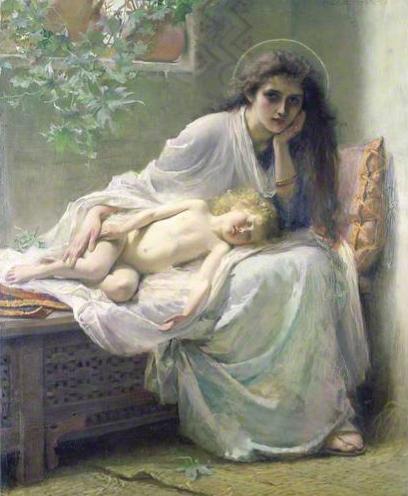
A human Jesus

Mary holding Baby Jesus
TODAY'S SPECIAL: Psalm 22:1-15

TO CHEW ON: "But You are He who took Me out of the womb;
You made Me trust while on My mother's breasts.
I was cast upon You from birth
From My mother's womb You have been My God." Psalm 22:9,10

One of the things I like about the New King James Version of the Bible is the way it capitalizes the pronouns of deity. When one pays attention to that detail, Psalm 22 comes across differently than many other prophetic passages which readers recognized as prophetic only after the events occurred.

All the upper case 'My's and 'Me's of Psalm 22 tell us this is considered to be God speaking—God in human form sent as Jesus, giving a prediction through David of "The Suffering, Praise and Posterity of Messiah" (the title the NKVJ give this chapter).

Jesus' humanity comes through in words like
"I am a worm and no man;
A reproach of men and despised by the people"  vs. 6.

This looks like Jesus with low self-esteem,   Jesus not unaffected by the people's reaction to Him. It brings to mind the verse, "For we do not have a High Priest who cannot sympathize with our weaknesses, but was in all points tempted as we are, yet without sin" - Hebrews 4:15.

As a mother I notice the verses that speak of Jesus' childhood. For Mary the risks of pregnancy and childbirth were the same as for any other mother and the psalmist credits God with His help in that process:
"You are He who took Me out of the womb ….
I was cast on you You from birth" - Psalm 22:9-10.

The way Mary trained Jesus also played a part in who He became:
"You made Me trust while on My mother's breasts…" - Psalm 22: 9.

If the early years of Jesus were important in making Him the man He would become, how much more the early training of our children!

Are you a young mom, distracted and  tempted by dreams, ambitions, and outside opportunities? Don't let anything take your focus off the priceless responsibility and opportunity of raising your little ones to trust God from day one. Honor God in this season of your life and He will surely make it up to you in another.

PRAYER: Dear Jesus, this human picture of You tugs at my heart. I know You understand my weakness. Help me to put my confidence in God when I am faced with scorn, like You did. Amen

********
Unless otherwise noted all Scripture quotations are taken from the New King James Version®. Copyright © 1982 by Thomas Nelson, Inc. Used by permission. All rights reserved.


Sunday, December 28, 2014

A devotional spirit

"But Mary kept all these things and 
pondered them in her heart" - by Alice Havers

TODAY'S SPECIAL: Luke 2:15-21

TO CHEW ON: "But Mary kept all these things and pondered them in her heart." Luke 2:51

I have always loved this little aside about Mary's reaction to the events of the Christmas story. It makes her seem so human, while directing our attention toward God as we ask with her, what do all these things mean?

Bible writers speak of many women whose hearts are tuned to God. The Thompson Chain Bible lists these examples under the heading: Women - Crowning Qualities - Devotional Spirit. What are some areas of life into which Bible women brought this devotional spirit?

1. Their attitude toward their mates:
  • The ideal wife of Proverbs is  "virtuous" - Proverbs 31:10.
  • Peter characterizes a godly wife as having a beauty of the heart—"… a gentle and quiet spirit, which is very precious in the sight of God" - 1 Peter 3:1-6.

2. Their motherhood:
  • Hannah prays for a son, makes a promise to God, and keeps it - 1 Samuel 1:15,26.
  • Rebekah "inquires of the Lord" when she senses there is something unusual about her pregnancy - Genesis 25:22.
  • Mary willingly gives her body to carry Jesus and after He is born, ponders all the unusual phenomenon that accompany His birth - Luke 1:38; 2:19 (our focus verse).

3. Their role as singles:
  • Philip's four daughters are single prophetesses - Acts 21:9.

4. Their position as leaders:
  • Miriam leads the women of Israel in worship with her tambourine, singing, and dancing - Exodus 15:20.
  • Huldah is a prophetess who even the priest consults - 2 Kings 22:14.
  • Queen Esther's first thought is to pray and fast before attempting to approach the king - Esther 4:16.

5. Their personal devotion and worship:

  • Eighty-four-year-old Anna spends all her time in the temple, fasting and praying - Luke 2:36-37.
  • Mary of Bethany sits at Jesus feet to listen to Him teach instead of getting caught up in her sister's fussing and worrying - Luke 10:38-42.
  • Jesus' women disciples, follow Him, minister to Him and stick with him to the cross (and beyond) - Mark 15:40.

6. Let's not get the idea, though, that a devotional spirit is seen only in women who listen to teaching, fast, and pray. A devotional spirit can be seen too in Their busyness and business:
  • Dorcas is full of very practical good works - Acts 9:36.
  • Lydia is a businesswoman, a seller of purple who worships God and "opened her heart to heed the things spoken by Paul" - Acts 16:14.
  • "Leading women" join Paul and Silas in Thessalonica - Acts 17:4.
  • Paul asks his readers in Rome to help Phoebe in her business - Romans 16:1.

I love how these women demonstrate a devotional spirit in so many roles and activities of life. Let's bring their attitude of alertness to God into whatever our today brings of meditation, worship and prayer; singleness, marriage and parenting; leading and following; business and crafts; play and leisure.

PRAYER: Dear God, please help me to be aware of and acknowledge You in every aspect of my life. Amen.

 *********
Unless otherwise noted all Scripture quotations are taken from the New King James Version®. Copyright © 1982 by Thomas Nelson, Inc. Used by permission. All rights reserved.


Saturday, May 31, 2014

God of the impossible

Mary and Elizabeth
by Harold Copping - 1927

TODAY'S SPECIAL: Luke 1:39-56


TO CHEW ON: "He has shown strength with his arm; he has scattered the proud in the thoughts of their hearts; he has brought down the mighty from their thrones and exalted those of humble estate; he has filled the hungry with good things and the rich he has sent empty away." Luke 1:51-53 ESV

Wow - could Bible women pray! The prayer of Hanna, another young mother (1 Samuel 2:1-10), and Mary's prayer in our reading today show that these godly women had keen insights about God and His ways.

A thought that occurs in both of these prayers is that the unlikely person will triumph because God comes to his or her aid.

Hannah prays that God will weigh and evaluate the unworthy actions that are masked by proud and arrogant speech. She boasts about Him giving strength to the feeble as He breaks the weaponry of the mighty. He feeds the hungry while those who were always full before end up hiring themselves out for bread. He gives he barren woman a complete family (seven children!) even as the mother of many is forlorn. She speaks of Him making the poor rich, exalting the lowly, raising the poor and needy to sit with princes - 1 Samuel 2:3-8.

Mary thanks God for raising her, a humble woman, to a position where all people will call her blessed. She boasts about God frustrating those with proud thoughts, bringing down the mighty from their thrones, sending the rich away empty while filling the hungry with good things - Luke 1:51-53.

These aren't selfish, vindictive prayers of needy women who want the tables turned for self-serving reasons. Rather, they are prayers of women for whom God has shown Himself strong in amazing ways (Hannah has borne a son after years of barrenness, Mary has recently become pregnant with Jesus—God in the flesh).

They are also pronouncements of faith saying, in effect, if God has done this for me, He can do this in any and every situation.

They are above all, prayers that proclaim trust in God over riches, position, power or natural ability, to change impossible situations.

What is my impossible situation today? What is yours? From personal needs involving ourselves, our families and friends, to big requests for our nation and the world, let's let the faith of Hannah and Mary inspire us to bring our impossible circumstances to God, who has the power and resources to turn them on their heads.

PRAYER: Dear God, than You for the faith and inspiration of Hannah and Mary, simple women who trusted You to do the impossible. Help me to trust You for my impossible thing (___) today. Amen

MORE: Feast of Visitation

Today the church celebrates the Feast of the Visitation of the Blessed Virgin.

The liturgy for this day begins with this collect:

"Father in heaven, by your grace the virgin mother of your incarnate Son was blessed in bearing him, but still more blessed in keeping your word: Grant us who honor the exaltation of her lowliness to follow the example of her devotion to your will; through Jesus Christ our Lord, who lives and reigns with you and the Holy Spirit, one God, for ever and ever. Amen."
***********
Unless otherwise noted all Scripture quotations are taken from the New King James Version®. Copyright © 1982 by Thomas Nelson, Inc. Used by permission. All rights reserved.

Bookmark and Share

Tuesday, March 25, 2014

Let it be to me...

"The Annunciation" - RosettiTODAY’S SPECIAL: Luke 1:26-38

TO CHEW ON: “‘For with God nothing shall be impossible.’ Then Mary said, ‘Behold the maidservant of the Lord! Let it be to me according to Your word.’ And the angel departed from her.” Luke 1:37-38


“Let it be to me according to Your word.” To me these words of sweet surrender typify this thoughtful Galilean teenager. An angel has just told her God favors her. That favor will result in her becoming pregnant with the very Son of God. But what a spot for a soon-to-be-married young woman to find herself in!

"The Annunciation"
by Dante Gabriel Rosetti 1828-1882

Mary asked one question: “How can this be, since I do not know a man.” I can’t help but think that dozens of others came to her after the angel left: What about my reputation? Won’t my life be in danger when people find out I’m pregnant? What about Joseph? No doubt the simple faith that had her utter the words, "Let it be to me according to Your word" in the first place, buoyed her up through the confusion of the following weeks and months.

God, in His own way and time, took care of each concern so that when Jesus was born, He had a responsible caring, committed earthly father in Joseph. As for Mary’s reputation–well, Joseph took care of it to the extent he could. As for people thinking ill of her (and there probably were some), that’s the risk one takes when one is a "maidservant of the Lord."

Has God ever come to you with a word (rhema) that seems as impossible as Gabriel’s to Mary? Perhaps you’ve been given a promise about your kids, or a work commission that seems far beyond your ability and totally out of sync with your circumstances. At the time it came, and still, you may be asking, “How can this thing be?”

Let Mary’s final words be your resolve and testimony as you wait for God’s promise to be fulfilled: “Let it be to me according to Your word.”

PRAYER: Dear God, please nourish in me a faith that is as simple and implicit as Mary’s, where I trust You to work things out because “With God (You) nothing will be impossible.” Amen.

MORE: The Feast of the Annunciation

Today the church celebrates the Feast of the Annunciation – when we recall Gabriel’s announcement to Mary that she will mother of the Son of God.

The liturgy of this day begins with this collect:

"Pour your grace into our hearts, O Lord, that we who have known the incarnation of your Son Jesus Christ, announced by an angel to the Virgin Mary, may by his cross and passion be brought to the glory of his resurrection; who lives and reigns with you, in the unity of the Holy Spirit, one God, now and for ever. Amen."

Liturgy for this day.


Biber - Rosary Sonata #1: The Annunciation
HEINRICH IGNAZ FRANZ VON BIBER (1644-1704)
"The Rosary Sonatas"
I. The Five Joyful Mysteries
Sonata No. 1 for violin and basso continuo "The Annunciation"


 **************
Unless otherwise noted all Scripture quotations are taken from the New King James Version®. Copyright © 1982 by Thomas Nelson, Inc. Used by permission. All rights reserved.

Tuesday, April 03, 2012

Our lives—a memorial

"Mary's Jar of Ointment" - James Tissot
TODAY'S SPECIAL: Mark 14:1-31

TO CHEW ON: "Assuredly, I say to you, wherever the gospel is preached in the whole world, what this woman has done will also be told as a memorial to her." Mark 14:9

In the last few years I have been to several family gatherings and reunions. These often include a visit to the cemetery where our ancestors are buried. There is something fulfilling about going to the place where our parents, grandparents, uncles, aunts, and cousins are memorialized, even though what is written on their gravestones may be unexceptional and generic.

That's one of the purposes of a memorial—to keep in remembrance a person or event.

We have two events in our reading today that characterize two people and become their memorials.

  • Mary (named in John 12:2-8) pours perfume on Jesus' feet during a feast in Simon's house. When other guests criticize her action as wasteful, Jesus tells them that her lavish demonstration of love will become a memorial to her wherever the gospel is preached (Mark 14:9).
  • Judas Iscariot, in the very next verse (Mark 14:10), makes a decision to betray Jesus. This leads to a course of action that becomes what he has been known for forever after.
I'm sure that neither Mary nor Judas were aware, when they were living the events, that they were doing something mementous. The incidents that came to memorialize their lives were, to them, part of everyday living.

Memorials left by other Bible characters open our minds to more possibilities.
  • Dorcas (after her first death) was remembered by the collection of clothes she had made for the poor (Acts 9:37-39).
  • Cornelius's memorial was prayers and alms, of which God Himself took note (Acts 10:4).
Which brings me to the question, what kind of a memorial am I leaving? What about you? Whatever it turns out to be, a distinguished event or the general impression of our lives, it's sobering to realize I am in the process of building and reinforcing it every day—and so are you.

PRAYER: Dear Jesus, I want my life to be a sweet-smelling memorial, like Mary's act of pouring perfume on Your feet. Help me to know how to translate who I am and what I have into such love for You. Amen.

MORE: "I Pour My Love On You" - Philips, Craig & Dean


Bible Drive-Thru


Bookmark and Share

Saturday, December 31, 2011

Pondering God's promises

TODAY'S SPECIAL: Luke 2:15-21

TO CHEW ON: "But Mary kept all these things and pondered them in her heart." Luke 2:19

From the day the angel came to Mary with the almost incomprehensible message, "The Lord is with you; blessed are you among women .... You shall bring forth a Son .... and of His kingdom there will be no end," her life was changed (Luke 1:28-33).

When she went to visit her relative Elizabeth, she was greeted with more unusual words: "Blessed are you among women, and blessed is the fruit of your womb" - Luke 1:42.

The strangenesses continue in today's reading when shepherds find the new parents in their cowshed accommodation and tell them that an angel has announced their baby's birth, identified Him by His manger bed and swaddling clothes, and proclaimed Him "A Savior who is Christ the Lord."

Mary's response: "She kept all these things and pondered them in her heart." And at least three more times in Luke we find Mary puzzled and pondering things that are playing out in the life of her child Jesus - Luke 2:33,50,51.

Though our experience will never mirror Mary's we too may have promises and dreams that set us pondering. They may be dreams God has put in our hearts for our own futures. They may be things people have spoken over us. They may be the destiny we see for our kids. They may be the role we envision our church will play in the community, or our country will have on the world stage.

Joyce Meyer had such a dream. Early in her Christian life she caught a vision of a ministry she believed God had for her. In her book Battlefield of the Mind, she describes how that vision was challenged. But claiming Romans 8:26 for the things she did not understand, she confronted naysaying thoughts with a determination to believe, not doubt, God's promises. She says:
"As Christians, we need to learn to decide to believe. God often gives us faith (a product of the Spirit) for things our minds just can't always seem to come into agreement with. The mind wants to understand everything—the why, the when, and the how of it all...


I had decided long before to believe what the Word says, and to believe the rhema (the revealed Word) that God gave me (the things He spoke to me or the promises He gave me personally), even if I didn't understand why, when, or how it would come to pass in my life" - Joyce Meyer, Battlefield of the Mind, p. 51.
As we ponder the promises God has given us, let us too channel those musings through the filter of faith. Mary obviously did. Why else would she have told the servants, troubled at running out of wine during the wedding in Cana, "Whatever He (Jesus) says to you, do it" (John 2:5)?

PRAYER: Dear God, as I stand on the threshold of the new year, please help me to ponder Your promises to me with faith, knowing that You can do "exceedingly abundantly above all that we ask or think" (Ephesians 3:20). Amen.

MORE: New Year's Eve

In Canada New Year's Eve is a time for celebration and partying. People gather in houses, hotel ballrooms, and city squares to eat, drink, and dance as they count down to 12 midnight. Then they welcome the new year with fireworks, kisses and the singing of Auld Lang Syne.

Churches often sponsor gatherings that bring in the new year a little differently. These New Year's Eve events, sometimes called Watchnight Services, find people welcoming the new year on their knees or singing praises to God.


Bible Drive-Thru


Bookmark and Share

Monday, May 31, 2010

Prophetic echoes

TODAY'S SPECIAL: Luke 1:39-56

TO CHEW ON: "And Mary said, 'My soul magnifies the Lord,
And my spirit has rejoiced in God my Saviour.'" Luke 1:46-47

Today is the celebration of the Feast of the Visitation -- commemorating the visit the newly pregnant Mary paid to her elderly cousin Elizabeth, who was herself miraculously with child.

At the sound of Mary's voice on arrival, Elizabeth reported that her baby "leaped in the womb" -- a sign to her that someone very special had just arrived. Elizabeth's greeting was a prophecy which began with a quote from another prophetic song. "Blessed are you among women," is what prophet and judge Deborah sang about Jael -- the woman who craftily killed Israel's enemy Sisera.

Mary answered with her own prophetic "song" (1:46-55) which roughly echoes Hannah's song (1 Samuel 2:1-10).

Three months later when John the Baptist was born, his father Zacharias broke his silence with his own prophetic outburst (Luke 1:67-79). It too is full of Old Testament references. “Blessed is the Lord God of Israel, from verse 68 recalls "‘Blessed be the LORD God of Israel" from 1 Kings 1:48  and "He has visited His people (same verse) the words " “I have surely visited you " from Exodus 3:16 . The words  "And has raised up a horn of salvation for us in the house of His servant David" (verse 69) reflects the thinking of Psalm 132:17. And there are more.

Still later after the birth of Jesus, old Simeon came to Joseph, Mary and the baby in the temple during Jesus' presentation and blessed the child with another prophetic message (Luke 2:29-32). His blessing also contains allusions to Old Testament scripture (for example his words: "For my eyes have seen Your salvation" vs. 30 remind us of  "And all the ends of the earth shall see the salvation of our God from Isaiah 52:10).

An endnote in my Bible says, "Note… how the new era is signaled by the renewal of the gift of prophecy, which has been dormant. The various prophecies and songs of these two chapters reflect the best of Old Testament piety and prophecy." New Spirit Filled Life Bible p. 1386

What impresses me about these prophecies is how loaded they are with scripture. The speakers, from teenaged Mary to elderly Simeon, had obviously saturated themselves with the psalms and prophets. Which brings me to ask myself -- how familiar am I with scripture? Do I know it well enough for the Holy Spirit to bring it to mind during prayer or in a time when I need to encourage myself or others (in prophecy)?

PRAYER: Dear God, please help me to intentionally fill my mind with the stuff of Your word. Amen.

MORE: Scripture Memorization
  • What scriptures do you know "cold"? For me this would include verses like John 3:16; Romans 3:23; Romans 6:23, Isaiah 53:6, Philippians 4:6-7; Psalm 23; the Lord's Prayer.
  • What scriptures would you like to know?
  • Do a scripture memory project:
1. List the scripture verses or passages you'd like to know.
2. Choose one and write the words of that verse or passage on a file card.
3. Spend 10 minutes a day (use a kitchen timer) memorizing them.
4. Over time, commit all your favourite passages to memory this way.

What methods of memorizing Bible passages have you found useful?

Do your 8-12-year-olds have daily devotions? Point them to Bible Drive-Thru.

Related Posts Plugin for WordPress, Blogger...