Showing posts with label accountability. Show all posts

Thursday, November 29, 2018

Rebuke

TODAY'S SPECIAL: Titus 1-3; Psalm 23

TO CHEW ON: "For there are many insubordinate both idle talkers and deceivers ... whose mouths must be stopped, who subvert whole households, teaching things which they ought not for the sake of dishonest gain .... Therefore rebuke them sharply that they may be sound in the faith." Titus 1:10-11,13

A friend was sharing the story of her spiritual journey with me the other day. She told of a time, about a year into her walk with Christ, when substitute teaching jobs kept coming up on the day of her women's Bible study. Feeling the need for more money, she almost always accepted them.

One day when she again phoned her Bible study leader to tell her she would be away, the woman confronted her. "You know," she said, "you're a new Christian and you need this Bible study. You need to get off the fence."

"My leader's words really made me think," my friend said. "We don't reprove or rebuke people much these days."

My friend is right. Rebuke, reproof, confrontation—whatever word you use for it—our tolerant society isn't very tolerant of such corrective speech. But this is what Paul told Titus to do when he encountered the idle talkers [mataiologos  = speaking that lacks reason and worth and gives evidence of an undisciplined lifestyle - New Spirit-Filled Life Bible, p. 1720] and the deceivers who influenced entire families against the gospel with motives of personal gain.

Titus isn't the only place the Bible mentions rebuke/reproof.

  • Proverbs speaks of the people who rebuke the wicked as having delight and gaining a blessing (Proverbs 24:25). However, the writer is realistic and also warns of the bad reception such rebuke may cause (Proverbs 9:7).
  • Luke tells us to rebuke with care, and forgive when the wrongdoer repents (Luke 17:3).
  • Paul tells his readers to expose the deeds of darkness (Ephesians 5:11). He lists "rebuke" as one of the routine duties of the pastor, along with "preach, exhort, convince, and teach" (2 Timothy 4:2). He tells Timothy to rebuke publicly so that onlookers will examine their own actions (1 Timothy 5:20) and Titus to rebuke sharply (our reading) and with authority (Titus 2:15).

Have you ever been rebuked? Have you rebuked someone? Maybe this is a biblical practice we should do more of, with the intention of helping people mature (Titus 1:13) and as an expression love to fellow members of God's family (1 Corinthians 4:14).

PRAYER: Dear God, help me to have the courage to rebuke a fellow Christian if there is a need. But more, help me to accept rebuke. Help me to see it as an act of love. Amen.

PSALM TO PRAY: Psalm 23

The Bible Project VIDEO: Titus (Read Scripture Series)


*****************
Unless otherwise noted all Scripture quotations are taken from the New King James Version®. Copyright © 1982 by Thomas Nelson, Inc. Used by permission. All rights reserved.

Sunday, August 12, 2018

Your sin hurts more than just you

"Deliverance from the flood" - Psalm 69:15
Engraver Melchior Kussell
Artist SL
From the Pitts Theology Library.

Deliverance from the flood - Psalm 69:15 - Engraving by Melchior Kussel - Artist SL
TODAY'S SPECIAL: 1 Chronicles  22-24 Psalm 69

TO CHEW ON:
"Let not those who wait for You,
O Lord God of hosts, be ashamed because of me;
Let not those who seek you be confounded because of me,
O God of Israel." Psalm 69:6


What a desperate cry for help David makes in this psalm! In picturesque language he describes the feeling of drowning in trouble and being sucked into the mire of problems (Psalm 69:1-2; 14-15). His enemies seem numberless and his treatment unfair (Psalm 69:4). The message that comes through is, 'None of this is my fault!'

And then we come to verse 5:

"O God you know my foolishness / And my sins are not hidden from you."
Maybe he isn't as blameless as he let on at the beginning.

I really appreciate his thoughts relating to the potential fallout of his actions in verse 6:

"Let not those who wait for You
O Lord of hosts, be ashamed because of me;
Let not those who seek you be confounded because of me,
O God of Israel."
The sad truth is that we are often at least a little to blame for our own problems. And when we sin we hurt those who view us as examples and mentors—our children, young Christians, our friends and colleagues, those who look to us for instruction and inspiration etc. Our broken marriages, involvements in pornography, illegal money schemes, theft, child sexual abuse—whatever—especially if we are leaders, impact much more than just our own lives.

Let's keep that in mind before we yield to temptation. Let's let our love for the body of Christ be another reason not to sin in the first place.

PRAYER: Dear God, help me to realize how my sin affects Your body (the church) and resist temptation. Help me, at the same time, to refrain from harsh judgment when my brothers and sisters sin. I want to be a restorer of the broken. Amen.

PSALM TO PRAY: Psalm 69

MORE: Second most-quoted psalm
The NIV Study Bible's introduction to this psalm names it the second most-quoted psalm in the New Testament:

"The authors of the NT viewed this cry of a godly sufferer as foreshadowing the sufferings of Christ; no psalm except Psalm 22 is quoted more frequently in the NT" - NIV Study Bible, p. 855.

Those quotes:

  • Psalm 69:4 - John 15:25
  • Psalm 69:9 - John 2:17; Romans 15:3
  • Psalm 69:21 - Matthew 27:34
  • Psalm 69:25 - Acts 1:20
  • Psalm 69:33 - Luke 4:18 
**************
Unless otherwise noted all Scripture quotations are taken from the New King James Version®. Copyright © 1982 by Thomas Nelson, Inc. Used by permission. All rights reserved.


Tuesday, May 08, 2018

Sowing and reaping

TODAY'S SPECIAL: Hosea 6-10; Psalm 123


TO CHEW ON: "Sow for yourselves righteousness;
Reap in mercy;
Break up your fallow ground,
for it is time to seek the Lord
Till He comes and rains righteousness on you." - Hosea 10:12


Hosea is full of the imagery of farming and nature. Here are some images from Hosea 10.

Hosea 10:1 talks about how Israel has enjoyed good harvests of the vine. But they have spent it on themselves and on improving idol altars and poles.

Hosea 10:4 talks about their system of justice. It's faulty and as a result "...judgment springs up like hemlock in the furrows of the field." I see weeds sprouting in newly plowed fields. But these aren't just any weeds. These are hemlock — a deadly poison that destroys the land's fruitfulness.

Hosea 10:7-8 talks about how Samaria will become desolate. Her king will be "cut off like a twig on the water" (a severed tree branch floating downriver?). Her idol altars for worshiping idols at Aven will no longer be used but will become the home of thorns and thistles. ("Aven" is short for Beth Aven a play on the name Bethel. Beth Aven means "House of Iniquity." Bethel which means "House of God.")

Hosea 10:10-11 tells us that as a result of their sins, the Israelites will be punished by other nations ("Peoples shall be gathered against them / When I bind them for their two transgressions"). Instead of enjoying the fruit of their work in an independent way ("Ephraim is a trained heifer / that loves to thresh grain"), they will now be forced to do menial work. "Ephraim will pull a plow...Jacob shall break his clods."

In the middle of these gloomy predictions God begs them to again take up farming His way:


"Sow for yourselves righteousness;
Reap in mercy;
Break up your fallow ground
For it is time to seek the Lord,"
It would result in His blessing of rain:

"Till He comes and rains
righteousness on you" - Hosea 10:12.

Instead of complying this is what they have done: "...plowed wickedness...reaped iniquity...eaten the fruit of lies / Because you trusted in your own way..." Hosea 10:13.

It all comes back to the old truism, for us as it did for them:

We reap what we sow.

This is true in nature and it's true spiritually. Let's ask ourselves:
  • What are we sowing personally — watching, reading, listening to, thinking and meditating about?
  • What are we sowing in our families — modeling for our kids and grand-kids, saying with our words and attitudes, spending our money on?
  • What are we sowing in our communities, our churches, cities, the nation? How do we care for the poor? Is our justice system really just? I think about how much our governments depend on income streams from questionable sources like gambling. This can't be a good thing, can it?

PRAYER: Dear God, it's easy to shrug off warnings like we have in Hosea as applicable to people in a different time and place. Help me to take these personally and do what I can about sowing good things in my life, my family's life, my community. Help me to remember to pray for my country and other big areas where I feel like I have little influence. Amen.

PSALM TO PRAY: Psalm 123

MORE: "Someday we will be amazed"
"We never know what God might be growing in the fields of obscurity we are tending. What might God do through the child whose diaper you’re changing, or the grandchild of the boy in your Sunday school class, or the bored teen in your small church, or the coworker who currently mocks your faith in Jesus, or the hardened inmate who looks impossible to reach? We can be confident of this: he is doing more than we can see. He always is. Someday we will be amazed." - Excerpt from a Bethlehem Baptist Church Newsletter "You Never Know What God is Growing"  by Jon Bloom, December 2007. Read entire...   © Desiring God. Website: desiringGod.org 

****************
Unless otherwise noted all Scripture quotations are taken from the New King James Version®. Copyright © 1982 by Thomas Nelson, Inc. Used by permission. All rights reserved.

Sunday, November 26, 2017

Recognizing Jesus

TODAY'S SPECIAL: Matthew 25:31-46

TO CHEW ON: " ' And the King will answer and say to them, "Assuredly, I say to you, inasmuch as you did it to one of the least of these My brethren, you did it to Me." ' " Matthew 25:40


One of the popular motifs of the Christmas dramas we used to put on in Sunday School was the poor, beggarly misfit becoming a type of the Christ child. It turned out that the person who noticed and served this unfortunate one amid the hustle and decorations, the shopping and food preparations, was the one who had the true Christmas spirit.

Recognizing Christ in unusual places and people is the theme of our reading today. Seeing and caring for His needs in those around us—the hungry and thirsty, the lonely stranger, the forsaken prisoner, the person who needs warm clothes ("naked") and sick—brings not only the King's commendation but the label of "righteous" and escape from eternal punishment (Matthew 25:34, 45-46).

Jesus talks in other places of coming in disguise:

  • In Mark 9:41 the person who serves Christ's disciples with as little as a cup of cold water gets a reward.
  • " 'Whoever receives one of these little children in My name receives Me; and whoever receives Me receives not Me but Him who sent Me' " says Jesus in Mark 9:37.
  • At another time, Jesus answered a question about how to inherit eternal life with the parable we call the Good Samaritan. In it, the person (Samaritan) who helps his needy neighbour (a beat-up Jew) is the one who loves his neighbour as himself, fulfilling one of the conditions for inheriting eternal life (Luke 10:28-37).

I look at these examples and ask myself—do I recognize Jesus when He comes to me disguised as a child, or a needy stranger, or a sister in trouble? Or am I more like those "goats" in our reading, who will someday appear before the King with 'Duh… Lord, when did I see you hungry or thirsty or a stranger or naked or sick or in prison?'

PRAYER: Dear Jesus, please take the scales off my eyes. Help me to recognize You however  and wherever You appear. Amen.

 *********
Unless otherwise noted all Scripture quotations are taken from the New King James Version®. Copyright © 1982 by Thomas Nelson, Inc. Used by permission. All rights reserved.

Saturday, November 18, 2017

What kind of a steward are you?

Image: Pixabay
TODAY’S SPECIAL: Matthew 25:14-30

TO CHEW ON: ‘For the kingdom of heaven is like a man traveling to a far country, who called his own servants and delivered his goods to them.’” Matthew 25:14


We might be excused if, at the beginning of this story, we thought the owner had given his possessions to his servants. However, when we read the whole thing, we realize that the relationship with those possessions (here “talents”—a unit of money), was not one of ownership at all but management. Another word for that is “stewardship.”

[Stewardship: The position and duties of a steward—a person who acts as the surrogate of another or others, especially by managing property, financial affairs, an estate etc. - from Dictionary.com.]

Stewardship comes up in other places in the Bible as well. Biblical stewardship is:
  • Tailored to the individual.
In our story, the owner gave his servants different amounts of money to manage dependent on each one’s ability - Matthew 25:15.

  • Not ownership.
The stewarding aspect of our story’s handout comes out more clearly in the Luke version of this same parable - Luke 19:13.
  • Judged by faithfulness.
It’s the main characteristic of a steward: "Moreover it is required in stewards that one be found faithful" - 1 Corinthians 4:2.

  • A sacred trust that impacts all of life.
Paul instructed Timothy on what it meant to be a steward in practical living: "O Timothy! Guard what was committed to your trust, avoiding the profane and idle babblings and contradictions of what is falsely called knowledge"  - 1 Timothy 6:20.

  • What God expects us to do with our spiritual gifts.
"As each one has received a gift, minister it to one another, as good stewards of the manifold grace of God" 1 Peter 4:10.

  • Important because our salvation came at a high price.
    "For you were bought at a price; therefore glorify God in your body and in your spirit, which are God’s" - 1 Corinthians 6:20.
  • Important because we have a divine Master - Ephesians 6:7.
"...with goodwill doing service, as to the Lord, and not to men knowing that whatever good anyone does, he will receive the same from the Lord, whether he is a slave or free" Ephesians 6:7,8.

So we might ask, what has God asked us to steward?

The answer will be slightly different for each one of us but will include things like the Gospel—the good news that we sinful humans can be reconciled to God through the death and resurrection of Jesus—our spiritual gifts, our material possessions, our network of family, friends, and colleagues, modern technology with its potential for fast and widespread communication, and the list could go on.

We have much to steward. Are we aware of our positions as stewards? Are we looking forward to the day we hear His “Well done, good and faithful servant?” Or will we be caught unaware at our Master’s return, embarrassed, ashamed, and casting about for excuses of why we haven't been good stewards?

PRAYER: Dear Father, help me to be aware of all You have entrusted to me, and to steward it well. May I keep the hope of Your “Well done,” always in mind. Amen.

 *********
Unless otherwise noted all Scripture quotations are taken from the New King James Version®. Copyright © 1982 by Thomas Nelson, Inc. Used by permission. All rights reserved.


Sunday, August 14, 2016

What kind of a steward are you?

TODAY'S SPECIAL: Luke 12:41-59

TO CHEW ON: "And the Lord said, 'Who then is that faithful and wise steward whom his master will make ruler over his household to give them their portion of food in due season? Blessed is that servant whom his master will find so doing when he comes. Truly I say to you that he will make him ruler over all that he has.'" Luke 12:42-44

Stewardship, accountability and reward are three things that Jesus talks about more than once.  His story in Luke 12:42-48 includes all three. In this parable a steward is responsible for giving the people under him regular portions of food. It has a choose-your-own-ending.

Ending 1: The master finds his steward doing his job faithfully so the master rewards him with greater responsibility.

Ending 2: The steward (thinking that his master sure is taking a long time to return; maybe he never will) abuses and neglects his underlings. On his return, the master punishes him—and even more severely then he would punish someone who had done the same things but didn't have the same knowledge, position and responsibility.

Does this story apply to us? I think it does. For if we know and believe the Gospel, each of us is a spiritual steward to someone.

Who are the people of your "household"?
The members of the class that you teach. Your exercise buddies. Your kids, or grandkids.

What has the Master given you to steward?
The Gospel. The things you have learned from the Bible. The experiences that have made you the person you are today. What you're passionate about.

In what ways could you steward these things?
Give your testimony. Write a book. Start a Bible study group in your neighbourhood. Help out in Sunday School or VBS. (My conviction that I wasn't being a good steward is one of the reasons I write these daily devotions and post them on a blog. Maybe that's what you could do too.)

Let God search you about your stewardship. Then be faithful and choose ending number one for your life's story. For as surely as you will stand before your Master one day, you will be held accountable for the kind of steward you were.

PRAYER: Dear God, please help me to be faithful and responsible in stewarding the Gospel by using the abilities and opportunities You have provided for me. Amen.

MORE: "Make My Life a Prayer to You" - Keith Green

**********
Unless otherwise noted all Scripture quotations are taken from the New King James Version®. Copyright © 1982 by Thomas Nelson, Inc. Used by permission. All rights reserved.


Do your 8-12-year-olds have daily devotions? Point them to Bible Drive-Thru.

Friday, April 08, 2016

Church report card - 4

TODAY’S SPECIAL: 

Revelation 3:14-4:11

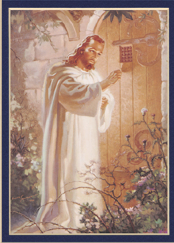
TO CHEW ON: Behold I stand at the door and knock. If anyone hears My voice and opens the door, I will come in to him and dine with him and he with Me. To him who overcomes, I will grant to sit with Me on My throne, as I also overcame and sat down with My Father on His throne.’” Revelation 3:20-21


The  final church of the seven, Laodicea, has a pretty discouraging report card. It is described as nauseating. It thinks well of itself while it is actually “wretched, miserable, poor, blind and naked." We could call it a church in denial. It is the only church to which Jesus gives no commendation at all.


Some Bible scholars have interpreted these seven messages to the churches as seven dispensations.* They see them as an outline of stages in church history. In their reading:


1. The Ephesus church represents the church at the close of the first century.


2. The Smyrna church represents the church from the beginning of the 2nd century until Constantine (beginning of the 4th century).


3. The Pergamos church is the church of the 4th through 7th centuries.


4. The Thyratira church is the church of the Middle Ages.


5. The Sardis church  represents the church just prior to the Protestant Reformation.


6. the Philadelphia church represents the “true church” throughout all of church history, especially the segment that experiences revival prior to the last days.


7. The Laodicea church represents the church in its final days, prior to its pretribulation rapture. It is characterized by apostasy.


Many Bible teachers feel we’re living in those last days. If we look at current events and line them up with Bible predictions, it’s easy to agree. On many fronts the modern church has fallen into apostasy. Does that mean we’re doomed to capitulate to the same thing ourselves?


No. Because in the end, it is not as a group that we respond to Jesus but individually. That’s why Revelation 3:20 is one of my favorite verses. Jesus comes to me (and you). He knocks on the door of our hearts. He wants to spend time with us, eat with us. As those of us who have welcomed Him into our lives join together, we will continue as a church that delights Him.

PRAYER:
Dear Jesus, come in! Make Yourself at home. Let’s visit, eat together, and live together. Please make Your home in my heart. Amen.

* E. A. Morey, in the study notes to Revelation, New Spirit-Filled Life Bible, pp. 1818-1822.

 *********
Unless otherwise noted all Scripture quotations are taken from the New King James Version®. Copyright © 1982 by Thomas Nelson, Inc. Used by permission. All rights reserved.


Monday, March 07, 2016

Running away from God?

Jonah fleeing to Tarshish - Jonah 1:1-3
Jonah fleeing to Tarshish
TODAY'S SPECIAL: Jonah 1:1-17

TO CHEW ON: "But Jonah rose to flee to Tarshish from the presence of the Lord. He went down to Joppa and found a ship going to Tarshish; so he paid the fare and went down into it, to go with them to Tarshish from the presence of the Lord." Jonah 1:3


Did Jonah really believe that changing his location would get him out of God's sites? He certainly tried. A map of the Roman Empire shows Joppa and Tarshish (Tarsus) to be quite a boat trip away (one source estimated 225 Km.). 

My Bible's commenter on Jonah observes: "Jonah is trying to escape the presence of the Lord. This indicates that he had a very localized view of God's presence or perhaps a belief that the Spirit of prophecy would not follow him there" - Charles W. Snow,  commentary on Jonah, New Spirit-Filled Life Bible, p. 1196.

Before we shake our heads and and smile knowingly at Jonah's foolishness, perhaps we should examine our own sensibilities. Though we may feel God's presence in church, do we realize that He also sees us / is with us when we are in places where His very existence is ignored or even denied—the neighborhood bar, a hockey game, a play or opera, the classroom?

Another time He may feel distant is when we're in trouble—on a back road at night beside our broken-down car, at the bedside of a loved one who is ill or badly injured, when we're opening yet another bill after the money is all spent...

God may feel absent but we can trust, with David that His awareness of us and presence with us doesn't waver by even a blink-second:

O Lord, you have examined my heart
    
and know everything about me.
You know when I sit down or stand up.
    
You know my thoughts even when I’m far away.

You see me when I travel
    
and when I rest at home.
    
You know everything I do....

I can never escape from your Spirit!
    
I can never get away from your presence!

If I go up to heaven, you are there;
    
if I go down to the grave, you are there.

If I ride the wings of the morning,
    
if I dwell by the farthest oceans,

even there your hand will guide me,
    
and your strength will support me.

I could ask the darkness to hide me
    
and the light around me to become night—

but even in darkness I cannot hide from you.

To you the night shines as bright as day.

Darkness and light are the same to you" 
Psalm 139:1-3; 7-12 NLT  


PRAYER: Dear God, thank You for Your continuous awareness of me. Help me to live in a way that acknowledges Your presence. Amen.

MORE: "He knows me"

In his chapter "Knowing and Being Known" (Chapter 3 in Knowing God), J. I. Packer makes this reassuring declaration:

"What matters supremely, therefore, is not, in the last analysis, the fact that I know God, but the larger fact which underlies it—the fact that He knows me. I am graven on the palms of His hands. I am never out of His mind. All my knowledge of Him depends on His sustained initiative in knowing me. I know Him, because He first knew me, and continues to know me. He knows me as a friend, one who loves me; and there is no moment when His eye is off me, or His attention distracted from me, and no moment, therefore, when His care falters" - J. I. Packer, Knowing God, p. 41.
**********
Unless otherwise noted all Scripture quotations are taken from the New King James Version®. Copyright © 1982 by Thomas Nelson, Inc. Used by permission. All rights reserved.
Bible Drive-Thru


Wednesday, May 07, 2014

Online integrity

TODAY'S SPECIAL: 1 Peter 2:1-12

TO CHEW ON: "Therefore laying aside all malice, all deceit, hypocrisy, envy, and all evil speaking, as newborn babes desire the pure milk of the word that you may grow thereby." 2 Peter 2:1-2


I love the guileless, transparent picture of the ideal Christian Peter paints for us here. It sounds so simple to live that way and probably would be if our lives weren't full of other people — people we don't like or we wish liked us; people we are trying to impress or are trying to impress us; people who bug us or bore us, intimidate us or are mean to us; people who talk too much or too little; people we think are wrong and people with whom we agree; people to whom we impute ulterior motives or whom we admire immensely. We meet up with these and how quickly the game-playing begins!

A new challenge to the integrity of our relationships is interacting with people through technology. The non face-to-face aspect of these interactions (through e-mail, cell phones, text messages, Facebook, blogs, comments, forums, etc.) makes us more vulnerable than ever to manipulate who we are and to be someone we're not to serve our own ends.

Tim Challies in his book The Next Story: Life and Faith After the Digital Explosion says:

"In all the ways we communicate today, we may use our technologies to destroy relationship instead of foster it, to tear down instead of build up....Through the Bible God calls us to speak truth in love. Truth and love are the twin pillars that should uphold all our communication" p. 85.

Then he goes on to give four measures to implement in our online life which will help us foster truth and love:

" Be visible. If anonymity can be an enemy and a refuge, then visibility can work to keep us from slipping into sinful patterns of living and communicating...


Be accountable....Let friends or family know what you are doing online; invite them into your digital world ....


Be real. Don't fabricate for yourself an identity online that is vastly different from your real-world identity....


Be mature. To sum it up, you will need to act like a mature Christian. Paul draws a clear connection between maturity and the ability to speak truth in love....


And always distrust yourself. It may sound harsh, but be willing to doubt your motives, your heart. Take a moment to pray before answering an antagonistic e-mail; bounce your ideas and articles off trusted friends before posting them; be slow to speak (or type) and quick to listen" - p. 86.

What great advice to us in what has become a technology-medicated generation.

Of course on top of this, we would do well to be closer followers of Peter's second bit of advice, to "desire the pure milk of the word" above all the trillions of online words.

PRAYER: Dear God, please change me at a heart level so all my relationships and communications, no matter how they are conducted, are free from malice, deceit, envy and evil speaking. Help me to feed on Your words more than the multitudes of others' words available to me. Amen.

MORE: Challies.com

Tim Challies, the author of The Next Story is an Ontario resident who blogs at http://challies.com. For insightful book reviews, commentary on the Christian faith, and observations about life from a Reformed perspective, his blog is a great resource.

***********
 Unless otherwise noted all Scripture quotations are taken from the New King James Version®. Copyright © 1982 by Thomas Nelson, Inc. Used by permission. All rights reserved.


Bookmark and Share

Friday, May 02, 2014

The long view

person looking through a telescope
TODAY'S SPECIAL: 1 Corinthians 4:16-5:10

TO CHEW ON:
Therefore we make it our aim, whether present or absent, to be well pleasing to Him." 2 Corinthians 5:9


Sometimes it's a good idea to pull back and look at life's big picture. That's what Paul appears to be doing here.

Something seems to have made him super aware of the fragility of his mortal life. It could have been pain, sickness, aging, or simply weariness that sparked statements like: "… we have this treasure in earthen vessels. … We are hard-pressed on every side … we do not lose heart. Even though our outward man is perishing. … For we who are in this tent groan…" (2 Corinthians 4:7,8,16; 5:4).

And so he reasons with himself and his readers about why it is important to not lose heart but keep going.

Because this life we live, encased in its frail body, is not all there is.
"For we know that if our earthly house, this tent, is destroyed, we have a building from God, a house not made with hands, eternal in the heavens" - 2 Corinthians 5:1.

Because inevitable death is not something to be feared. Rather it is the means of realizing the hope that energizes us.
"We are confident, yes well pleased rather to be absent form the body and to be present with the Lord" - 2 Corinthians 5:8.

Because we will be held accountable for how we have lived our lives.
"For we must all appear before the judgment seat of Christ, that each one may receive the things done in the body, according to what he has done, whether good or bad" - 2 Corinthians 5:10.

I keep getting reminders of life's frailty and brevity. A recent hip fracture has showed me how little it takes to slow me down and put a crimp in my independence. More and more now I hear of people my age and younger dying. Their last days often appear to be the test of a lifetime as they soldier through illness and pain. And so Paul's encouragement here to keep going in view of what's ahead past all this mortal life stuff is a good reminder for me. You too?

PRAYER: Dear God, it's easy for me to get fixated on this life. Please help me to raise my sights to what's beyond and live  focused on eternal values. Amen.

 *********
Unless otherwise noted all Scripture quotations are taken from the New King James Version®. Copyright © 1982 by Thomas Nelson, Inc. Used by permission. All rights reserved.


Bookmark and Share


Related Posts Plugin for WordPress, Blogger...