Tuesday, December 25, 2018

Pondering God's promises

TODAY'S SPECIAL: Luke 2:19-33

TO CHEW ON: "But Mary kept all these things and pondered them in her heart." Luke 2:19

From the day the angel came to Mary with the almost incomprehensible message, "The Lord is with you; blessed are you among women .... You shall bring forth a Son .... and of His kingdom there will be no end," her life was changed (Luke 1:28-33).

When she went to visit her relative Elizabeth, she was greeted with more unusual words: "Blessed are you among women, and blessed is the fruit of your womb" - Luke 1:42.

The strangenesses continue when shepherds find the new parents in their cowshed accommodation and tell them that an angel has announced their baby's birth, identified Him by His manger bed and swaddling clothes, and proclaimed Him "A Savior who is Christ the Lord."


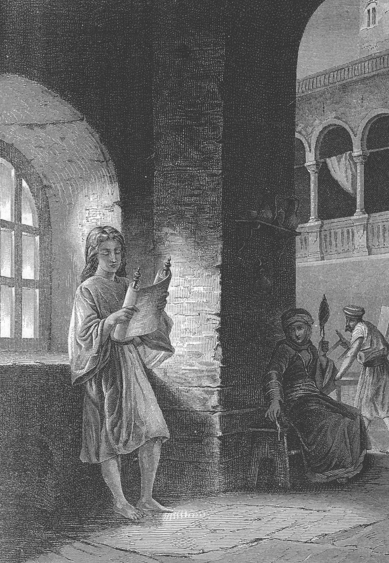
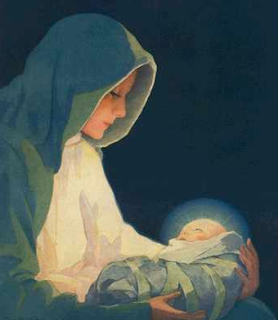
Mary's response: "She kept all these things and pondered them in her heart." And at least three more times in Luke we find Mary puzzled and pondering things that are playing out in the life of her child Jesus - Luke 2:33,50,51.

Though our experience will never mirror Mary's we too may have promises and dreams that set us pondering. They may be dreams God has put in our hearts for our own futures. They may be things people have spoken over us. They may be the destiny we see for our kids. They may be the role we envision our church will play in the community, or our country will have on the world stage.

Joyce Meyer had such a dream. Early in her Christian life she caught a vision of a ministry she believed God had for her. In her book Battlefield of the Mind, she describes how that vision was challenged. But claiming Romans 8:26 for the things she did not understand, she confronted naysaying thoughts with a determination to believe, not doubt, God's promises. She says:
"As Christians, we need to learn to decide to believe. God often gives us faith (a product of the Spirit) for things our minds just can't always seem to come into agreement with. The mind wants to understand everything—the why, the when, and the how of it all...


I had decided long before to believe what the Word says, and to believe the rhema (the revealed Word) that God gave me (the things He spoke to me or the promises He gave me personally), even if I didn't understand why, when, or how it would come to pass in my life" - Joyce Meyer, Battlefield of the Mind, p. 51.
As we ponder the promises God has given us, let us too study them in the light of faith. Mary obviously did. Why else would she have told the servants, troubled at running out of wine during the wedding in Cana, "Whatever He (Jesus) says to you, do it" (John 2:5)?

PRAYER: Dear God, please help me to ponder Your promises to me with faith, knowing that You can do "exceedingly abundantly above all that we ask or think" (Ephesians 3:20). Amen.

MORE: Mary, Did you Know? - Gaither Vocal Band


  ***************
Unless otherwise noted all Scripture quotations are taken from the New King James Version®. Copyright © 1982 by Thomas Nelson, Inc. Used by permission. All rights reserved.


Monday, December 24, 2018

Humiliation

TODAY'S SPECIAL: Luke 2:11-17

TO CHEW ON: "'For there is born to you this day in the city of David a Savior, who is Christ the Lord. And this will be the sign to you: You will find the Babe wrapped in swaddling cloths, lying in a manger.*'" Luke 2:11,12

*"Feed trough" is how my Bible footnotes "manger." It's a bassinet painted with animal drool, and decorated with cobwebs. What a contrast - Savior, Lord — lying in a manger! This is a sign indeed.

But it is consistent. For throughout His life, Jesus' trademark association was with  humble things:
  • He spoke easily and graciously with women, even socially despised ones (John 4:5-7; John 8:2-11).
  • He ate with tax collectors and sinners (Mark 2:13-17).
  • He taught the dignity and worth of the poor, humble, needy state (Matthew 5:2-12, 11:29; Luke 9:58)
  • He welcomed and blessed children (Mark 10:13-16).
  • He washed His disciples feet (John 13:5).
  • He was "numbered with the transgressors" (Luke 22:37) when He was "crucified..." and, as if that way of death was not bad enough, "between two robbers" (Matthew 27:38).

I have two reactions:

1. Amazement, that the exalted, all-powerful, all-knowing Creator of heaven and earth chose to identify with us in this way. The contrast is almost inconceivable.

2. Gratitude. Paul expresses that the reasons for our thankfulness so eloquently in 2 Corinthians 8:9.
"You are familiar with the generosity of our Master, Jesus Christ. Rich as he was, he gave it all away for us—in one stroke he became poor and we became rich" MSG.

PRAYER:
 Dear Jesus, thank You for coming to earth and in such a  humble way. No one of us needs to feel You can't identify with our lowness, for You came into the poorest situation. Help me reflect the value You modeled, of looking past the outer appearances to the inner worth of every person. Amen.


MORE: "Who is He in Yonder Stall?" - sung by the Collingsworth Family


*************
Unless otherwise noted all Scripture quotations are taken from the New King James Version®. Copyright © 1982 by Thomas Nelson, Inc. Used by permission. All rights reserved.

Scripture quotations marked MSG are taken from The Message. Copyright © 1993, 1994, 1995, 1996, 2000, 2001, 2002. Used by permission of NavPress Publishing Group.

Sunday, December 23, 2018

The angel multitude of Christmas

Children pose in a Christmas tableau
Christmas Tableau from our church's Christmas production some years ago.

TODAY'S SPECIAL: Luke 2:1-14

TO CHEW ON: "And suddenly there was with the angel a multitude of the heavenly host praising God and saying, 'Glory to God in the highest, and on earth peace, goodwill toward men.'" Luke 2:13,14

For about 400 years there had been heavenly silence. Now, within a matter of months, there were angel visitations all over the place.

They began with the angel coming to Zacharias to tell him of the birth of John - Luke 1:11-19.

Then an angel came to Mary to tell her of God's plan to make her pregnant with His Seed - Luke 1:26.

Following that an angel came to her betrothed, Joseph, to tell him the origin of Mary's pregnancy and that he should marry her - Matthew 1:20-21.

And here we have an angel multitude appearing to the shepherds to announce Jesus' birth and to praise God.

These angel visitations illustrate two of the purposes of angels.
1. When the angels appeared to Zacharias, Mary, Joseph, and the shepherds, they were busy as God's servants, carrying out His plans. Wayne Grudem details some of the ways angels assist God:
  • They bring God's messages to people (what they did here).
  • They carry out some of God's judgments  (2 Samuel 24:16,17).
  • When Christ returns an angel army will accompany Him (Matthew 16:27; Luke 9:26; 2 Thessalonians 1:7).
  • They patrol the earth as God's representatives (Zechariah 1:10-11).
  • They carry out war against demonic forces (Daniel 10:13; Revelation 12:7-8).
  • When Christ returns an angel will proclaim His coming (1 Thessalonians 4:16; Revelation 18:1).

2. The angel multitude that appeared to the shepherds did more than carry a message, however. They were a praising choir—another purpose of angels: to directly glorify God.
  • Many Bible references besides Luke 2:14 show angels doing this, for example Psalm 103:20; 148:2.
  • They express joy when sinners repent (Luke 15:10).
  • Perhaps one of the most poignant verses in regard to angels' reaction to our salvation is in 1 Peter 1:12, where Peter tells us that angels "desire to look into" the plan of salvation predicted by the prophets and brought about by "the suffering of Christ and the glories that follow." Though angels have many qualities and abilities we don't possess, it would seem they can't "look into" and know God's plan of salvation like we can.

The reaction of heaven's angelic beings to Jesus' birth reminds us again how incredible and special this event was. As we meditate on it today, reviewing what it means to us personally (in areas like forgiveness, our changed lives, and the  sense of purpose and destiny we have as a result of being part of God's family) let's let our hearts echo the words of the angels' praise: "Glory to God in the highest!"

(Points and references about angels from Systematic Theology by Wayne Grudem, pp. 404,5.)

PRAYER: Dear God, thank You for sending Your Son to earth to become one of us. Glory and praise to You forever! Amen.

MORE: Luke 2 in Handel's Messiah


Words from Luke 2 are put to music in Handel's Messiah.

Here is Tafelmusik's rendition of "Glory to God."


***********

New King James Version (NKJV) Used with permission. The Holy Bible, New King James Version Copyright © 1982 by Thomas Nelson, Inc.


Saturday, December 22, 2018

Little Bethlehem

TODAY'S SPECIAL: Micah 4:13-5:15

TO CHEW ON:
"But you, Bethlehem, Ephrathah
Though you are little among the thousands of Judah
Yet out of you shall come forth to Me
The One to be Ruler in Israel,
Whose goings forth are from old
From everlasting." - Micah 5:2


This often-quoted passage from Micah is a prediction of Messiah's birthplace. The students of Scripture in Jesus' day took it as such (Matthew 2:5,6; John 7:41,42) and all Christendom since has considered Jesus' birth in Bethlehem fulfillment of it and part of the proof that He really was/is Messiah.

I wonder, did Joseph ever connect this prophecy with what the angel had told him (Matthew 1:20,21), or Mary with what Gabriel had told her about the baby she would bear ("...and the Lord God will give Him the throne of His father David. And He will reign over the house of Jacob forever..." - Luke 1:32,33)?

I've always imagined that they felt upset and nervous about the need to travel from Galilee to Bethlehem so close to Mary's due date. But maybe their angst was also accompanied by an undercurrent of epiphany and excitement. God had told them His secret in private and now He was engineering events so that the details would fit with prophecy!

Of course they still had to live through those uncomfortable days of travel, that panicky time of finding a place—any place—where Mary could birth her baby. No matter how they put the two together, there was still lots of room for faith to be stretched.

You know, we're in God's story too. Of course, not in the way Joseph and Mary were. But we are part of events that are playing out as Jesus and the prophets foretold. Let's live our roles, no matter how insignificant they seem, with the faith that God has all the details in hand as He did for Joseph and Mary.

PRAYER: Dear God, thank You for these Bible prophets and prophecies that bolster my faith in You and Your plan. Please help me to have implicit faith in You as I play my part. Amen.

**********
Unless otherwise noted all Scripture quotations are taken from the New King James Version®. Copyright © 1982 by Thomas Nelson, Inc. Used by permission. All rights reserved.


Friday, December 21, 2018

Joseph's Dilemma

"The Anxiety of Saint Joseph" by James Tissot (1836-1902)

TODAY'S SPECIAL: Matthew 1:18-25

TO CHEW ON: "Then Joseph her husband, being a just man and not wanting to make her a public example, was minded to put her away secretly." Matthew 1:19

Joseph has always intrigued me. I think of him as thoughtful and deep, the strong, silent type. Here he faced the dilemma of his life: his beautiful fiancee was pregnant.

My Bible's study notes explain about Jewish betrothals:
"In Jewish law, betrothal involved a formal binding contract before witnesses but the betrothal abstained from sexual relations and the woman remained at her father's house until the actual wedding ceremony. The betrothed referenced each other as husband and wife (vs. 19,20), and the contract could be terminated only by death or a formal divorce decree" - J. Lyle Story, New Spirit Filled Life Bible, p. 1290.
Did the culture allow private conversations between engaged young people? If it did, I can imagine Mary's explanation, probably tearful (how could you not be emotional when the love of your life, the man who had your future in his hands, was looking at you with utter shock, disbelief and...revulsion?) even though this was a holy, joyful thing that had happened to her.

What to do? Joseph was considering putting her away secretly—divorcing her—the solution described in Deuteronomy 24:1. But just in time, "while he thought about these things" an angel appeared to Joseph in a dream to confirm Mary's claim that this baby was indeed what she had said and not the fruit of a sinful union. So Joseph married her and the rest of the story played out.

Have you noticed how God showing up here just in the nick of time, just as He often comes to us in our emergencies. It never feels soon enough for our likes, but neither is it too late for the situation. God could have alerted Joseph to what was about to happen before any of it transpired, saving him the stress, worry, and crisis. But He didn't. Why? I believe it was because God was developing Joseph's faith at the same time He was working out His plans for the earth in sending Jesus.

God's response to Joseph reminds me of some paragraphs I came across in J. I. Packer's Knowing God. Packer, speaking of another Joseph and his reaction to his brothers in Genesis 45:4-8 says:
"Once again we are confronted with the wisdom of God ordering the events of a human life for a double purpose: the man's own personal sanctification and the fulfilling of his appointed ministry and service in the life of the people of God....


These things are written for our learning: for the same wisdom which ordered the paths which God's saints trod in Bible times orders the Christian's life today. We should not therefore be too taken aback when unexpected and upsetting and discouraging things happen to us now. What do they mean? Why, simply that God in His wisdom means to make something of us which we have not attained yet, and is dealing with us accordingly....


But how are we to meet these baffling and trying situations if we cannot for the moment see God's purpose in them? First by taking them as from God, and asking ourselves what reactions to them, and in them, the gospel of God requires of us; second by seeking God's face specifically about them" J. I. Packer, Knowing God, pages 103-105, 1975 edition (emphasis mine).

PRAYER: Dear God, please help me to go to You when life is puzzling and full of questions. Then help me to, in faith, obey what you reveal, as Joseph did. Amen.

*************

Unless otherwise noted all Scripture quotations are taken from the New King James Version®. Copyright © 1982 by Thomas Nelson, Inc. Used by permission. All rights reserved.

Thursday, December 20, 2018

Lift up your eyes

"Adoration of the Magi" after Workshop of Raphael

TODAY'S SPECIAL: 2 Samuel 7:1-17


TO CHEW ON:
"And your house and your kingdom shall be established forever before you. Your throne shall be established forever." 2 Samuel 7:16

What does a passage in 2 Samuel have to do with Christmas, you may be asking. As we read it we see, sure enough. Here in Nathan's prophecy to David is a very clear reference to Messiah. Of 2 Samuel 7:12-16 a footnote in my Bible says:

"The son of David (Solomon) and the son of David (the Messiah) merge here. It is the Messiah's throne that will be established forever" - Jerry Cook, New Spirit Filled Life Bible, p. 411.

Then the footnote suggests more Bible bits to read in the same vein. Let's read and ponder them, letting the prophetic words of hope and longing crane the necks of our spirits and lift our eyes as we anticipate the celebration of His birth and the revelation of His Kingdom established still to come.

Psalm 45. Note especially verse Psalm 45:6:
"Your throne, O God, will last for ever and ever;
   a scepter of justice will be the scepter of your kingdom." -
NIV © 2010 

Psalm 2: 6-9:
6"Yet have I anointed (installed and placed) My King [firmly] on My holy hill of Zion.
    7I will declare the decree of the Lord: He said to Me, You are My Son; this day [I declare] I have begotten You.
    8Ask of Me, and I will give You the nations as Your inheritance, and the uttermost parts of the earth as Your possession.
    9You shall break them with a rod of iron; You shall dash them in pieces like potters' ware." -  Amplified


Psalm 89:3-4
 3 "The Lord said, “I have made a covenant with David, my chosen servant.
      I have sworn this oath to him:
 4 ‘I will establish your descendants as kings forever;
      they will sit on your throne from now until eternity.’”
                         
Interlude" - NLT


Hebrews 1:8
8 "But to the Son He says:

      'Your throne, O God, is forever and ever;
      A scepter of righteousness is the scepter of Your kingdom.'"- NKJV
Revelation 11:15
15 "The seventh angel sounded his trumpet, and there were loud voices in heaven, which said:
   'The kingdom of the world has become
   the kingdom of our Lord and of his Messiah,
   and he will reign for ever and ever.'" - NIV © 2010


Revelation 19:6
"6After that I heard what sounded like the shout of a vast throng, like the boom of many pounding waves, and like the roar of terrific and mighty peals of thunder, exclaiming, 'Hallelujah (praise the Lord)! For now the Lord our God the Omnipotent (the All-Ruler) reigns!'" - Amplified

PRAYER: Dear God thank You for Your kingdom, predicted by the prophets, fulfilled in the coming of Christ and still in the process of being revealed. I look forward to the day when Your complete victory over Satan, sin and death is visible. Amen.

MORE: "Of the Father's Love Begotten"


"All dominions bow before Him
And extol our God and King"


********************
Unless otherwise noted all Scripture quotations are taken from the New King James Version®. Copyright © 1982 by Thomas Nelson, Inc. Used by permission. All rights reserved.

Scripture quotations marked AMP are taken from the Amplified® Bible, Copyright © 1954, 1958, 1962, 1964, 1965, 1987 by The Lockman Foundation. Used by permission." (www.Lockman.org)

Scripture quotations marked NLT are taken from the Holy Bible, New Living Translation, copyright © 1996, 2004, 2007 by Tyndale House Foundation. Used by permission of Tyndale House Publishers, Inc., Carol Stream, Illinois 60188. All rights reserved

Scripture quotations marked NIV are taken from THE HOLY BIBLE, NEW INTERNATIONAL VERSION®, NIV® Copyright © 1973, 1978, 1984, 2011 by Biblica, Inc.® Used by permission. All rights reserved worldwide.

Wednesday, December 19, 2018

The most profound miracle and mystery of the universe

The Child Jesus by Alexandre Bida
"The Child Jesus" - Alexandre Bida
For the next week, we're going to take a Christmas break from our Bible reading schedule to focus on Christmas and the Christmas story.

(We'll still make it reading through the Bible this year, as the schedule we're following has one week of grace built into it!)


TODAY'S SPECIAL: Psalm 85:1-13

TO CHEW ON: "Mercy and truth have met together,
Righteousness and peace have kissed." Psalm 85:10


This meeting of mercy and truth, righteousness and peace playing out in the incarnation has fascinated philosophers and theologians ever since there have been such people. They have tried to understand how it works, argued over its fine points, and parted ways over differences of belief. It is really the point of the whole Bible—the Gospel, good news.  I love how Wayne Grudem sums it up at the end of the chapter "The Person of Christ" in his Systematic Theology:

"It (the incarnation) is by far the most amazing miracle of the entire Bible—far more amazing than the resurrection and more amazing even than the creation of the universe. The fact that the infinite, omnipotent, eternal Son of God could become man and join himself to a human  nature forever, so that infinite God became one person with finite man, will remain for eternity the most profound miracle and the most profound mystery in all the universe" - p. 563.

PRAYER: Dear God, thank You for this mystery and miracle and what it means for me: I have Your mercy, I have peace with You. Thank You!

 *********
Unless otherwise noted all Scripture quotations are taken from the New King James Version®. Copyright © 1982 by Thomas Nelson, Inc. Used by permission. All rights reserved.


Tuesday, December 18, 2018

Light some incense today!

TODAY’S SPECIAL: Revelation 7-9; Psalm 42

TO CHEW ON: “Then another angel having a golden censer, came and stood at the altar. He was given much incense, that he should offer it with the prayers of all the saints upon the golden altar which was before the throne. And the smoke of the incense with the prayers of the saints, ascended before God from the angel’s hand.” Revelation 8:3-4

In John’s vision, events in heaven continue to play out. He (the Lamb) opens the seventh seal to reveal an expanding vista of seven trumpets. The seven judgments they announce (8:2-11:18) are cataclysmic. The first four (found in our reading today) affect the natural world and remind us of the Egyptian plagues (hail, blood, polluted water, death to living creatures, darkness).

What I find fascinating are the two verses about the saints’ prayers that precede the fateful trumpet blasts. They seem almost out of place. Here, as earlier (Revelation 5:8), an angel presents these prayers to God as incense.

Incense has been associated with deity and worship since ancient times. Divination by interpreting the shapes that rose from incense smoke was an inexpensive way for poor people to determine the will of the gods. The Egyptians and other Gentile nations used it in their worship. Still today it is part of the practice of Buddhism, Christian Orthodoxy and other religions.

  • In Old Testament religious practice, only the priests were allowed to offer incense. Moses’ instructions to Aaron included strict regulations concerning its makeup and use (Exodus 30:34-36). 
  • God specifically forbade the personal mixing and use of the incense designed for worship (Exodus 30:37-38). 
  • David first likened prayers to incense (Psalm 141:2). 
  • God warned the Israelites through Isaiah that offerings, including the burning of incense, done while clinging to known sin were offensive to Him (Isaiah 1:13).  
  • In Malachi its use symbolized the universal worship of God: “In every place incense shall be offered to My name…” Malachi 1:11

That the prayers of the saints (us!) should be equated with something as integral to worship as incense tells us how important they are to God. Here they are directly connected to the judgments that follow. For after presenting the incense prayers to God, the angel takes the golden censer that held them, fills it with fire from the altar, throws it to earth, and the action begins.

This focus on prayer makes me want to spend more time on this aspect of my relationship with God. As Barbara Billet expresses it:
“I ask You, Lord, that You would fill me with Your consuming fire today. I desire to be used as a house of prayer so that I can pray heartfelt, fervent, effectual prayers that will cause my prayer life to have much power, available, dynamic in its working.” Barbara Billet, Praying With Fire, p. 19

PRAYER: Dear God, please teach me to pray. Amen

PSALM TO PRAY: Psalm 42

*****************
Unless otherwise noted all Scripture quotations are taken from the New King James Version®. Copyright © 1982 by Thomas Nelson, Inc. Used by permission. All rights reserved.


Monday, December 17, 2018

No-holds-barred worship


TODAY’S SPECIAL: Revelation 4-6; Psalm 41

TO CHEW ON:
 “The twenty-four elders fall down before Him who sits on the throne and worship Him who lives forever and ever, and cast their crowns before the throne saying”
‘You are worthy, O Lord
To receive glory and honor and power
for You created all things
And by your will they exist and were created.’” Revelation 4:10-11


The scene John describes in today’s reading is beyond comprehension and difficult even to imagine. It is not unlike other glimpses we get of God and the activity in heaven. There are striking similarities. Note the “sea of glass” in Revelation 4:6 and the sapphire-like pavement under God's feet when He showed Himself to Moses (Exodus 24:9,10) and the 70 elders on Mount Sinai. Note the exotic creatures (Revelation 4:7,8) here and described similarly in Ezekiel’s vision (Ezekiel 1:10). Note the abundance of eyes in both places.(Revelation 4:8; Ezekiel 1:18)

What does it all mean? An end-note in my Bible suggests that the sea of glass denotes the unapproachableness of God. The four creatures speak of majesty (lion), courage and strength (ox), intelligence (man) and speed (eagle) “in the service of the Creator.” The abundance of eyes symbolizes God’s unceasing watchfulness.(New Spirit Filled Life Bible p.1824)

These visions evoked fear, awe and above all, worship in those who saw them.

Worship (proskuneo; pros= toward, kuneo = kiss; kiss toward - "to kiss like a dog licking his master's hand") means to prostrate oneself, bow down, do obeisance, show reverence, homage, worship, adore. We worship only God and the risen and ascended Jesus – not angels, saints, shrines, relics or religious people.

Although we’re not currently in heaven, privy to these description-taxing scenes, where worshipers fall down before God and present their crowns to Him, we can also worship on earth in the here-and-now.

1. We can assume physical postures of worship as twenty-four Elders do here – kneeling, bowing, lying on the ground before God during our times of private prayer and even in church. Perhaps it would do us good to remind ourselves of our lowness in relation to God in this way more often than we do.

2. We can give our everyday lives to God (Romans 12:1) – your “ordinary life – your sleeping eating, going-to-work, and walking-around life—and place it before God as an offering” (Message). This is called your “reasonable (rational, intelligent) service and spiritual worship.” (Amp)

3. We can adhere to His standards and live obediently as people of His covenant - Isaiah 56:6,7 (inviting people of all nations to Christ, observing the pattern of life He has set out - like keeping one day of rest - and preserving our assembly place as a "house of prayer for all nations.")

4. We can be part of His plan by aligning ourselves with other Christians as “living stones” (1 Peter 2:4,5 NIV) members of His spiritual house.

Will we do these things with the same willingness and abandon that the saints in heaven worship in the awe-inspiring presence of God?

PRAYER:
Dear God, please give me a sense of Your otherness. I so easily take You down to my level. Help me to worship You with all I am and have. Amen.
The Bible Project VIDEO: Day of the Lord (Theme series)


MORE: I love John's comparison of God and heaven with precious gems, stones, and metals. Trouble is, I have no experience with many of these jewels. Here is a little about the ones mentioned in this passage.


Jasper

Sardius (similar to Carnelian, only harder and darker)


Emerald


Gold

Crystal

*************
Unless otherwise noted all Scripture quotations are taken from the New King James Version®. Copyright © 1982 by Thomas Nelson, Inc. Used by permission. All rights reserved.

Unless otherwise noted all Scripture quotations are taken from the New King James Version®. Copyright © 1982 by Thomas Nelson, Inc. Used by permission. All rights reserved.

Scripture quotations marked AMP are taken from the Amplified® Bible, Copyright © 1954, 1958, 1962, 1964, 1965, 1987 by The Lockman Foundation. Used by permission." (www.Lockman.org)

Scripture quotations marked MSG are taken from The Message. Copyright © 1993, 1994, 1995, 1996, 2000, 2001, 2002. Used by permission of NavPress Publishing Group.

Sunday, December 16, 2018

Jesus - the A to Z

Alpha and Omega written on stones
TODAY’S SPECIAL: Revelation 1-3; Psalm 40

TO CHEW ON: “’ I am Alpha and Omega, the Beginning and the End,’ says the Lord, ‘who is and who was and who is to come…. I am Alpha and Omega, the First and the Last.’” Revelation 1:8, 11


God’s plan in time and space is wonderfully wrapped up and tied together in Jesus. Here He is called Alpha and Omega – the first and last letters in the Greek alphabet – the beginning, ending and everything in between.

As the beginning, Jesus is the creator (Genesis 1:1)  – the One through whom all things were made (John 1:1-3).

He is the first communicator – the Word (John 1:1-3).  In John’s vision  a “sharp two-edged sword” comes out of His mouth. Sound familiar? It’s right here (Hebrews 4:12).

He is the ever-present one – “who is and was and is to come.” Remember the strange name He called Himself to Moses: “I Am” (Exodus 3:14),  echoed by Jesus in John 8:58? What better explanation of that name than “the One who is and who was and who is to come.”

He is the end. He is the end of the law (Romans 10:4).

He is also integral to end-of-time events as the Bible predicts them – the time of harvest (Matthew 13:39) and judgment (Matthew 13:49,50). The end is the culmination of our opportunity (Matthew 24:13,14) to obey Jesus’ last command (Acts 1:8).  We have the promise of Jesus’ presence with us (Matthew 28:19,20) till then. But also until then our endurance and ability to stay true to Him will be tested (Mark 13:13).

Thinking about these things is like doing brain stretches. It’s almost impossible for our human minds to comprehend these dimension-challenging ideas – present before time, after time, ever present in time…

But we can grasp that here and now Alpha and Omega is the I Am to us. He can be present in our lives. He can help us endure. He  can enable us to live daily in obedience and on-task.

PRAYER: Dear Jesus, be my Alpha and Omega. Live in my life as I Am today. Help me to fulfill my role in Your eternal plan. Amen.

PSALM TO PRAY: Psalm 40


The Bible Project VIDEO - Revelation - Part 1 (Read Scripture Series)


***********
Unless otherwise noted all Scripture quotations are taken from the New King James Version®. Copyright © 1982 by Thomas Nelson, Inc. Used by permission. All rights reserved.

Saturday, December 15, 2018

Spiritual bodybuilding

TODAY'S SPECIAL: Jude 1-25; Psalm 39

TO CHEW ON: "But you, beloved, building yourselves up on your most holy faith, praying in the Holy Spirit, keep yourselves in the love of God, looking for the mercy of our Lord Jesus Christ unto eternal life." Jude 20-21

Jude, the brother of James wrote the short letter of Jude. It's a letter of warning to an unnamed church or churches. False teachers were the problem.

Jude talks of the havoc these teachers had created by comparing them to Bible characters. They acted in the spirit of:
Cain: destruction. Cain murdered his brother instead of caring for him (Genesis 4:8).

Balam: greed. Balam was a prophet who consented to try to curse Israel for King Balak in return for money (Numbers 21:1-22:41).

Korah: rebellion. Korah led a rebellion against Moses (Numbers 16:1-24).

How can the people resist these teachers? Jude says by "building yourselves up on your most holy faith."

The phrase "building yourselves up" brings to mind the gym. There people do multiple repetitions of exercises (sit-ups, crunches, leg lifts, bench presses, cycling, etc.) to build up different parts of the body. What would a spiritual workout look like? It could consist of reading, studying and memorizing the Bible, praying in the Holy Spirit (praise, thanksgiving, petition, intercession, worship), and singing.

The crowd of runners we pass on our way to church Sunday morning have tapped into another effective way to work out physically. They do it together for companionship, accountability, even safety. In our spiritual workout program, this would compare to being part of a faith community — a church, home group or Bible study group. (Of course Jude's letter, written out of the need to warn church members about false teachers within tells us that such togetherness also has its hazards.)

We know that in order for a physical workout program to accomplish what we want it to, it has to be consistent. That's where we get tested. For no matter how exciting a fitness program is at the beginning, it's hard to stick with it. Doing the same exercises over and over can get boring. Sometimes we're tired and don't feel like exercising. We may not notice any difference in our body and wonder if it's actually making us stronger.

Sticking with a spiritual fitness program is just as challenging. Some parts of the Bible are hard to understand. We may wonder if our prayers are making any difference. We may get discouraged by the spiritually immature tendencies we still see in ourselves and feel disheartened when temptations still trip us up. But just like sticking with a physical fitness program eventually brings about changes in our bodies, so sticking with regular routine of spiritual fitness will strengthen us spiritually.

Do you work out spiritually? If not, decide to make such a program a part of your routine. Life is full of challenges. You'll want to face them with a well-toned faith.

PRAYER: Dear God, thank You for being my teacher and trainer. Help me to be as devoted to developing my faith as I am to caring for my body. Amen.

PSALM TO PRAY: Psalm 39

The Bible Project VIDEO: Jude (Read Scripture Series)


*************
Unless otherwise noted all Scripture quotations are taken from the New King James Version®. Copyright © 1982 by Thomas Nelson, Inc. Used by permission. All rights reserved.

Friday, December 14, 2018

Loving God, loving each other

TODAY'S SPECIAL: 2 John 1 & 3 John 1; Psalm 38

TO CHEW ON:
"And now I plead with you, lady, not as though I wrote a new commandment to you, but that which we have had from the beginning: that we love one another." 2 John 5


When I first posted this devo some years ago (it is a re-post) we were in the middle of our annual church conference. One night visiting speaker Joel A'Bell (Hillsongs Church, Australia) talked about loving each other. He said something like, "We want deep teaching, to know what the colors of the priest's robes mean. But we don't obey Jesus' most basic commands to love the Lord our God with all our heart, soul, mind, and strength and our neighbour as ourselves - Mark 12:29-31."

"Have you ever thought about what it means to love God this way?" he asked. He went on to explain how we love God with our heart, soul, mind and strength. Here are some of his thoughts (via my scribbled notes):

- Loving God with all my heart means having a heart to let go.
"We struggle when there's more in our heart than Jesus."

- Loving God with all my soul means to go slow.
"We're speedy; make decisions quickly, we're too fast on the inside, don't take time to think, meditate, pray."

- Loving God with all my mind is having a mind to change (i.e. repent).
"Maturity is evidenced by the decreasing time gap between the challenge to change and the actual obedience."

- Loving God with all my strength is endurance.
An example he gave of this is our tendency to become familiar with the things of God so they no longer move us. The person that loves with strength pulls his/her mind back to focus on the truths of God's word, the lyrics of the familiar worship song etc. and does "not give in to the weakness of familiarity."

Loving God this way will make us ever more convinced and sure and secure in God's love for us. The natural outflow of such love is for us to love others. I like how Leslynn Musch puts it in her Truth-In-Action in 2 John article: "If we are truly loved, then that love should affect the way we love others. Love others as Jesus has loved you" - New Spirit-Filled Life Bible, p. 1795.

PRAYER: Dear God, I know I often fall short of loving You with my heart, soul, mind, and strength and so it is no wonder my relationships with others are tainted by insecurity, fear, comparison, and competition etc. Please help me to bask in Your love, love You back, and from that loop, to love my Christian family and the world. Amen.

PSALM TO PRAY: Psalm 38

********

 Unless otherwise noted all Scripture quotations are taken from the New King James Version®. Copyright © 1982 by Thomas Nelson, Inc. Used by permission. All rights reserved.

Thursday, December 13, 2018

The "we know"s of John


TODAY'S SPECIAL: 1 John3-5; Psalm 37


TO CHEW ON: "And we know that the Son of God has come and has given us an understanding that we may know Him who is true..." 1 John 5:20

As we read 1 John 5, the phrase "we know" keeps popping up. What are the things John told his readers way back in the first century, and tells us now, that "we know"?

1. "We know that we love the children of God, when we love God and keep His commandments" (1 John 5:2).

[Know here and in its last appearance (in 1 John 5:20) is ginosko which means to learn to know, come to know, get a knowledge of, perceive, feel, understand.]

2. "These things I have written to you who believe in the name of the Son of God that you may know that you have eternal life..." (1 John 5:13).

[Know here is oida from horao which means to see with the eyes, see with the mind, perceive, know, become acquainted with by experience, to see, look, take heed, be aware.]

3. "... we know that He hears us, whatever we ask..." (1 John 5:15)

4. "...we know we have the petitions we have asked of Him" (1 John 5;15).

5. "We know that whoever is born of God does not sin" (1 John 5'18).

6. "We know that we are of God and the whole world lies under the sway of the wicked one" (1 John 5:19).

7. "We know that the Son of God has come and has given us an understanding..." (1 John 5:20a).

8. "...that we may know Him who is true and we are in Him who is true..." (1 John 5:20b).

As I read this list of certainties posed by John, I am again impressed with how the Christian life is a push-and-pull of faith and experience. Notice how our lists of knows (the know of experience) is bracketed by two knows (learning to know, getting a knowledge or perception of).

I ask myself, which of these knows can I declare with confidence? Which do I need to grow in? Most of all, am I progressively advancing in knowing Him (1 John 5:20b)? I do that by buttressing my faith through experience in all the ways John lists.

PRAYER: Dear God, help me to have the confident knowledge of You that John expresses. Above all, help me to know You.


PSALM TO PRAY: Psalm 37

*************
Unless otherwise noted all Scripture quotations are taken from the New King James Version®. Copyright © 1982 by Thomas Nelson, Inc. Used by permission. All rights reserved.

Wednesday, December 12, 2018

Do we walk in darkness, or light?

TODAY’S SPECIAL: 1 John 1-2; Psalm 36

TO CHEW ON:
“If we say that we have fellowship with Him and walk in darkness, we lie and do not practice the truth. But if we walk in the light as He is in the light, we have fellowship with one another and the blood of Jesus Christ His Son cleanses us from all sin.” 1 John 1:6,7


Our reading talks about two ways to live: “Walk in darkness” and “walk in light.” These are metaphors. What do they mean?

The Zondervan Study Bible notes define both (emphases added):

To “walk in darkness” denotes a life characterized by wickedness and ignorance and an unwillingness to be open toward God and his revelation in Christ—lest one’s sinful behaviour be exposed.”

John actually quotes Jesus Himself on what walking in darkness is about:
“‘For everyone practicing evil hates the light and does not come to the light, lest his deeds should be exposed’” - John 3:19.
Here’s the old secrecy over disobedience cropping up again that began way back in the Genesis garden (Genesis 3:8-10).

To “walk in light” denotes a life characterized by truth and holiness and a willingness to be open to God and his revelation, resulting in fellowship with one another and with God.”

How do we, in our everyday lives, walk in light?

A start, I believe is to be open with God—to let Him search us through the Bible and in prayer and keep no secrets from Him. We can express our doubts, fears, issues, and questions to Him. When He shows us attitudes to change and exposes the times we’ve sinned, we acknowledge, confess, repent, make restitution (or whatever is required). We let Him shine light into the farthest, darkest recesses of our hearts to show us to ourselves so we can renounce all darkness and live in light. (I’m thinking this may take years as, in my experience, God deals with us in layers to get to core of our onion hearts.)

A wonderful side benefit of living in light is how it smooths our relationships with fellow-Christians: “… we have fellowship with one another…”


PRAYER: Dear Father, help me to walk in light by being completely open and honest with You. Amen.

PSALM TO PRAY: Psalm 36

The Bible Project VIDEO: 1-3 John (Read Scripture Series)


*********
Unless otherwise noted all Scripture quotations are taken from the New King James Version®. Copyright © 1982 by Thomas Nelson, Inc. Used by permission. All rights reserved.


Tuesday, December 11, 2018

Seeing beyond sight

"The Transfiguration" Artist unknown

TODAY'S SPECIAL: 2 Peter 1-3 Psalm 35

TO CHEW ON: "For we did not follow cunningly devised fables when we made known to you the power and coming of our Lord Jesus Christ, but were eyewitnesses of His majesty. For He received from God the Father honor and glory when such a voice came to Him from the Excellent Glory: 'This is my beloved Son, in whom I am well pleased.'" 2 Peter 1:16,17.


Do you think first-person accounts of people seeing visions of heaven and Jesus are believable? Or hoax? Or maybe you view them as sacrilege? In the last few years many such modern stories have surfaced. Several—Heaven is for Real and Miracles from Heaven—have even been made into movies.

I wonder if Peter's account of Jesus' transfiguration, which he refers to here (and is told in full in Luke 9:28-36) met with the same mixed response. There was no doubt in Peter's mind, though, as to the reality of what he had seen and heard. He used this vision as grounds for his authority (2 Peter 1:18-21). Indeed, most if not all of the prophetic writings in the Bible derive from God's communicating with people in ways we would call extrasensory or supernatural.

Most of us humans, though, live in a state of limited reception, especially to the spiritual realm. So when someone claims to have a vision, even Christians, especially us 21st century ones, influenced by the prove-it-in-the-lab-or-I-won't-believe-it mentality of humanistic naturalism, are skeptical.

I know there is room for caution when we hear stories of people experiencing the supernatural. Still, I hope that I am not so cautious as to disqualify myself from hearing from God in any way He should want to speak to me.

In this regard, let me leave you with some quotes from a book by author Mike Mason. The e-book Adventures in Heaven is the story Mason tells of his friend who claimed to have many supernatural and heavenly experiences. Mike himself saw Jesus only once. Here is some of his account:

"No sooner had he said these words than I found myself looking at Jesus! He was right there in front of me, larger than life. … The first thing that struck me was His joy. He was positively beaming like ten thousand suns. … And that face—how full of character! … And what is revealed in the face of Jesus is all love, all beauty, all wisdom, all goodness…." Kindle Location 3399.

This is how that vision affected him:

"Seeing Jesus, it turned out, far from leaving me with my head stuck in the clouds, was absolutely the best thing that could have happened. I didn't tell anyone else my experience. I didn't have to. I'd been filled with the joy and the love of God, and so all my contacts with people over the next few days took on a wholly different quality" - Kindle Location 3433.

PRAYER:
Dear Jesus, I'm glad that You are not bound by the limitations I feel within my human tent. Help me to perceive You in whatever way You choose to reveal Yourself to me. Amen.
 

PSALM TO PRAY: Psalm 35

The Bible Project VIDEO: 2 Peter (Read Scripture Series)


 *********
Unless otherwise noted all Scripture quotations are taken from the New King James Version®. Copyright © 1982 by Thomas Nelson, Inc. Used by permission. All rights reserved.


Monday, December 10, 2018

Who is the boss in your heart?

TODAY'S SPECIAL: 1 Peter 3-5; Psalm 34

TO CHEW ON: "But even if you should suffer for righteousness' sake, you are blessed. 'And do not be afraid of their threats nor be troubled.' But sanctify the Lord God in your hearts." 1 Peter 3:14-15. 


The fact of God actually living in people is a concept that spans the Old and New Testaments. However, Jesus sheds new light on it ("new" at least to the people of His time) when He explains the role of the Holy Spirit in the process.
  • Jesus calls Him the "Helper" whom He has petitioned the Father to send. This Helper will live with, indeed, in them - John 14:15-18. 
  • He will give them assurance of eternal life, interaction with God the Father, Son and Holy Spirit, and He is the assurance of God's love - John 14:19-21.

Paul talks often about this life of Christ within people. Some of the things he tells us about it:
  • It is a life of faith that begins when we accept Christ's substitutionary death for our sin as our means of salvation (not our own works) - Galatians 2:20.
  • It helps us know the love of God - Ephesians 3:17-19.
  • It is the hope of a wonderful future beyond this life - Colossians 1:27.

Peter's words in our reading today talk about this life to believers who are in the middle of persecution. His short statement, "But sanctify the Lord God in your hearts" comes right after he addresses their apparent puzzlement over bad treatment. They are righteous but they are suffering. Why? He reminds that this suffering is, in the Kingdom of God's upside-down way, a blessing (Matthew 5:10), and not to fear but rather to "sanctify (or set apart) the Lord God in your hearts."

He is telling them, in effect, Let God be the Lord (boss) in these things. Accept even persecution as from Someone who knows about it, who has power over it, yet is allowing it. 


The Message puts it this way:
"Through thick and thin, keep your hearts at attention, in adoration before Christ, your Master" - 1 Peter 3:15
As Paul explains in Romans "...all things work together for good to those who love God, to those who are called according to His purpose." That purpose includes being conformed to the image of Jesus. Persecution may be a part of it. But the end of the story is good. It is glory - Romans 8:27-30.

Whatever we are facing, have we done this — set apart Jesus as Lord? Settled once and for all that He is in charge of our lives and is working His good purposes in them even through negative circumstances? Let's put this into practice:
  • By faith accept that Jesus lives in us by the Holy Spirit.
  • Believe that He loves us.
  • Sanctify Him as Lord — our hands off; He's in charge.
  • Let the good and bad things (at least 'bad' according to how we feel about them) He sends our way conform us to Jesus' image.
  • Live in hope not of this world's rewards but of glory in eternity.
PRAYER: Dear God, how often I take the steering wheel of my life back into my hands. How easily I question whether You know what You're doing when unpleasant things come my way. Help me to enthrone You as Lord in a moment-by-moment way today. Amen.

PSALM TO PRAY: Psalm 34

**************
Unless otherwise noted all Scripture quotations are taken from the New King James Version®. Copyright © 1982 by Thomas Nelson, Inc. Used by permission. All rights reserved.

Sunday, December 09, 2018

"Kept"

Guard
TODAY'S SPECIAL: 1 Peter 1-2; Psalm 33

TO CHEW ON:
"… who are kept by the power of God through faith for salvation ready to be revealed in the last time." 1 Peter 1:5

It's easy to trust in God's keeping power when times are good. But when we get sick, or suffer setbacks in business, or go through heart-breaking times with our kids, or have all we own ripped away from us by fire, tornado or mudslide, or any number of other trials, can we trust that God is still there? Is He still keeping us?

Peter here reminds the "pilgrims of the Dispersion"—mostly Gentile Christians living in various parts of Asia Minor who are experiencing persecution because of their obedience to Christ—that even through their trials they are being "kept."

["Kept—phroureo is "a military term picturing a sentry standing guard as protection against the enemy. We are in spiritual combat but God's power and peace (Philippians 4:7) are our sentinels and protectors" - Dick Mills, Word Wealth, New Spirit-Filled Life Bible, p. 1763.]

But we have our part to play in this keeping. For it is "through faith." And this keeping will not necessarily mean a return to how things were before the trial, but in ultimate salvation, completely accomplished and understood "in the last time."

If your faith is old, seasoned and experienced, a wealth of memories reminding you of how God has kept you in the past will buttress your faith now. If you're new to faith, you may want to spend time reading stories of Bible characters and biographies of modern Christ followers. The way God kept them through trials will build faith in God's creativity and faithfulness for your life. 

PRAYER: Dear God, thank You for keeping me in the past and continuing to do so. Please help me to grow in faith as I experience your keeping power. Amen.

PSALM TO PRAY: Psalm 33

The Bible Project VIDEO:  1 Peter (Read Scripture Series)


MORE: Reading list

Some Bible characters to read about:

  • Joseph - Genesis 37, 39-47.
  • Hannah - 1 Samuel 1:1-2:11.
  • Ruth - Bible book of Ruth.
  • Esther - Bible book of Esther.
  • Daniel - Daniel 1-3, 6.
  • Nehemiah - Bible book of Nehemiah.

Some faith-building biographies (links are to my reviews of these books):

  • Kabul 24 - Henry O. Arnold & Ben Pearson

 *********
Unless otherwise noted all Scripture quotations are taken from the New King James Version®. Copyright © 1982 by Thomas Nelson, Inc. Used by permission. All rights reserved.


Saturday, December 08, 2018

Two tests for our to-do lists

TODAY'S SPECIAL: James 4-5; Psalm 32

TO CHEW ON: "Therefore, to him who knows to do good and does not do it, to him it is sin." James 4:17


In this practical section of James' practical letter, I see two filters or tests for our to-do lists for today, tomorrow, and into the future.

1. Is this God's will (James 4:13-16)?


After years of walking with the Lord, I still often find myself making plans and then feeling a check in my spirit and the question: "Have you consulted Me about this?" Or realizing that I want something to happen or work out NO MATTER WHAT and then getting the insight: this thing is self-conceived, self-imposed, and self-generated.

Author Janette Oke came face to face with such a dilemma when she began writing. At first she prayed:
"'God, I'm going to write this book. And if it works and if I discover that I have talent, I'll give it all to You.'"

But she quickly sensed that was not what God wanted. His response as she recalls it:
"'I'm not interested in your book after you're done with it. I'm not even particularly interested in your talent. If you are really serious about writing as a ministry, then I want it all, right now before you start.'"

At that early stage in her career, then, she made a hands-off commitment  and the result:

"She was free. She was free to write without worrying about the outcome. She was free from the pressure of getting sales. She was free from the temptation of pride'" -  Janette Oke: A Heart for the Prairie by Laurel Oke Logan, Kindle Location 3167.

2. Am I doing the good I know to do (James 4:17)?

The IVP commentary says about this verse:
"Suddenly James shifts his emphasis from whether we know God's will to whether we do God's will… The adverb oun ("Then"—in the NKJV "Therefore") provides grammatical evidence James intends a connection in thought. The picture is of one who knows the good he ought to do and doesn't do it" - IVP commentary accessed through Bible Gateway.

I see this enacted in author Oke's life as well. Once she'd had her first book published, she started planning another. But then letters began pouring in from people who wanted to know what happened next to the characters in her story and her editor asked her to write a sequel. So she abandoned her plans and did her duty to the publishing company.

Throughout the active years of her writing career, she continued to do the good she knew to do, delivering three books a year. And it wasn't always easy. In this interview she describes writing as " ... very time consuming and frankly, it’s hard work."

That, folks, is knowing the good one should do, and doing it!

PRAYER: Dear Father, help me to make plans subject to Your lordship in my life and to faithfully perform the good and humble duties You set before me. Amen.


MORE: The Reward
The reward to Janette Oke for relinquishing her work to God and faithfully doing her duty is still being seen. Her books have sold over 30 million copies. In 2002, Michael Landon Jr. chose that first book she wrote—Love Comes Softly—as the basis of his first TV movie for the Hallmark Channel. Over the years many more of her books have been made into movies, including the When Calls the Heart TV series, based on her Canadian West books.

But it would be my guess that the reward she is most looking forward to is meeting Jesus and hearing His: "Well done, good and faithful servant."

My  short biography of Janette Oke, posted in the Encyclopedia of Canadian Christian Leaders is HERE.


*********
Unless otherwise noted all Scripture quotations are taken from the New King James Version®. Copyright © 1982 by Thomas Nelson, Inc. Used by permission. All rights reserved.


Friday, December 07, 2018

Five ways to prove your faith is alive

Sprouting vegetables
"Receive... the implanted word" - RGBStock.com photo
TODAY'S SPECIAL: James 1-3; Psalm 31

TO CHEW ON: "But be doers of the word and not hearers only deceiving yourselves. … Thus also faith by itself, it if does not have works, is dead." James 1:22; 2:17.


In our reading today, James stresses the importance of living what we claim to believe. He begins by clarifying where those beliefs originate. They are not our ideas but come from the word: "… receive with meekness the implanted word, which is able to save your souls" - James 1:21.

He goes on to give five examples of things we do that prove our faith is alive. The person with a living faith:

1. Controls his / her tongue - James 1:25
The phrase used for control in the NKJV is "bridle his tongue" (James 1:25). A bridle is "the head harness including bit and reins, used to guide or restrain a horse" - Funk & Wagnall's Dictionary. The bit goes into the horse's mouth, the harness—leather straps attached to each side of the bit—fits over the horse's muzzle and the driver or rider holds the reins to control and steer the horse. What a picture of a self-controlled mouth / speech—or better yet, a metaphor of speech controlled by the Holy Spirit, the One who should be in our life's saddle.

2. Gives practical help to society's poor - James 1:26.

"Orphans and widows" are named here.
Visit  - episkeptomai  is more than a mere social call. It means to look upon or after, to inspect, examine with the eyes in order to see how he is; to look upon in order to help or benefit; to look about or look out for one to choose, employ etc.

3. Stays pure - James 1:26.
The NKJV uses the phrase "unspotted from the world." The NASB says "unstained." The Amplified adds "uncontaminated." 

4. Treats everyone the same - James 2:1-9.
James takes quite a bit of space to describe the tendency of his readers to fawn over those who appear wealthy while sidelining the poor person. He calls it "partiality" and names it what it is: "sin" - James 2:9.

5. Is generous to the needy brother or sister - James 2:15-16.
James uses the word "give" to describe what they do for these people.
Give - didomi means to give of one's own accord, to let have, supply, furnish necessary things, hand out lots. The sense is of generous, no-questions-asked giving.

Two thousand-plus years later, this list is as relevant as it ever was. Let's challenge ourselves today by living out practical proofs in these ways—and others—that our faith is truly alive.


PRAYER: Dear God, help me today to express through my actions the love and commitment I say that have to You. Amen. 

PSALM TO PRAY: Psalm 31

The Bible Project VIDEO: James (Read Scripture Series)


 *********
Unless otherwise noted all Scripture quotations are taken from the New King James Version®. Copyright © 1982 by Thomas Nelson, Inc. Used by permission. All rights reserved.


Thursday, December 06, 2018

Sacrifice of praise

People praising with arms outstretched toward the cross
TODAY'S SPECIAL: Hebrews 11-13; Psalm 30

TO CHEW ON:
"Therefore by Him let us continually offer the sacrifice of praise to God, that is, the fruit of our lips, giving thanks to His name." Hebrews 13:15


Not only does the writer of Hebrews challenge us to continuous contentment (Hebrews 13:5,6) but to an even more radical habit. He suggests we live lives of continuous praise.

The phrase "sacrifice of praise" snags my attention. How is our praise a sacrifice? A sidebar article in my Bible gives this insight:

"The word 'sacrifice' (Greek thusia) comes from the root thuo, a verb meaning "to kill or slaughter for a purpose." Praise often requires that we 'kill' our pride, fear, or sloth—anything that threatens to diminish or interfere with our worship of the Lord" Guy P. Duffield, Hebrews commenter, New Spirit-Filled Life Bible, p. 1746.

I look with chagrin at the trivialities that can quench my praise: the weather, problems with my stuff, a headache, a stressful schedule... Yes, praising God in and through the above will need a sacrifice on my part, though a tiny one. Perhaps those little irritants are meant as rehearsal for the big problems that will inevitably come along—terminal illness, catastrophe, death—so I can be praising through those things as well.

Of course our praise isn't a Pollyanna-ish refusal to look at life realistically. It is based on our thankfulness to God who, in Jesus, stepped into time and space. He sacrificed everything for me so that my eternal destiny is sure, no matter what my circumstances here on earth.

Our Bible commenter again:

"Praise will never be successfully hindered when we keep its focus on Him."

PRAYER: Dear Jesus, help me today to sacrifice any and all thoughts of discontent, irritation, worry, fear … substituting them with the fruit  (thoughts and words) of praise. Amen.

PSALM TO PRAY: Psalm 30
***********

The Holy Bible, New King James Version Copyright © 1982 by Thomas Nelson, Inc. - Used with permission.

Related Posts Plugin for WordPress, Blogger...