Tuesday, December 06, 2016

Prize excellence

TODAY'S SPECIAL:  Philippians 1:1-11

TO CHEW ON:
"And this I pray … that you may surely learn to sense what is vital, and approve and prize what is excellent and of real value—recognizing the highest and the best and distinguishing the moral differences." Philippians 1:9,10 AMP


Excellence. We appreciate it in our things—well-made clothes of quality fabrics, vehicles that purr as they run on a minimum of gas, a sofa that still looks good after being a trampoline, a table and a wrestling mat to a couple of kids.

But what does excellence in a life look like? Perhaps we should break our lives down into their parts to see what is excellent in various departments.

Thoughts

All activities begin in our thoughts. The Bible has some excellent advice about what kinds of thoughts we should allow to tumble around in our heads:
  • A list of thought-worthy subjects: things that are true, noble, just, pure, lovely, of good report, virtuous, praiseworthy is found in Philippians 4:8.
  • Thinking about God's word is excellent - Joshua 1:8.
  • Thoughts about ourselves should be realistic - Romans 12:3.

Words
Our words give others a look into our hearts/thoughts. The Bible describes excellent words as:
  • Appropriate - Proverbs 15:23; 25:11.
  • Gracious - Ecclesiastes 10:12; Colossians 4:6.
  • Comforting - Isaiah 50:4.
  • Edifying - Ephesians 4:29.
  • Simple and clear - Matthew 5:37.
  • Convicting in their honesty and wisdom - Ecclesiastes 12:11.
  • Spiritually inspiring - Ephesians 5:19; 1 Peter 4:11.
  • Kind - Proverbs 31:26 ("She openeth her mouth with wisdom;
    And the law of kindness is on her tongue" - ASV
    .)

Work
Most of us spend the majority of our time at work. Whether we work for a boss or are self-employed we want to do excellent work. The Bible's description of excellent work and workers includes the facts that:
  • Excellent work is deliberate and planned, not rushed - Proverbs 21:6.
  • Excellent workers are faithful and diligent - 1 Corinthians 4:2; Proverbs 10:4.
  • They work at everything as if God were the boss - Colossians 3:17. 
  • They work with a view to what lasts for eternity - Luke 12:16-20.

What a standard! Let's challenge ourselves to excellence in every department of our lives today.


PRAYER: Dear God, please give me the wisdom to recognize the path of excellence and the discipline to take it. Amen.

 *********
Unless otherwise noted all Scripture quotations are taken from the New King James Version®. Copyright © 1982 by Thomas Nelson, Inc. Used by permission. All rights reserved.

Scripture quotations marked AMP are taken from the Amplified® Bible, Copyright © 1954, 1958, 1962, 1964, 1965, 1987 by The Lockman Foundation. Used by permission." (www.Lockman.org)

Scripture quotations marked ASV are taken from the American Standard Version, which is in the public domain. 

Monday, December 05, 2016

Pilgrims

TODAY'S SPECIAL: Isaiah 35:1-10

TO CHEW ON: "A highway shall be there, and a road,
And it shall be called the Highway of Holiness
The unclean shall not pass over it,
but it shall be for others
Whoever walks the road, although a fool,
Shall not go astray…
But the redeemed shall walk there
And the ransomed of the Lord shall return
And come to Zion with singing,
With everlasting joy on their heads
They shall obtain joy and gladness
And sorrow and sighing shall flee away." Isaiah 35:8-10


Eugene Peterson says in the first chapter of A Long Obedience in the Same Direction:

"For recognizing and resisting the stream of the world's ways, there are two biblical designations for people of faith that are extremely useful: disciple and pilgrim...Pilgrim (parepidemos) tells us we are people who spend our lives going someplace for God and whose path for getting there is the way, Jesus Christ. We realize that 'this world is not my home' and set out for 'the Father's house.' Abraham, who 'went out' is our archetype. Jesus, answering Thomas's question 'Master, we have no idea where you're going. How do you expect us to know the road?' gives us directions: 'I am the Road, also the Truth, also the Life. No one gets to the Father apart from me' (John 14:5-6)" (p. 17-18).

Our focus verse today talks about part of that pilgrimage path. It appears to be the part near the end of the journey. Don't you just love the way Isaiah describes this part of the road — it's bigness (it's a "Highway"), its purity (it's a "Highway of Holiness" with nothing unclean on it), its safety (no one goes astray on it), its music, and its joy!

Isaiah's description here got me thinking about ways and roads and paths and how this metaphor for our life as people of faith is used again and again in the Bible. Here are some examples:

1. We choose the way we want to go (Psalm 119:30).

2. It's important to choose well, for our choice has implications for eternity (Matthew 7:13-14; Proverbs 15:24).

3. God and our leaders teach us the right way (Jeremiah 42:3; 1 Samuel 12:23).

4. Staying on the right path involves continuing choices for us (Proverbs 9:6; Proverbs 10:17; 2 Peter 2:2).

5. The way we choose impacts private actions as well as public life (Psalm 101:2).

6. When we get confused about the path, God promises to give us direction (Isaiah 30:21; Psalm 139:23-24).

7. The right path — the path of wisdom — is righteous, level, straight, and smooth (Isaiah 26:7), also described as pleasant and peaceful (Proverbs 3:17).

8. Staying on the right path brings with it the promise of a prolonged life (Deuteronomy 5:33).

9. It leads, finally, to a wonderful destination (Psalm 107:7, as well as today's focus verse).

A while ago we attended the funeral service of a friend who was part of the church we were members of years ago. Though it was a sad time, the afternoon had a glad side to it too, as we again met people we had worked with in the nursery, in Sunday School, and on the church board, people we knew well because we had, for years, journeyed side by side.

It was also an afternoon of reflecting on where our friend, was now. The hours I spent musing and mingling was to me a brief glimpse of what it means to be on that "Highway of Holiness" — traveling, singing, joyful, and ever hopeful as I make my way, in the company of many others, to a wonderful destination.


PRAYER: Dear God, thank You for this picture of life as a journey and Your way as the road. Please guide my steps on it today. Amen.

MORE: "I'll Lead You Home" by Michael W. Smith


*************
Unless otherwise noted all Scripture quotations are taken from the New King James Version®. Copyright © 1982 by Thomas Nelson, Inc. Used by permission. All rights reserved.


Bible Drive-Thru

Sunday, December 04, 2016

Treasure hunt

Image: Pixabay
TODAY’S SPECIAL: Psalm 119:161-176

TO CHEW ON: “I rejoice at Your word
As one who finds great treasure.” Psalm 119:162


I love the metaphors the psalmist and other Bible writers use for the Word of God. In our reading today the psalm writer likens it to “treasure.”

So I have just been on a treasure hunt, looking for Bible passages that speak of treasure and how it relates to the Christian life.

Where is this treasure?


When you hear the word “treasure,” does the image of treasure maps come to mind, and mines deep in the earth from which miners hack out gold, diamonds and other precious stones? That’s what I think of.

Isaiah references treasure in that way. Speaking as the voice of God to HIs chosen servant Cyrus, Isaiah says:
“I will give you the treasures of darkness
And hidden riches of secret places” - Isaiah 45:3.

Jesus too implies the hiddenness and value of treasure when He talks about the Kingdom of Heaven:
“‘Again, the kingdom of heaven is like a treasure hidden in a field, which a man found and hid; and for joy over it he goes and sells all that he has and buys that field’” - Matthew 13:44.

In several places Bible writers refer to those deep things at the center of our being—our hearts—as treasure, and it’s not always good. Jesus again:
“'A good man out of the good treasure of his heart brings forth good things, and an evil man out of the evil treasure brings forth evil things'” - Matthew 12:35.

Another aspect of this inner treasure is its use as a description of the impact and value of our lives. Jesus warns about the futility of living life consumed with storing up treasure on the physical plane and concludes:
 “...‘For where your treasure is, there your heart will be also’” - Matthew 6:19-21.

To the Rich Young Ruler, who had supposedly done everything else, Jesus said:
“‘If you want to be perfect, go, sell what you have and give to the poor, and you will have treasure in heaven and come, follow Me’” - Matthew 19:21.

What is this treasure?


Our focus verse (Psalm 119:162) equates it with God’s communication (word) to us. That certainly includes the Bible.

Solomon pairs it with wisdom:
“There is desirable treasure
And oil in the dwelling of the wise” - Proverbs 21:20.

Isaiah says “The fear of the Lord is His treasure” - Isaiah 33:6. 

Jesus speaks of the kingdom of heaven in terms of treasure. In one parable he likens the kingdom to a valuable pearl:
“'Again, the kingdom of heaven is like a merchant seeking beautiful pearls, who, when he had found one pearl of great price, went and sold all that he had and bought it'" Matthew 13:45,46.

Paul writing to the Colossians speaks of this treasure as Jesus:
“… of Christ in whom are hidden all the treasures of wisdom and knowledge” - Colossians 2:3.

A lovely sidebar to this is the wise men who acknowledged this treasure with their gifts to the baby Jesus: gold, frankincense and myrrh - Matthew 2:11.

Paul speaks of this treasure as something we believers can possess:
“But we have this treasure (Christ—“…the light of knowledge of the glory of God in the face of Christ” - 2 Corinthians 4:6) in earthen vessels that the excellence of the power may be of God and not of us” - 2 Corinthians 4;7.

So let’s live consistent with our wealth today, in deed and word. In Jesus’ words:
“‘Therefore every scribe instructed concerning the kingdom of heaven is like a householder who brings out of his treasure things new and old’” - Matthew 13:52.

PRAYER: Dear Father, thank You for the treasure of Your word, and of Jesus whose Spirit lives in me through the Holy Spirit. Help me to live consistent with the knowledge and in the power of this wealth today. Amen.

MORE: Second Sunday in Advent
On this second Sunday of Advent, churches may celebrate in various ways. Some may light the second candle representing JOY. Others may pay special attention to the players in the incarnation story, like the prophets, angels, shepherds and magi. The prophets appear to be the focus of the collect part of the liturgy for this day:

"Merciful God, who sent your messengers the prophets to preach repentance and prepare the way for our salvation: Give us grace to heed their warnings and forsake our sins, that we may greet with joy the coming of Jesus Christ our Redeemer; who lives and reigns with you and the Holy Spirit, one God, now and for ever. Amen."

*********
Unless otherwise noted all Scripture quotations are taken from the New King James Version®. Copyright © 1982 by Thomas Nelson, Inc. Used by permission. All rights reserved.


Saturday, December 03, 2016

Headlights for life

Headlights on a dark road.
Image: Pixabay
TODAY’S SPECIAL: Psalm 119:105-120

TO CHEW ON:
“Your word is a lamp to my feet
And a light to my path.” Psalm 119:105


Yesterday we focused on preparing the way of the Lord and straightening those desert highways—doing heart roadwork. Today we explore another aspect of traveling life’s road.

All of us who have driven in darkness know how important good headlights are. Here God’s word is pictured as the headlights for making our way through life—both low and high beam:

“… verse 105 shows us how God’s Word lights the way, giving direction for each step (“to my feet”) and for long-range plans (“to my path”) - Jack Hayford, “God’s Word in Practical Fruitful Living,” New Spirit-Filled Life Bible p. 783.

Some Bible passages that focus on more ways God’s word is light for life’s path:

  • It gives understanding (“enlightens the eyes”) - Psalm 19:8
“The directions of God are plain and easy on the eyes” - MSG.

  • The introduction of God’s word into a situation leads to clarity and  grasping meaning (seeing below the surface) even for the “simple” - Psalm 119:130.
“Break own you words, let the light shine out
let ordinary people see the meaning” - MSG.

  • God’s laws, rules, and reproofs help us understand how life works and works best - Proverbs 6:23.
“For sound advice is a beacon,
good teaching is a light,
moral discipline is a life path” - MSG.

  • Finally, prophetic passages in the Bible are the light of hope for the future - 2 Peter 1:19.
“And so we have the prophetic word confirmed, which you do well to heed as a light that shines in a dark place, until the day dawns and the morning star rises in your hearts”

I can apply this to our lives no better than Hayford does in the concluding words of his article: 
 “Let God’s Word guide, correct, instruct, lead, teach, and confirm (and I would add, give hope)” - Ibid.

PRAYER:
Dear Father, help me to not only read and study Your word but drive through life by its light. Amen.

 *********
Unless otherwise noted all Scripture quotations are taken from the New King James Version®. Copyright © 1982 by Thomas Nelson, Inc. Used by permission. All rights reserved.

Scripture quotations marked AMP are taken from the Amplified® Bible, Copyright © 1954, 1958, 1962, 1964, 1965, 1987 by The Lockman Foundation. Used by permission.(www.Lockman.org)


Friday, December 02, 2016

PREPARE

TODAY’S SPECIAL: Isaiah 40:1-20

TO CHEW ON: “Prepare the way of the LORD
Make straight in the desert
A highway for our God” - Isaiah 40:3


How do we “prepare the way of the LORD” during this busy season?

If we want Christmas to be more than just a time of family and cultural celebration, we may find it necessary to ask ourselves if any spiritual road maintenance needs to happen in our lives.

My Thompson Chain Bible has a category called “Readiness precedes blessings.” I’ve distilled thoughts from some of those verses in an acrostic poem. Maybe you will find some things in it to help you “prepare the way of the Lord / Make a straight … a highway for our God.”

PREPARE

Provide a path for God
Rend your hearts, repent, return, reconcile
Envision with obedience-washed eyes
Prepare trenches for God’s blessing
Allow yourself to sit; allow the dead to rise
Reap the crop of God’s righteous rain
Enter—washed, white, every bit prepared

(Verses on which these are based [slash indicates line break]: Isaiah 40:3; Matthew 3:3 / Joel 2:12-13; Matthew 5:24 / John 9:7 / 2 Kings 3:16-17 / Matthew 9:14-17; John 11:39 / Hebrews 10:12 / Revelation 7:13-14.)

PRAYER: Dear Jesus, help me to prepare my heart for this beautiful season of remembering and celebrating Your incarnation.

MORE: Laurel’s story

My friend Laurel and her husband have two children with autism spectrum disorder. Listen to her story of how Christmas was ripped away, and then returned to her as she learned a new way to celebrate the season.


Laurel Archer | Advent from Christian Life Assembly on Vimeo.


Laurel and some of her friends write an Advent blog each year. It’s updated regularly throughout Advent at Four Parts Hope.

 *********
Unless otherwise noted all Scripture quotations are taken from the New King James Version®. Copyright © 1982 by Thomas Nelson, Inc. Used by permission. All rights reserved.


Thursday, December 01, 2016

Jesus the winnower


TODAY’S SPECIAL: Matthew 3:1-12

TO CHEW ON: “‘His winnowing fan is in His hand, and He will thoroughly cleanse out His threshing floor and gather His wheat into the barn; but He will burn up the chaff with unquenchable fire.’” Matthew 3:12


As we enter the month where we celebrate Jesus’ birth, John the Baptist’s cry alerts us to the fact that Jesus came not just as a baby, meek and mild. The actions John describes Him doing (for we come to see that John here refers to Jesus) are “winnowing”—a harvest activity that separates the valuable (grain) from the worthless (chaff).

[Winnow: blow a current of air through grain to remove the chaff; remove chaff from grain; remove (people or things) from a group until only the best ones are left; find or identify (a valuable or useful part of something).]

Winnowing was the action Jeremiah described God performing on Judah as a result of King Manasseh’s sin:

“And I will winnow them with a winnowing fan in the gates of the land;
I will bereave them of children;
I will destroy My people,
Since they do not return from their ways” - Jeremiah 15:7.

Isaiah predicted Israel would be God’s tool to thresh and winnow the nations:
“Behold I will make you into a new threshing sledge with sharp teeth; …
You shall winnow then, the wind shall carry them away” - Isaiah 41:15,16.

Malachi speaks of a day of when, after the winnowing is done,  the extraneous parts of the harvest (stubble) will be burned in judgement;
“For behold the day is coming,
Burning like an oven,
But all the proud, yes all who do wickedly shall be stubble.
And the day which is coming shall burn them up …
But to you who fear My name
The Sun of Righteousness shall arise
With healing in His wings…” Malachi 4:1,2.

So let’s remind ourselves—as we prepare to celebrate Jesus’ birth—of John the Baptist’s image of Jesus the winnower (predicted in the apocalyptic literature of the Old Testament hundreds of years earlier). Yes, Jesus came as a vulnerable, innocent, soft and cuddly baby but it was to fulfill a mission that was going to disrupt life and even prove deadly.

PRAYER:
Dear Jesus, thank You for coming as a baby to winnow out good from evil. Amen.

 *********
Unless otherwise noted all Scripture quotations are taken from the New King James Version®. Copyright © 1982 by Thomas Nelson, Inc. Used by permission. All rights reserved.


Tuesday, November 29, 2016

The Spirit we want

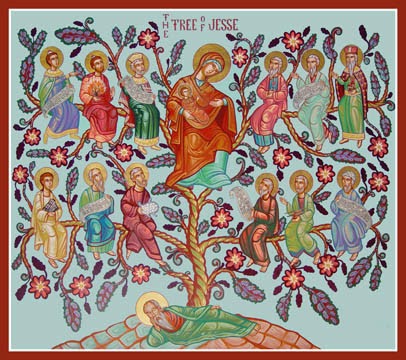
Tree of Jesse - Artist unknown
TODAY'S SPECIAL: Isaiah 11:1-10

TO CHEW ON:
"The Spirit of the Lord shall rest upon Him,
The Spirit of wisdom and understanding,
The Spirit of counsel and might,
The Spirit of knowledge and of the fear of the Lord." Isaiah 11:2


The rich Spirit of the Lord—that Spirit of wisdom, understanding, counsel, might, knowledge "and of the reverential and obedient fear of the Lord" (AMP) rests on the Jesse branch (Isaiah 11:1). That would be a descendant of David, who was a son of Jesse. We understand this prophecy to be of Jesus.

As we read this list, His early wisdom comes to mind:
"And the Child grew and become strong in spirit, filled with wisdom; and the grace of God was upon Him" - Luke 2:40.

When His ministry commenced, we recall the visible descent of the Holy Spirit on Jesus at His baptism - Matthew 3:16.

Throughout Jesus' life, Godly qualities were lived out in Him. My Thompson Chain Bible has a longer (than the Isaiah 11) list of qualities that typified the Spirit of Christ:
  • Divine - Isaiah 11:2
  • Wise - Isaiah 11:2
  • Just and Fearless - Isaiah 11:4.
  • Faithful - Isaiah 11:5.
  • Tender - Isaiah 40:11
  • Quiet - Isaiah 42:2
  • Gentle - Isaiah 42:3
  • Persevering - Isaiah 42:4
  • Liberating - Isaiah 61:1
  • Saving - Isaiah 63:1
  • Compassionate - Matthew 9:36
  • Meek and lowly - Matthew 11:29
  • Longsuffering - Luke 9:55-56
  • Forgiving - Luke 23:34
  • Zealous - Acts 10:38
  • Loving - Ephesians 5:2

The exciting thing is that when we become His children, He gives us the same Spirit: "The Spirit of truth … He dwells with you and will be in you" - John 14:7.

His Spirit is life-giving - Romans 8:11.

He guides and leads us - Romans 8:14.

He opens up truth to us and gives insights into the future - John 16:13.

His Spirit gives wisdom (what is needed to enact all the other qualities) that is not only theoretical but also practical. I love how my Bible's notes on wisdom includes this sum-up:
"Biblical wisdom unites God, the Source of all understanding, with daily life, where the principles of right living are put into practice" - Dick Mills, Word Wealth, New Spirit-Filled Life Bible, p. 888.

And so we are brought back to earth with convicting passages like this one from James that describes what Jesus' heavenly wisdom does not and does look like:
"But if you have bitter envy and self-seeking in your hearts, do not boast and lie against the truth. This wisdom does not descend from above but is earthly, sensual, demonic …. But the wisdom that is from above is first pure, then peaceable, gentle, willing to yield, full of mercy and good fruits, without partiality and without hypocrisy" - see all of James 3:13-18.

PRAYER: Dear God, please help me to recognize worldly versus the heavenly wisdom of the Spirit of Jesus. Quicken my will toward instant obedience of Your Spirit's voice. Amen.


 *********
Unless otherwise noted all Scripture quotations are taken from the New King James Version®. Copyright © 1982 by Thomas Nelson, Inc. Used by permission. All rights reserved.

Scripture quotations marked AMP are taken from the Amplified® Bible, Copyright © 1954, 1958, 1962, 1964, 1965, 1987 by The Lockman Foundation. Used by permission." (www.Lockman.org)

Saturday, November 26, 2016

Who will you put on today?

T-shirt with stencil "Jesus Lives Here"
TODAY'S SPECIAL: Romans 13:1-14

TO CHEW ON: "But put on the Lord Jesus Christ, and make no provision for the flesh to fulfill its lusts." Romans 13:14.

Here Paul sums up for readers two simple (and vast) instructions about living a Christian lifestyle. They are as relevant today as they were 2000 years ago.

1. "Put on the Lord Jesus Christ…"
The image is of clothing oneself. Clothes serve many purposes. They protect us from the elements. They cover our intimate parts, providing modesty and dignity. They also define us by the styles and fabrics we choose to wear. Paul tells these Roman Christians to dress in Jesus.

  • Way back in the Old Testament, Job makes this statement that underlines clothing's protective and defining aspects: "I put on righteousness and it clothed me; My justice was like a robe and a turban" - Job 29:14.
  • Paul speaks of the rite of baptism as something that initiates that putting on and declares it to the world - Galatians 3:27.
  • A mind renewal is also involved. Paul, writing to the Ephesians, describes how they must "…put off … the old man … and be renewed in the spirit of your mind that you put on the new man which was created according to God in true righteousness and holiness" - Ephesians 4:17-24. Colossians 3:9 also talks about this renewal.

2. "…make no provision for the flesh to fulfill its lusts."


[Provision - pronoia is forethought, planning, making preparation for, providing for.]

In other words, Paul tells these Christians and us, not to make plans to sin.

  • Just don't do it says Peter - 1 Peter 2:11.
  • "Walk in the Spirit (another way of describing Step 1 above) and you shall not fulfill the lust of the flesh" - Galatians 5:16.

Two steps that are so simple and yet they involve a lifetime of practice, of putting off and putting on.

Who are you, who am I wearing today? If it's Jesus, let's not be sullying those clothes with plans to sneak into our day some old-clothes thought or habit.

PRAYER: Dear Jesus, please help me to put on You and to be aware of my sneaky side that still wants to make provision for sinful thoughts and actions. Amen.

 *********
Unless otherwise noted all Scripture quotations are taken from the New King James Version®. Copyright © 1982 by Thomas Nelson, Inc. Used by permission. All rights reserved.

Friday, November 25, 2016

Different routes to the same destination

Jesus calls Philip & Nathaneal - William Hole
TODAY'S SPECIAL: John 1:43-51


TO CHEW ON: "The following day Jesus wanted to go to Galilee, and He found Philip and said to him, 'Follow me.'" John 1:43

It's interesting to note how Jesus picked and called His disciples.

Andrew and another unnamed disciple (perhaps John, the writer) were attracted to Him by the testimony of their original rabbi, John the Baptist (John 1:35-37). When they asked Jesus where He was staying, His "Come and see" was invitation enough for them to leave John and follow Jesus.

The following day Jesus went in search of Philip.

Philip recruited his friend Nathaneal (also called Bartholomew) to be Jesus' follower.

It seems the four fishermen (Andrew, Simon [Peter], James and John) may have made their decision to become serious followers in stages, for we see them back fishing. Then one morning after a fruitless night on Galilee followed by a Jesus instigated miraculous catch, they finally "forsook all to follow Jesus" (Luke 5:1-11).

After that Jesus saw Matthew (Levi) at his tax-collecting station. When Jesus invited him to be a disciple, Matthew immediately left all to follow Jesus (Luke 5:27,28).

Still today Jesus finds and calls us in a variety of ways. Some encounter Him through the words of a teacher or preacher. Others are introduced to Him seemingly without human intervention through visions, dreams, and the Bible. Some come through the testimony of friends. Many make the decision to follow Him in stages and over a period of time. Still others decide in an instant.

Let's remember and be encouraged by this variety as we continue to pray for our unsaved family members and friends. Just because they aren't coming to God in the way we did or in the way we expect them to doesn't mean that God isn't involved in their lives, busy drawing them to Himself in ways tailored just to them.

PRAYER:
Dear Jesus, thank You that Your call to discipleship is unique and personal. I believe You are at work in the lives of those I love who have yet to respond to You. Amen.

 *********Unless otherwise noted all Scripture quotations are taken from the New King James Version®. Copyright © 1982 by Thomas Nelson, Inc. Used by permission. All rights reserved.


Thursday, November 24, 2016

What's the name of your god?

Micah Foretells Christ -   JOLLAIN, Gérard
Micah Foretells Christ - Gerard Jollain
TODAY'S SPECIAL: Micah 4:1-5:1

TO CHEW ON: "For all people walk each in the name of his god, but we will walk in the name of the Lord our God forever and ever." Micah 4:5

Micah's thoughtful little statement in our focus verse is as true now as it was in 700 B.C. In our culture we don't worship idol statues, but we do each have a god and we demonstrate who it is  by our lives (or as Micah says it, "we will walk each in the name of his god").

Wealth, power, attention (how many followers we have on Facebook, Twitter, Blogger, etc.), praise, a gorgeous home, a well-toned body, career, recreation — all these and more can be gods (one of the definitions of god: any person or thing made the chief object of one's love, interest or aspiration").

A little overview of some Bible references to false gods helps us understand them, and the process and folly of worshiping them.

1. They are impotent (Jeremiah 10:5) and inferior to the God who can create (1 Chronicles 16:26).  Though they may appear attractive and powerful, someday their fate will be that of the Philistine god Dagon in the presence of the ark  — broken and in pieces on the floor (1 Samuel 5:4).

2. The work of one's own hands can be a false god (Isaiah 2:8). Though Isaiah was referring to worshiping idol statues that people had carved, we readily, and I think correctly, identify such worship with putting supreme value on ourselves and our own achievements (Secular Humanism), a prevalent value in our society today.

3. False worship may draw us into some strange activities (Ezekiel 21:21).

4. Who/what we worship is a choice we make. We make that choice by who or what we serve. We can't have two masters at once (Matthew 6:24). We choose to worship something or someone other than God when we ignore His commands (1 Kings 18:18). It is also possible to turn from God, back to the things we served before (Galatians 4:8-10).

5. Refusing to bow down to the gods of our culture may make us stand out and could even prove dangerous (Daniel 3:12-18).

6. But we can decide for God. Let's affirm, with Paul, "yet for us there is one God, the Father, of whom are all things, and we for Him; and one Lord Jesus Christ, through whom are all things, and through whom we live." (1 Corinthians 8:6).

Or, as Micah says it:

"We will walk in the name of the Lord our God."

PRAYER: Dear God, in the crush of life, when my mind is so easily taken up with all that I need to do,  help me not to make a false god out of anything, even ministry and Christian service.  Amen. 

***************
Unless otherwise noted all Scripture quotations are taken from the New King James Version®. Copyright © 1982 by Thomas Nelson, Inc. Used by permission. All rights reserved.

Bible Drive-Thru

Wednesday, November 23, 2016

Pictures of peace

Image: Pixabay
TODAY’S SPECIAL: Isaiah 2:1-5

TO CHEW ON: “He shall judge between the nations,
And rebuke many people;
They shall beat their swords into plowshares
And their spears into pruning hooks;
Nation shall not lift up sword against nation,
Neither shall they learn war any more.” Isaiah 2:4


The picture of peace Isaiah paints here, of weapons being softened and hammered into tools for farming, expresses the longing in many a human heart. I can only imagine how the citizens of Aleppo and Mosul would welcome such a thing.

The theme of a coming time of peace runs through the prophets’ writings. I’m quoting the passages today, so this post is a bit long, but I think you'll be thrilled at the beautiful pictures of peace here.

There are prophecies of peace coming as a consequence of fearing and honoring God:

  • Psalm 46:9,10:
'He makes wars cease to the end of the earth; He breaks the bow and cuts the spear in two;
 He burns the chariot in the fire. 
Be still, and know that I am God;
I will be exalted among the nations,
I will be exalted in the earth!'

  • Psalm 72:5-7 - a psalm-prayer of Solomon:
"They shall fear You
As long as the sun and moon endure,
Throughout all generations. 
"He shall come down like rain upon the grass before mowing,
Like showers that water the earth. 
In His days the righteous shall flourish,
And abundance of peace,
Until the moon is no more."
  • Psalm 85:9,10
"Surely His salvation is near to those who fear Him,
That glory may dwell in our land. Mercy and truth have met together;
 Righteousness and peace have kissed."
  • Psalm 147:11,14:
"The Lord takes pleasure in those who fear Him,
In those who hope in His mercy…

"He makes peace in your borders,
And fills you with the finest wheat."

There are prophecies of the possibility of peace associated with the kingdom of the Child:
  • Isaiah 9:6,7:
"For unto us a Child is born,
Unto us a Son is given;
And the government will be upon His shoulder.
And His name will be called
Wonderful, Counselor, Mighty God,
Everlasting Father, Prince of Peace. 
Of the increase of His government and peace
There will be no end
."
  • Isaiah 11:1,6-9 (the pictures of peace here also resemble the distant, end-time peace of Isaiah 65 below):
"There shall come forth a Rod from the stem of Jesse,
And a Branch shall grow out of his roots…

“The wolf also shall dwell with the lamb,
The leopard shall lie down with the young goat,
The calf and the young lion and the fatling together;
And a little child shall lead them. 
"The cow and the bear shall graze;
Their young ones shall lie down together;
And the lion shall eat straw like the ox. 
"The nursing child shall play by the cobra’s hole,
And the weaned child shall put his hand in the viper’s den. 
"They shall not hurt nor destroy in all My holy mountain,
For the earth shall be full of the knowledge of the Lord
As the waters cover the sea."
  • Isaiah 33:17,20
"Your eyes will see the King in His beauty;
They will see the land that is very far off…

"Look upon Zion, the city of our appointed feasts;
Your eyes will see Jerusalem, a quiet home..."
  • Zechariah 9:9,10:
“Rejoice greatly, O daughter of Zion!
Shout, O daughter of Jerusalem!
Behold, your King is coming to you;
He is just and having salvation,
Lowly and riding on a donkey,
A colt, the foal of a donkey. 
"I will cut off the chariot from Ephraim
And the horse from Jerusalem;
The battle bow shall be cut off.
He shall speak peace to the nations;
His dominion shall be ‘from sea to sea,
And from the River to the ends of the earth.’"


And there are prophecies that look forward to a  seemingly distant, end-time period of peace.

  • Isaiah 2:1-5 - Our reading of Isaiah 2:1-5, which begins: "Now it shall come to pass in the latter days..." would be in that category.
  • Isaiah 65:11,25:
“For behold, I create new heavens and a new earth;
And the former shall not be remembered or come to mind….

The wolf and the lamb shall feed together,
The lion shall eat straw like the ox,
And dust shall be the serpent’s food.
They shall not hurt nor destroy in all My holy mountain,”
Says the Lord."
  • Micah 4:1,4
"Now it shall come to pass in the latter days
That the mountain of the Lord’s house
Shall be established on the top of the mountains,
And shall be exalted above the hills;
And peoples shall flow to it….

"But everyone shall sit under his vine and under his fig tree,
And no one shall make them afraid;

For the mouth of the Lord of hosts has spoken."

But is there any hope for peace now? Well, yes. Paul gives Timothy some down-to-earth advice about peace in the present in 2 Timothy 2:1,2:
"Therefore I exhort first of all that supplications, prayers, intercessions, and giving of thanks be made for all men, 
"for kings and all who are in authority, that we may lead a quiet and peaceable life in all godliness and reverence."

PRAYER: Dear Father, our beleaguered world longs for the pictures of peace painted by Bible writers, to become reality. Help me to do all I can now to bring peace to my little corner of time and space. Amen.

 *********
Unless otherwise noted all Scripture quotations are taken from the New King James Version®. Copyright © 1982 by Thomas Nelson, Inc. Used by permission. All rights reserved.


Tuesday, November 22, 2016

Working for the real boss

"Best Boss Ever" on mug
TODAY'S SPECIAL: Ephesians 6:5-24

TO CHEW ON: "Obey them (earthly masters) not only to win their favor when their eye is on you, but as slaves of Christ, doing the will of God from your heart." Ephesians 6:6


Though Paul's instructions are addressed to slaves, I believe they are applicable to workers of any kind—those of us who work as employees, as freelancers, and as volunteers.

The qualities of God-pleasing workers that Paul lists are obedience, respect / fear, sincerity, integrity (working hard even when supervisors aren't watching), and wholeheartedness. They were to exercise all of these as if God were one's actual boss (because He is; He is the one who doles out the ultimate and eternal wages).

I find this straightforward and practical teaching for us. Personally, it means I should put as much effort into these blog devotions that I write for free as I put into an article I hope to publish for pay. I need to give myself as wholeheartedly to my housework as I do to a volunteer job I do at church.

Living as if God were our real boss in every endeavor helps us view all work, even lowly jobs like cleaning a toilet, in a whole new light.

PRAYER: Dear God, please help me internalize the reality of You as my real boss in each job of my life's work. Amen.

********
Unless noted otherwise, all Scriptures quoted in this meditation are taken from THE HOLY BIBLE, NEW INTERNATIONAL VERSION®, NIV® Copyright © 1973, 1978, 1984, 2011 by Biblica, Inc.® Used by permission. All rights reserved worldwide.

Monday, November 21, 2016

Harmonious family relationships

Image: Pixabay
TODAY’S SPECIAL: Ephesians 5:21-6:4

TO CHEW ON: “Wives, submit to your own husbands as to the Lord.” Ephesians 5:22


In marital relationships the fashion has changed. Nowadays if you say the word “submit” when you’re talking about how a wife should relate to her husband, some would have you wash your mouth out with soap. A wife submitting to her husband is considered so yesterday—no, not even yesterday, so archaic!

[The word translated “submit” comes from the Greek hypotasso. It means “to arrange under, subordinate, subject, put in subjection, subject oneself, obey, submit to one’s control; yield to one’s admonition or advice.”] Nothing ambivalent about that!

In fact Paul has something (controversial to modern ears) to say to every member of the family:

Wife: Submit to your husband as to the Lord. Be subject to (same “submit” word)  your own husband in the same way the church is subject to Christ, deferring to him as your head* like the church defers to Christ as its  head (Ephesians 5:22-24).

[*Head: kephale: literal head, where the loss of the head destroys life; metaphorical - anything supreme, chief; of persons: master, lord; of husband in relation to his wife; of Christ, the Lord of the husband and of the church.]

Husband: love your wife like Christ loved the church in a selfless, giving way, to the same extent that you love and care for yourself, working for her well-being, beauty, and purity (Ephesians 5:25-29).

As a couple: leave your parents’ home and become joined and intimate as a new entity - Ephesians 5:31.

 Children: Obey your parents, honor them (which comes with a promise of well-being and longevity) - Ephesians  6:1-3.

Fathers: Don’t provoke [parorigizo - rouse to wrath, provoke, exasperate, anger] your children. Bring them up, and train them to know and obey the the Lord - Ephesians 6:4.

As old-fashioned as this advice may sound, can you imagine our society if everyone lived by it? God’s design for marriage and the family is to reflect His sacrificial love to us and our submission to Him. It might be out of modern favor but I don’t know of any modern model for the family that sounds more harmonious and functional (but difficult to live out in one's own strength).


PRAYER: Dear Father, I need  faith that You know best and Your power to live these things in my imperfect, everyday life. Amen.

 *********
Unless otherwise noted all Scripture quotations are taken from the New King James Version®. Copyright © 1982 by Thomas Nelson, Inc. Used by permission. All rights reserved.


Sunday, November 20, 2016

Live alert for THE DAY

earthquake-shaken house
TODAY'S SPECIAL: Luke 21: 25-38

TO CHEW ON:
"'But take heed to yourselves, lest your hearts be weighed down with carousing and drunkenness, and cares of this life, and the Day come on you unexpectedly. For it will come as a snare on all those who dwell on the face of the whole earth.'" Luke 21:34,35

I live on the earthquake-prone west coast of Canada where we haven't had a significant quake since 1700. Thus it's easy for us to get complacent about earthquake preparedness. But the BIG ONE is on its way, assure the experts. It's just a matter of time.

Jesus, here, is using a similar warning tone as He talks about the signs of the times, the end of the age and the big one—the event for which they should be expectant.  The big one is THE DAY. He describes it earlier—the climax of all manner of social, political, and natural upheaval:
"'And then they will see the Son of Man coming in a cloud with great transcendent and overwhelming power and all His  kingly glory, majesty, and splendor'" - Matthew 21:27 AMP.

Stay alert in expectation of THE DAY, Jesus tells His followers. Don't get caught in the snare of its unexpectedness. He lists ways they and we can be distracted ("overburdened and depressed—weighed down" - Amp):

1] With "carousing":  we'd call it partying and having a good time ("… the giddiness and headache and nausea of self-indulgence…" vs. 34 - AMP).

2] With "drunkenness": when we get drunk we dull our senses with mind-numbing, mood-altering alcohol. Could we also include in this category other activities designed to take the edge off life's harsh realities—things like compulsive shopping, overeating, spending endless hours online?

3] With the "cares of this life": That would be the concerns of everyday living: "… worldly worries and cares pertaining to the business of this life" - AMP.

To prepare for the BIG ONE in the earthquake department we are reminded often to have kit of emergency food, water, medical supplies and batteries ready, and a plan for how we will link up with family members should it happen when we're in different places.

Jesus tells us how to prepare for THE DAY:
"'Keep awake then, and watch at all times, that is be discreet, attentive, and ready, praying that you may have the full strength and ability and be accounted worthy to escape all these things … and to stand in the presence of the Son of man'" - Luke 21:36 AMP.

PRAYER: Dear Jesus, help me not to be distracted from watching world events in the context of Your predictions. Help me to stay spiritually alert and be in communication with You often about these things and my role in them.  Amen.

***********

New King James Version (NKJV) Used with permission. The Holy Bible, New King James Version Copyright © 1982 by Thomas Nelson, Inc.

Bible Drive-Thru

Saturday, November 19, 2016

Beloved Son

Image: pixabay
TODAY’S SPECIAL: Luke 20:9-26

TO CHEW ON: “‘Then the owner of the vineyard said,”What shall I do? I will send my beloved son…”’” Luke 20:13

In the parable of the Wicked Vinedressers (Luke 20:9-16)—which the chief priests and scribes recognized as a parable against them—Jesus called the son that the king finally sent, in the king's words “my beloved son.”

If we are at all familiar with the Bible, flags will go up at that expression. We’ve heard it before.

  • The prediction that God would send a Son occurs as early as Psalm 2:7:
“I will declare the decree:
The Lord has said to Me,
‘You are My Son,
Today I have begotten You.
The Messiah that Isaiah predicted was described in offspring terms:
“And now the Lord says,
Who formed Me from the womb to be His Servant,
To bring Jacob back to Him,
So that Israel is gathered to Him-  Isaiah 49:5.
"Yet it pleased the Lord to bruise Him;
He has put Him to grief.
When You make His soul an offering for sin,
He shall see His seed, He shall prolong His days,
And the pleasure of the Lord shall prosper in His hand - Isaiah 53:10.

  • When Jesus arrived, God the Father said it publicly at His baptism:
“And suddenly a voice came from heaven saying, ‘This is My beloved Son, in whom I am well pleased’” - Matthew 3:17 (also Mark 1:11; Luke 3:22).
He said it again on the Mount of Transfiguration:
“‘This is My beloved Son. Hear Him’” - Luke 9:35 (and Peter recalled the experience in 2 Peter 1:17-18).
  • In confronting the Jewish religious leaders, who were so offended by His claims they sought to kill Him (as in our reading as well) Jesus said it plainly to them: 
“‘For the Father loves the Son and shows Him all things that He Himself does’” - John 5:20.

As we approach the Advent season when we focus on the expectation and fulfillment of God sending His Son, I am particularly moved by the adjective “beloved.” This was no robotic, mechanical gift from cold, distant God but a tearing apart of His very self as He entrusted His Beloved Son to Earth’s murderous gardeners; entrusted Him to what He knew would happen, indeed what had to happen in order to restore sinful man back to relationship with Him.

It's a gift that makes it possible for us to say with Paul:
“He has delivered us from the power of darkness and conveyed us into the kingdom of the Son of His love” - Colossians 1:13.

Hallelujah!

PRAYER: Dear Father, as a parent I understand how beloved a child is. That You would send Your Son Jesus to be treated as He was and sacrificed for me is hard to comprehend, but wonderful. Thank You! Amen.

 *********
Unless otherwise noted all Scripture quotations are taken from the New King James Version®. Copyright © 1982 by Thomas Nelson, Inc. Used by permission. All rights reserved.


Friday, November 18, 2016

Under whose authority do we live?

 Jesus' authority extended over nature. 
(Image from Standard Bible Story Readers Book 2 
Used with permission)

TODAY’S SPECIAL: Luke 20:1-8

TO CHEW ON: “Now it happened on one of those days, as He taught the people in the temple and preached the gospel, that the chief priests and scribes together with the elders confronted Him and spoke to Him saying, ‘Tell us by what authority are You doing these things? Or who is it who gave You this authority?’” Luke 20:1,2

The religious leaders were justified, in their own minds, to challenge Jesus’ authority. As this IVP New Testament Commentary article points out:

“He has had no official training. He comes from Galilee, an area not known for its religious instruction or anything else of stature (John 7:52). He has never sat under a rabbi. Where does his authority come from? How can he justify the things he has been doing? This is really a fundamental question for the entire gospel (Luke 4:32,36; 5:24; 9:1; 10:19)” - IVP Commentary accessed through BibleGateway.com.

Jesus’ answer with another question was right in line with the back-and-forth discussion style of the day. (“This style of disputation was popular in the ancient world. It was designed to show who could ask the wiser question and expose the weaknesses in the opponent” - IVP Commentary).

His question (“’The baptism of John—was it from heaven or from men?’”) accomplished several things:
- It equated the authority of His ministry with the authority of John the Baptist’s.
- It revealed the religious leaders as unwilling to believe that either John or Jesus came from God.
- It put them in a dilemma (Luke 20:5,6)
- It silenced them for now (but they would be back - Luke 20:19-22).

The claims of Jesus’ authority are still an issue today, to unbelievers and believers alike.

To unbelievers, His words, “‘You must be born again’” (John 3:7) are an affront to the human spirit, which is quite happy with its state.

To believers, His words: “‘If anyone desires to come after Me, let him deny himself, and take up his cross daily,and follow Me. For whoever desires to save his life will lose it, but whoever loses his life for My sake will save it ‘“  (Luke 9:23,24) show how demanding living under His authority will be.

PRAYER: Dear Jesus, when Your authority challenges my self-will, help me not to play mind games but to be honest with myself and deal with heart issues. Amen.

 *********
Unless otherwise noted all Scripture quotations are taken from the New King James Version®. Copyright © 1982 by Thomas Nelson, Inc. Used by permission. All rights reserved.


Tuesday, November 15, 2016

Our lives—a witness to the heavens

TODAY’S SPECIAL: Ephesians 3:1-21

TO CHEW ON: “To the intent that now the manifold wisdom of God might be made known by the church to the principalities and powers in heavenly places.” Ephesians 3:10

Paul describes God’s wisdom in three ways. He calls it “the unsearchable riches of Christ,” “the mystery, which from the beginning of the ages has been hidden in God,” and “the manifold wisdom of God” - Ephesians 3:8-10.

Focusing on the last one, manifold (polypoikilos) means much, varied, many-coloured. “The word pictures God’s wisdom as much varied, with many shades, tints, hues, and colourful expression” - Dick Mills, “Word Wealth,” New Spirit-Filled Life Bible, p. 1649.
I take this wisdom to include:
- God's wisdom on display in the amazing complexity of creation and the natural world.
- God’s intervention to save humankind from sin by sending Jesus to die and be resurrected. This includes all of redemptive history from the Old Testament to the modern-day church.
- God’s working in the large and small details of our lives. Who of us hasn’t experienced or heard stories of amazing coincidences and situations fitting together in ways that shout: “There’s a wise planner behind this!”?

What I find curious about the sharing of this wisdom by the church is who the target is—the “principalities and powers in the heavenly places.”

Why do they need to hear this?

The Zondervan Study Bible says of these powers:
“Can refer to good or evil spiritual powers. Beholding God’s wisdom as displayed through the church leads good angels to glorify God since they ‘long to look’ into God’s redemptive plan (1 Peter 1:12). Evil powers, on the other hand, are reminded that God’s plan of uniting all things under Christ (Ephesians 1:9-10) has decisively begun and that their defeat is imminent (1 Corinthians 15:24)” - Zondervan Study Bible, Kindle Location 273,978 (emphasis added).

What excites my imagination in this is the largeness of God’s plan. It’s bigger than we know or imagine. And you and I are part of it. Something as simple as being obedient to pray for someone has the potential to ricochet throughout the universe!

PRAYER: Dear Father, please help me to understand better the “unsearchable riches of Christ,” the “mystery hidden in God” and your “manifold (many-sided, colourful) wisdom” and to live a life in sync with these things. Amen.

 *********
Unless otherwise noted all Scripture quotations are taken from the New King James Version®. Copyright © 1982 by Thomas Nelson, Inc. Used by permission. All rights reserved.


Monday, November 14, 2016

Life "presenced with Divinity"

TODAY’S SPECIAL: Ephesians 2:1-10

TO CHEW ON: “But God who is rich in mercy, because of His great love with which He loved us, even when we were dead in trespasses, made us alive together with Christ (by grace you have been saved)” Ephesians 2:4,5


Today’s reading in Ephesians reminds me of a book I’m reading. Biblical Ethics / The Moral Foundations of Life / The Philosophy of Sin by Oswald Chambers is a collection of talks, addresses, and lectures Chambers gave at various times and places from 1909 to 1917.

I find his words a wonderful elaboration on the themes touched on by Paul here: the need for us to die to the old self and to live the new Holy Spirit-dependant “alive together with Christ” life God has “prepared beforehand for us” (Ephesians 2:5,10).

  • Christians are unhappy if “They are not at one with the principle that unites them”; if they are not “Christians at heart.” Chambers describes halfhearted Christians as carrying their beliefs like a headache and because they can’t chop off their heads they can’t get rid of the headache -  Kindle Location 514.
  • When dealing with sinful tendencies, we starve those things in ourselves: “It is absurd to say, pray about them; when once a thing is seen to be wrong, don’t pray about it, it fixes the mind on it; never for a second brood on it; destroy it by neglect” - KL 731 (emphasis added).
  • But we’re only human. How can the ideal that Paul describes be true of us?  Chambers takes this realistic approach: “No one is constituted to live a pure, divine life on earth; we are constituted to live human lives on earth, presenced with Divinity” - KL 798 (emphasis added).
  • I love that—“presenced with divinity.” Chambers talks more about realizing that state: “Am I willing that the old disposition should be crucified with Christ? If I am, Jesus Christ will take possession of me and will baptize me into His life until I bear a strong family likeness to Him. It is a lonely path, a path of death, but it means ultimately being presenced with Divinity” - KL 1241 (emphasis added).
  • We can all probably relate to the tug-of-war between the self-directed and Spirit-directed life implied in how Chambers describes God handling the backtracking we easily revert to: “As soon as you begin to forecast and plan for yourself, God will break up your program—He delights to do it—until we learn to live like children based on the knowledge that God is ruling and reigning …” - KL 1342 (emphasis added).
  • Such surrender doesn’t happen without a struggle. “When the Holy Spirit emancipates my personality, no attention is paid to my individuality, to my temperament or to my prejudices; He brings me into oneness with God entirely when I am willing to waive my right to myself and let Him have His way. No individual gets there without a crisis, a crisis of a terrific nature in which he or she goes to the death of something” - KL 1350 (emphasis added).

PRAYER: Dear Father, may these be more than words and ideas on the page. Please help me to realize in practical, everyday experience the “alive together with Christ” life—a life "presenced with Divinity." Amen.


 *********
Unless otherwise noted all Scripture quotations are taken from the New King James Version®. Copyright © 1982 by Thomas Nelson, Inc. Used by permission. All rights reserved.


Sunday, November 13, 2016

A Divine Lawyer

TODAY’S SPECIAL: Luke 21:1-19

TO CHEW ON: “‘Therefore settle it in your hearts not to meditate beforehand on what you will answer; for I will give you a mouth and wisdom which all your adversaries will not be able to contradict or resist.’” Luke 21:14,15

Here Jesus gives advice to the disciples on how to prepare themselves for being arrested and interrogated for their faith in Him. This bit snags my attention: “'… settle it in your hearts not to meditate beforehand on what you will answer.’”

Jesus’ advice goes against every instinct I have. If I was arrested and anticipating being questioned about my faith, my tendency would be to review my doctrine and apologetics textbooks, have my Romans Road scriptures at my fingertips, refresh my mind on how to make a logical and convincing argument, etc.

But the compelling defence Jesus describes (“‘… all your adversaries will not be able to contradict or resist…’”) comes a different way than through memory, intellect, or reasoning power. Our reading in Luke doesn’t name the source of this wisdom but in another place Jesus refers to it (Him) specifically.

“‘Now when they bring you to the synagogue and magistrates and authorities, do not worry about how or what you should answer, or what you should say. For the Holy Spirit will teach you in that very hour what to say.’” Luke 12:11,12.

Jesus speaks more about this divine ‘Lawyer’ in John 14-16.

“‘But the Helper, the Holy Spirit, whom the Father will send in My name, He will teach you all things and bring to remembrance all things that I said to you’” - John 14:26.

“‘If you abide in Me and My words abide in you, you will ask what you desire and it shall be done for you’” - John 15:7.

“‘… And when He has come, He will convict the world of sin, and of righteousness and of judgment’” - John 16:8.

Two further thoughts:

1. Maybe a greater dependence on the Holy Spirit is also a wiser, more effective way of sharing the gospel with friends and family than some of the rote methods we’ve been taught.

2. Waiting for the Holy Spirit to supply our words, takes work too—the work of refusing to worry and substituting worry with dependence on and obedience to the Holy Spirit at all times and in all situations.

PRAYER: Dear Jesus, thank You for Holy Spirit, Your wisdom and words, that are appropriate and come with convicting power, available to me. Amen.

 *********
Unless otherwise noted all Scripture quotations are taken from the New King James Version®. Copyright © 1982 by Thomas Nelson, Inc. Used by permission. All rights reserved.


Saturday, November 12, 2016

Four reasons to stay the course

TODAY'S SPECIAL: Malachi 3:13-4:6

TO CHEW ON: "'Your words have been harsh against Me,' says the Lord,
'Yet you say, "What have we spoken against You?"
You have said, "It is useless to serve God;
What profit is it that we have kept His ordinance
And that we have walked as mourners,
Before the Lord of Hosts?"'" Malachi 3:13-14


Have you ever thought - what's the point of living for God? Does God even know that I alter my lifestyle to please Him? Does He care? That seems to have been the thinking of Israel, especially of the faithful few that resisted the nation's general backsliding during Malachi's time.

We don't have to understand all the prophetic details in God's reply to catch the gist of encouragement to His disheartened followers. Let's listen in and get hope for our lives from the four reasons He gives them to stay the course.

1. You are remembered.
"So a book of remembrance was written before Him
For those who feared the Lord
And who meditate on His name." Malachi 3:16

How comforting to know that God writes about us in His book. One can't help but think of other references to such books — the book of our days from Psalm 139, or the Book of Life with our names written in it, mentioned in Revelation.

2. You are His treasure.
"They shall be Mine," says the Lord of hosts
On that day when I make them my jewels." Malachi 3:17

Treasure (segullah) means personal property, special treasure. My Bible explains: "Malachi 3:17 speaks of the people God will regard as His 'jewels.' Man's treasure is material objects, but consistently in Scripture, God's treasure is human beings" ("Word Wealth" - New Spirit Filled Bible [NSFLB], p. 262).

3. You will get justice.
"Then you shall again discern
Between the righteous and the wicked
Between one who serves God
And one who does not serve Him." 3:18

This is a reassurance to those of us tempted to question God's fairness while unbelieving friends and neighbours prosper even as they flaunt behaviours that our consciences won't allow. "Sometimes believers tend to be spiritually nearsighted. We face the same temptation today as did God's people in Malachi's day; the temptation to look at ungodly circumstances around us and question God's integrity and character. We must not mistake God's patience for apathy" ("Truth-In-Action Through Malachi - NSFLB, p. 1274).

4. You will be healed.
"But to you who fear my name
The Sun of Righteousness shall arise
with healing in His wings." Malachi 4:2

Healing (marpe) means restoration of health, remedy, cure, medicine, tranquility, deliverance, refreshing. "Salvation is God's rescue of the entire person, and healing is His complete repair of that person" - NSFLB p. 1273.

God's eternal vision sees eternal outcomes. So let's stay the course of loyalty to Him, knowing that the outworking of all that comes our way is good.

PRAYER: Dear God, thank You for these assurances for those who are Yours. Help me to live my life with this eternal perspective in mind. Amen.

MORE: "When He Cometh"

The song "When He Cometh" is based on Malachi 3:17. William O. Cushing wrote it in 1856 and George F. Root wrote the music in 1866. Cyberhymnal tells an interesting story about it with a Canadian connection.

Hear it sung at a Gaither gathering with Joni Erickson Tada in this YouTube rendition.


**************

Unless otherwise noted all Scripture quotations are taken from the New King James Version®. Copyright © 1982 by Thomas Nelson, Inc. Used by permission. All rights reserved.

Do your 8-12-year-olds have daily devotions? Point them to Bible Drive-Thru.

Related Posts Plugin for WordPress, Blogger...