Showing posts with label discipleship. Show all posts

Monday, October 01, 2018

Dsicipleship's costs

Going forth to Calvary - Alexandre Bida
Going forth to Calvary - A. Bida
TODAY'S SPECIAL: Luke 14-16; Psalm 119:1-32


TO CHEW ON: "For which of you, intending to build a tower, does not sit down first and count the cost, whether he has enough to finish it?" Luke 14:28

The tower we're building, the war we're fighting is that of being a disciple—or not. Jesus here names three costs of discipleship. They are things that we should consider before we sign on:

1. The cost in relationships.
A disciple "hates" his family and his own life (Luke 14:26). What? My Bible elaborates:

"A disciple must subordinate all earthly relationships to loyalty to Christ. Jesus' remark is an example of Hebrew hyperbole to emphasize the subject being discussed. To 'hate' one's family is … but a way of expressing the importance of allegiance to Him" - J. Lyle Story, commentary on Luke, New Spirit-Filled Life Bible, p. 1417.

2. The cost in vocation and destiny.
A disciple follows Jesus carrying his cross - Luke 14:27 (not a suitcase, or a ladder, or a sword, or a throne… ).

I see this as Jesus' way of foreshadowing to the disciples how He would die, and telling them that discipleship may well be their death sentence too (as opposed to a means to security, success, power or glory).

3. The cost in possessions.
The disciple forsakes all that he has (Luke 14:33).

This sounds like turning one's back not only on possessions but also dreams, goals and ambitions.

"Discipleship means the total renunciation of all selfish interest for the sake of Jesus. 'Cannot be my disciple' is dealing with issues of total commitment and maximum realization of Christ's purpose for our lives in this life' - Ibid.

As I try to superimpose my North American lifestyle on this stark template of discipleship, I ask, has my discipleship affected my loyalties? Do I view it as a possible death sentence? Is everything in my life (possessions, home, time, plans) subservient to following Jesus? Now that I've looked at the cost, do I wish to carry on?

PRAYER: Dear Jesus, as I compare my life with Your cost, I see that my view of discipleship (at least my way of living it out) may be unrealistic. But with Peter, I say, "To whom shall we go? You have the words of eternal life" - John 6:68.  Help me to be a more realistic disciple. Amen. 

PSALM TO PRAY: Psalm 119:1-32


***********

The Holy Bible, New King James Version Copyright © 1982 by Thomas Nelson, Inc. - Used with permission.

Wednesday, September 26, 2018

Jesus woos us

Jesus Preaches from a Ship - Alexandre Bida
Jesus Preaches from a Ship - A. Bida
TODAY'S SPECIAL: Luke 4-5; Psalm 114

TO CHEW ON:
"So when they had brought their boats to land, they forsook all and followed Him." Luke 5:11


It's fascinating to watch Jesus woo the disciples (who were not yet disciples) in this passage.

His popularity with the crowd needed a bit of a stage that provided both visibility and distance. A boat would be just the thing. He chose Simon's (Peter's), asked him to interrupt his net-washing and "put out a little from the land" and taught the crowds from there.

Imagine being the one from whom this upstart asked such a favor. I wonder, did Peter feel annoyed that Jesus just commandeered his boat for several hours, or honored and flattered?

It didn't end there, though. After the teaching session, Jesus turned His attention from the crowds to the boat owner. He told Peter to move to deep water and start fishing. Peter, probably still smarting from the previous unsuccessful night, started to argue but then changed his mind and did as Jesus said.

A great miraculous catch followed. "They" (Peter and probably his brother Andrew) got help from partners James and John to haul in the multitudes of fish. At Jesus' next words "'Do not be afraid. From now on you will catch men,'" Peter was completely smitten. He (and his partners) "...brought their boats to land, they forsook all and followed Him" - Luke 5:11.

I would love to have interviewed Peter and asked him, what was going on in his mind and heart that synchronized with Jesus' actions and words to cause this life change in him.

Perhaps he was wondering how he could continue looking after his family's needs with such unpredictable fishing luck. Jesus had just showed him His supernatural power in that department.

Perhaps he'd been wishing, all his life, to live for something bigger and had for some time been questioning the usefulness of what he was doing. Jesus told him he would "catch men." Peter may not have completely understood, but would surely have been intrigued.

We don't know. But we do know that on that particular day in Peter's life, Jesus ticked all the boxes and the decision to follow Him was easy.

On listening to people's stories of how they come to Jesus, I've noticed something similar. Jesus woos us in different ways. Sometimes it's through unaccountable blessing. Sometimes it's via an inner search for more purpose and meaning. Sometimes Jesus is the last option to stop a downward spiral that, if something doesn't change, will lead to destruction.

Let's pray for friends, colleagues, and loved ones who have yet to meet Jesus, that He will continue to work His wooing ways in their lives and that they will respond like Peter did.

PRAYER:
Dear Jesus, I see how You won Peter and his crew over in a few well-timed interventions and actions. Please continue to work that way in the lives of my loved ones who don't know You. Amen. 

PSALM TO PRAY: Psalm 114

The Bible Project VIDEO: Luke ch. 3-9 (Gospel of Luke series)


*********
Unless otherwise noted all Scripture quotations are taken from the New King James Version®. Copyright © 1982 by Thomas Nelson, Inc. Used by permission. All rights reserved.


Thursday, September 13, 2018

The fight between sleep and prayer

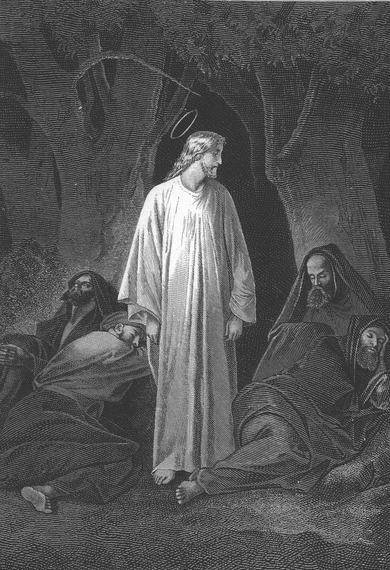
The Sleep of the Disciples - Alexandre Bida

TODAY'S SPECIAL: Mark 13-14; Psalm 101

TO CHEW ON:
"And He came and found them sleeping, and said to Peter, 'Simon, are you sleeping? Could you not watch one hour? Watch and pray, lest you enter into temptation' … And when He returned, He found them asleep again, for their eyes were heavy; and they did not know what to answer Him." Mark 14: 37,38,40

No doubt the disciples' sleep was a legitimate physical response to physical fatigue. Yet one gets the sense that there is also a spiritual component to their napping here, while a few feet away, Jesus agonizes in prayer.

Several thoughts...

On prayer:
1. Jesus, the very Son of God, who had unprecedented access to the Father, still desired the disciples' prayer company and support. " 'Could you not watch one hour?' "  Mark reports Jesus saying (Mark 14:37). Matthew adds " 'Could you not watch with me one hour?' " (Matthew 26:40).

2. Jesus' desire for them to be praying was also for their benefit: " 'Watch and pray, lest you enter into temptation. The spirit indeed is willing but the flesh is weak' " Mark 14:38.

On sleep:
1. The persistence of the disciples' sleep, even after Jesus' warning, alerts us to the fact this may have been more than mere fatigue. They were seemingly embarrassed and perhaps even puzzled by their inability to stay awake: " … they did not know what to answer Him" - Mark 14:39.

2. Luke's account says: "He found them sleeping from sorrow" - Luke 22:45. This suggests their sleep may also have been a form of escapism.

Some insights for our lives as modern disciples from this part of the passion story:
- Prayer: 

  • It aids us even as it supports others.

- Sleep:

  • We do need a healthy amount to function. But could an inordinate sleepiness at times when we set out to pray be an aspect of spiritual warfare?
  • When we're overwhelmed by life situations, maybe we should more often escape into prayer than sleep!
  • Could our inability to stay awake during prayer be a symptom of a dull spiritual state? Perhaps spiritual things just don't seem real enough; prayer doesn't seem important enough to keep us alert and awake. The Bible uses sleep as a metaphor to illustrate spiritual dullness and oblivion:
"… now it is high time to awake out of sleep; for now our salvation is nearer than when we first believed" - Romans 13:11.

"Therefore let us not sleep as others do, but let us watch and be sober" - 1 Thessalonians 5:6.


See also Mark 13:35,36  |  Romans 11:8  |  Ephesians 5:14.

PRAYER: Dear Jesus, I confess I have often slept when I should be praying. Please help me to understand what's at stake in maintaining times of prayer. Amen. 

PSALM TO PRAY: Psalm 101

 *********
Unless otherwise noted all Scripture quotations are taken from the New King James Version®. Copyright © 1982 by Thomas Nelson, Inc. Used by permission. All rights reserved.


Tuesday, May 22, 2018

Singing in a pagan land

Image: Pixabay
TODAY’S SPECIAL: Job 8-11; Psalm 137

TO CHEW ON:
“But how can we sing the songs of the LORD
While in a pagan land?” Psalm 137:4 NLT


This psalm is heavy with homesickness. What a poignant picture it paints of captives, urged by their captors to provide entertainment with their joyous songs of religious celebration, refusing to sing. Instead they hung their harps on the trees that lined the rivers and irrigation canals of Babylon.

The songs the Babylonians asked them to sing were for religious purposes, not entertainment. These reminders of Yahweh’s greatness and goodness were meant to be the the accompaniment on their happy journeys to the Jerusalem and part of the feasts. 

There might also have been undertones of of mockery and gloating in the Babylonian requests. Many of these songs praised Zion (Jerusalem) as an exalted, beautiful, glorious place. Jerusalem had, at this point, been conquered and no longer existed in its former beauty and glory.

And so this psalm asks the rhetorical question:
“How can we sing the songs of the LORD
While in a pagan land
?”

The implied answer: we can’t!

This psalm resonates with me not only because I can relate to its feelings of homesickness, but also its spiritual alienation.

We modern disciples of Jesus also live in a pagan land where the dominant culture is against much of what we stand for (and drifting farther from its Judeo-Christian roots all the time). We too might ask: “How can we sing the songs of the Lord while in a pagan land?”

I would submit, though, that that doesn’t need to silence us. For we can also live in the reality of who we are in Christ and embrace right now, the life of the Kingdom of Heaven (where pagan values are turned on their heads: the first are last, the last first, the poor are rich, we give to get, forgive seventy times seven, and deny ourselves, take up our crosses and follow Jesus, but know that this is not the end - John 14:1-3).

 And so we take down those harps, dust off those keyboards and guitars, and tune our voices because by faith we are exiles no more but pilgrims, passing through this life to our real home (1 Peter 2:11-12).

PRAYER: Dear Father, help me to live as a citizen of the Kingdom of God while I also live in my life as a pilgrim and stranger here on earth. Amen.

PSALM TO PRAY: Psalm 137

 *********
Unless otherwise noted all Scripture quotations are taken from the New King James Version®. Copyright © 1982 by Thomas Nelson, Inc. Used by permission. All rights reserved.

Scriptures marked NLT are taken from the Holy Bible, New Living Translation, copyright © 1996, 2004, 2015 by Tyndale House Foundation. Used by permission of Tyndale House Publishers Inc., Carol Stream, Illinois 60188. All rights reserved. 

Thanks for reading! This year we are using The Bible Project "Timeless Reading Plan" to read through the Bible in 2018. If you'd like to read along in your own Bible, you can download a pdf of the reading plan HERE.

Sunday, February 25, 2018

Teach your children well

"A Family Prayer" after the painting
by George Agnew Reid (1860-1947).

TODAY'S SPECIAL: Deuteronomy 10-12; Psalm 56

TO CHEW ON: "You shall teach them (these words of mine) to your children, speaking of them when you sit in your house, when you walk by the way, when you lie down, and when you rise up." Deuteronomy 11:19


My parents must have taken this verse to heart, for early in our family life Daddy instituted something we called schluss (a German word that means "conclusion"). It was a time of family devotions when he gathered everyone around to read a story from the Egermeier Bible Story Book. Then we all got on our knees beside our chairs and prayed oldest to youngest, starting with Dad. No matter that we resisted this, as we did when we got older by claiming we hadn't heard him call, or had homework, or were too tired, or even pretending to be asleep. The family altar my parents set up laid a firm foundation for me and my siblings in the Bible and the things of God.

Here Moses suggests that teaching the things of God to our kids should intrude even more into daily life than a once-a-day time of Bible reading and prayer.

He tells parents to teach the things of God using various sense portals. They can write God's words on the walls (sight). They can bind them on their hands (touch). They can speak them (sound). Additionally this teaching can happen anywhere, everywhere: when they sit in their houses and when they go for walks, the last thing at night and the first thing in the morning.

For us to initiate that level of God-awareness and inclusion in our children implies a similar level of God-awareness and inclusion in our own lives.

In Moses' time God-awareness meant learning, meditating, memorizing and discussing God's character and essence as demonstrated in the laws God gave Moses. It also involved storytelling, reminding each other of the ways He had come through for them in signs, wonders and miracles.

We have a more complete picture of God than the Israelites did. For in addition to what the they had, we have the personal reaction to those laws in the Psalms, the heart of a loving Father grieving over His wayward kids demonstrated in the prophets, the fleshing out of God the Son in the Gospels, what it looks like for us to be subjects of the Kingdom He ushered in, in the Epistles, and our own stories.

And so I ask myself, do I acknowledge God's presence in my life to the extent of bringing Him into the decor of my home? Do thoughts of Him preoccupy me often, like first thing in the morning and as I go through my day sitting, working, walking? Does He tuck me in at night? Do I recognize the incidents of God showing Himself present and strong in the circumstances of my life? In order for me to be able to introduce Him as such an ever-present God to my kids and grandkids, I need to first practice His presence in this way myself.

PRAYER: Dear God, help me to be intentional about including You in my day. Then help me to pass on my God-awareness to the next generation whenever I have the opportunity. Amen.

PSALM TO PRAY: Psalm 56


The Bible Project VIDEO: AHAVAH: Love (Shema word study series)


Unless otherwise noted all Scripture quotations are taken from the New King James Version®. Copyright © 1982 by Thomas Nelson, Inc. Used by permission. All rights reserved.

Tuesday, November 28, 2017

Poured-out life

Jesus heals Peter's mother-in-law - Artist unknown
Jesus heals Peter's mother-in-law.
TODAY'S SPECIAL: Matthew 8:1-17

TO CHEW ON: "… that it might be fulfilled which was spoken by Isaiah the prophet, saying: 'He Himself took our infirmities And bore our sicknesses.' " Matthew 8:17

Jesus is busy and popular. We see him, at the beginning of today's reading (having just come down from a mountain teaching session followed by a huge crowd), talking with and then healing a man with leprosy. He walks to Capernaum and on entering the city gets waylaid by a Gentile centurion. At Peter's house one of his hostesses is sick so Jesus heals her. Then in the evening Peter's property becomes an impromptu healing and deliverance clinic for the town.

Now I realize that the Matthew narrative makes it sound like these things happened one after the other in close succession. There may well have been more time between the incidents than it seems. But even if these events occurred over days to a week, Jesus had a full schedule, which He carried out with not a whiff of a bad attitude.

There is no eye-shift of impatience when the man with leprosy stops Him. Rather, " ' I am willing (to heal). Be cleansed.' "

There is not a watch-glance of schedule-keeping when the centurion stops him. Rather, there is close listening, honest admiration of the man's faith, a mini-lecture to take advantage of the teachable moment, and the promise of an answered prayer.

At Peter's house, after a full day, He  heals before supper and then ministers healing and release from demonic bondage till long after dark.

No wonder Matthew recognizes Him as the fulfillment of Isaiah 53:4. It doesn't happen through His looking on but because of His intimate involvement with and service of humanity—of us.

I watch Jesus here and get convicted as I imagine what my reactions to the things He encountered would have been:
- I would have been irritated by all those interruptions.
- I would have been overwhelmed by all the needs.
- I would have been self-protective, insisting, for example, that we take a break after supper instead of getting back to work.

Later in the New Testament, we see the disciples living with the same bold, people- and ministry-centred focus that they had seen in Jesus. Where did they get this spirit? From being with Jesus (Acts 4:19)

Maybe if I, if all of us, hung around Jesus more, allowed His Spirit to take over ours, we too would be known for the assured yet compassionate, identifying-with-human-needs, poured-out life that characterized Him.

PRAYER: Dear Jesus, I am full of awe at the way You handled life and its demands. I need the ability to see beyond my list of urgencies to what's eternally important, and the courage to pour my life into those things. Amen.

 *********
Unless otherwise noted all Scripture quotations are taken from the New King James Version®. Copyright © 1982 by Thomas Nelson, Inc. Used by permission. All rights reserved.


Thursday, October 26, 2017

Paul's mother-care

TODAY'S SPECIAL: 1 Thessalonians 2:1-8

TO CHEW ON: "But we were gentle among you, just as a nursing mother cherishes her own children. So, affectionately longing for you, we were well pleased to impart to you not only the gospel of God but our own lives, because you had become dear to us." 1 Thessalonians 2:7-8


What untypical words to read from Paul, who is usually so instructional and corrective. They remind me of a little saying:

"People do not care how much you know until they know how much you care" - John C. Maxwell.

This might be a good time to refresh our memory about who these people were that Paul was writing to (the Thessalonians) and how the church at Thessalonica came into existence.

It was only the second church started on the European continent. The first was in Philippi, about 90 miles northeast. You will recall how Paul and Silas traveled from Troas to Macedonia (on the continent of Europe) in response to a vision (Acts 16:9). The mission at Philippi took a bad turn when Paul and Silas were thrown into prison. But an earthquake sprung them from their cell. They then led the jailor to Jesus and soon left town. (Their Philippian adventures are recorded in Acts 16:11-40.)

Their next stop was Thessalonica. Their stay there was just as troubled. Paul spent mere weeks with them, teaching for three Sabbaths in the synagogue where he "...reasoned with them from the Scriptures, explaining and demonstrating that the Christ had to suffer and rise again from the dead saying, 'This Jesus whom I preach to you is the Christ'" - Acts 17:1-3).

His message kindled a big response: "...a great multitude of the devout Greeks, and not a few of the leading women joined Paul and Silas" - Acts 17:4. But the gospel was too controversial for the Jews, who also envied the missionaries their success, hassled Jason their host, provoked a riot, and essentially ran Paul and Silas out of town (Acts 17:5-10).

It is to these believers Paul had known only a matter of weeks that he wrote this letter. It demonstrates the bond of love that Christians everywhere can feel for each other even though they have barely met. For Paul the relationship was especially poignant, as the people he had left behind were brand new believers. And so he used the language of motherhood, assuring these spiritual babies of his mother care for them: "...we were gentle among you just as a nursing mother cherishes (literally 'keeps warm') her own children.... pleased to impart to you not only the gospel...but our own lives."

I ask myself, do I have that spirit of sacrificial mother-love, especially toward those who are new and immature in the faith? Physical babies take a lot of time. Toddlers can tax one's patience. It's not so different with spiritual babies. I want Paul's words to be a model of Christian nurture to me as I interact with believers in all stages of maturity. You too?

PRAYER: Dear God, please grow in me love and gentle care for other believers, especially those who are new in their faith. Amen.


********
Unless otherwise noted all Scripture quotations are taken from the New King James Version®. Copyright © 1982 by Thomas Nelson, Inc. Used by permission. All rights reserved.


Saturday, October 21, 2017

Would you say "Imitate me"?

Image: Pixabay
TODAY’S SPECIAL: 1 Thessalonians 1:1-10

TO CHEW ON: “And you became followers of us and of the Lord, having received the word in much affliction, with joy in the Holy Spirit, so that you became examples to all in Macedonia and Achaia who believe.” 1 Thessalonians 1:6,7

A few weeks ago in a church Bible study I’m part of, the topic of mentorship came up. Paul’s description here sounds a lot like that: “And you became followers of us” - 1 Thessalonians 1:6.


[Mentor:  (Noun) 1] A wise and trusted counselor; 2] an influential sponsor or supporter. (Verb) To advise or train.

"Mentorship is a relationship in which a more experienced or more knowledgeable person helps to guide a less experienced or less knowledgeable person. The mentor may be older or younger than the person being mentored, but he or she must have a certain area of expertise" - from Wikipedia]

This business of mentorship (though that specific word is never used) is mentioned in more places in the New Testament:
  • Paul to the church in Corinth: “Imitate me” and listen to Timothy who “will remind you of my ways” - 1 Corinthians 4:16.
  • Paul to the church in Philippi: Copy everything about me: “The things which you learned and received and heard and saw in me, these do” - Philippians 4:9.
  • Paul in a later letter to the Church in Thessalonica: Imitate me in the way you work for a living - 2 Thessalonians 3:9.
  • The writer of Hebrews also encourages his readers to be enterprising and diligent - Hebrews 6:12.
  • Hebrews urges, as well, that readers imitate and submit to leaders - Hebrews 13:7,17.

 But mentorship is not meant to be a dead end that stops with the person being mentored. I love how Paul proposes it continue. “And you became followers of us and the Lord…so that you became examples to all…” 1 Thessalonians 1:6,7 - emphasis added.
The goal of mentorship is to produce more mentors. There’s a place for everyone.

Are we  being mentored—by a person or by books (in a class discussion answering the question, “Who have been your mentors?” a large number of us named books and their authors as significant mentors)? Are we, in turn, becoming mentors, to our children and those newer in the faith?

Let’s keep the mentor chain growing!

PRAYER: Dear Father, thank You for the life of Jesus in the Bible, and for flesh-and-blood and book teachers and mentors to learn from and imitate. Help me to live in such a way that I could say to anyone, “Imitate me.” Amen.

 *********
Unless otherwise noted all Scripture quotations are taken from the New King James Version®. Copyright © 1982 by Thomas Nelson, Inc. Used by permission. All rights reserved.


Thursday, September 21, 2017

Unlikely disciple

"St. Matthew" by Pompeo Batoni

TODAY'S SPECIAL: Matthew 9:1-13


TO CHEW ON: "As Jesus passed on from there, He saw a man named Matthew sitting at the tax office and He said to him, 'Follow me.' So he arose and followed Him." Matthew 9:9


I love Matthew's uncomplicated faith, shown when he dropped everything and followed Jesus. Didn't he have to give this career change some thought? Apparently not. Or maybe he had given it thought, had become increasingly discontented with his job, was aware of Jesus, secretly longed to get to know Him better, and here was his opportunity.

Matthew is an interesting choice as a disciple. The Bible tells us he was a tax collector—one of a class of people who worked for the hated Romans. Tax collectors made their living by charging slightly higher fees than the Romans for general, agricultural, census, and traveler taxes. Licensed tax collectors often hired publicans to do the actual collecting. Publicans, who tacked on additional fees, were usually Jews and doubly despised as tax collectors and traitors.

Matthew was one of these publicans whose booth was beside the road outside Capernaum. In addition to collecting the road tax, he may also have collected taxes from fishermen. Imagine how the career fishermen (Andrew, Peter, James and John) must have felt when this loathed publican joined their band!

However, Jesus knew what He was doing when He chose Matthew. He was probably good with numbers and could read and write. He was well educated in the Scriptures, judging by how much of the Old Testament he had at his fingertips to quote in the Gospel of Matthew.

He also had a missionary bent, shown when he shared his new Rabbi with his friends. Though the book of Matthew doesn't name him as the host of the feast described in our reading, he is named that in Luke 5:29 (actually Luke calls him 'Levi'—another name he went by).

That desire to share Jesus eventually led to his writing of the history of the life of Christ we know as The Gospel According to Matthew. What a legacy!

  • It contains the only account of the wise men visit.
  • Its detailed account of the Jesus' teachings (called the Sermon on the Mount) is three chapters long (Matthew 5:1-7:29) versus Luke's twenty-nine verses (Luke 6:20-49).
  • It contains parables of the Day of Judgment found in no other gospel (Matthew 24)
  • It emphasizes Jesus as the fulfillment of Old Testament prophecy.
  • It stresses that Jesus was Messiah.
  • It depicts Him as King.
What an amazing contribution from someone who came from the most despised category of people, "tax collectors and sinners," whom Jesus Himself characterized as sick: "'Those who are well have no need of a physician but those who are sick'" - Matthew 9:12.

The story of Matthew should give all of us hope. For when Jesus calls us, He sees right through our family and job categories. He is not influenced by the labels others put on us or we put on ourselves. When He says "Follow Me" and we jump up and follow Him, we set out on the road to discover a potential and a destiny we never dreamed possible.

PRAYER: Dear God, thank You for Matthew (Levi), a tax collector who became the writer of a history that has influenced millions. Help me to trust You with my future like he trusted You with his. Amen.

MORE: The Feast of St. Matthew

Today the church celebrates the Feast of St. Matthew. The liturgy for the day begins with the following collect:

"We thank you, heavenly Father, for the witness of your apostle and evangelist Matthew to the Gospel of your Son our Savior; and we pray that, after his example, we may with ready wills and hearts obey the calling of our Lord to follow him; through Jesus Christ our Lord, who lives and reigns with you and the Holy Spirit, one God, now and for ever. Amen."

Sources:
Unless otherwise noted all Scripture quotations are taken from the New King James Version®. Copyright © 1982 by Thomas Nelson, Inc. Used by permission. All rights reserved.


Bible Drive-Thru


Thursday, August 24, 2017

The call of His presence

Philip: "We have found Him..." John 1:45
TODAY’S SPECIAL: John 1:35-51

TO CHEW ON: “Then Jesus turned, and seeing them following, said to them, ‘What do you seek?’ They said to Him, ‘Rabbi,” (which is to say when translated, Teacher), where are you staying?”
He said to them, ‘Come and see.’
They came and saw where He was staying, and remained with Him that day (Now it was about the tenth hour)” John 1:38,39


John’s gospel starts out telling the story of Jesus quite differently from Matthew, Mark, and Luke. There is no record of His birth. There is no mention of the 40 days of fasting in the desert that culminated in His temptation. We don’t see Him preaching in Galilee, calling the disciples from their boat, or teaching in the Caperaum synagogue

We do see him with John the Baptist who identifies and baptizes Him, and then on the next day, as Jesus walks by, speaks of Him to two of his own disciples - John 1:36.

On their own initiative those disciples follow Jesus who turns out to be a man of mystery and few words: “'What do you seek?… Come and see.'”

I like what the IVP Commentary says about this aspect of John 1:

John puts a great emphasis on Jesus' almost mysterious silence...
Jesus in John appears as one hidden and aloof. These first disciples, therefore, are characterized by initiative and willingness to examine claims they have heard concerning this silent one. Most importantly, they are not put off by his silence, nor do they seek to break it. Rather they are humbly receptive, seeking only to be where Jesus is staying….

…here at the outset John gives us a glimpse of the enormous depths of silence that lay behind all that Jesus does. Jesus is fully engaged in his historical circumstances, but he is not centered in them nor controlled by them. …

These disciples, who will shortly be so full of words, opinions and activity, are characterized at the outset by a desire for the presence of Jesus more than for answers to questions. Their immaturity will become evident immediately, but the crucial issue in discipleship is not whether we are mature but whether we desire to come and see and then abide in the divine presence, the only source of eternal life and growth in grace and truth (IVP Commentary on John 1:35-51 accessed through Biblegateway.com) - emphasis added.

Nathanael illustrates this desire so beautifully. He goes from skepticism about this Man, that his friend is so high on, to outright worship in a heartbeat (John 1:46,49). What brings about the change?

The Bible doesn’t clearly tell us. But we infer from Jesus' and Nathanael’s back-and-forth that Nathanael recognizes Jesus is supernatural from His personal knowledge of a specific moment (“under the fig tree”) and what it meant to him.

I would submit that that is often the way Jesus still calls us to himself… not with many words but in the stillness of personal encounters that tell us He sees us, knows our deepest secrets and invites us to be with Him.

PRAYER:
Dear Jesus, help me to hear You over the noise of everyday life and live in Your presence. Amen.

MORE: Feast of St. Batholomew

Today the church celebrates the Feast of St. Bartholomew (another name for Nathanael).

The liturgy for the day begins with this prayer:
Almighty and everlasting God, who gave to your apostle Bartholomew grace truly to believe and to preach your Word: Grant that your Church may love what he believed and preach what he taught; through Jesus Christ our Lord, who lives and reigns with you and the Holy Spirit, one God, for ever and ever. Amen.

 *********
Unless otherwise noted all Scripture quotations are taken from the New King James Version®. Copyright © 1982 by Thomas Nelson, Inc. Used by permission. All rights reserved.


Wednesday, June 21, 2017

Cost to a "sent out" one

"Take Up His Cross"- Pictures from 
Children's Bible Story Books.

TODAY'S SPECIAL: Matthew 10:32-11:1

TO CHEW ON: "He who finds his life will lose it, and he who loses his life for My sake will find it." Matthew 10:39

Matthew 10 is mostly a set of instructions Jesus gave to His twelve disciples before sending them out to their Jewish neighbours. Their mission was to preach and demonstrate the nearness of the Kingdom of Heaven (Matthew 10:7-8). By Jesus' instructions we can tell that the reaction to their message would be mixed. In other words this would be no sightseeing jaunt or cushy vacation.

In the end, this assignment seemed to be as much about the apprenticeship of the disciples as it was about the delivery of the Kingdom message to their countrymen. A warning that Jesus gave at least three times in this chapter was to expect opposition that would test their loyalties.

1. Their message and commitment to Jesus would get them in trouble with governing authorities to the extent of being forced to defend themselves before councils, governors, and kings. The will even be beaten (Matthew 10:17-20).

2. Their commitment to Jesus would test family ties. Jesus warned of treachery coming from even within their own households (Matthew 10:34-36).

3. Their commitment to Jesus would test their loyalty to themselves (Matthew 10:37-39). Jesus challenged His disciples to love Him more than their own lives. He couched it in the language of death — called it  taking up one's cross. Such a thing probably doesn't ring many alarm bells in our society where crosses aren't used for execution. To get the shock value of His statement let's say it differently. How about: "He who does not take with him his lethal injection and follow Me is not worthy of Me"?

Jesus' warning words are a stark reminder of humanity's default reaction to the gospel. Therefore you and I shouldn't be surprised when people respond to the good news of the Kingdom of Heaven (and all it entails of mankind's sinful state, our need for redemption and the ultimate lordship of Jesus over our life and all of creation) with incredulity, challenge, confrontation, ultimatums, anger... In fact, we're probably naive if we don't expect it.

And personally, am I ready to kill that part of me that wants the world to accept me and like me? On top of that, am I ready to put to death that part of me that wants to do as I please in choice of vocation, relationships, how I spend my time, money etc.? Am I that loyal to Jesus?

PRAYER: Dear Jesus, Your description of true discipleship in this chapter is sobering and startling. I don't think I've begun to be a disciple like this. Please show me what it means in daily living. Amen.

MORE: "Jesus I My Cross Have Taken"

This Bob Dylan-esque rendition of this old hymn is from the second Indelible Grace CD, Pilgrim Days. I love it! Many verses that's why it's so long. Read along with the singers by following the link to the lyrics below.


Follow the lyrics as you listen

**********
Unless otherwise noted all Scripture quotations are taken from the New King James Version®. Copyright © 1982 by Thomas Nelson, Inc. Used by permission. All rights reserved.

Friday, May 05, 2017

You are with me


Image: Pixabay
TODAY’S SPECIAL: Psalm 23:1-6

TO CHEW ON: "Yea, though I walk through the valley of the shadow of death
I will fear no evil;
For You are with me…” Psalm 23:4


“The key to provision is the presence of God,” the writer of my Bible’s study notes reminds us  (K. R. Iverson, New Spirit-Filled Life Bible, p. 703).

Indeed, we want God with us in the most extreme hour of life—“the valley of the shadow of death.” But thank God, He is with us in so many other less trying situations as well:

1. He is with us wherever we go—as He promised to be with Jacob and Joshua - Genesis 28:15; 31:3; Joshua 1:9.

2. He is with us all the time - Psalm 139:18.

3. He is with us when we’re given a big assignment, as Moses and Joshua discovered - Exodus 3:12; Joshua 1:5-9.

4. He reveals the road ahead to us - Psalm 16:11.

5. He is with us through the hard times - Isaiah 43:2; Psalm 23:4 (our focus verse).

6. His presence allows us to relax - Exodus 33:14.

7. He is with us through His word - Joshua 1:8,9.

8. He lives among His people. He lived among the Israelites (Exodus 29:45) and gives the prophetic promise:
“‘…behold I am coming and I will dwell in your midst’ says the Lord” - Zechariah 2:10.
9. His indwelling Spirit within us equips us with power and everything we need to fulfill our purpose here on earth - Acts 1:8.

Reminding ourselves of God’s presence all the time, everywhere, and in every situation, practicing it, as in talking to Him throughout the day (prayer), singing songs (worship and praise), keeping short accounts (repentance—“Sorry Lord, I blew it there!”), catching and responding to His signals (fulfilling our purpose as witnesses) is key. It is what we can do now to be in His presence when times are good. We don’t have to save the reassurance and comfort of His presence for the “valley of the shadow of death.”

PRAYER: Dear Father, thank You for Your presence in my life in these many ways. Help me to acknowledge You in the good times and not wait for a desperate time to turn to You. Amen.

 *********
Unless otherwise noted all Scripture quotations are taken from the New King James Version®. Copyright © 1982 by Thomas Nelson, Inc. Used by permission. All rights reserved.


Saturday, April 15, 2017

Secret disciples

TODAY'S SPECIAL: Matthew 27:57-66

TO CHEW ON: "Now when evening had come, there came a rich man from Arimathea, named Joseph, who himself had also become a disciple of Jesus." Matthew 27:57

Here Joseph of Arimathea (a rich man, Matthew points out) asked Pilate for Jesus' body. John's account of the same event includes Nicodemus as Joseph's companion in this:

"After this, Joseph of Arimathea, being a disciple of Jesus, but secretly, for fear of the Jews, asked Pilate that he might take away the body of Jesus; and Pilate gave him permission. So he came and took the body of Jesus. And Nicodemus, who at first came to Jesus by night, also came, bringing a mixture of myrrh and aloes, about a hundred pounds" - John 19:38-39.

I find it interesting that these two members of the Sanhedrin, so intimidated by their fellow Jewish leaders during Jesus' life that they didn't follow Him openly, finally showed their colours at His death. Perhaps they felt ashamed that they hadn't declared themselves sooner. Maybe they wished they had tried harder to bring about a different ending, and this was the least they could do. From their point of view it had ended badly and now showing their allegiance to Jesus was more important than staying tight with the Sanhedrin crowd. Maybe folks like they were the reason Jesus had warned so often about the danger of riches.

On the other hand, their riches and position now gave them the leverage they needed to get Jesus' body from Pilate. Joseph had the tomb, Nicodemus the expensive spices. With their resources they showed Jesus care and respect, albeit too late.

I come from this story with two thoughts.
  • Riches and influence can be a trap. Fear of losing them has the power to shut mouths and change behaviour. I am reminded of Jesus' words: "For whoever is ashamed of Me and My words in this adulterous and sinful generation, of him the Son of Man also will be ashamed when He comes in the glory of His Father with the holy angels" - Mark 8:48.
  • But riches and influence are also needed in the Kingdom of God. God gives the power to make money ("...for it is He who gives you the power to get wealth..." - Deuteronomy 8:18). He places people into positions of influence ("But God is the Judge: He puts down one, And exalts another" - Psalm 75:7). If we're rich and influential, let's not get caught up in materialism and power, nor be made to feel guilty by those who have given up everything. Rather, let's put our resources at the disposal of the Kingdom of God.

PRAYER: Dear God, thank You for the example of Joseph and Nicodemus who honoured Jesus so beautifully in His death. Help me to use my influence and resources for Your kingdom. Amen.

************
Unless otherwise noted all Scripture quotations are taken from the New King James Version®. Copyright © 1982 by Thomas Nelson, Inc. Used by permission. All rights reserved.

Thursday, April 13, 2017

Devilish Judas spirit

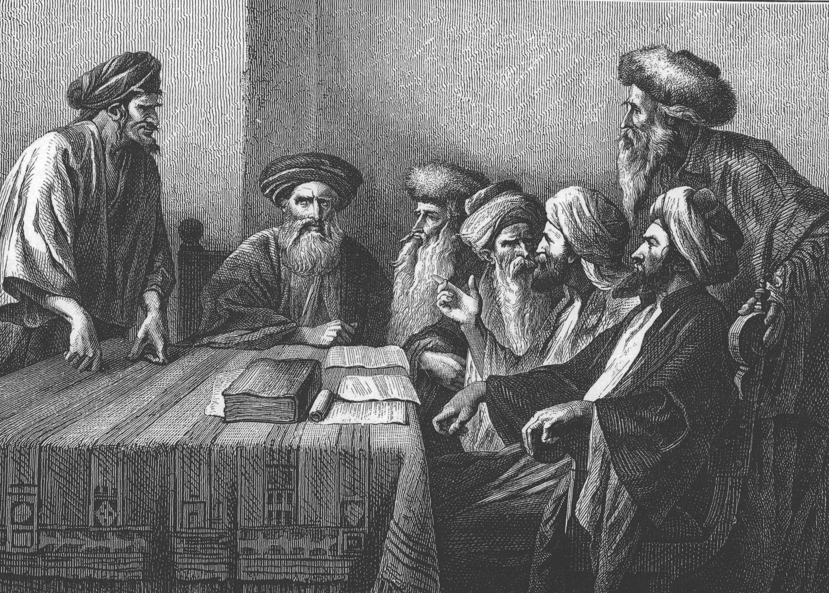
Judas before the Sanhedrin - Alexandre Bida
Judas before the Sanhedrin - by Alexandre Bida

TODAY'S SPECIAL: Matthew 27:1-26

TO CHEW ON: "Then Judas, His betrayer, seeing that He had been condemned, was remorseful and brought back the thirty pieces of silver to the chief priests and elders."  Matthew 27:3

I have thought a lot about Judas. What drove him to betray Jesus? What inner need was he giving in to?

Our passage today implies (when it says "…seeing He had been condemned, was remorseful…") that he may have thought his actions of betrayal would force Jesus' hand. Perhaps he thought that Jesus would again slip out of the grasp of the scribes and Pharisees as He had at other times. And this time, He would assert Himself as Messiah and show Himself to be the human King of the Jews.

We know that the other disciples had co-ruler ambitions. The mother of James and John asked that her sons have special positions in Jesus' kingdom. How much more Judas, who handled the money and already dipped into their common purse for his own use? In other words. I believe Judas thought his relationship with Jesus was a means to improve his own fortunes.

Are we so different? Don't we also often think of ourselves as the privileged chosen who, because of our relationship with Jesus will escape sickness and money problems, will have good families and successful businesses? What happens when things don't turn out the way we expect? Might we also be tempted to try to manipulate Him to follow our agenda? (You didn't hold up your end of the bargain, so I'll turn my back on You. Pout, pout.)

But Jesus had told them that following Him would include more than blessing and well-being:

"'Assuredly I say to you, there is no one who has left house or brothers or sisters of father or mother or wife or children or lands for My sake and the gospel's who shall not receive a hundredfold now in this time—house and brothers and sisters and mothers and children and lands, with persecutions—and in the age to come, eternal life'" - Mark 10:29,30 (emphasis added).

Let's be watchful over our own motivations, careful to recognize and deal with any selfish ambition that might, if left to grow, sabotage our loyalty to Him when His plans for us turn out to be entirely different than we had imagined.

(Jesus' description of Judas is strong: "…one of you is a devil" - John 6:70.)

PRAYER: Dear Jesus, please help me to love and follow You, not for selfish gain but because You are truth and life (John 6:67,68). Amen.

MORE: Maundy Thursday

Today is Maundy Thursday, the church feast that commemorates the Last Supper Jesus celebrated with His disciples. Here is the Collect that begins the day's liturgy.

Almighty Father, whose dear Son, on the night before he suffered, instituted the Sacrament of his Body and Blood: Mercifully grant that we may receive it thankfully in remembrance of Jesus Christ our Lord, who in these holy mysteries gives us a pledge of eternal life; and who now lives and reigns with you and the Holy Spirit, one God, for ever and ever. Amen.

 *********
Unless otherwise noted all Scripture quotations are taken from the New King James Version®. Copyright © 1982 by Thomas Nelson, Inc. Used by permission. All rights reserved.

Friday, November 25, 2016

Different routes to the same destination

Jesus calls Philip & Nathaneal - William Hole
TODAY'S SPECIAL: John 1:43-51


TO CHEW ON: "The following day Jesus wanted to go to Galilee, and He found Philip and said to him, 'Follow me.'" John 1:43

It's interesting to note how Jesus picked and called His disciples.

Andrew and another unnamed disciple (perhaps John, the writer) were attracted to Him by the testimony of their original rabbi, John the Baptist (John 1:35-37). When they asked Jesus where He was staying, His "Come and see" was invitation enough for them to leave John and follow Jesus.

The following day Jesus went in search of Philip.

Philip recruited his friend Nathaneal (also called Bartholomew) to be Jesus' follower.

It seems the four fishermen (Andrew, Simon [Peter], James and John) may have made their decision to become serious followers in stages, for we see them back fishing. Then one morning after a fruitless night on Galilee followed by a Jesus instigated miraculous catch, they finally "forsook all to follow Jesus" (Luke 5:1-11).

After that Jesus saw Matthew (Levi) at his tax-collecting station. When Jesus invited him to be a disciple, Matthew immediately left all to follow Jesus (Luke 5:27,28).

Still today Jesus finds and calls us in a variety of ways. Some encounter Him through the words of a teacher or preacher. Others are introduced to Him seemingly without human intervention through visions, dreams, and the Bible. Some come through the testimony of friends. Many make the decision to follow Him in stages and over a period of time. Still others decide in an instant.

Let's remember and be encouraged by this variety as we continue to pray for our unsaved family members and friends. Just because they aren't coming to God in the way we did or in the way we expect them to doesn't mean that God isn't involved in their lives, busy drawing them to Himself in ways tailored just to them.

PRAYER:
Dear Jesus, thank You that Your call to discipleship is unique and personal. I believe You are at work in the lives of those I love who have yet to respond to You. Amen.

 *********Unless otherwise noted all Scripture quotations are taken from the New King James Version®. Copyright © 1982 by Thomas Nelson, Inc. Used by permission. All rights reserved.


Sunday, September 18, 2016

What does it mean to "press in"?

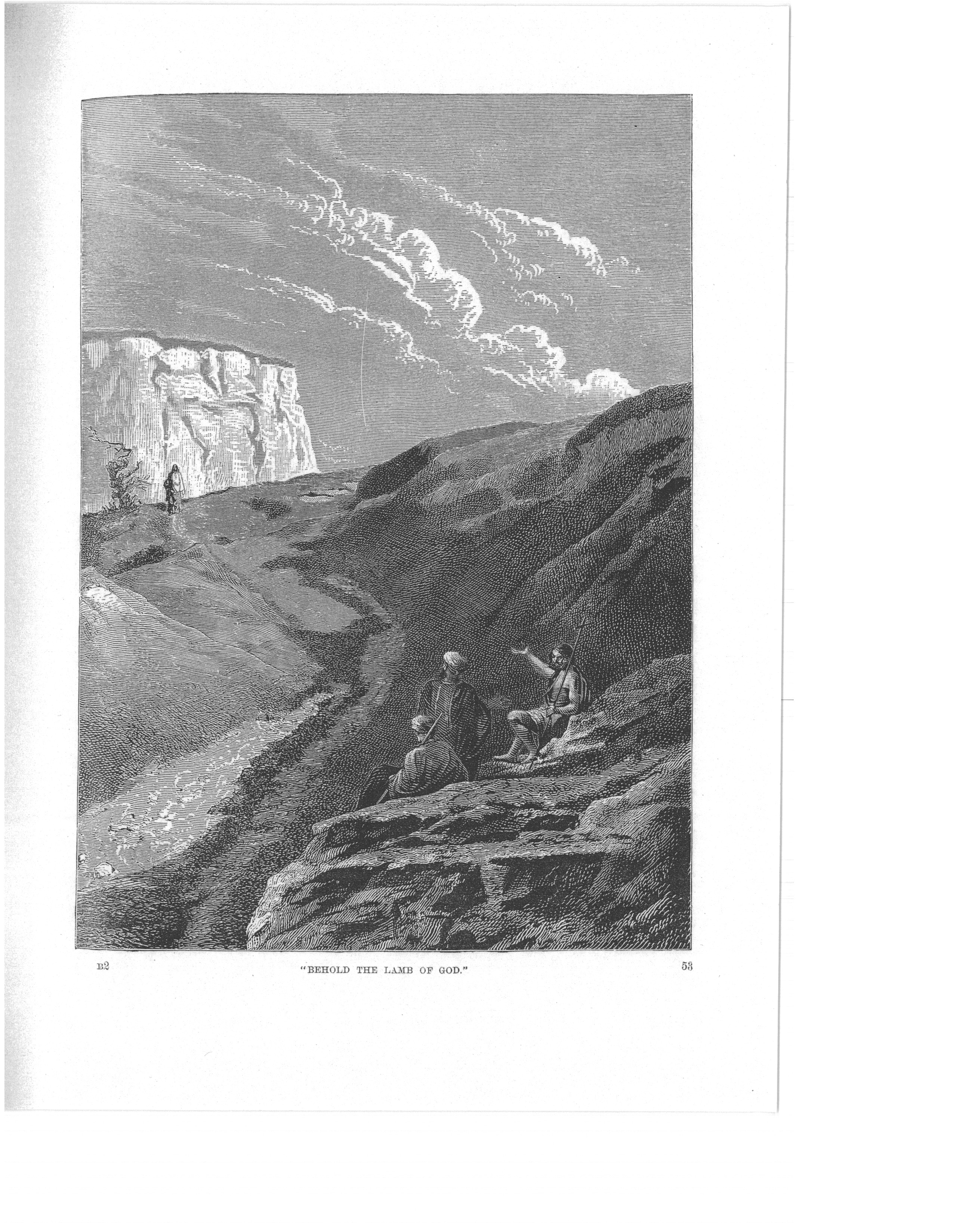
"Behold the Lamb of God" by Alexandre Bida
John: "Behold the Lamb of God."  by A. Bida
TODAY'S SPECIAL: Luke 16:1-18

TO CHEW ON: "'The law and the prophets were until John. Since that time the kingdom of God has been preached, and everyone is pressing into it.'" Luke 16:16

From time to time I've heard preachers admonish us to "press in" to God, the things of God etc. I've wondered what exactly they meant and thought it was a preacher-invented expression. But no—it comes from Jesus! He uses it here to talk about the advancement of the kingdom of God: "'Since that time (the time of John) the kingdom of God has been preached, and everyone is pressing into it.'"

[The expression "pressing into it' is a transliteration of biazo. It means to use, force, to apply force, to inflict violence on. The word biazo is used one other place in the NT, in Matthew 11:12: "'From the days of John the Baptist until now the kingdom of heaven suffers violence, and the violent take it by force.'"]

Other translations render the NKJV'S Luke 16:16 "…pressing into it" as "…forcing his way into it" (NAS), "… everyone tries forcefully to get into it" (AMP), "… eager multitudes are pressing in" (TLB), "… everyone is forcing their way into it" (NIV).

How does one press in to advance the kingdom of God? A sidebar article by Jack Hayford in my Bible is helpful. Below I quote and paraphrase his thoughts:

"Jesus declares the advance of the kingdom of God is the result of two things: preaching and pressing in."

Those who hear the preaching must respond or they will grow passive. That kingdom is advanced by words of truth and acts of love, but: "… apart from 1] an impassioned pursuit of prayer, 2] confrontation with the demonic, 3] expectation of the miraculous, and 4] a burning heart for evangelism, the kingdom of God makes little penetration in the world."

We must not go overboard in politicizing the kingdom and trying to advance it forcefully through "Earth-level rule" methods as they did during the Crusades. Rather: "Pressing in is accomplished first in prayer warfare, coupled with a will to surrender one's life and self interests, in order to gain God's kingdom goals" - Jack Hayford, "Pressing In," New Spirit-Filled Life Bible, p. 1420.

It sounds a lot like sold-out discipleship to me

PRAYER:
Dear Father, please create within me the desire, will, and energy to press in to You and the bringing about of Your kingdom. Amen.

 *********
Unless otherwise noted all Scripture quotations are taken from the New King James Version®. Copyright © 1982 by Thomas Nelson, Inc. Used by permission. All rights reserved.


Sunday, June 26, 2016

Discipleship's competition

TODAY'S SPECIAL: Luke 9:51-62

TO CHEW ON:
 "And another also said, 'Lord, I will follow You, but let me first go and bid them farewell who are at my house.' But Jesus said to him, 'No one having put his hand to the plow, and looking back is fit for the kingdom of God.'" Luke 9:61-62


In one of his meditations about discipleship, Oswald Chambers says:
"If any man come to me and hate not . . . , he cannot be My disciple," not, he cannot be good and upright, but, he cannot be one over whom Jesus writes the word 'Mine.' Any one of the relationships Our Lord mentions may be a competitive relationship. I may prefer to belong to my mother, or to my wife, or to myself; then, says Jesus, you cannot be My disciple. This does not mean I will not be saved, but it does mean that I cannot be "His."

The three interactions Jesus had with potential disciples at the end of our reading today (Luke 9:57-62) shed more light on discipleship's competition. It can come not only as human relationships but also as:

1. Material security
When a man approached Jesus and promised, "I will follow You wherever You go," Jesus didn't do what we might have expected, either welcoming or turning him away outright. Instead He told the man I don't even own a place to sleep. We hear no more of the man following Jesus. As a footnote commentary in my Bible explains it: "An emotional enthusiasm that hasn't considered the cost of abandoning material security is insufficient." (New Spirit Filled Life Bible, p. 1406).

Do we do that—get all glowy with the romance of following Jesus, and then reconsider when we realize, missionaries don't often own real estate, have fat pensions waiting for them at retirement, or have the luxury of a six-week winter vacation?


2. Procrastination
In a second case Jesus challenged a man to follow Him, but the man replied, "Let me first go and bury my father." Does Jesus reply, "'Let the dead bury their own dead, but you go and preach the kingdom of God,'" mean that the true disciple wouldn't even take time off for a family funeral? Hardly. I've heard someone explain this scenario by speculating that the man's father was probably not even dead at this point. Rather, he was in a life situation where he let current responsibilities trump Jesus' invitation to be a disciple by putting Him off with, 'I'll follow you later, when…'

Do we do that—put off sold-out discipleship for when our family is raised, our current project is finished, it's generally more convenient?

3. Distraction
In the third case, a man volunteered to be a disciple, but wanted first to bid farewell to those at home. Jesus' answer, "'No one having put his hand to the plow and looking back is fit for the kingdom of heaven,'" says to me that He knew the trip home for this potential disciple would be a distraction and a means to cause him to reconsider his decision.

Do we do that—after hearing His call, return to the people, the books, the advice that conflicts with His absolute claim on our lives? Like the seed that fell among thorns (Luke 8:7) didn't produce because of cares, riches and pleasures, our return "to bid farewell" can have a similar choking effect on our discipleship.

Oswald Chambers continues:

"Our Lord makes a disciple His own possession, He becomes responsible for him. 'Ye shall be witnesses unto Me.' The spirit that comes in is not that of doing anything for Jesus, but of being a perfect delight to Him. The secret of the missionary is - I am His, and He is carrying out His enterprises through me.
"Be entirely His" - Oswald Chambers, My Utmost for His Highest, September 4th reading.
How will I respond to that challenge? How will you?

PRAYER:
Dear Jesus, Your call to discipleship was not casual in the first century and is no more casual today. Help me to be a true disciple. Amen.

*********
Unless otherwise noted all Scripture quotations are taken from the New King James Version®. Copyright © 1982 by Thomas Nelson, Inc. Used by permission. All rights reserved.


Do your 8-12-year-olds have daily devotions? Point them to Bible Drive-Thru.

Monday, October 19, 2015

The Christian's job description

Index finger on "Job" button
Image from Pixabay.com
TODAY'S SPECIAL: 2 Timothy 4:1-18

TO CHEW ON: "Preach the word! Be ready in season and out of season. Convince, rebuke, exhort, with all long-suffering and teaching." 2 Timothy 4:2


"Preach the word [as an official messenger]; be ready when the time is right and even when it is not [keep your sense of urgency, whether the opportunity seems favorable or unfavorable, whether convenient or inconvenient, whether welcome or unwelcome]; correct [those who err in doctrine or behavior], warn [those who sin], exhort and encourage [those who are growing toward spiritual maturity], with inexhaustible patience and [faithful] teaching" - 2 Timothy 4:2 AMP


The job description Paul gives Timothy here is one we can all adopt. It addresses  three W questions and one H.

WHY?
When we look at the context we see the reason why the job Paul is about to describe is important. It's because someday he (Timothy) and all of us will appear before our King and Judge Jesus (2 Timothy 4:1).


WHAT?

  • "Preach the word!"
The "word" here is logos the same word used in John 1:1, 14 etc. It's the message of Jesus and His incarnation as God's communication to us. It's the message of our sin penalty paid and our relationship with God renewed. It's the word that Jesus equates with truth in John 8:31,32.

"It's not their own notions and fancies that they are to preach, but the pure plain word of God" - Matthew Henry's Commentary.

It's the word that's becoming increasingly unpopular in our culture. Beth Moore, in her September 2015 simulcast, speaking of living as an audacious Christian acknowledged this:
"We need the audacity to live the tension that comes with loving in truth … I want to love like Jesus, but Jesus never loved but with truth. We are going to do the greatest disservice to our culture if we deny the truth. If we think we're better for the world without the word, we'll end up looking just like the world" - Beth Moore, from my notes.

  • "Preach the word"
Preach (kerysso) means to proclaim publicly.

  • "Convince..."
Convince (elencho) is to convict, confute, find fault with and correct by word or deed.

  • "...rebuke ..."
Rebuke (epitimao) means to tax with a fault, chide, rebuke, reprove, censure severely.
"He must tell people their faults" - Matthew Henry's Commentary.

  • "...exhort..."
Exhort (parakaleo) means to call to, call upon with entreaty, comfort, instruct, encourage. 
"He must direct, encourage, and quicken those who began well" - Matthew Henry's Commentary.

WHEN?
  • "Be ready in season and out of season." The way the Amplified puts it is better than any commentary: "… be ready when the time is right and even when it is not [keep your sense of urgency, whether the opportunity seems favorable or unfavorable, whether convenient or inconvenient, whether welcome or unwelcome]…"

HOW?

  • "…with all long-suffering and teaching"
That is with patience (makrothymia) - endurance, constancy, steadfastness, perseverance, slowness in avenging wrongs.

and

teaching (didache) - doctrine.
"He must do it rationally, not with passion but with doctrine" - Matthew Henry's Commentary.

I ask myself does the way I live my life fulfill this assignment? What about you?


PRAYER: Dear God, if anything, this job is more challenging than ever. Help me to know how to carry it out in the moments of this day. Amen.

 *********
Unless otherwise noted all Scripture quotations are taken from the New King James Version®. Copyright © 1982 by Thomas Nelson, Inc. Used by permission. All rights reserved.

Scripture quotations marked AMP are taken from the Amplified® Bible,
Copyright © 1954, 1958, 1962, 1964, 1965, 1987 by The Lockman Foundation
Used by permission." (www.Lockman.org)

Thursday, April 30, 2015

Intimate Holy Spirit

teacher guiding the hand of a student
TODAY'S SPECIAL: John 14:1-21

TO CHEW ON: "I will not leave you orphans; I will come to you." John 14:18

One of the saddest things in the world is kids who don't belong to anyone—orphans. It's hard for me to even imagine being in such a place because my parents have been so foundational to the person I have become.

Here Jesus taps into the language of family and other relationships to describe what the Holy Spirit, who will soon come, will be to His disciples. Let's look at the roles Jesus says the Holy Spirit will play in a disciple's life. He will be a:

1. Helper: "I will pray to the Father and He will give you another Helper…"- John 14:16.  [Helper  is parakletos and means 'beside' and 'to call' = called to one's side. The word signifies an intercessor, comforter, helper, advocate counselor. … In non-biblical literature parakletos had the technical meaning of an attorney who appears in court in another's behalf. The Holy Spirit … gives the strength to endure the hostility of the world system" - Dick Mills, Word Wealth, New Spirit-Filled Life Bible, p. 1472.]
2. Roommate / Housemate: "He dwells with you..."
3. Tenant of the spirit: "…and will be in you" - John 14:17; 23
4. Parent: "I will not leave you orphans" - John 14:18.
5. Lover who shows His love: "And he who loves Me will be loved by My Father and I will love him and manifest Myself to him" - John 14:21. [Manifest - emphanidzo 1718 - to cause to shine… to appear to come to view, reveal, exhibit, make visible, present oneself to the sight of another" - Op. Cit, p. 1470.]
6. Teacher: "But the Helper, the Holy Spirit … will teach you all things…"
7. Prompter: "… and bring to your remembrance all things that I said to you" - John 14:26.

Of course the Holy Spirit doesn't barge into our lives but moves in on our invitation, increasingly taking over our life's house and our very personality and character only with our cooperation—that is, our obedience - John 14:15, 21, 23-24.

I challenge myself, and you, to be on the lookout today for instances where the Holy Spirit is these things to us. Perhaps a good project would be to make note of what we discover in a journal.


PRAYER: Dear Holy Spirit, thank You for coming to me in these various ways. Please open my eyes to clearly recognize what You do and who You are in my life.  Amen

***********

The Holy Bible, New King James Version Copyright © 1982 by Thomas Nelson, Inc. - Used with permission.

Bible Drive-Thru


Related Posts Plugin for WordPress, Blogger...