Showing posts with label testing. Show all posts

Friday, June 15, 2018

Love is not for sissies

Image: Pixabay
TODAY’S SPECIAL: Song of Solomon Psalm 11

TO CHEW ON:
“My beloved is mine and I am his.” Song of Solomon 2:16


Whether you interpret Song of Solomon as a spiritual allegory or a lyrical poem to heterosexual love, I’m sure you’ll agree it’s a beautiful Bible book. Today I’m struck by the wisdom about love between a man and a woman found in our short reading:
  • The lovers enjoy each others physical presence. The Shulamite is alert to her beloved. She thrills to the sound of his voice and the sight of him (Song of Solomon 2:8,9,14). In other places, the Beloved extols the physical beauties of his loved one (like Song of Solomon 1:10, 2:2, 4:1-7).
Though the couple here may sound like they’re at the beginning of their relationship, I’ve found this can be true even after 36 years of marriage. I can pick my husband’s voice out of the crowd, recognize his form from a distance, and find reassurance even in his snoring beside me at night.
  • The couple enjoys spending time together—alone (Song of Solomon 2:10).
This is important, After the hectic years of child-rearing, when you may be hard pressed to find alone time together, come the empty nest years. God willing you’ll have lots of time for such togetherness. Hopefully it’s good.
  • However, it doesn’t take much to disturb paradise. Just some “little foxes” - Song of Solomon 2:15 (like impatience, sharp answers, sarcasm, unkindness, unforgiveness, nagging, ingratitude…etc. etc.).
  • They are secure in each other’s love - Song of Solomon 2:16.
I like how one of our church pastors and his wife flesh this out. Sometimes, even when they’re in the middle of a heated discussion (we won’t call it an argument or fight), his wife will say, “I’m committed to you,” reinforcing her commitment to her husband and the relationship even though they don’t always agree about everything.
  • Sometimes love is tested. Such tests help the lovers see their relationship with fresh eyes and cling to each other with new appreciation - Song of Solomon 3:1,2.
If you or your spouse has been ill, had a near-death experience, been incommunicado on a long trip or some such, you’ll know how such an experience helps you see your loved one through new eyes and gain a new appreciation for what you have.  
  • This love school is not for the immature. Don’t register for class until you’re ready for it - Song of Solomon 3:5.
Admittedly, this is my interpretation, but I think it’s advice that follows logically after the stresses and strains the lovers have just been through. Our Beloved and his Shulamite might tell a young man or woman, you could avoid all this by not falling in love in the first place. So hold off as long as you can, because once love has been awakened, it's a roller coaster ride. Love is not for sissies!


PRAYER: Dear Father, thank You for love and marriage. Help me to work at mine. I am reminded of the many times the Bible speaks of the church as Jesus’ bride. Help us, in our Christian marriages, to pursue the unity and beauty of this spiritual relationship. Amen.

PSALM TO PRAY: Psalm 11

The Bible Project VIDEO: Song of Solomonhttps://youtu.be/4KC7xE4fgOw (Read Scripture series)


*********
Unless otherwise noted all Scripture quotations are taken from the New King James Version®. Copyright © 1982 by Thomas Nelson, Inc. Used by permission. All rights reserved.


Thursday, March 01, 2018

A test of family loyalty

Image: Pixabay
TODAY’S SPECIAL: Deuteronomy 21-23; Psalm 60

TO CHEW ON: “If a man has a stubborn and rebellious son who will not obey the voice of his father or the voice of his mother and who, when they have chastened him, will not heed them, then his father and his mother shall take hold of him and bring him out to the elders of the city, to the gate of his city.” Deuteronomy 21:18,19


One day before the February 14th Florida school shooting, a grandmother in Everett Washington reported her grandson to the police. This was after reading disturbing entries in his journal, entries in which he talked about shooting up his school (Read CNN article.)

What a test of family loyalty! And yet, for the greater good—the good of the community and this kid— this grandma reported her grandson for short-term pain.

The test of family ties in our reading is even more extreme. Parents were to bring their stubborn, rebellious, disobedient, gluttonous, alcoholic son to the elders, not for a scolding or a fine or lockup but stoning (Deuteronomy 21:21).

We’ve been studying the SHEMA which the Israelites prayed regularly:
“You shall love the LORD your God with all your heart, with all your soul, and with all your strength” - Deuteronomy 6:5. 

Such a radical family “betrayal,” then, could be seen as part of that heart, soul and strength love for a God who hated, condemned and punished these sins.

Of course we now live in the New Testament church era. Jesus’ death on the cross has atoned for our sins of stubbornness, rebellion, disobedience, gluttony, addiction etc. It’s not that our current sin is any less serious, but that God’s holy wrath at our wrong-doing has been satisfied by Jesus’ death in our stead.

Still, I believe there is a principle for us here, seen in the singlehearted focus of the parents. Jesus in the NT also referred to the cost of following Him in Matthew 10:34-39. In that section he described how His coming into a life could have the potential to mess with relationships, especially in the family:
“‘For I have come to set a man against his father, a daughter against her mother, and a daughter-in-law against her mother-in; and a man’s enemies will be those of his own household. He who loves father or more more than Me is not worthy of Me. And he who loves son or daughter more than Me is not worth of Me'” - Matthew 10:35-37.

Do we have this OT/NT devotion to Jesus that trumps even blood ties?


PRAYER: Dear Jesus, may my love for You be stronger than any love tie on earth. Amen.

PSALM TO PRAY: Psalm 60

The Bible Project VIDEO: The Law (Theme series)


 *********
Unless otherwise noted all Scripture quotations are taken from the New King James Version®. Copyright © 1982 by Thomas Nelson, Inc. Used by permission. All rights reserved.

Thanks for reading! This year we are using The Bible Project "Timeless Reading Plan" to read through the Bible in 2018. If you'd like to read along in your own Bible, you can download a pdf of the reading plan HERE.

Monday, January 22, 2018

Food from God's kitchen

Gathering Manna - Artist unknown

TODAY'S SPECIAL: Exodus 16-18

TO CHEW ON: "So when they measured it by omers, he who gathered much had nothing left over and he who gathered little had no lack." Exodus 16:18

Manna was the daily food for the Israelites that came straight from God's kitchen. It was first delivered one morning a-month-and-a-half after they left Egypt and continued for 40 years until they were on the doorstep of Canaan (Exodus 16:1, 35).

In today's reading we're given some lovely details about this food:
- It was on the ground every morning (except for the Sabbath day).
- It was small, round, as fine as frost (Exodus 16:14).
- It tasted like coriander and honey (Exodus 16:31).
- It melted in the heat (Exodus 16:21).
- It could be prepared in various ways. Our passage mentions baking and boiling (Exodus 16:23).
- It was called "manna" (literally "what?" Exodus 16:31) , referred to as "bread (Exodus 16:15, 22, 29), and compared to "wafers (Exodus 16:31).
- There was always enough for everyone.
- It normally spoiled overnight, smelled bad, and bred worms if saved (Exodus 16:20).
- But the manna gathered on the sixth day for use on the Sabbath kept just fine (Exodus 16:23-24).
- Even more strange, the omer of manna collected as a memorial lasted for years (Exodus 16:33-34).
- Moses and God took obedience to the details of its gathering and use on the Sabbath very seriously (Exodus 16:19-20; 28-29).

Manna is often viewed by scholars and Bible teachers as a symbol of the way God provides for us. My Bible's study notes refer to it this way:
"The food supply comes morning by morning in God's time, according to God's plan. The supply cannot be stored up for future use, except for the Sabbath. It is to be used only as God has specified (vs. 20) a miraculous demonstration of His provision to meet the needs of His people" J. C. Tollett,  New Spirit-Filled Life Bible, p. 98.

It's a great metaphor for God's  provision in so many ways.
  • Like manna, God's provision for us so often comes at the time we need it. (Jesus prayed: "… give us this day our daily bread" - Matthew 6:11).
  • His provision is also often just enough for our need. I've heard many stories of people getting money in the mail or as a gift in the precise amount needed.
  • But it is also under His command. Like the manna didn't keep the rules of spoilage on the sixth day, God can override the laws of time and space when He wants to, stretching oil and meal (1 Kings 17:8-16), multiplying loaves and fishes (John 6:5-13), adapting the manna He sends to our specific need.
  • How we handle God's provision for us may also be a test—as we've seen several times this month. Just to review Moses' explanation of this to the Israelites: "And you shall remember that the Lord your God led you all the way these forty years in the wilderness, to humble you and test you, to know what was in your heart, whether you would keep His commandments or not" - Deuteronomy 8:2.

- But perhaps the most beautiful comparison of manna as provision comes as we reflect on Jesus and how He is spiritual manna (bread) to us.
  •  He is the bread of life (John 6:35,48). He enacted  this when He broke bread with the disciples, telling them:
"Take, eat this is My body" - Mark 14:22.  
He explained what this meant: "I am the living bread which came down from heaven. If anyone eats of this bread, he will live forever; and the bread that I shall give is My flesh, which I shall give for the life of the world”  John 6:48-51.
  • There's even a memorial component. As the manna was kept in remembrance, we too remember and celebrate Jesus, the bread of life, every time we take part in the Lord's Supper (1 Corinthians 11:24).


PRAYER: Dear Jesus, thank You for Your manna provision for me, materially and spiritually. Amen.

PSALM TO PRAY: Psalm 22
This Psalm is prophetic of Jesus' death, a reminder of all that His death mentioned above entailed. This psalm contains this verse, that reminds us that the food He gives in this way is available to all:

 "The poor shall eat and be satisfied; 
Those who seek Him will praise the LORD - Psalm 22:26.

 *********
Unless otherwise noted all Scripture quotations are taken from the New King James Version®. Copyright © 1982 by Thomas Nelson, Inc. Used by permission. All rights reserved.


Sunday, January 07, 2018

Seed promises

TODAY'S SPECIAL: Genesis 22-24


TO CHEW ON: "'In your seed all the nations of the earth shall be blessed, because you have obeyed My voice.'" Genesis 22:18

Isaac had obviously been with Abraham before when he made an offering, for he knew what things were needed and noticed that they didn't have one of them. Abraham's answer to Isaac's question, "Where is the lamb?" was masterful in its avoidance. He didn't say, "You're going to be that lamb." Instead he said: "God will provide for Himself the lamb," which was not only tactful, but prophetic.

His answer illustrated his faith—a faith so genuine it earned him a big section in the Hebrews 11 gallery of heroes (Hebrews 11:8-10; 17-19). He believed that because Isaac was the child of promise, God would achieve His purposes through Isaac even if He had to raise him from the dead to do it.

What are our Isaacs? Is it our sense of calling? Our hopes and dreams for a marriage, or a project? Our careers? Our own children? Whether these things have already come to pass and we're clinging to them (in almost idolatrous fashion) as the answer to how God is going to make our lives significant, or they are still in the future, could we tie them up and put them on the altar like Abraham did Isaac?

Talking about offerings, I am reminded of another "offering" passage: "I beseech you therefore brethren by the mercies of God that you present your bodies as a living sacrifice, holy, acceptable to God which is your reasonable service" - Romans 12:1. Paul is pleading with the Roman Christians to sacrifice their very selves.

Abraham's faith got a big promise from God: "In your seed all the nations of the earth shall be blessed." Was God talking about the seed of a son, or the seed of faith, or both?

There is a "seed" promise for us too if we make that "living sacrifice" of ourselves and all the things that are dearest to us. Here it is:
"I tell you the truth, unless a kernel of wheat is planted in the soil and dies, it remains alone. But its death will produce many new kernels—a plentiful harvest of new lives. Those who love their life in this world will lose it. Those who care nothing for their life in this world will keep it for eternity" - John 12:24-25, NLT.


PRAYER: Dear God, it is hard for me to sacrifice my "Isaacs." Each relinquishment is a test of faith in You and Your promises. Help me to have the unflinching faith of Abraham to let You have complete control and say over all those things that are dearest to me. Amen.

PSALM TO PRAY - Psalm 7

********
Unless otherwise noted all Scripture quotations are taken from the New King James Version®. Copyright © 1982 by Thomas Nelson, Inc. Used by permission. All rights reserved.

Scripture quotations marked NLT are taken from the Holy Bible, New Living Translation, copyright © 1996, 2004, 2007 by Tyndale House Foundation. Used by permission of Tyndale House Publishers, Inc., Carol Stream, Illinois 60188. All rights reserved.

Thanks for reading! This year we are using The Bible Project "Timeless Reading Plan" to read through the Bible in 2018. If you'd like to read along in your own Bible, you can download a pdf of the reading plan HERE.

Sunday, October 22, 2017

Piling on

Image: Pixabay
TODAY’S SPECIAL: Matthew 22:15-33

TO CHEW ON:
“Then the pharisees went and plotted how they might entangle Him in His talk. And they sent to Him their disciples with the Herodians, saying, ‘Teacher…’
“That same day the Sadducees came to Him and ask Him saying, “Teacher…’  Matthew 22:15,16,23.


Jesus was a huge challenge to the Jewish religious leaders. In our reading we see two groups of them trying to trap Him into saying something they could use against Him. Farther along in the same chapter, a lawyer posed another question - Matthew 22:35-36. Their persistence reminds me of “piling on” the quarterback in football (not that Jesus was ever down, though).

In fact, Jesus seemed to relish these interchanges. In an earlier one, He provoked the back-and-forth by the way He answered a lawyer. That man, after he interpreted Jesus’ words as condemning of him and his buddies said, in effect, ‘Surely you’re not speaking of us lawyers here’ (Luke 11:45). Jesus answered with an inflammatory speech of woes (Luke 11:46-52) that stirred up the scribes and Pharisees to fever pitch (Luke 11:53,54).

Our incident in Matthew 22 came near the end of Jesus’ life. And though He consistently bested His questioners in argument, so they were eventually silenced (Matthew 22:46), we know that He was still arrested, tried, convicted (on false testimony) and put to death.

Some observations we can make about Jesus’ handling of verbal testing:
  • He didn’t avoid it even though it got Him into trouble - Luke 11:37-54.
  • He was nimble in His responses. He seemed to have no formula.
- Sometimes He answered with Scripture - Mark 10:2-9.
- Sometimes He told stories - Luke 10:25-37.
- Sometimes He used objects - Mark 12:15-17.
  • He knew when to speak and when to be silent. Several times He simply kept His mouth shut - Luke 20:1-8; John 8:6.

Jesus’ wisdom in dealing with His questioners, no matter how they piled on, never ceases to amaze me. The beautiful thing is, we can have it too, through the Holy Spirit. Jesus has promised it:
“'Now when they bring you to the synagogues and magistrates and authorities, do not worry about how or what you should answer, or what you should say. For the Holy Spirit will teach you in that very hour what you ought to say’” - Luke 12:11,12 (emphasis added).

May we have the faith to hear and speak!

PRAYER: Dear Jesus, help me to live so in tune with and empowered by Your Spirit that Your wisdom of words and deeds will be evident in my life. Amen.

 *********
Unless otherwise noted all Scripture quotations are taken from the New King James Version®. Copyright © 1982 by Thomas Nelson, Inc. Used by permission. All rights reserved.


Wednesday, September 20, 2017

Obedience Training

Image: Pixabay
TODAY’S SPECIAL: Exodus 16:1-16

TO CHEW ON: “Then the LORD said to Moses, ‘Behold I will rain bread from heaven for you. And the people shall go out and gather a certain quota every day that I may test them whether they will walk in My law or not.’” Exodus 16:4

Have you ever raised a stubborn child, where the smallest request ended in a battle of wills? “Eat your vegetables.” “No!” “Brush your teeth.” “No!” “Buckle your seat belt.” “No!” “Stop hitting your sister.” POW!

Sometimes such battles can seem silly. Why press a child to tears for victory over a few peas or a bedtime with clean teeth? Yet the responsible parent knows that disobedience in such small things is a symptom of a deeper attitude of rebellion toward authority. When we ignore it in our children, we run the risk of them growing into rebellious adults.

In a way the Israelites were like children. They were untrained in the ways of freedom. They had recently broken free from the grip of generations of slavery in Egypt. Whether their new attitude of complaining and insolence was a pendulum swing as far from slavery as they could get (now we can do as we please!), or just the natural response of human nature to tough conditions, we don’t know. But God sensed their need for training and He started small, with basic, easy-to-follow directions about gathering food (Exodus 16:4,5).

God’s explanation to Moses of why He made such rules: “‘That I may test them.'”

[Test - nasah - To put to the test, to try, to prove, tempt. The basic idea is to put someone to the test to see how he will respond. - Dick Mills, Word Wealth, New Spirit-Filled Bible, p. 747.]

Predictably, perhaps, some failed this test by trying to keep manna overnight (Exodus 16:20), and failing to gather extra on the day before Sabbath, then finding no supply on Sabbath morning (Exodus 16:27).

On the flip side of this matter, Jesus taught that those obedient and faithful in small things would be rewarded with greater responsibility (Matthew 25:21,23).

Where do we sit in this continuum of rebellion to obedience (and qualification for promotion)? What tests are we facing? Are we passing those tests? Are we aware of what our acts of insolence and disobedience to the things of God say about our maturity and fitness for the responsibilities we have now, let alone greater responsibility?

PRAYER: Dear Father, please give me insight into how the mundane activities and attitudes of life are spiritual tests. Help me to grow in obedience. Amen.

 *********
Unless otherwise noted all Scripture quotations are taken from the New King James Version®. Copyright © 1982 by Thomas Nelson, Inc. Used by permission. All rights reserved.


Sunday, August 13, 2017

Tests

TODAY'S SPECIAL: Psalm 105:1-22

TO CHEW ON: "His feet were hurt with fetters; his neck was put in a collar of iron; until what he had said came to pass, the word of the Lord tested him." Psalm 105:19


The "his" and "he" referred to in the verses above is Joseph. What is the psalm-writer talking about when he says "...until what he had said came to pass"? I believe it was those outrageous dreams of Joseph's which we read about in Genesis 37:

"Hear this dream that I have dreamed: Behold we were binding sheaves in the field and behold my sheaf arose and stood upright. And behold your sheaves gathered around it and bowed down to my sheaf....Behold, I have dreamed another dream. Behold the sun, the moon, and eleven stars were bowing down to me..." Genesis 37:6-9.

During his days as a slave in Potiphar's house and later as a prisoner, I wonder if Joseph ever thought back to those dreams and wondered — What was that about? His situation couldn't have been farther from what his dream predicted.

However, there was action toward the fulfillment of those dreams all through that time. The psalm-writer alludes to what was happening behind the scenes. God was testing Joseph.

It's interesting that the psalmist doesn't say that circumstances tested Joseph, or Potiphar and the jailer tested Joseph but "the word of the Lord tested him," telling us that these circumstances had God's knowledge and permission. They issued as "the word of the Lord," that same creative force that brought the worlds into being (John 1:1-3).

Joseph's response to this testing was positive. With faithful dependability he passed every test. Then on one day that began like every other, the test was over (Psalm 105:20-22). And of course, when his brothers came from Canaan seeking food, the fulfillment of his dreams came true in living color before his eyes.

Your current situation may also be far from what you feel God has promised you for your future. Viewing the unpleasant, difficult, and unfair things in your life as God's tests may help you gain courage, inspiration and the hope to keep going.

Joseph's story shows too, how completely and radically God can turn things around in a short while once the test is over. So don't be fooled or disheartened by appearances.

PRAYER: Dear God, thank You for this glimpse behind the scenes of the way You work in human lives. Please help me to pass the tests You bring my way today. Amen.


MORE: The test of waiting

You may find my article "In the Waiting Room" helpful if your test is waiting...and waiting... and waiting some more

************

Unless otherwise noted all Scripture quotations are taken from the New King James Version®. Copyright © 1982 by Thomas Nelson, Inc. Used by permission. All rights reserved.

Saturday, August 12, 2017

Storm—a faith adventure

Image: Pixabay
TODAY’S SPECIAL: Matthew 14:22-36

TO CHEW ON: “But the boat was now in the middle of the sea, tossed by the waves for the wind was contrary.” Matthew 14:24

Here are some interesting details to note about this story:
  • Jesus “made” (NKJV) or “directed” (AMP) His disciples to get into the boat and precede Him to the other side (Matthew 14:22).
  • Jesus stayed behind to pray. It was during prayer He must have sensed the disciples were in trouble (Matthew 14:23).
  • The disciples were no doubt stressed, anxious, and busy fighting the wind and waves. The boat might even have been out of control, seeing how it was  in the “middle of the sea,” “tossed,” and the “winds were contrary” (Matthew 14:24).
  • However, it wasn’t until almost morning (the “fourth watch” is between 3 and 6 a.m.) that Jesus came to them (Matthew 14:25).
  • When He came, He encouraged Peter to risk, rather than react with caution (Matthew 14:29).

This incident impresses several things on me.

1. Since Jesus “made” or “directed” the disciples into that boat and then let the trouble go on for a while before coming to them, perhaps we can conclude that facing that storm was His plan for them. And perhaps storms and trouble are also part of God’s plan for us—a preparation for our continuing earthly life or destiny in eternity?

2. Jesus sensed they were in trouble during His prayer time. Has it ever happened to you that as you are praying, a name, face, or memory of an old friend or acquaintance comes to mind? Could that be a supernatural nudge that they have a need and we should intercede for them?

3. When Peter kept His eyes on Jesus, he had faith that helped him do the impossible. Let’s take from that that when Jesus is with us in the storm, we too can step out and risk rather than pull back in caution. My Bible’s study notes express it well:
“He gives His followers the power to follow Him, even in adversity, and encourages adventurous discipleship” - J. Lyle Story, New Spirit-Filled Life Bible, p. 1317.

PRAYER:
Dear Jesus, thank You that You know about my storms and that they are under Your control. Help me to view them as faith challenges and adventures. Amen.

 *********
Unless otherwise noted all Scripture quotations are taken from the New King James Version®. Copyright © 1982 by Thomas Nelson, Inc. Used by permission. All rights reserved.


Tuesday, March 07, 2017

Do you know what is in your heart?

TODAY'S SPECIAL: Deuteronomy 8:1-10

TO CHEW ON: "And you shall remember that the Lord your God led you all the way these forty years in the wilderness to humble you and test you, to know what was in your heart, whether you would keep His commandments or not." Deuteronomy 8:2


If you want to discover your grumpiness, irritability, and general unpleasantness potential, put yourself under stress. For me, even something as ordinary as camping in the rain with little kids was enough to expose impatience and short-temper just under the thin veneer of pleasantness and longsuffering.

I often ask myself, when I watch people on the news as they react to natural disasters—how would I do in that situation? It's the same with stories of the Exodus in the Bible. Though it's easy to be condemning of the Israelites as they make their grumbling way through the desert, I wonder, would I have been any different?

In our reading today, Moses, in a farewell message to the Israelites, explains the why behind God's dealings with them. Their hardship, hunger, and thirst show them how helpless they are on their own and how much they need God. The way their clothes don't wear out and their feet don't swell show them they can trust God for the most practical, down-to-earth details. Their testing is never arbitrary or random but for a purpose, to show them how much they need God and to strengthen character in them. It is to build a people who, even when the stress is off, will remember the origins of their supply and good fortune.

We may be dismayed at how difficulties show us up as selfish, fearful, impatient etc. At such times it's easy to get discouraged with our many immaturities. But we mustn't stay down on ourselves too long. For such self-revelations are also positive:

  • They give us glimpses of who we really are.
  • They keep us from being proud and judgmental of others.
  • They throw us on God. We can ask Him to help us understand the roots of our reactions.  We can go to Him for daily spiritual nourishment, just like the Israelites went out to gather manna six days a week. In this way our difficulties will help us change. They will "do you good in the end" - Deuteronomy 8:16.

PRAYER: Dear God, please help me understand the roots of my irritability, impatience, worry — all the things that show up in me when I'm under stress. Help me to deal with them in a way that will build character and trust in You. Amen.

*****************
Unless otherwise noted all Scripture quotations are taken from the New King James Version®. Copyright © 1982 by Thomas Nelson, Inc. Used by permission. All rights reserved.

Do your 8-12-year-olds have daily devotions? Point them to Bible Drive-Thru.

Monday, February 13, 2017

Works that last; works that burn

fire burning behind a wall
TODAY'S SPECIAL: 1 Corinthians 3:1-23

TO CHEW ON: "If anyone's work which he has built on it endures, he will receive a reward. If anyone's work is burned, he will suffer loss; but he himself will be saved, yet so as through fire." 1 Corinthians 3:14,15


The older I get, the more I ponder the meaning of these verses as they relate to my own life. Will my life's work last or will it burn?

Here are some things the Bible calls enduring or lasting:
  • Riches and honour whose source is God - Proverbs 8:18.
  • Spiritual food that "endures to everlasting life" - John 6:27. The whole chapter of John 6 is Jesus declaring and explaining his role as the Bread of Life that lasts.
  • Spiritual works that endure (1 Corinthians 3:14). The works Paul talks about here relate to building the church and Paul uses the metaphor of Jesus as the foundation of this building and each one of us as builders.
  • Faith, hope and love - 1 Corinthians 13:13.
  • Unseen eternal things - 2 Corinthians 4:18.
  • The kingdom of God, which cannot be shaken - Hebrews 12:27-29.

Here are some of the things the Bible names as frail and destructible:
  • Our lives - Psalm 49:12; 78:39; 103:14.
  • Our righteousnesses—the good things we do to try to earn salvation - Isaiah 64:6.
  • Our pleasures - Luke 12:19,20.
  • Human knowledge - 1 Corinthians 13:8.
  • The glory of man - 1 Peter 1:24.
  • Material things—the earth - Psalm 102:25,26.
  • Spiritual works that don't pass the fire test (1 Corinthians 3:15). Though these works will burn, Paul makes a special point of saying that the person who built the works will be spared, barely, and with no reward.

These two lists leave a lot of room for self-searching and discernment, as you and I compare how we spend our lives with what will last, and what won't.

PRAYER:
Dear God, please help me to discern what is a worthwhile use of my limited time on earth. Help me to bring this perspective to all the activities of my life. Amen.

 *********
Unless otherwise noted all Scripture quotations are taken from the New King James Version®. Copyright © 1982 by Thomas Nelson, Inc. Used by permission. All rights reserved.


Tuesday, August 09, 2016

Chameleon faith

TODAY'S SPECIAL: Hebrews 11:32-12:4

TO CHEW ON: "... through faith subdued kingdoms, worked righteousness, obtained promises, stopped the mouths of lions, quenched the violence of fire, escaped the edge of the sword, out of weakness were made strong, became valiant in battle, turned to flight the armies of the aliens." Hebrews 11:33-34

There is a group of lizards—chameleons— who change color with the changing temperature of their surroundings and their emotions. Paul's description of faith here reminds me of chameleons in the way its outworking changes with the situation. It's another way of looking at the various outworkings of faith we talked about yesterday...

For Jacob faith meant blessing Joseph's sons (and in an unconventional way, trusting that He was hearing from God in this).

For Joseph it meant instructing his descendants to carry his bones back to Canaan. It was faith that God would bring the family back to the promised land.

For Jochebed it meant keeping her boy baby Moses alive, hiding him and, when he could no longer stay hidden, abandoning him to God by setting him adrift in a little pitch-covered boat.

For that same Moses, faith meant aligning himself with his fellow Israelites, though he had been brought up on Pharaoh's palace. It also meant obeying God's instructions to carry out the first Passover, and leading the Israelites through the Red Sea even as the Egyptians were in hot pursuit.

And so we could go on, tracing the changing color of faith on display through the entire chapter of Hebrews 11.

I have often asked myself when I hear missionary stories or stories of people persecuted in places where belief in Christ is forbidden, Would I be as strong as they are? If I were in their situation, would I have their faith? The truth of the matter, though, is that's not the faith that God is requiring of me at the moment. A better question to ask would be, Do I exhibit faith in the situation in which God has me right now?

I reflect on the color that faith takes in my life. It's faith to finish a writing project, trusting that God has a purpose for it. It's faith to keep praying for the family members and friends in my little circle of acquaintance and responsibility who have yet to come to Jesus or who are ill or needy in some way. It's faith that God is leading me in and out of commitments. No, it's not the big stuff of Hebrews 11, though it often feels big to me!

What color is faith in your life?


PRAYER: Dear God, thank you for this inspiring people-of-faith list and the examples of how faith was lived out in their lives. Help me to live with faith today. Amen.

MORE: Chameleons

For interesting information about chameleons and why they change color check out this article on the Reptile Knowledge website.

"Fooled by Nature: Chameleon Colors" is a video on howstuffworks.com that shows chameleons changing colors in different situations.

***********
Unless otherwise noted all Scripture quotations are taken from the New King James Version®. Copyright © 1982 by Thomas Nelson, Inc. Used by permission. All rights reserved.

Bible Drive-Thru


Thursday, July 14, 2016

Sifted

TODAY'S SPECIAL: Amos 9:1-15

TO CHEW ON:
"For surely I will command,
And I will sift the house of Israel among all nations
As Grain is sifted in a sieve;
Yet not the smallest grain shall fall to the ground." Amos 9:9


My earliest memories of sifting are from when I was a little girl and learning to bake. Mom taught me to make sure I always sifted the flour before putting it into anything. That was because beetles sometimes got into the large kitchen bin where we kept the 100 lb. quantities of flour we bought. I'm sure if I found beetles in my flour now, I'd throw out the whole lot. But not then. We'd simply remove the wriggling black interlopers and carry on, mixing the bread, cookies or whatever.

The act of sifting ("To pass through a sieve in order to separate the fine parts from the coarse") is referred to in the Bible at various times. It is God's way of revealing the covered or hidden things that shouldn't be there (e.g. Proverbs 20:26). The intention is to get rid of them.

However, the purpose of sifting is also to separate out and preserve what is good. Unlike the Ethiopians, Philistines and Syrians, which God says He will destroy, He will sift Israel so that he can preserve the "house of Jacob" (Amos 9:7-9). He'll separate out the bad stuff to preserve all that is good (down to the "smallest grain").

The process of sifting, when it affects our lives, is never fun. Just as the physical act of sifting disturbs every bit of the sifted product, so God's sifting of us is uncomfortable, painful, even life-shaking. Job is one man I think of when I think of the sifting of a life. Nothing he had was left untouched.

In the New Testament, Jesus refers to Satan asking to sift Peter. Though at first Peter failed the sifting test, Jesus told him that the sifting would eventually work toward him strengthening others (Luke 22:31-32).

Are you being sifted? All kinds of things can serve as sifters, from the normal tensions of work and family life to the unusual stresses of accidents, crimes, natural disasters, disease, unemployment, etc. If you feel like you are being sifted, remember the purpose of the process—to reveal what shouldn't be there so you can deal with it now, and to separate out what is worth preserving.

Peter speaks of the end result of such a purifying and separating process in 1 Peter 1:6-7 (using the metaphor of purifying gold in fire). "In this you greatly rejoice, though now for a little while, if need be, you have been grieved by various trials, that the genuineness of your faith, being much more precious than gold that perishes, though it is tested by fire, may be found to praise, honor and glory at the revelation of Jesus Christ."

PRAYER: Dear God, please help me to realize that problems in my life may be part of Your sifting and purifying process in me. Help me to endure so my life will glorify You. Amen.

MORE: Paul Baloche sings "Shaken"


Paul Baloche tells the story of writing the song "Shaken" in this 1.5 minute video.


Do your 8-12-year-olds have daily devotions? Point them to Bible Drive-Thru.

Sunday, May 22, 2016

Will persecution stumble us?

TODAY'S SPECIAL: John 15:26-16:15


TO CHEW ON: "These things I have spoken to you that you should not be made to stumble." John 16:1

What "things" is Jesus referring to?
  • That the world will hate them (John 15:18,19).
  • That they will be persecuted (John 15:20).
  • That they will be hated without a cause (John 15:25).
  • That the Holy Spirit will be their Helper (John 15:26).

["Parakletos = called to one's side, intercessor, comforter, helper, advocate, counsellor ... The Holy Spirit leads believers to a greater apprehension of gospel truths. In addition to general help and guidance, He gives strength to endure the hostility of the world system" - Dick Mills, Word Wealth, New Spirit-Filled Life Bible, p. 1472.]

We in North America have had it pretty good in the persecution department. In many cases our forefathers fled to Canada and the U.S. from religiously oppressive regimes for the reason that they wanted to live in place where they could worship according to their convictions. As a result for several generations the prevailing culture of North America has been sympathetic toward Christians.

But that's changing. Read the comments under pro-Christian articles in secular media and you will often see scorn, mockery, disdain, name-calling, even hatred for Christianity and Christians.

As Jesus warns here, let's not let that reaction cause us to stumble—in confusion, discouragement, fear, intimidation. Because:
  • It's what we should expect - John 16:4.
  • It's part of our inheritance - John 15:18,19.
  • It proves whose we are - John 15:23.

Rather, let's claim the help of the Holy Spirit

  • To remind us of Jesus' predictions about such treatment - John 14:26.
  • To assure us that we belong to God's family - Romans 8:16.
  • To tell us what to say - Mark 13:11; Luke 21:14,15.
  • To give us boldness - Acts 4:29-31

PRAYER: Dear God, I don't like abuse, scorn, or ridicule. Please help me to have the spirit of Jesus under such treatment—of wisdom and Holy Spirit boldness. Prepare me now for what the future holds of negative reactions to Christ-followers. Amen.

MORE: Persecution.org

The website Persecution.org monitors persecution of Christians around the world. A little snooping around on that site shows us that though persecution in North America happens, it occurs much less frequently than in many other countries.

You can read news about persecution of Christians throughout the world as you search for news by country.

Bible Drive-Thru


Tuesday, April 26, 2016

Fiery refining

Liquid gold
Liquid gold - Courtesy RGBStock.com
TODAY'S SPECIAL: Zechariah 13:1-9

TO CHEW ON: "I will bring one-third through the fire,
Will refine them as silver is refined,
And test them as gold is tested
They will call on My name;
And I will answer them.
I will say, 'This is My people';
And each one will say, 'The Lord is my God' " - Zechariah 13:9


This chilling prophecy was fulfilled in the near term for Israel in A.D. 70 when Jerusalem was overrun and sacked by the Romans. The connection is clear because of the picture of the struck shepherd and scattered sheep (Zechariah 13:7) that precedes it. Jesus, who referred to Himself as the shepherd (John 10) quoted words from Zechariah 13:7 to warn His disciples of what would happen with them when He would be struck down (Matthew 26:31). The disciples were scattered first at His crucifixion, and after the establishment of the church by persecution. Jerusalem was destroyed by fire, as predicted.

However, I believe we can view this prophecy of refining as something that is for the entire church age. "No clearer picture of Jesus and His suffering church is given in the Old Testament" says the Reformation Study Bible comments on verse 9.

As we look at some of the places the Bible mentions refining / testing, we see the methods  God uses to refine and what He wants to accomplish.

  • Job's test (through a complete turnaround in fortunes and bad health to boot) was to prove what he was really made of (Job 23:10).
  • The writer of Proverbs talked of God's correction as a proof of His parenthood and love (Proverbs 3:12).
  • Isaiah spoke of God's "hand against you" that was meant to "purge away your dross and take away all your alloy" —a picturesque way of saying God's tests are a way to rid us of all that isn't the real thing (Isaiah 1:25).
  • In another place Isaiah talked of testing in the furnace of "affliction" (Isaiah 48:10). "Affliction" - oniy -  means "affliction, poverty, misery."
  • In our passage the refining through fire was meant to bring the tested ones back to God. They pray, He answers, and they are reunited in a new identity and loyalty (Zechariah 14:9).
  • In Malachi the ministering tribe—Levites—were refined so that their ministry would be acceptable (Malachi 3:3).
  • Peter talked about faith developing through testing—faith that showed itself to be genuine and that results in "praise, honor, and glory at the revelation of Jesus Christ" (1 Peter 1:7).
  • Peter further reminded us to expect such testing rather than be surprised by it (1 Peter 4:12).

Testing, affliction, refining through fire… I don't particularly want them. You probably don't either. Still, such tests will probably come our way in one form or another.

I love the challenge in Paul Baloche's song "We Will Hold On." In the first stanza he speaks of the kind of tests we've listed above—being "persecuted and reviled ..."

In Stanza 2, he talks of another kind of test—one that might be more familiar to many of us: "We are tested by the blessing / With all the comforts of the world surrounding" (emphasis added).  That's a test that's much more to our liking, though probably as telling a test as any and as easy to fail.  For the temptation is to think we don't need Him and try to get by on our own.

Whatever test comes our way, let's accept the challenge of the Bible to stay with God. As Baloche puts it: "We will hold on to Your love" - Paul Baloche ("We Will Hold On" from the CD Glorious, Integrity Music, © 2009).

PRAYER: Dear God, help me to pass all the tests You send my way. Be very close to our brothers and sisters around the world whose lives are a series of fiery refinings. May I be prepared for a time when the same may be true of me. Amen.

MORE: "We Will Hold On"


 *********
Unless otherwise noted all Scripture quotations are taken from the New King James Version®. Copyright © 1982 by Thomas Nelson, Inc. Used by permission. All rights reserved.


Wednesday, April 06, 2016

Church report card - 2 (not straight A's)

TODAY’S SPECIAL: Revelation 2:18-29


TO CHEW ON: "And he who overcomes and keeps My works until the end, to him I will give power over the nations." Revelation 2:26.


Continuing on with these church report cards, today’s reading contains an evaluation for the church at Thyatira.

The Thyratira church was given an A for its work, love, service, faith, and patience. But they tolerated a Jezebel figure  (1 Kings 16:29-31) who “led people into literal and spiritual fornication” (endnotes – New Spirit Filled Life Bible, p. 1820). Jesus warned them that their tolerance and unwillingness to rid themselves of this influence would lead to deadly consequences.

After the warning, Jesus' message to Thyatira continues in a sympathetic tone. To those who have resisted this evil influence, He says, "... I will put on you no other burden. But hold fast what you have till I come." 

Finally He gives them a promise. For those who overcome and stay true to Jesus, the ending is triumphant rule over nations (Revelation 2:27 - compare Psalm 2:8,9).

What can we learn about the church and God’s standards for her from Thyratira?


1. The church has enemies. 1 Peter 4:12-16. Possibly some of the worst are those who infiltrate its membership, causing dissension and disunity (as in Thyratira’s case).

2. Jesus prayed for the unity of His followers (present and future) (John 17:20,21). Unity in the church was also one of the Apostle Paul’s great aspirations for it (1  Corinthians 1:10). 


3. God sometimes uses harsh and unpleasant circumstances to discipline us toward maturity  (James 1:2-4) and repentance(Matthew 18:15-17).  This discipline sometimes comes as punishment for a refusal to repent (1 Corinthians 5:1-5,12)

4. Jesus is sympathetic to our humanity and its challenges. In this regard I love verses like: "A bruised reed He will not break, / And smoking flax He will not quench..." Isaiah 42:3 and
"'Take My yoke upon you and learn from Me, for I am gentle and lowly in heart, and you will find rest for your souls'" (Matthew 11:29).

5. Our lives here on earth are a proving ground and basis for eternal reward (Matthew 19:28,29; 2 Timothy 2:11,12; Revelation 20:6). 


The things in the above list apply to and impact not only church congregations but individuals who make up those churches. Are we experiencing opposition? It shouldn’t surprise us. Are we working for unity. We should be. Are we learning from God’s discipline? Are we persevering, and living in hope because of the amazing future God has prepared for us?


PRAYER: Dear Jesus, what a privilege it is to be part of Your church. Help me to be a healthy member in this, Your body on earth. Amen.


 *********
Unless otherwise noted all Scripture quotations are taken from the New King James Version®. Copyright © 1982 by Thomas Nelson, Inc. Used by permission. All rights reserved.


Monday, July 27, 2015

Testing, testing...

TODAY'S SPECIAL: Exodus 16:1-16

TO CHEW ON: "Then the Lord said to Moses, 'Behold, I will rain bread from heaven for you. And the people shall go out and gather a certain quota every day that I may test them whether they will walk in my law or not.'" Exodus 16:4

In today's reading we see that the very mundane instructions for the gathering and handling of manna were were not options or suggestions but a God-designed test. What God was testing here was whether the people took Him and His instructions seriously.

[Test - nasah  means to put to the test, prove, tempt. The basic idea is to put someone to the test to see how he will respond - Dick Mills, "Word Wealth" New Spirit-Filled Life Bible, p. 747.]


Other places this word us used shows various ways God may test us.

"Nasah" is the word used of what God did to Abraham when He asked Him to sacrifice Isaac - Genesis 22:1.

God sent a nasah-test in the form of the ten commandments followed by fearful trumpet sounds and an electrical storm. This was to impress the people with how seriously they should take these commands and Moses' instructions about staying off Mount Sinai - Exodus 20:18-20.

Nasah is also the word used to describe what Moses accused the Israelites of doing to God at Rephidim when they demanded water as a proof of His presence - Exodus 17:1-7. Later, in his final instructions, Moses told them testing God was something they should not do - Deuteronomy 6:16.

Again in his Deuteronomy sermon, Moses reiterated how the desert wanderings were a test: "And you shall remember that the Lord your God led you all the way these forty years in the wilderness, to humble you and test you, to know what was in your heart, whether you would keep His commandments or not" - Deuteronomy 8:2 (emphasis added).

Which brings me to the question, what things in our lives may be God's tests?

It could be an Abraham-sized test like an accident or tragedy happening to a loved one or to us as a test of whether our faith is in God or someone or something else. Or perhaps it's a little manna-sized test—an item on the grocery cart missed by the checkout lady to test honesty; a string of rainy days to test contentment; someone cutting us off in traffic to test love ("...love suffers long ... does not behave rudely ... is not provoked" - 1 Corinthians 13:4,5).

Rich Warren defines life: "The Bible offers three metaphors that teach us God's view of life: Life is a test, life is a trust, and life is a temporary assignment."

Of the test part he says:
"Character is both developed and revealed by tests, and all of life is a test. You are always being tested. God constantly watches your response to people, problems, success, conflict, illness, disappointment, and even the weather! He even watches the simplest actions such as when you open a door for others, when you pick up a piece of trash, or when you're polite toward a clerk or waitress" - Rick Warren - The Purpose Drive Life, p. 42, 43.   

PRAYER: Dear God, it sure changes the complexion of life when I view the details of my day as tests. Help me to pass today's tests. Amen.

MORE: More about life's tests
"When you understand that life is a test, you realize that nothing is insignificant in your life. Even the smallest incident has significance for your character development. Every day is an important day, and every second is a growth opportunity to deepen your character, to demonstrate love, or to depend on God. Some tests seem overwhelming, while others you don't even notice. But all of them have eternal implications" - Rick Warren, Op. cit., p. 43.

*********
Unless otherwise noted all Scripture quotations are taken from the New King James Version®. Copyright © 1982 by Thomas Nelson, Inc. Used by permission. All rights reserved.


Bible Drive-Thru


Friday, July 24, 2015

Would we pass this test?

Jesus the disciples & the crowd - Artist unknown
Jesus & the Multitude - Artist unknown
TODAY'S SPECIAL: John 6:1-21

TO CHEW ON: "Then Jesus lifted up His eyes and seeing a great multitude coming toward Him, He said to Philip, 'Where shall we buy bread that these may eat?' "
But this He said to test him, for He Himself knew what He would do." John 6:5,6


Jesus, seeing the crowds approaching, asks Philip, How are we going to feed these people? What a curious little aside John mentions here—cluing us in to Jesus' motives. For Jesus asks, not to get ideas or information. This is not a problem-solving brainstorm but a probe of Philip's own heart. It's a test.

[Tested - peirazo  "means to explore, test, try, assay, examine, prove, attempt, tempt. The word describes the testing of the believer's loyalty, strength, opinions, disposition, condition, faith, patience or character. Peirazo determines which way one is going and what one is made of" - Dick Mills, Word Wealth, New Spirit-Filled Life Bible, p. 1820.]

Philip answers, "Two hundred denarii worth of bread is not sufficient for them that every one of them may have a little."  I wonder how Jesus feels about that response.

It is realistic and practical. It focuses on the big need and the expense they will incur to fill it. But I can't help but think Jesus is disappointed in it. For there is not a whiff of faith here. Nothing to suggest that Philip has been impacted by Jesus' presence, that his faith has grown as a result of witnessing the healings and other miraculous signs Jesus has performed.

(In my Bible's Harmony of the Gospels, Jesus does many miracles between His selection of the twelve apostles and this feeding of the 5,000 event. Philip has probably witnessed these: the centurion's servant healed - Luke 7:1-10; widow's son raised from the dead - Luke 7:11-17; sea calmed - Matthew 8:23-27; Gadarene demoniac healed - Luke 8:25-39; the twelve sent out to heal and preach - Luke 9:1-6).

Somehow Philip's first response despite all he has seen and heard, is still to look at the big problem and cast about for a common sense, material solution.

Aren't we also a lot like that? We view difficult people, accidents, challenges to our resources, illnesses etc. as things that shouldn't be happening to us. They're from the devil, we say. And in a way every problem and brokenness does have its roots in the falleness of us and our world.

But here we see they may also be God-designed tests—the things that show God and us—mostly us—what we really lean on and trust in, where our confidence is. They demonstrate the focus, size and quality of our faith.

PRAYER: Dear Jesus, when I'm challenged by life and circumstances, help me to perceive Your view of what this really is. I want to begin to pass these tests. Amen.

MORE: How could Philip have passed this test?

  • What answer from Philip do you think would have pleased Jesus (or maybe you think Philip's answer did please him)?
  • What might a test-answering response to the challenges of life be for us?

"Comments" would love to record your answers.

 *********
Unless otherwise noted all Scripture quotations are taken from the New King James Version®. Copyright © 1982 by Thomas Nelson, Inc. Used by permission. All rights reserved.


Tuesday, February 10, 2015

Tested by circumstances - 2

"Naaman's Gifts Refused"- 1728 engraving
by Bernard Picart and Abraham de Blois

TODAY'S SPECIAL: 2 Kings 5:16-27


TO CHEW ON: "But Gehazi, the servant of Elisha, the man of God, said, 'Look, my master has spared Naaman this Syrian, while not receiving from his hands what he brought; but as the Lord lives, I will run after him and take something from him.' " 2 Kings 5:20.

The last character in the Naaman story is Gehazi, Elisha's servant. He isn't confronted with the circumstance Naaman's leprosy, as the characters in the earlier installment were, but with his boss's reaction to Naaman's offer of gifts.

I can just see Gehazi as Naaman returns to Elisha, loitering in the background, his eyes glittering as Naaman's servants unpack the beautiful clothes and the sacks of coin. Then watch his expression change when Elisha refuses them all.

He wants that stuff, oh, how he wants it! And so he concocts a plan. He runs after Naaman and tells him that Elisha has received guests, now needs some things, and asks for a modest two outfits and a sack of silver.

After stashing them safely in his quarters he stands before Elisha as usual to wait on him. In answer to Elisha's, "Where did you go, Gehazi?" he replies with the brazen, "Your servant did not go anywhere."

Foolish Gehazi. Do you not know that your master is in touch with the One who can not only see your motives and actions, but can reveal them to him? Elisha confronts Gehazi with what he has done and bequeaths him and his family with the leprosy that had infected Naaman.

What can we learn from how this sly prophet's assistant handled his test? Three things come to mind.

1. Exposure to the things of God and the people of God doesn't change our hearts. Gehazi served the man of God but he wasn't a godly man. Each of us needs to come to God personally and have a personal relationship with Him.

2. God has a way of revealing knowledge about people and situations to those who are close to Him.

3. Like Gehazi's response to Naaman's beautiful stuff revealed his covetousness, greed, deceit, and sneakiness, so our response to temptation can show us what's inside us.

Let's observe our responses to today's circumstances and the temptations they bring. Then let's allow these tests to educate us about ourselves, our weaknesses, and our need for repentance and a change of heart.

PRAYER: Dear God, please help me not to kid myself that I can fool You in any way. I pray with the psalm writer: "Search me O God, and know my heart. Try me and know my anxieties. And see if there is any wicked way in me. And lead me in the way everlasting" (Psalm 139:23-24).

MORE: Lying to the Holy Spirit

This story reminds me of one from the New Testament. The couple Ananias and Sapphira gave a generous gift to the early church but in a deceptive way. Read what happened to them in Acts 5:1-11.

**********
Unless otherwise noted all Scripture quotations are taken from the New King James Version®. Copyright © 1982 by Thomas Nelson, Inc. Used by permission. All rights reserved.

Bible Drive-Thru


Wednesday, September 17, 2014

But it's just a little thing

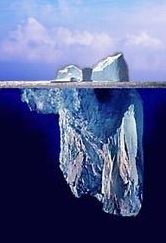
Art from Iceberg


TODAY'S SPECIAL: Exodus 16:1-16

TO CHEW ON: "Then the Lord said to Moses, 'Behold I will rain bread from heaven for you. And the people shall go out and gather a certain quota every day, that I may test them whether they will walk in My law or not.'" Exodus 16:4

The Israelites had just experienced the great high of crossing over the Red Sea and watching the Egyptians perish. But from that high they soon plunged to a low when they needed water and the water they eventually found was bitter. Their reaction: they grumbled and complained against Moses.

Would we blame them? Yet Moses' response to their grumbling shows that this was no frivolous thing: "Your complaints are not against us but against the Lord" (Exodus 16:8).

A little while later, remembering their Egyptian diet and comparing it to what they now ate now, "...the whole congregation complained against Moses and Aaron in the wilderness" (Exodus 16:2). God sent manna to satisfy their hunger. It was food that had an interesting side purpose: "And the people shall go out and gather a certain quota every day, that I may test them whether they will walk in my law or not." The "quota" was enough for each day and double that amount on the day before Sabbath so Sabbath was a day off. How they followed those instructions was God's test.

These are such little things—grumbling and complaining, not following instructions. Haven't we all been guilty of doing something similar?

Jerry Bridges in his book The Pursuit of Holiness says,

"We do not take some sin seriously. We have mentally categorized sins into that which is acceptable and that which may be tolerated a bit .... Andrew Bonar said, 'It is not the importance of the thing, but the majesty of the Lawgiver that is to be the standard of obedience .... Some, indeed, might reckon such minute rules as these trifling. But the principle involved in obedience or disobedience was none other than the same principle which was tried in Eden at the foot of the forbidden tree. It is really this: Is the Lord to be obeyed in all things whatsoever He commands? Is He a holy Lawgiver? Are His creatures bound to give implicit assent to His will?'" - Jerry Bridges, The Pursuit of Holiness, Kindle Location 110 - Bonar quote from Andrew Bonar, A Commentary on Leviticus, 1846, reprint 1972, p. 218 (emphasis added).

And so when God convicts about some little thing let's not try to wriggle our way out of dealing with it, giving the excuse that it's too insignificant to be concerned about. Rather, let's do the needed thing—make it right and change our ways because of the worth of our holy, majestic Lawgiver.


PRAYER: Dear God, thank You for these examples of how you test us in the little things. Help me to live with a sensitive conscience before You today, quick to change my ways where You apply pressure. Amen.


MORE: "The great disposition of sin underneath"

"When I get into the presence of God, I do not realize that I am a sinner in an indefinite sense; I realize the concentration of sin in a particular feature of my life.... The conviction is concentrated on—I am this, or that, or the other. This is always the sign that a man or woman is in the presence of God. There is never any vague sense of sin, but the concentration of sin in some personal particular. God begins by convicting us of one thing fixed on in the mind that is prompted by His Spirit; if we will yield to His conviction on that point, He will lead us down to the great disposition of sin underneath. That is the way God always deals with us when we are consciously in His presence" - Oswald Chambers, My Utmost for His Highest, July 3 reading (emphasis added).

I believe Chambers has put his finger one of the reasons little things aren't really little at all. It is because they are symptoms of our real condition. They are the one tenth of the iceberg jutting above the surface, hiding the nine tenths of that "great disposition of sin" underneath."

************
Unless otherwise noted all Scripture quotations are taken from the New King James Version®. Copyright © 1982 by Thomas Nelson, Inc. Used by permission. All rights reserved.


Bookmark and Share

Friday, August 01, 2014

Spiritual tests

test tubes - a chemical test
TODAY'S SPECIAL: Psalm 17:1-15

TO CHEW ON:
"You have tested my heart…" - Psalm 17:3


We're not told exactly what kind of a test David was facing here, but he is definitely in some kind of a dilemma. The beginning of his prayer ("Hear a just cause, O Lord…") sounds a little bit like the preamble of a lawyer setting out to convince God of the rightness of his case.

He asks God to vindicate him (Psalm 17:2). [Vindicate: to clear of accusation, censure, suspicion, to support, justify set free, rescue.] He needs protection (Psalm 17:8). His foe is cunning and sneaky as a hunting lion, and he needs a stronger warrior, more skilled than he is, to fight for him (Psalm 17:11-13). He recognizes that this experience is a spiritual test: "You have tested my heart…" (Psalm 17:3).

Spiritual tests can come in many ways. Sometimes God tests us:
  • By asking for a great sacrifice. He tested Abraham by asking him to sacrifice his son Isaac (Genesis 22:1,2).
  • By leading in a difficult way. Moses reminded the Israelites that their wilderness journey was a test (Deuteronomy 8:2).
  • By giving choices. Solomon's dream, where God asked him "'What shall I give you?'" was a test (1 Kings 3:5).
  • By proposing hard tasks. "'Where shall we buy bread that these may eat?'" Jesus asked Philip. "But this He said to test him" (John 6:5-6).
  • By permitting temptation—for it is a test of faith that, if passed, produces good results (James 1:2).

Have I, have you considered that the difficult circumstances we're facing right now, or the sacrifices we're being asked to make, or the choices we're contemplating, or the hard tasks ahead of us, or the temptations all around us might be spiritual tests? As we recognize what's going on, we can rally our defenses. First and most important we can call on God for His presence, protection, and help, like David did here.


PRAYER:
Dear God "Uphold my steps…. hear me, O God … Show Your marvelous lovingkindness … Keep me … Hide me… Arise O Lord" (Psalm 17:5-8,13). Help me to pass this spiritual test. Amen.

 *********
Unless otherwise noted all Scripture quotations are taken from the New King James Version®. Copyright © 1982 by Thomas Nelson, Inc. Used by permission. All rights reserved.

*********
Subscribe to my newsletter coming September 1st. 

Get book recommendations, Bible study tips, author news plus a full-colour 18-month Pathways Scripture text calendar when you sign up!  

Sign up below:


********


Bookmark and Share


Related Posts Plugin for WordPress, Blogger...