Showing posts with label disobedience. Show all posts

Sunday, August 19, 2018

Two Cautionary Tales

King Joash Repairs the Temple - 2 Chron. 24
TODAY’S SPECIAL: 2 Chronicles 21-24; Psalm 76

TO CHEW ON:
“Then the Spirit of God came upon Zechariah, the son of Jehoiada the priest, who stood above the people and said to them, ’Thus says God: “Why do you transgress the commandments of the LORD so that you cannot prosper? Because you have forsaken the LORD, He also has forsaken you”’

So they conspired against him, and at the command of the king they stoned him with stones in the court of the house of the LORD.” 2 Chronicles 24:20,21


Our reading today is the sad story of Joash. He came to Judah’s throne when he was a mere seven years old. Under the influence of priest Joehoiada, he made an excellent start, repairing the neglected temple and restoring worship.

But after Jehoiada died, Joash allowed the leaders of Judah to influence him. They had a very different agenda. They steered him away from the worshiping Yahweh to idols and his idolatry became so entrenched even the “wrath that came upon Judah and Jerusalem because of their trespass” didn’t move him from it.

When Zechariah, son of Joash’s old mentor Jehoiada, warned him in a bold Holy Spirit-inspired prophecy of the inevitable consequence (“Because you have forsaken the LORD, He also has forsaken you” - 2 Chronicles 24:20), Joash had him stoned to death.

Zecharaiah reminds us a a New Testament character who was also stoned when he spoke out against the perverted worship of his day. That would be Stephen. Their ends are eerily alike (Acts 7:51-60).

Two lessons jump out at me from these two tales:

1. We need to be aware of and intentional about who we allow to influence us. When Joash was under the tutelage of Jehoiada, he was inspired to honour God by fixing up the temple and restoring the worship of Yahweh. But when Jehoiada died, he allowed himself to be led by Judah’s leaders right back into the swamp of idolatry.

We too put ourselves under influencers. Who we spend time with, what we read, what we watch, listen to, the music we play—all affect our loyalties. Let’s not slip into modern idolatry by being careless about who and what we allow to influence us.

2. Being a mouthpiece for God can be dangerous. Zechariah and Stephen discovered that. As our society drifts ever farther from Judeo-Christian principles, we do well to remind ourselves of the price we too may be asked to pay when we allow the Holy Spirit carte blanche to our lives.

PRAYER: Dear Father, please help me to choose my influencers well. Help me, in turn, to be a good mentor to others. May I be willing to pay the price of being the temple of Your Spirit, no matter what the price. Amen.

PSALM TO PRAY: Psalm 76

 *********
Unless otherwise noted all Scripture quotations are taken from the New King James Version®. Copyright © 1982 by Thomas Nelson, Inc. Used by permission. All rights reserved.


Friday, June 22, 2018

Potter picture

TODAY'S SPECIAL: Jeremiah 18-22; Psalm 18

TO CHEW ON: "And the vessel that he made of clay was marred in the hand of the potter; so he made it again into another vessel as it seemed good to the potter to make." Jeremiah 18:4


The Bible writers often use everyday objects and activities to teach lessons of the Spirit. Here Jeremiah bases his prophecy and plea to Israel on a visit God instructs him to make to a pottery shop. As he watches the craftsman shape the glistening clay spinning under his hands, then change the pot's form when the clay refuses to cooperate, God gives him a message for Israel. He draws their attention to similarities between the potter working with the clay, and God working with people.

- Just as the potter is sovereign over the clay, doing with it as he pleases, so God is sovereign over the "house of Israel."

- What the potter makes depends on the clay. When the vessel he is making doesn't stand up to the process but becomes marred, he shapes it into a different one. Similarly, what God can do with Israel depends on her response to Him.

My Bible study notes sum up these lessons well: "As the quality of the clay limits what the potter can do with it, so the quality of a people limits what God can do with them." Spirit Filled Life Bible p. 985.

We can apply this potter picture to our own lives as we ask questions like:
  • Am I resistant or malleable clay in God's hands? 
  • Do I insist on fulfilling my own plans and ambitions, or do I submit those to Him. When circumstances in my life don't turn out as I plan, do I get all frustrated? 
  • Do I realize that God may be shaping me for some task of which I'm not aware? 
  • Am I letting the Master Potter shape my life into whatever jar, cup, plate or pitcher most useful for the purposes of His kingdom?

PRAYER: Dear God, please show me where the clay of my life is stubborn or marred with impurities. I want my life to be good clay, that You can shape for Your kingdom purposes. Amen.

PSALM TO PRAY: Psalm 18

*******
Unless otherwise noted all Scripture quotations are taken from the New King James Version®. Copyright © 1982 by Thomas Nelson, Inc. Used by permission. All rights reserved.

Sunday, June 10, 2018

Do you have an obedient ear?

Gold earring with amber gemstone
Photo from RGB Stock
TODAY'S SPECIAL: Proverbs 25-27; Psalm 6

TO CHEW ON: "Like an earring of gold and an ornament of fine gold
Is a wise rebuker to an obedient ear." Proverbs 25:12


Rebuke isn't a word we use often these days. It means to reprove sharply, reprimand, check or restrain by command. Its synonym reprove (to rebuke, censure, blame) is almost as rare.

Perhaps we don't use these words because we don't do much rebuking or reproving. When the news carries stories of people getting beat up for trying to check or restrain bad behaviour, can we be blamed for keeping our mouths shut?

Yet here Solomon praises the person who learns from a rebuke. Other references to rebuke in the Bible help us understand from whom rebuke might come and how to receive and give it.

  • Sometimes it comes from unexpected sources. In the Old Testament, rebuke came to Abram and Sarah from an Egyptian Pharaoh and Abimelech, the king of Gerar, when they lied about their relationship - Genesis 12:18 and Genesis 20:16.
  • Rebuke is valuable when it comes from a righteous, wise person. In Psalm 141:5 the psalmist calls it "excellent oil." Our focus verse likens wise rebuke to gold jewelry.
  • Parents are expected to rebuke their children and wise children will respond with corrected behaviour - Proverbs 15:5; Proverbs 2:1-22.
  • Rebuke is most helpful when it's "open" vs. hidden, as in not delivered - Proverbs 27:5.
  • We demonstrate whether we are foolish or wise by how we respond to it - Proverbs 17:10.
  • God, our heavenly Father, shows His care for us when He rebukes us - Hebrews 12:5.

Have you been rebuked by someone lately? Or by God Himself? How do you tend to respond to rebuke?

Instead of getting our hackles up, or objecting "Who are you to tell me I'm wrong?!" let's prove ourselves wise by valuing righteous, helpful, needed rebuke and responding to it with an obedient ear.

PRAYER: Dear God, help me to be open to rebuke today and to respond with an obedient ear. Amen.

PSALM TO PRAY: Psalm 6
***********

The Holy Bible, New King James Version Copyright © 1982 by Thomas Nelson, Inc. - Used with permission.


Saturday, May 12, 2018

The climax of judgment

Image: pixabay.com
TODAY'S SPECIAL: Amos 6-9; Psalm 127

TO CHEW ON: "Shall the land not tremble for this .... I will make the sun go down at noon .... I will turn your feasts into mourning .... I will send a famine on the land ... of hearing the word of the Lord." Amos 8:8,9,10,11

Amos's prophecy starts with a vision—a basket of summer fruit. As if the image of fruit (an understandable metaphor for consequences) isn't enough, apparently the Hebrew word for fruit (qayits) and end (qets) sound almost identical. And so we have a word-play pun underlining this vision's message of judgment.

The judgment was for Israel's secularism and greed. The prophet reports their talk: "'When will the New Moon be past, / That we may sell grain? / And the Sabbath / That we may trade wheat?'" - Amos 8:5.

The judgment was also for their deception and unfairness. He reminds of what they do: "Making the ephah small and the shekel large, / Falsifying the scales by deceit" - Amos 8:5. (The ephah was a measure of grain. Making it small was lowering the amount of it. The shekel was money. Making it large was increasing the price of whatever commodity was being sold.)

The "fruit" of this is interesting to see. I read the consequences as being delivered in increments.
- There are natural disasters - earthquakes and unnatural daytime darkness (coming from volcanic eruptions, perhaps or wildfires) - Amos 8:8,9.
- Life's milestones and even religious celebrations that are usually occasions of joy become times of lament. They are characterized by mourning, premature aging and disease, ("...baldness on every head ...") and tragedy ("... like mourning for an only son") - Amos 8:10.
- But the climax of judgment is God's silence that results in a desperate but futile search for Him - Amos 8:11,12:
“I’ll send a famine through the whole country.
    It won’t be food or water that’s lacking, but my Word.
People will drift from one end of the country to the other,
    roam to the north, wander to the east.
They’ll go anywhere, listen to anyone,    hoping to hear God’s Word—but they won’t hear it - Amos 8:11,12 MSG (emphasis added).

My questions: 
  • Do we understand what a grave place we put ourselves into when we stop listening to God, ignore His invitation to eternal life and live in selfishness and disobedience—as a nation, as churches, as individuals?
  • Do we understand God's ensuing silence as the climax of judgment and ultimate consequence that it is?


PRAYER:
Dear Father, please help me to keep the channel of communication with You open.

PSALM TO PRAY: Psalm 127

 *********
Unless otherwise noted all Scripture quotations are taken from the New King James Version®. Copyright © 1982 by Thomas Nelson, Inc. Used by permission. All rights reserved.

Scripture quotations marked MSG are taken from The Message. Copyright © 1993, 1994, 1995, 1996, 2000, 2001, 2002. Used by permission of NavPress Publishing Group.


Tuesday, March 13, 2018

Playing games with God

TODAY'S SPECIAL: Judges 6-8; Psalm 72

TO CHEW ON: "Then Gideon said to God, 'Do not be angry with me, but let me speak just once more: Let me test, I pray, just once more with the fleece; let it now be dry only on the fleece, but on all the ground let there be dew.'" Judges 6:39

This little story is the origin of the saying 'put out a fleece' meaning ask for a sign to test a situation.

Asking for or depending on signs was a frequent thing in the Bible.
  • Abraham's servant asked for a sign when he was sent to find a wife for Isaac - Genesis 24:42-44.
  • Samuel told Saul that certain signs would prove that God was with him as he assumed the role of king (1 Samuel 10:7).
  • Later Saul's son Jonathan determined that the sign he and his servant should fight the Philistines would be if they said: "Come up to us" instead of "Wait until we come to you" - 1 Samuel 14:10.

So why did Gideon seem fearful of God's anger when he asked for this sign?

I believe it was because this was the second sign that he asked for to confirm the same situation. God had already given him an answer with a sign, so he realized that in a way he was trivializing God's first response by asking for another one.

Perhaps Jesus' vexation over the Pharisees' request for a sign was the reaction Gideon feared from God: "When the Pharisees came to dispute with Him and sought a sign from heaven to test Him, He sighed deeply in His spirit and said, 'Why does this generation seek a sign?'" Mark 8:12.

Seeking sign upon sign can easily disintegrate into playing games of stalling, quibbling, and rationalizing with God—what the Pharisees did again and again. That is not the behavior Jesus calls "blessed." Rather, He praised simple faith that believed because of the signs it already had. To Thomas, who insisted that he see Jesus' scars before he will believe that He rose from the dead, Jesus said: "'Thomas, because you have seen Me, you have believed. Blessed are those who have not seen and yet have believed.'" John 20:29.

The Bible is full of reported signs: "... these (referring to "this book"—John, and all of Scripture) are written that you may believe that Jesus is the Christ, the Son of God, and that believing you might have life in His name" - John 20:31. Let's let them be enough for us.

PRAYER: Dear Lord, please grow my faith so that Your sign-filled Bible is enough for me. Help me to recognize the signs of guidance, confirmation and affirmation that You send my way. Amen.

PSALM TO PRAY: Psalm 72

MORE: Reckless faith

"If you debate for a second when God has spoken, it is all up. Never begin to say - "Well, I wonder if He did speak?" Be reckless immediately, fling it all out on Him. You do not know when His voice will come, but whenever the realization of God comes in the faintest way imaginable, recklessly abandon. It is only by abandon that you recognize Him. You will only realize His voice more clearly by recklessness." - Oswald Chambers, My Utmost for His Highest, June 18th reading
************
Unless otherwise noted all Scripture quotations are taken from the New King James Version®. Copyright © 1982 by Thomas Nelson, Inc. Used by permission. All rights reserved.

Thursday, February 01, 2018

A shocking conclusion to a beautiful day

Image: Pixabay
TODAY’S SPECIAL: Leviticus 8-10; Psalm 32

TO CHEW ON:
“Then Nadab and Abihu, the sons of Aaron, each took his censer and put fire in it, and offered profane fire before the LORD, which He had not commanded them.
So fire went out from the LORD and devoured them, and they died before the LORD.” Leviticus 10:1,2


Things were going so well on this day when the tabernacle worship was begun. Just before our focus verses we read of how God’s glory appeared and His fire came down supernaturally, devouring the offering. The amazed and dazzled congregation fell on their faces at this sight of God’s presence and approval.

Even as this was going on, Aaron’s sons snatched their censers, filled them with incense and fire, and began making their own offering.

What were they up to? Was this an attempt to gain a little credit for their service? Or perhaps they were showing off. Or maybe they were experimenting to see what glorious thing God would do next.  Or could they have been confused by too much wine?

We’ll never know. But lest we leave thinking God harsh and arbitrary for judging them in this way, let’s look behind their seemingly small “sin” and think about how their actions can be a warning to us.

1. Proud ambition:
Matthew Henry’s commentary suggests they were “… proud of the honour they were newly advanced to and ambitions.” What we don’t find in the passage is God’s command that they make this extracurricular offering. It was their own idea.

2. Unlawful fire:
Their presumption included taking, not the fire from the altar that was to be used in offerings but with blatant disregard filling those censers with their own fire.

3. Impulsive:

It sounds like their act was done quickly, on impulse, while Moses, Aaron and the people were preoccupied.

4. Drunk:
They may have been drunk, for immediately after this happened God addressed Aaron with a warning about serving sober (Leviticus 10:8-11).

We take away from this incident a reminder that God is holy, other, different from us. No matter what the culture of our times says about permissiveness and how breaking rules is no big deal, He doesn’t change. From this story we can learn:
  • Personal ambition has no place in God’s service.
  • No matter what our status or position, we shouldn’t presume to step out on our own but wait for God’s direction.
  • Obedience is important, even when no one is looking.
  • God’s service calls for our best focus and concentration.

PRAYER:
Oh Father God, this story reminds me that You are not to be taken lightly. Please give me a renewed realization of Your holiness and respect for who You are and what You say. Amen.

PSALM TO PRAY:
Psalm 32

The Bible Project VIDEO: Leviticus (Torah Series)


*********
Unless otherwise noted all Scripture quotations are taken from the New King James Version®. Copyright © 1982 by Thomas Nelson, Inc. Used by permission. All rights reserved.

Thanks for reading! This year we are using The Bible Project "Timeless Reading Plan" to read through the Bible in 2018. If you'd like to read along in your own Bible, you can download a pdf of the reading plan HERE.

Thursday, November 09, 2017

No answer!

prayer - no answer
TODAY'S SPECIAL: Micah 3:1-12

TO CHEW ON: "Then they will cry to the Lord
But He will not hear them;
He will even hide His face from them at that time,
Because they have been evil in their deeds....
So the seers shall be ashamed
And the diviners abashed
Indeed they shall all cover their lips
for there is no answer from God." Micah 3:4,7


What a desperate feeling—to pray and not be heard, to expect and wait for an answer and none comes. Micah's denouncement on his contemporary prophets reminds me of Israel's first king. Saul found himself in this very predicament. After the prophet Samuel died and he faced the Philistine army, he cried out to God in desperation himself but "...the Lord did not answer him..."  2 Samuel 28:6. He felt driven to seek an answer from a witch and discovered his sealed fate (read the whole story in 2 Samuel 28:1-25).

The Bible gives some clues as to why we might pray and not get an answer:
  • We have been disobedient - Deuteronomy 1:42-45.
  • We are holding onto sin - Psalm 66:18.
  • We have ignored God's rebuke and been indifferent to Him - Proverbs 1:23-28.
  • Have have been callous toward the poor - Proverbs 21:13.
  • We have despised God's laws - Proverbs 28:9.
  • We have blood on our hands - Isaiah 1:15.
  • We are living in sin - Isaiah 59:2 and Micah 3:4.
  • We have stubbornly refused to listen to God's words in the past - Zechariah 7:11-13.
  • We waver and are double-minded, asking with a doubting attitude - James 1:6-8.
  • We ask with self-indulgent motives - James 4:3.

If we have been praying but the heavens seem like brass, perhaps we should examine our hearts in the light of the above to see if any of them describe us.

PRAYER: Dear God, please shine the light of Your word on my heart. Show me where my attitudes and actions have blocked the answer to my prayers. Amen.

MORE: Unanswered prayer quotes

"When He grants our prayers,
it is because He loves us.
When He does not, it is also
because He loves us." - O. Hallesby

"If the request is wrong, God says, 'No.'
If the timing is wrong, God says, 'Slow.'
If you are wrong, God says, 'Grow.'
But if the request is right, the timing is right
and you are right, God says, 'Go!'" - Anonymous

"God has not always answered my prayers.
If He had, I would have married the wrong man—several times!" - Ruth Bell Graham

All quotes from Prayer Points, compiled by Randall D. Roth, pp. 196, 197.

*********
Unless otherwise noted all Scripture quotations are taken from the New King James Version®. Copyright © 1982 by Thomas Nelson, Inc. Used by permission. All rights reserved.
Bible Drive-Thru


Monday, September 25, 2017

Just a little disobedience

TODAY’S SPECIAL: Exodus 16:17-36

"Gathering Manna" by James Tissot


TO CHEW ON:
“Notwithstanding, they did not heed Moses. But some of them left part of it until morning, and it bred worms and stank. And Moses was angry with them.” Exodus 16:20

When I read this part of Israel’s story I feel in very familiar territory. That’s because the book I wrote some years ago fictionalizes these very scenes. Today I’m going to share how I handled this manna episode in Destiny’s Hands.

A little set-up:
The character through whose eyes we see the action is Bezalel (the man who later became the chief artisan for the tabernacle and temple). He is a young man of 19 in our story, living with his family Grandfather Hur, father Uri (both Bible characters), mother Noemi and younger sister, 14-year-old Zamri (both fictional characters).

**********
“Zamri, it’s time to get up. The sun is already warm and you still haven’t gone for the manna.” Noemi’s voice was urgent.

From behind the tent partition, Bezalel heard Zamri groan and mutter, “I don’t have to. I collected extra yesterday.”

A minute later, Bezalel heard his mother exclaim, “Oh no! This is
awful!”

As he pulled on his tunic and tied his robe around him, Bezalel detected a smell of decay and rottenness. He went over to the basket of yesterday’s manna, looked inside, then drew back, repulsed. The food that had been deliciously edible the day before now stank and was crawling with maggots. It was disgusting.

Hur, hearing the fuss inside the tent, came in to see what it was about.

“It’s yesterday’s manna,” said Noemi. “Zamri collected extra without telling us. Today it smells and is full of worms.”

Zamri was up by now, fully awakened by everyone’s reaction to what she’d done.

“Didn’t you hear Moses’ command?” Hur asked. “We are to collect only enough for each day, no more.”

“My friends did it too,” said Zamri. “We wanted to sleep today.”

“Well, we’d better get out there now,” said Noemi. “The sun is already high in the sky. You know how the heat melts it.”

“I’ll help,” said Bezalel. He dumped the spoiled manna outside the
tent, but the odor lingered on the basket, so he left it outside and found another. Then he joined Noemi and the other manna-gatherers already sweating in the warm morning sun.

...(later)

Shortly Uri came back from tending the animals and the family sat down to eat. After everyone was satisfied, Hur announced, “I’m going to the gathering place to watch Moses judge the people. Uri, Bezalel, I think you should join me.”

When they arrived at the area that served as the camp’s meeting place, it was indeed as Hur had said. The queue of people waiting to speak to Moses stretched through the center of the natural amphitheater and beyond, past several clusters of tents. The three found a spot with other onlookers where they could hear and watch the proceedings.

People came with a variety of matters.

One man complained that a neighbor was making advances toward his wife. Others brought charges of theft, trespass, and annoying, noisy neighbors. “My neighbor’s extra manna smells so terrible we can’t sleep,” said a man who had just reached Moses.

Aaron, who sat beside Moses and did most of the speaking, answered.“You bother Moses with a small matter like that? Just ask your neighbor to take it away…”

But Moses flashed Aaron a quick frown and broke in. “This may seem like a small matter, but it isn’t. Is your neighbor here?”

When the complainant pointed out the man, Moses spoke to him in a surprisingly harsh tone. “I told you—in fact, I made it very clear—that no one is to keep any of the manna until morning. What about that command do you not understand? Collect enough for one day and one day only.”

Looking around at the people gathered, Moses proclaimed to everyone, “People, listen to what God says and obey Him for a change. Why do you keep cutting corners and not doing exactly as He says?”

Bezalel was surprised at Moses’ reaction. Was disobedience in such a small thing that big of a problem? It seemed that Yahweh demanded compliance down to the last detail. He also felt a wave of relief. It was a good thing their day-old manna matter had been dealt with this morning and within their tent. But what about other things in which Moses judged the people?

Excerpts from Destiny’s Hands, pp. 96-100


PRAYER: Dear Father, may my obedience to You be an outworking of my  respect for Your wisdom in all things. Amen.

 *********
Unless otherwise noted all Scripture quotations are taken from the New King James Version®. Copyright © 1982 by Thomas Nelson, Inc. Used by permission. All rights reserved.


Wednesday, September 20, 2017

Obedience Training

Image: Pixabay
TODAY’S SPECIAL: Exodus 16:1-16

TO CHEW ON: “Then the LORD said to Moses, ‘Behold I will rain bread from heaven for you. And the people shall go out and gather a certain quota every day that I may test them whether they will walk in My law or not.’” Exodus 16:4

Have you ever raised a stubborn child, where the smallest request ended in a battle of wills? “Eat your vegetables.” “No!” “Brush your teeth.” “No!” “Buckle your seat belt.” “No!” “Stop hitting your sister.” POW!

Sometimes such battles can seem silly. Why press a child to tears for victory over a few peas or a bedtime with clean teeth? Yet the responsible parent knows that disobedience in such small things is a symptom of a deeper attitude of rebellion toward authority. When we ignore it in our children, we run the risk of them growing into rebellious adults.

In a way the Israelites were like children. They were untrained in the ways of freedom. They had recently broken free from the grip of generations of slavery in Egypt. Whether their new attitude of complaining and insolence was a pendulum swing as far from slavery as they could get (now we can do as we please!), or just the natural response of human nature to tough conditions, we don’t know. But God sensed their need for training and He started small, with basic, easy-to-follow directions about gathering food (Exodus 16:4,5).

God’s explanation to Moses of why He made such rules: “‘That I may test them.'”

[Test - nasah - To put to the test, to try, to prove, tempt. The basic idea is to put someone to the test to see how he will respond. - Dick Mills, Word Wealth, New Spirit-Filled Bible, p. 747.]

Predictably, perhaps, some failed this test by trying to keep manna overnight (Exodus 16:20), and failing to gather extra on the day before Sabbath, then finding no supply on Sabbath morning (Exodus 16:27).

On the flip side of this matter, Jesus taught that those obedient and faithful in small things would be rewarded with greater responsibility (Matthew 25:21,23).

Where do we sit in this continuum of rebellion to obedience (and qualification for promotion)? What tests are we facing? Are we passing those tests? Are we aware of what our acts of insolence and disobedience to the things of God say about our maturity and fitness for the responsibilities we have now, let alone greater responsibility?

PRAYER: Dear Father, please give me insight into how the mundane activities and attitudes of life are spiritual tests. Help me to grow in obedience. Amen.

 *********
Unless otherwise noted all Scripture quotations are taken from the New King James Version®. Copyright © 1982 by Thomas Nelson, Inc. Used by permission. All rights reserved.


Monday, September 11, 2017

Obedience—just because He says so

Image: Pixabay
TODAY’S SPECIAL: Exodus 12:15-28

TO CHEW ON: “Seven days you shall eat unleavened bread. On the first day you shall remove leaven from your houses. For whoever eats leavened bread from the first day until the seventh day, that person shall be cut off from Israel.” Exodus 12:15

Have you ever entered a contest? What was the first thing you did before you prepared your entry and perhaps the last thing before submitting it? Study the guidelines? Read the rules?

Though a contest’s rules may seem arbitrary, we know that to have our entry considered for the prize, it must follow those rules. We don’t question the contest administrator’s right to make rules, debate them, or argue with them. Instead we comply, simply because the rules say so and if we break them, our entry will be disqualified.

In a way God’s prohibition about leaven may have seemed senseless and arbitrary to the Israelites. Yet here and throughout much of the Bible, leaven has a bad reputation.

What is leaven? The Bible Encyclopedia explains:

Literally:
”Bread was made to rise by putting a piece of sour dough from a previous batch of dough in the flour, which dough in turn brought on fermentation of the whole. Leavened bread was a regular part of the diet of ancient Israel (Hos 7:4).” (Bible Encyclopedia accessed through Biblegateway.com.)

Historically: Leaven had a special significance at Passover when leaving it out refreshed the Israelites’ collective memory of leaving Egypt in such a hurry they had no time to add it to their unbaked dough.

Figuratively leaven is mentioned several times in the Bible and usually gets a bad rap:
  • Jesus used leaven in His parables to illustrate the undesirable teaching of the Scribes and Pharisees (Matthew 16:6,11,12) and the pervasiveness of the Kingdom of Heaven (Matthew 13:33—and one of, if not the only time leaven is viewed positively).
  • Paul used leaven to illustrate the pervasiveness of evil (1 Corinthians 5:6) and the power of a little evil to contaminate the whole (1 Corinthians 5:6; Galatians 5:9).

Back to our Israelites, God’s harsh pronouncement on those who were careless about destroying leaven ("that person shall be cut off from Israel") reminds us of how God was (and is) a God of details. He wanted careful obedience, whether the thing made sense or not.

It reminds us too of the enormity of what Jesus did for us when He gave His life for us so we no longer need to be bound by these ceremonial rules.

Yet the principle of obedience remains. There are some things that God has said which we may not understand. But we obey anyway, just because He said so.

PRAYER:
Dear Father, please help me to obey You as carefully as I follow contest guidelines to win a fleeting, earthly prize.

 *********
Unless otherwise noted all Scripture quotations are taken from the New King James Version®. Copyright © 1982 by Thomas Nelson, Inc. Used by permission. All rights reserved.


Thursday, February 23, 2017

A daily choice

Sapphire
Sapphire - Image: Pixabay
TODAY’S SPECIAL: Exodus 24:1-18

TO CHEW ON: "Then Moses went up, also Aaron, Nadab and Abihu, and seventy of the elders of Israel, and they saw the God of Israel. And there was under His feet as it were a paved work of sapphire stone, and it was like the very heavens in its clarity.” Exodus 24:9,10

Yesterday we saw that God’s Kingdom is not only talk but also action. It comes in power—signs, wonders, and miracles - 1 Corinthians 4:20.

In Exodus 24 we have an example of one such supernatural phenomenon. Moses, Aaron, his sons Nadab and Abihu, and the 70 elders Moses had appointed to help him, went up Mount Sinai for a leadership retreat.

What happened there no doubt blew their minds. They saw God in a setting so beautiful it practically defied describing, though Moses tried: “And there was under His feet as it were a paved work of sapphire stone, and it was like the very heavens in its clarity” - Exodus 24:10. That day they ate and drank together with their heavenly Host. In recounting this, Moses seemed incredulous that they had survived - Exodus 24:11.

We would think that such an experience would change these men forever—that they would be staunchly loyal to Yahweh and would never give Moses another moment of trouble. But that’s not what happened.

At the institution of Tabernacle worship, Aaron’s sons Nadab and Abihu were careless about God’s instructions, “offered profane fire,” and died as a result - Leviticus 10:1,2.

The elders were swayed, along with the rest of the congregation, by the discouraging report of the ten spies who insisted they could never take Canaan (Numbers 13:27-14:30). They may well have been among the 250 leaders who joined Korah, Dathan, and Abiram’s rebellion and met their demise then - Numbers 16:1,2,35.

All that to say, the sight of God’s gory, the witnessing of signs and wonders is not a guarantee either that people will stay loyal to God.

Contrast their falling away with Joshua, one of the faith-filled spies who became Israel’s leader after Moses died. He stayed the course. At the end of his life, he left Israel with a challenge that we today can still rise to: “Choose for yourselves this day whom you will serve” - Joshua 24:15 (emphasis added).

Though he spoke to them on a particular day of decision, “this day” is always our day of decision. May we choose God each day of our lives!

PRAYER:
Dear Father, help my faith in You to stay strong whether I “see” You or whether I don’t. Amen.

 *********
Unless otherwise noted all Scripture quotations are taken from the New King James Version®. Copyright © 1982 by Thomas Nelson, Inc. Used by permission. All rights reserved.


Tuesday, February 07, 2017

Open eyes

Photo: V. Nesdoly
TODAY’S SPECIAL: Psalm 119:17-32

TO CHEW ON:
“Open my eyes that I may see
Wondrous things from Your law.”


What a great prayer to pray regularly when we begin our times with the Lord!

It brings to mind incidents when Bible characters had their physical eyes opened to spiritual realities:
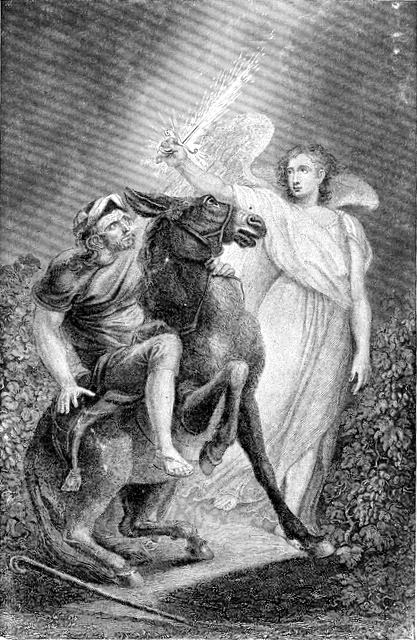
  • Balaam, on his way to “curse” Israel for Balak had his eyes opened to the angel that was blocking his donkey’s path - Numbers 22:31.
  • Elisha’s servant had his eyes opened to the surrounding “horses and chariots of fire”—the Lord’s army—after Elisha prayed - 2 Kings 6:17.

It brings to mind the question, why are some eyes spiritually closed, some open?

  • Disobedience is one reason for spiritual blindness:
For the Lord has poured out on you
The spirit of deep sleep,
And has closed your eyes” - Isaiah 29:10.

  • So is failure to acknowledge God’s existence and glorify and thank Him: “ For since the creation of the world His invisible attributes are clearly seen, being understood by the things that are made, even His eternal power and Godhead, so that they are without excuse,  because, although they knew God, they did not glorify Him as God, nor were thankful, but became futile in their thoughts, and their foolish hearts were darkened” Romans 1:20,21.

  • But “'Blessed are the pure in heart, / For they shall see God’” - Matthew 5:8.

The beautiful thing is, spiritual sight is available and possible.
  •  It came to the man born blind whose eyes Jesus healed with mud and Siloam water, so he could exclaim: “‘One thing I know: that though I was blind, now I see’” - John 9:25. Jesus later made sure that He also addressed the man's spiritual sight issue - John 9:35-38.
  • And it came to Saul/Paul on the Damascus Road. I love the parallel of physical and spiritual sight in his story. For it was after Ananias prayed for him that “scales” fell from his light-blinded eyes so that he regained his physical sight (Acts 9:17,18), while at the same time embarking on a new life path that God showed him - Acts 9:16.

Let’s make the psalmist’s prayer our own as we seek spiritual sight and insight for our lives from the Bible.

PRAYER: Dear Father, “Open my eyes that I may see wondrous things from Your law.” Amen.

 *********
Unless otherwise noted all Scripture quotations are taken from the New King James Version®. Copyright © 1982 by Thomas Nelson, Inc. Used by permission. All rights reserved.


Tuesday, October 11, 2016

Sin's misery

TODAY'S SPECIAL: Lamentations 4:1-22

TO CHEW ON: "Now their appearance is blacker than soot;
They go unrecognized in the streets;
Their skin clings to their bones
It has become as dry as wood." Lamentations 4:8


What a catalogue of catastrophe is Lamentations 4.
1. The temple is desecrated (Lamentations 4:1).
2. Leaders and the nobility are no longer privileged or respected (Lamentations 4:2, 5, 7-8, 16).
3. People abandon their responsibilities (Lamentations 4:3).
4. Even the mothers' natural instincts disappear (Lamentations 4:3-4, 10).
5. People long for a quick death (versus this slow death by starvation) (Lamentations 4:9).
6. The nation is humiliated (Lamentations 4:12-15).
7. God no longer seems to be on their side (Lamentations 4:11, 16).
8. They feel besieged and pursued by neighbour nations (Lamentations 4:18-20).

Jeremiah sees all this, not as something that happened by chance but as a direct consequence of the peoples' sins (Jeremiah 32:22-23).

Though we, in our time, hesitate to make such direct connections between sin and calamity, Bible writers made it repeatedly (Romans 1:28-32; 2:2). Without Jesus' intervention on our behalf we would all be destined to drink the full cup to its bitter end (Romans 3:10-18). We know too, that sin is deceptive in its attractiveness. Being aware of its end helps us avoid getting snared by it.

"There is a way that seems right to a man,
       but in the end it leads to death." NIV - Proverbs 14:12.

PRAYER: Dear God, please grow in me an abhorrence of sin. Help me not to be deceived or taken in by its apparent harmlessness. Amen.

MORE: Judge yourself
"Keep yourself steadily faced by the judgment seat of Christ; walk now in the light of the holiest you know. A wrong temper of mind about another soul will end in the spirit of the devil, no matter how saintly you are. One carnal judgment and the end of it is hell in you. Drag it to the light at once and say — 'My God, I have been guilty there.' If you don't, hardness will come all through. The penalty of sin is confirmation in sin. It is not only God who punishes for sin; sin confirms itself in the sinner and gives back full pay.


"No struggling nor praying will enable you to stop doing some things, and the penalty of sin is that gradually you get used to it and do not know that it is sin. No power save the incoming of the Holy Ghost can alter the inherent consequences of sin." Oswald Chambers, My Utmost for His Highest, March 16th reading (emphasis added).

***************
Unless otherwise noted all Scripture quotations are taken from the New King James Version®. Copyright © 1982 by Thomas Nelson, Inc. Used by permission. All rights reserved.

Do your 8-12-year-olds have daily devotions? Point them to Bible Drive-Thru.

Wednesday, August 03, 2016

Unanswered prayers

Image: pixabay.com
TODAY'S SPECIAL: Isaiah 1:1-17

TO CHEW ON: "When you spread out your hands
I will hide my eyes from you;
Even though you make many prayers
I will not hear.
Your hands are full of blood." Isaiah 1:15

Many books have been written on the subject of prayer, looking at it from many angles. Despite our close inspection and study, we still don't understand how it works exactly. Why, for example, are some prayers answered even as the words exit our lips, while others need the persistence and perseverance of the widow in Jesus' story in Luke 18:1-8?

Though I've heard it said that there are no unanswered prayers, because no and wait are answers too, I'm not content with accepting that as the full picture.

One reason for unanswered prayers is implied in the opening chapter of Isaiah: it may be our fault. "Even though you make many prayers, I will not hear," God says through Isaiah. He gives the reason for His unresponsiveness. In this case it is injustice - "Your hands are full of blood." They were guilty of putting to death (or looking away while others killed for them) people who did not deserve to die.

The Bible gives other reasons for unanswered prayer. Answers may be denied:
- to the disobedient (Deuteronomy 1:43-46).
- to those who hold onto their sin (Psalm 66:18).
- to those living in sin (Micah 3:4).
- to the indifferent (Proverbs 1:25-28).
- to those who refuse to extend mercy (Proverbs 21:13).
- to the stubborn (Zechariah 7:11-14).
- to those who waiver in faith (James 1:5-8).
- to those who are self-seeking (James 4:3).

When the heavens seem like brass and our prayers remain unanswered, maybe we should spend some time searching our own hearts and lives. Perhaps we'll find some of the things listed above plugging the channel to God's flow of grace into our lives.

PRAYER: Dear God, I confess my life contains some of the things on the list above. Help me root them out. Amen.


************
Unless otherwise noted all Scripture quotations are taken from the New King James Version®. Copyright © 1982 by Thomas Nelson, Inc. Used by permission. All rights reserved.

Do your 8-12-year-olds have daily devotions? Point them to Bible Drive-Thru.

Wednesday, October 07, 2015

Satan's to-do list

Daily Activities list - photo
TODAY'S SPECIAL: Job 1:1-22

TO CHEW ON: " ' But now, stretch out Your hand and touch all that he has and he will surely curse You to Your face." Job 1:11


What an interesting drama we see playing out in today's reading: Satan intermingling with the good angels as they appear before God (Job 1:6); God singling him out with a question (Job 1:8); and Satan rising to the occasion with a challenge back to God (Job 1:9-11). It appears that one of the tasks he has set for himself is to slander the saints (something he continues to do - Revelation 12:10).

A short stroll through the Bible makes us privy to some of the other nasty things on his to-do list:
  • Tempt people to be disobedient. He was behind Eve's and Adam's sin (Genesis 3:4,5) and he was also behind David's sin of commanding a census when God was not for it (1 Chronicles 21:1).
  • Inflict disease. As we read further on in Job, we see the active role Satan played in Job's case of boils (Job 2:7).
  • Oppose God's ministers—as Zechariah saw in his vision of priest Joshua in the temple (Zechariah 3:1).
  • Tempt Christ (Matthew 4:1,3).
  • Remove truth with falsehood. Jesus, in His parables, shows Satan removing the good seed or truth (Matthew 13:19) and sowing tares or what is false (Matthew 13:38,39).
  • Torture those in his possession. The Bible is full of the mental and physical anguish of the demon-oppressed and possessed (Luke 9:42; 13:16).
  • Lie, lie lie (John 8:44).
  • Instigate sin. This is what he did in the heart of Judas to betray Jesus (John 13:2) and Ananias and Sapphira to lie about their offering (Acts 5:3).
  • Hassle, persecute, and kill Christians. Paul attributed his "thorn in the flesh" as a "messenger of Satan" to "buffet" him (2 Corinthians 12:7). In Revelation, John sees those who have been killed for their faith--who "...overcame him (Satan) by the blood of the Lamb, and by the word of their testimony; and they loved not their lives unto the death" (Revelation 12:11).
  • Hinder Christian activity. Paul blames Satan for keeping him from visiting the church in Thessalonica (1 Thessalonians 2:18).
  • Prey on people. Peter and John clearly alert us to this in 1 Peter 5:8 and Revelation 2:10.

Though we will probably never have as clear a behind-the-scenes clip of Satan at work in our lives as we get in Job, when we review the above list of his activities it's not hard to see his fingerprints all over our circumstances as well. Let's follow Peter's advice to:

"Be well balanced (temperate, sober of mind), be vigilant and cautious at all times; for that enemy of yours, the devil, roams around like a lion roaring [in fierce hunger], seeking someone to seize upon and devour. 
"Withstand him; be firm in faith [against his onset—rooted, established, strong, immovable, and determined], knowing that the same (identical) sufferings are appointed to your brotherhood (the whole body of Christians) throughout the world." - 1 Peter 5:8,9 AMP.

PRAYER: Dear God, thank You that Satan is , through Christ, a defeated enemy. Help me to live alert to his methods and schemes in my life and in the world around me. Amen.

 *********
Unless otherwise noted all Scripture quotations are taken from the New King James Version®. Copyright © 1982 by Thomas Nelson, Inc. Used by permission. All rights reserved.

Scripture quotations marked AMP are taken from the Amplified® Bible,
Copyright © 1954, 1958, 1962, 1964, 1965, 1987 by The Lockman Foundation
Used by permission." (www.Lockman.org)

Saturday, June 27, 2015

Bad choices and a bad end

Saul's Final Battle - Artist unknown
TODAY'S SPECIAL: 1 Samuel 31:1-13

TO CHEW ON: "So Saul, his three sons, his armor bearer, and all his men died together that same day." 1 Samuel 31:6

Here we read of Saul's death. How did he come to this humiliating end?

He began well. Samuel chose Saul and assured him of God's presence and help: " Then the Spirit of the Lord will come upon you, and you will prophesy with them and be turned into another man." - 1 Samuel 10:6.

After only two years of being king, though, the trouble started. At war with the Philistines, Saul assembled an army then waited at Gilgal for Samuel to come and make an offering before they went into battle. He waited seven days and still no Samuel. When the army began to scatter, he took matters into his own hands and performed the sacrifice himself. No sooner had he finished than Samuel appeared and there were fireworks:
Samuel: ““You have done foolishly. You have not kept the commandment of the Lord your God, which He commanded you. For now the Lord would have established your kingdom over Israel forever.  But now your kingdom shall not continue. The Lord has sought for Himself a man after His own heart, and the Lord has commanded him to be commander over His people, because you have not kept what the Lord commanded you.”" - 1 Samuel 13:13,14.

Sometime later, Samuel told him to fight the Amalekites. His instructions were "Now go and attack Amalek, and utterly destroy all that they have, and do not spare them" 1 Samuel 15:3. However, Saul obeyed only partially (1 Samuel 15:9), claiming he had spared the livestock as offerings. Then God sent Samuel to Saul with the another message:

“Has the Lord as great delight in burnt offerings and sacrifices,
As in obeying the voice of the Lord?
Behold, to obey is better than sacrifice,
And to heed than the fat of rams.
For rebellion is as the sin of witchcraft,
And stubbornness is as iniquity and idolatry.
Because you have rejected the word of the Lord,He also has rejected you from being king”
- 1 Samuel 15:22,23
Saul did have a long reign. Bible scholars believe he was around 20 years old when he was crowned and he reigned 40 years. But his time as king was overshadowed by the consequences of his impatience, lack of faith, disobedience, and rebellion. After God told him that the kingly succession would leave his family, suspicion and jealousy ruled his life (1 Samuel 20:30). Finally, after Samuel's death when he no longer heard from God at all, he was full of fear - 1 Samuel 28:8-20.

The sins for which Saul are known are hardly foreign to us. Who of us hasn't been tempted, perhaps gone through with enacting our own plans when God seemed slow to answer and our impatience got the best of us? Similarly, we are not strangers to disobedience, rebellion, suspicion, jealous, and fear.

There's no question that God was with Saul, and yet he ended so badly because he gave in to his natural tendency to do things on his own. May we learn from his life that such choices on our part will also have their consequences.


PRAYER: Dear God, help me to consistently exercise faith and choose to obey. Amen.
 
 *********
Unless otherwise noted all Scripture quotations are taken from the New King James Version®. Copyright © 1982 by Thomas Nelson, Inc. Used by permission. All rights reserved.


Saturday, March 14, 2015

A way God calls "perverse"

"Balaam's Eyes Were Opened" 
Artist Unknown 
From Treasures of the Bible (Moses)

"Balaam's Eyes Were Opened"   Artist Unknown
"Balaam's Eyes Were Opened"
TODAY'S SPECIAL: Numbers 22:22-40

TO CHEW ON:
"And the Angel of the Lord said to him, 'Why have you struck your donkey these three times? Behold I have come out to stand against you, because your way is perverse before Me.' " Numbers 22:32


Balaam really does want to go with Balak's men. His hastily acquired permission (Numbers 22:20) means that the morning after the second delegation arrives, he is on his way back to Balak with them (though there is no record that God's condition: "'If the men come to call you…'" is ever met).

What happens next on the road—the donkey crushing Balaam's foot, lying down, refusing to go further and actually speaking to Balaam—is a familiar Sunday School story. The Angel of the LORD's words (God's words) to Balaam are sobering (Numbers 22:32-33). He describes Balaam's way as "perverse."

[Perverse - yarat means to precipitate, to be precipitate, to push headlong, drive recklessly.]

The use of that word gives us the sense that Balaam's decision to go with Balak's men is impulsive, reckless, and headstrong. Peter gives us a clue about his motivation. He really did want all that stuff, that attention, that honor:
 "They (Peter, referring here to false teachers) have forsaken the right way and gone astray, following the way of Balaam the son of Beor, who loved the wages of unrighteousness…" - 2 Peter 2:15.

In Balaam's reaction we see a flashing caution light for ourselves and our own tendencies to impetuously push ahead with what we want to do. I like how Priscilla Shirer expresses it:

"I am learning that God will use the appropriate means to reveal His will in His timing. … If you feel an overwhelming urge to act spontaneously, pull in the reins" - Priscilla Shirer, Discerning the Voice of God, pp. 92,93

PRAYER: Dear God, please help me to be aware of my own tendency to act on my own, rashly, spontaneously, and recklessly. Help me, instead, to wait for Your clear timing and direction before I move ahead with plans and projects. Amen.

 *********
Unless otherwise noted all Scripture quotations are taken from the New King James Version®. Copyright © 1982 by Thomas Nelson, Inc. Used by permission. All rights reserved.


Monday, June 09, 2014

Clothed in light

Clothed in light - artist unknown
Clothed in light - Artist unknown
TODAY'S SPECIAL: Psalm 104:1-18

TO CHEW ON: "Bless the Lord, O my Soul!
O Lord my God, You are very great:
You are clothed with honor and majesty,
Who cover Yourself with light as with a garment." Psalm 104:1,2


Images of light—and dark—are woven through the Bible. Today let's sample a few of them to understand what the Bible says about light and dark, and to get a sense of where we fit in the spectrum.

  • "God is light, in Him there is no darkness at all" - 1 John 1:5.
  • God's breath gives man intellectual understanding or light - Job 32:8.
  • The prophets depict the coming Messiah in terms of light: "But to you who fear My name / The Sun of Righteousness shall arise…" - Malachi 4:2.
  • John talks of Jesus using the metaphor of light: "In Him was life and the life was the light of men … That was the true light which gives light to every man" - John 1:4,9. 
  • Jesus claimed to be light: " ' I am the light of the world. He who follows Me shall not walk in darkness, but have the light of life' " John 8:12.
  • He said belief in Him brought people into light:" ' I have come as a light into the world that whosoever believes in Me should not abide in darkness' " John 12:46. 

We gain an understanding and appreciation of light when we contrast it with darkness.

  • Moses describes the consequences of disobeying God: "You shall grope at noonday as a blind man gropes in darkness; you shall not prosper in your ways" - Deuteronomy 28:29.
  • Proverbs talks of the wicked person's way, "…like darkness. They do not know what makes them stumble" - Proverbs 4:19.
  • The prophet Micah depicts the time of Israel's apostasy as "… night without vision. And you shall have darkness without divination" - Micah 3:6.
  • In general, we humans prefer darkness "…men loved darkness rather than light because their deeds were evil" - John 3:19.
  • But darkness and light can never coexist. When light comes, darkness has to leave: "And the light shines in darkness, and the darkness did not comprehend it" - John 1:5.
  • We can never hide from God's light. No darkness is too thick that He can't penetrate it  - Psalm 139:11,12.
  • Paul tells us to cast off darkness and "… put on the armour of light" - Romans 13:12.
  • He speaks of our pilgrimage to faith in terms of once being in darkness but now in light - Ephesians 5:8.
  • Jesus tells those who believe in Him that they are the light of the world - Matthew 5:14.
  • And someday we will live in the city which has no need of the light of sun or moon—for God's Son will illuminate it. Jesus "…the Lamb is its light" - Revelation 21:23.

I ask myself, where am I on this journey from darkness to light? Where are you? Are we living with sin in the shadows, thinking we can hide from God? Have we seen Jesus' attractive light, but we're still in twilight, not sure we want to go all the way in putting on that armour? Or are we on the pilgrimage to ever-increasing light as we let the scriptures probe our lives, shining light on any rooms and corners where darkness still resides, becoming ever more attractive light-bearers (2 Corinthians 3:18)? Let's live in the light now so we can look forward with anticipation to heaven when we will experience perfect light!


PRAYER:
Dear God, thank You for being light. Help me to expose my life to Your light and walk in it all my days. Amen.

 *********
Unless otherwise noted all Scripture quotations are taken from the New King James Version®. Copyright © 1982 by Thomas Nelson, Inc. Used by permission. All rights reserved.


Bookmark and Share


Wednesday, March 26, 2014

Does God like the look of your heart?

"The youngest one was out keeping the herd"
From "L'ancien testament",  Lucile Butel illustrator

TODAY'S SPECIAL: 1 Samuel 16:1-23


TO CHEW ON: "But the Lord said to Samuel, 'Do not look at his appearance or at his physical stature because I have refused him. For the Lord does not see as man sees; for man looks at the outward appearance, but the Lord looks at the heart.'" 1 Samuel 16:7

The Oscar Awards are a big night for appearance-driven Hollywood. After award night, social and mainstream media is full of comments about what people wore, how they handled themselves, who was well-spoken and who not. I wonder what God would have said to Samuel about that affair.

Actually, Samuel himself was prone to judge by appearances, thinking surely Jesse's handsome son Eliab must be God's choice, or Abinadab, or Shammah. But no. Each good-looking man was passed over until there were none left and Samuel had to get Jesse to call young David from sheep-herding.

What was the secret of David's heart that made it acceptable to God? Paul refers to this incident in Acts 13 where he says, "He raised up for them David as king, to whom also He gave testimony and said 'I have found David the son of Jesse a man after my own heart, who will do all my will'" - Acts 13:22).

It was the willingness to do, the obedience factor, that God valued in David, and the disobedience in Saul that caused God to reject him (1 Samuel 15:20-23).

It is still an essential ingredient God looks for in people. Obeying God:
  • is the key to prosperity and success (Joshua 1:8).
  • is the basis on which we call God our God (Jeremiah 7:23).
  • is our pass into the Kingdom of Heaven (Matthew 7:21).
  • gives us the privilege of being part of God's family (Luke 8:21).
  • trumps our loyalty and obedience to people (sometimes even the laws of the land) (Acts 5:29).
  • demonstrates that we love God (2 John 1:6).

Every time I read this story, I come away asking, What would be God's verdict on my heart? What about yours?


PRAYER: Dear God, help me to see myself as You see me. Also, please give me insight into others and a heart that values the things that You value above outward appearances. Amen.


MORE: "To Obey Is Better Than Sacrifice" - Keith Green


Bible Drive-Thru


Bookmark and Share

Saturday, May 25, 2013

The offense and the gift

TODAY'S SPECIAL: Romans 5:6-21

TO CHEW ON: "But the free gift is not like the offense. For if by one man's offense many died, much more the grace of God and the gift by the grace of the one Man Jesus Christ, abounded to many." Romans 5:15

In a rich part of today's reading Paul draws an analogy between Adam's offense —a deliberate choice to disobey God in Eden—and Christ's free gift—our salvation through His death for us.

These two things are similar in that both acts affected and continue to affect all of mankind. But they are also different:

1. They are moral opposites - Romans 5:15-16.
  • Adam's act is called an "offense." A margin note in my Bible gives synonyms: "trespass or false step." It was sin,  a deliberate act which missed the mark.
  • Christ's act is called a "free gift" and described as "grace." 

2. Their results are different - Romans 5:17-18.
  • Adam's sin resulted in death—condemnation.
  • Accepting the gift results in receiving God's lavish graces of justification, righteousness, and the ability to "reign as kings in life" (Amplified), i.e. victory - Romans 5:17-18.

3. They spring from different attitudes - Romans 5:19.
  • Adam's act was one of disobedience ("… failing to hear, heedlessness and carelessness" - Amplified).
  • Christ's  gift came from His obedience  resulting in "the many ... constituted righteous—made acceptable to God; brought into right standing with Him" - Romans 5:19 Amplified.

What have we done with Christ's gift? Have we accepted it? Are we living in the truth and power of it, resisting Satan's attempts to make us feel we have to do more and thus put ourselves in the chains of having to earn/pay for our salvation? What is the attitude of our lives? Are we disobedient—deaf, heedless, careless? Or is your life, is mine characterized by yearly, monthly, weekly, daily, moment-by-moment 'Yes's to Jesus?

PRAYER: Dear Jesus, thank You for Your free gift! Please help me to begin to understand its implications for my life—and to live those out in habitual obedience. Amen.

MORE: "My Heart is Filled with Thankfulness"  - Keith and Kristyn Getty


***********

The Holy Bible, New King James Version Copyright © 1982 by Thomas Nelson, Inc. - Used with permission.
Bible Drive-Thru


Bookmark and Share


Related Posts Plugin for WordPress, Blogger...