Showing posts with label rebellion. Show all posts

Saturday, November 24, 2018

A guard against deception

TODAY’S SPECIAL: 2 Thessalonians 1-3; Psalm 18

TO CHEW ON: “The coming of the lawless one is according to the working of Satan, with power, signs, and lying wonders, and with all unrighteous deception among those who perish, because they did not receive a love of the truth, that they might be saved.” 2 Thessalonians 2:9,10


In this interesting chapter of 2 Thessalonians, Paul gives his readers (who are confused about whether Jesus has already returned) some signs to watch for that will precede “that day.”

  • It will be a time of “falling away”—people losing their faith in Jesus and the gospel - 2 Thessalonians 2:3.
  • A charismatic leader will come on the scene. He will demand everyone’s allegiance, even worship. He will work miracles by Satan’s power - 2 Thessalonians 2:3,4,9,10.
  • People will be gullible because restraint has been removed - 2 Thessalonians 2:6,7. (There are varying opinions about “what is restraining” [vs. 6] and “He [or he] who now restrains” [vs. 7] is—the Holy Spirit, the church, human government. I think it is safe to say whatever that restraining power, God is behind it being in place and then being removed.)
  • People will be ripe for deception because they’ve rejected the truth. Paul’s words are explicit here: “The coming of the lawless one is according to the working of Satan, with all power, signs, and lying wonders, and with all unrighteousness deceptions among those who perish, because they did not receive the love of the truth, that they might be saved.”

What we can take for our lives from this passage is that a love of the truth is a guard against deception. This is more than just a head knowledge or intellectual assent, though. John Piper expresses it well in this sermon on 2 Thessalonians 2:

“Notice: it is not merely an issue of knowing or believing in a merely mental sense: it is an issue of loving….Therefore the only defense against this appeal (signs and miracles of the man of lawlessness) will be a deeper desire for God. If Christ is our portion and our treasure, if he satisfies our longings, and if we love the glory of his gospel, then the mystery of lawlessness will not overcome us, and our love will not grow cold and we will endure to the end and be saved”  
- John Piper, quote from message on the DesiringGod website (emphasis added). Read or listen to entire…

PRAYER: Dear God, help me to know, love, and live by the truth of Your word. Please make me sensitive to deception in whatever form it comes. Amen.

PSALM TO PRAY: Psalm 18

The Bible Project VIDEO: 2 Thessalonians (Read Scripture Series)


*********
Unless otherwise noted all Scripture quotations are taken from the New King James Version®. Copyright © 1982 by Thomas Nelson, Inc. Used by permission. All rights reserved.



Tuesday, October 23, 2018

The rebel within

choose good or bad
TODAY'S SPECIAL: Romans 7-8; Psalm 136

TO CHEW ON: "O wretched man that I am! Who will deliver me from this body of death? I thank God—through Jesus Christ our Lord! So then, with the mind I myself serve the law of God, but with the flesh the law of sin." Romans 7:24-25

Who of us can't relate to the split personality inside each of us that Paul writes about here? Some ideas he develops in this passage:

1. The law is a mixed blessing.
What law is Paul talking about? I think we can safely assume he is referring at the very least of the Ten Commandments (Exodus 20:1-17). He mentions one of them ("You shall not covet") in verse 7.

Jewish readers would also probably have thought of the myriad of laws connected to their worship. These involved offerings, feast days, circumcision, refraining from certain foods etc. We know a lifetime of religiously doing such things can put one into bondage, fearing that if something is left out, it will lead to damnation, It's another way the law puts one in shackles.

Paul describes the law as the thing that revives an inner struggle (so, in a way, bad) and also "holy, just, and good" (Romans 7:12).

2. Awareness of the law awakens within us the desire to break it
(Romans 7:7-12).
The very presence of a rule is a challenge to our perverse human nature to break that rule.

3. We are born in sin with a bent to rebel against God and His law.

The tendency to sin is our default setting (Romans 7:14-18). And so as Christians, our desires (wanting to obey Christ) and our actions (disobedience, because it comes naturally) often contradict each other (Romans 7:19).

4. But there is a way out of this law-awakened rebellion against God
—a way to get unchained from this "body of death":
This body of death: The figure of a person chained to a corpse from which he cannot be freed, despairing of deliverance…"
It is "Through Jesus Christ our Lord":
"But despair gives way to a declaration of victory, not because the struggle ceases, but because human strength is exceeded by the power of the Holy Spirit" - Wayne Grudem, commentary notes on Romans, New Spirit-Filled Life Bible, p. 1561).

As we experience what Paul is talking about, let's allow the Spirit full sway in our hearts to change our desires so that we fulfill the "law of God" (Romans 7:22) not only with our minds but with our flesh as well.

PRAYER: Dear Holy Spirit, be alive and active in me so that I desire to obey—not rebel—God's will as expressed through His moral laws.  Amen. 

PSALM TO PRAY: Psalm 136

 *********
Unless otherwise noted all Scripture quotations are taken from the New King James Version®. Copyright © 1982 by Thomas Nelson, Inc. Used by permission. All rights reserved.


Thursday, August 23, 2018

When your belly is full of tears

TODAY'S SPECIAL: 2 Chronicles 35-36; Psalm 80

TO CHEW ON: "Return, we beseech You, O God of hosts;
Look down from heaven and see,
And visit this vine." Psalm 80:14


From the vantage point of hindsight we know the "vine's" story—the ups and downs of Israel's history. It's easy for us gloss over generations of slavery in Egypt, the back-and-forth between oppression and freedom of the judges' period, the waves of invaders that led to the exile of the Jews in at the end of the Old Testament.  Our Bible reading takes us through millennia in mere hours. We readily forget how horrible it must have been to live in any one of those dark times.

This psalm, however, seems like a cry from the middle of one of them:
"O Lord God of hosts,
How long will You be angry
Against the prayer of Your people?
You have fed them with the bread of tears,
And given them tears to drink in great measure" - Psalm 80:4,5 (emphasis added).

One of the powerful things about the psalms is how they express the experience and emotion we all go through, no matter when we live. Can't you just hear the Christians of Syria, hounded and killed by ISIS terrorists weeping these verses, or the family in Africa devastated by the  Ebola virus, or the family in North America cut apart by cancer, or…?

In this psalm there is only one resolution to whatever tragedy the pray-er is experiencing. It is God.

Our prayers can echo the psalmist's as we cry from whatever dark place we're in:
"Restore us ... Restore us ... Return we beseech You...
Restore us, O Lord God of hosts,
Cause Your face to shine,
And we shall be saved" - Psalm 80:3,7,14,19.

PRAYER: Dear God, please restore and return to those with their bellies full of tears who call on You today. Amen. 

PSALM TO PRAY: Psalm 80

 *********
Unless otherwise noted all Scripture quotations are taken from the New King James Version®. Copyright © 1982 by Thomas Nelson, Inc. Used by permission. All rights reserved.

Monday, May 07, 2018

Spirit of harlotry

TODAY'S SPECIAL: Hosea1-5; Psalm 122

TO CHEW ON: "For the spirit of harlotry has caused them to stray. And they have played the harlot against their God." Hosea 4:12b

"Harlot" is a word we don't use a lot. It simply means an unchaste woman, a whore, a strumpet. "Harlotry" is the trade or behaviour of a harlot.

I am struck by the phrase "spirit of harlotry" in our reading. Hosea points his finger at that spirit or attitude as the underlying cause of Israel's straying. A close look at Hosea 3 and 4 give us information about such a spirit. Here are some of its characteristics:

1. God's law is ignored (Hosea 4:2,6).

2. There is an impact on the natural world of earth and animals (Hosea 4:3).

3. Respect for leaders is absent, replaced by argument and contention (Hosea 4:4-5).

4. Evil multiplies (Hosea 4:7).

5. Dissatisfaction is typical (Hosea 4:10).

6. Addiction is everywhere (Hosea 4:11).

7. People seek advice from occult sources (Hosea 4:12).

8. There is a proliferation of idolatrous customs and rituals (Hosea 4:13).

9. Both men and women are affected (Hosea 4:13b, 14).

10. A rebellious spirit rules the land (Hosea 4:16-18).

As I read that list and look at my own country, I am not reassured. It is uncanny how many of these attitudes are typical of Canada. Do you see any of these characteristics where you live?

What to do? Besides resisting these things in our own lives, I believe we need to focus our prayers against that spirit of harlotry in our own nation. Dick Eastman in his book Love on Its Knees says about praying for nations: "When praying for a nation, we should try to determine which satanic strongholds exist there, then exercise our God-given spiritual authority to confront these bastions."

He lists some general areas of strongholds and how to pray for them.

1. Government strongholds. Intercessors should pay special attention to the political characteristics of a nation...


2. Cultural strongholds. Every nation possesses behavioural characteristics. Collectively we refer to these as the culture of a people, and in some cases such characteristics restrict the spread of the Gospel....


3. Religious strongholds. This focus touches the spiritual characteristics of a land... In some countries of the world today it is virtually impossible to engage in open evangelism because of the religious restrictions...


4. Material strongholds. A final focus regarding strongholds in nations concerns the materialistic characteristics of a land. Some nations appear to be free and have experienced prosperity. Yet there is often lukewarmness in the churches of those nations. Soon apathy toward spiritual things moves a people toward humanism which puts the emphasis on human development and rejects spiritual values...." - Dick Eastman, Love On Its Knees pp. 110-112.

The result of this harlotry spirit for Israel was God's sober warning: "I will destroy your mothers ...forget your children...change their glory into shame" (Hosea 4: 5-7). The nation will be characterized by futility: "The wind has wrapped her up in its wings..." Hosea 4:19.

Let's pray for a turning from the spirit of harlotry in our land, lest we find ourselves setting up for the same fate.

PRAYER: Dear God, please help me to resist the spirit of harlotry in my own life. Then help me to see my country and people realistically and with spiritual insight so I can pray effectively and be salt and light in the ways You direct. Amen.

PSALM TO PRAY: Psalm 122
 
The Bible Project VIDEO: Hosea (Read Scripture Series)


Andrew Peterson has written a powerful song called "Hosea." Hosea - the song - from Andrew Peterson's blog, with the lyrics

****************
Unless otherwise noted all Scripture quotations are taken from the New King James Version®. Copyright © 1982 by Thomas Nelson, Inc. Used by permission. All rights reserved.

Sunday, April 08, 2018

Do we provoke God?

Elijah confronts Ahab - Artist unknown
TODAY'S SPECIAL: 1 Kings 14-16; Psalm 98

TO CHEW ON: "Ahab did more to provoke the LORD God of Israel to anger than all the kings of Israel who were before him. " 1 Kings 16:33

Provoking God? It sounds serious!

A brief survey of Bible passages that speak of provocation tell us some of the things that provoke God.

God is provoked by:

  • Unbelief and refusal to act in faith—what the Israelites did when they balked at entering the Promised Land despite all the miracles along the way - Numbers 14:11.
  • Rejecting His appointed leaders—the way Korah, Dathan and Abiram challenged the leadership of Moses and Aaron - Numbers 16:30.
  • Rebellion—the way the Israelites often acted during their wilderness trek - Deuteronomy 9:7,8,22; Psalm 106:7.
  • Idol worship - Deuteronomy 31:20,29; 1 Kings 14:9; 16:26,33 (our focus verse); Jeremiah 7:18.
  • Scoffing at God's work—what Sanballat and Tobiah did over Nehemiah's wall - Nehemiah 4:6.
  • Breaking covenant with Him and refusing to keep His law ("testimonies") - Deuteronomy 31:29; Psalm 78:56.
  • Words against Him - Isaiah 3:8.
  • Sacrilegious things in a holy place - Ezekiel 8:3.

The results of provoking God throughout Israel's history were serious:

  • The Israelites were doomed to wander for 38 more years in the wilderness - Number 14:23
  • Korah, Dathan, and Abiram and their families were destroyed for challenging God's appointed leaders - Numbers 16:31,32.
  • Ahab's provocative ways led to three years of drought- 1 Kings 17:1.
  • Nehemiah seemed concerned that the scorn of his detractors would lead to discouragement of the workers - Nehemiah 4:5.
  • Israel's idol worship led to the temple's destruction by a foreign power - Ezra 5:12.
  • Provoking God also led to Israel's exile - Jeremiah 8:19.

Though it's easy for us to look down our noses at the fearful and rebellious Israelites or idolatrous Ahab, another read-through of the list of things that provoke God in relation to our setting may demolish some of that smugness.

- Are we ever guilty of unbelief and refusing to act in faith?

- Have we ever rebelled against the leaders God has placed over us?

- Do we have idols? Not silver and gold images, perhaps, but other things like work, people's praise, money, etc. that compete with God for first place in our hearts?

- Have we ever scoffed at what others report as God's work?

- Have we ever been disdainful of sacred things—by what we've said?  By what we've done?

Yes, God is long-suffering and merciful. Jesus has paid for these sins with His death. But still our provocations may have consequences.  What a shame to miss out on His best, to assign ourselves, by our attitudes, words, and actions, to seasons of wilderness wanderings, drought, and exile.

PRAYER: Dear Father, help me to be sensitive to what pleases and what provokes You. I have been guilty of unbelief, rebellion, idolatry and more. Help me to see these things that provoke, grieve and displease you—as sin. Amen.

PSALM TO PRAY: Psalm 98

*********
Unless otherwise noted all Scripture quotations are taken from the New King James Version®. Copyright © 1982 by Thomas Nelson, Inc. Used by permission. All rights reserved.


Saturday, March 24, 2018

Fighting God's anointed

"Triumph of David" by Matteo Rosselli
TODAY'S SPECIAL:  1 Samuel 18-20; Psalm 83

TO CHEW ON:
"Thus Saul saw and knew that the Lord was with David, and that Michal, Saul's daughter, loved him; and Saul was still more afraid of David. So Saul became David's enemy continually." 1 Samuel 18:28,29

Saul's admiration of David quickly turned to jealousy as the people expressed their preference for this youthful, brave, and spirited shepherd over him.

In a pretense of rewarding David, Saul tried to trap him with marriage to his daughters. But instead of getting killed in battle and later in the slaughter Philistines to obtain a gory dowry for Michal, David succeeded in not only  defeating the enemy and delivering the dowry, but also in winning the love and loyalty of Saul's own daughter Michal. With each victory David endeared himself to the people more. Saul was right to fear him, for his successes were evidence of God's Spirit on him.

Saul's actions remind me of how we too sometimes fight the "Lord's anointed."  When we gossip about our pastor or resist God-given leadership in other ways (grumble and complain, divide into factions, try to figure out ways to get rid of one or the other) aren't we engaging in a Saul-type battle—a battle we're sure to eventually lose?

I am reminded of Jesus' words to another Saul who was fighting the people God had anointed: "'Saul, Saul, why are you persecuting Me? .... I am Jesus whom you are persecuting. It is hard for you to kick against the goads'" Acts 9:4,5.

PRAYER: Dear God, help me to recognize those You have anointed for leadership in my life. Help me not to rebel against them, but to accept Your authority over me through them. Amen. 


PSALM TO PRAY: Psalm 83
 
MORE: Pray for leaders
Instead of resisting God-given leadership, we could pray for our leaders. John Piper lists eight prayer points:

1. Ask God to give them an inclination to His word versus money, fame, or power.
2. Pray for their purity.
3. Pray for their biblical and doctrinal purity.
4. Pray for their solid, joyful, Christ-exalting marriages.
5. Pray for their boldness in witnessing.
6. Pray for visionary creative energy for them.
7. Pray for converting power, i.e. that the Lord will open hearts and save people through their ministry.
8. Pray that they would be a small part of a global spiritual awakening.

Read all of "How to Pray for the Pastoral Staff"  - by John Piper. ©2012 Desiring God Foundation. Website: desiringGod.org.


*******************
Unless otherwise noted all Scripture quotations are taken from the New King James Version®. Copyright © 1982 by Thomas Nelson, Inc. Used by permission. All rights reserved.


Wednesday, March 14, 2018

Destructive cycles

Image: Pixabay
TODAY’S SPECIAL: Judges 9-12; Psalm 73

TO CHEW ON: “Then the children of Israel again did evil in th sight of the LORD and served the Baals and the Ashtoreths…

So the anger of the LORD was hot against Israel and He sold them into the hands of the Philistines …


And the children of Israel cried out to the LORD…


And the children of Israel said to the LORD, ‘We have sinned…’


So they put away the foreign gods from among them and served the LORD. And His soul could no longer endure the misery of Israel.” Judges 10:6,7,10,15,16).


In the depressing chapters of our reading today we see firsthand the living out of the summary of this book from Judges 2:
1] The people leave God to worship idols - Judges 2:11-13. 
2] God gives them over to plundering neighbours and nomads who wreck their land and livelihood - Judges 2:14-16. 
3] In desperation the Israelites pray to God for help - Judges 2:15,18. 
4] God sends a leader—a judge—to deliver them - Judges 2:16. 
5] They have peace during the judge’s lifetime but on his death revert back to idol-worshiping ways - Judges 2:19. 
6] The cycle begins again - Judges 2:20-23.

As we read today’s stories of Israel descending with every generation and judge into greater anarchy, chaos, and depravity, it’s easy for us to feel critical. How could they not recognize the self-sabotage in their cycles?

Yet I would submit that their actions are only an outworking of the condition of the human heart that by default rebels against God and looks for other deities.  And I’m not so sure we’re immune from these same kinds of cyclical reactions that keep us from freedom and forward motion.

Do we find ourselves in the same spot of joblessness or debt or hoarding or obesity or addiction or relationship problems that we’ve broken free from in the past? 

Could the answer to complete and final breakthrough be that we need victory over spiritual rebellion in some chamber of our own hearts? Are we returning to our own idols of self, indulgence, fear of not enough, lust, etc. 

Let’s pray for God to give us insight into our own destructive cycles.

PRAYER: The destructive cycles of Israel are not unfamiliar to me. Please help me to see and recognize the rebellions and idols of my own heart that have me going in circles. Please show me the path to breakthrough. Amen.
 
PSALM TO PRAY: Psalm 73

 *********
Unless otherwise noted all Scripture quotations are taken from the New King James Version®. Copyright © 1982 by Thomas Nelson, Inc. Used by permission. All rights reserved.

Thanks for reading! This year we are using The Bible Project "Timeless Reading Plan" to read through the Bible in 2018. If you'd like to read along in your own Bible, you can download a pdf of the reading plan HERE.

Monday, February 05, 2018

The lure of the occult

Divination - fortune telling cards, palmistry
TODAY'S SPECIAL: Leviticus 19-20; Psalm 36

TO CHEW ON: "Give no regard to mediums and familiar spirits; do not seek after them to be defiled by them: I am the Lord your God." Leviticus 19:31


What do we make of such a prohibition in our time of occult popularity? The paranormal is a movie and book genre of its own with a huge following. Many look at getting their palms or tea leaves read, or following their horoscope as a lark and entirely harmless. What about hanging onto objects that are supposed to ward off bad luck or attract good luck?

The Bible is very clear in its prohibition of witchcraft and related occultic activities.

  • God is against it - Leviticus 20:6, 27; Exodus 22:18.
The story of King Saul illustrates this. 1 Samuel 28:1-24 tells the story of his desperate seeking out of a woman with connections to the spirit world when he no longer heard from God. 1 Chronicles 10:13 gives us God's perspective on what he did.
The story of Manasseh is another example. His avid pursuit of the occult brought calamity on the nation (2 Kings 21:1-17).
  • Witchcraft defined: What exactly are we talking about? Deuteronomy 8:10-11 lists the activities that are called an "abomination" to God:
"For example, never sacrifice your son or daughter as a burnt offering. And do not let your people practice fortune-telling, or use sorcery, or interpret omens, or engage in witchcraft, or cast spells, or function as mediums or psychics, or call forth the spirits of the dead" (NLT).
Isaiah describes the speech of a medium in these spooky words:
"You will speak out of the ground; your speech shall be low, out of the dust; your voice shall be like a medium's, out of the ground; and your speech shall whisper out of the dust" - Isaiah 29:4. 
  • Sorcery is also condemned in the New Testament - Galatians 5:20; Revelation 21:8.
  • Witchcraft's root: The sobering words I will end with, though, are Samuel's words to King Saul after he had committed blatant disobedience:
"For rebellion is as the sin of witchcraft, and stubbornness is as iniquity and idolatry" - 1 Samuel 15:23.

If we follow the lure of the occult to its source, we find a familiar and perhaps not-so-foreign-to-us root: REBELLION. So even though we've avoided practicing blatant forms of occultism, we may not be as lily white as we'd like to think!

PRAYER: Dear God, I confess that I have been rebellious. Help me to see any heart rebellion for the serious issue that it is. Amen.

PSALM TO PRAY: Psalm 36

*********
Unless otherwise noted all Scripture quotations are taken from the New King James Version®. Copyright © 1982 by Thomas Nelson, Inc. Used by permission. All rights reserved.

Scripture quotations marked NLT are taken from the Holy Bible, New Living Translation, copyright © 1996, 2004, 2007 by Tyndale House Foundation. Used by permission of Tyndale House Publishers, Inc., Carol Stream, Illinois 60188. All rights reserved.


Wednesday, September 20, 2017

Obedience Training

Image: Pixabay
TODAY’S SPECIAL: Exodus 16:1-16

TO CHEW ON: “Then the LORD said to Moses, ‘Behold I will rain bread from heaven for you. And the people shall go out and gather a certain quota every day that I may test them whether they will walk in My law or not.’” Exodus 16:4

Have you ever raised a stubborn child, where the smallest request ended in a battle of wills? “Eat your vegetables.” “No!” “Brush your teeth.” “No!” “Buckle your seat belt.” “No!” “Stop hitting your sister.” POW!

Sometimes such battles can seem silly. Why press a child to tears for victory over a few peas or a bedtime with clean teeth? Yet the responsible parent knows that disobedience in such small things is a symptom of a deeper attitude of rebellion toward authority. When we ignore it in our children, we run the risk of them growing into rebellious adults.

In a way the Israelites were like children. They were untrained in the ways of freedom. They had recently broken free from the grip of generations of slavery in Egypt. Whether their new attitude of complaining and insolence was a pendulum swing as far from slavery as they could get (now we can do as we please!), or just the natural response of human nature to tough conditions, we don’t know. But God sensed their need for training and He started small, with basic, easy-to-follow directions about gathering food (Exodus 16:4,5).

God’s explanation to Moses of why He made such rules: “‘That I may test them.'”

[Test - nasah - To put to the test, to try, to prove, tempt. The basic idea is to put someone to the test to see how he will respond. - Dick Mills, Word Wealth, New Spirit-Filled Bible, p. 747.]

Predictably, perhaps, some failed this test by trying to keep manna overnight (Exodus 16:20), and failing to gather extra on the day before Sabbath, then finding no supply on Sabbath morning (Exodus 16:27).

On the flip side of this matter, Jesus taught that those obedient and faithful in small things would be rewarded with greater responsibility (Matthew 25:21,23).

Where do we sit in this continuum of rebellion to obedience (and qualification for promotion)? What tests are we facing? Are we passing those tests? Are we aware of what our acts of insolence and disobedience to the things of God say about our maturity and fitness for the responsibilities we have now, let alone greater responsibility?

PRAYER: Dear Father, please give me insight into how the mundane activities and attitudes of life are spiritual tests. Help me to grow in obedience. Amen.

 *********
Unless otherwise noted all Scripture quotations are taken from the New King James Version®. Copyright © 1982 by Thomas Nelson, Inc. Used by permission. All rights reserved.


Thursday, August 31, 2017

4 reasons for hardening of the hearteries

TODAY'S SPECIAL: Romans 11:1-18

stony heart
TO CHEW ON: "What then? What the people of Israel sought so earnestly they did not obtain. The elect among them did, but the others were hardened, as it is written: 'God gave them a spirit of stupor, eyes that could not see, and ears that could not hear to this very day.'" Romans 11:7,8 NIV


When Paul speaks here about the Israelites being "hardened" and their "spirit of stupor,"  he's hearkening back to several references in the Old Testament that speak of a similar dullness.

Moses describes the Israelites' spiritual hardness when they are about to enter Canaan. Their minds don't understand, their eyes don't see, and ears don't hear despite the miraculous way God has cared for them during their 40-year wilderness wander - Deuteronomy 29:4.

Three prophets make a similar charge. Isaiah talks about Israel's "calloused' hearts" (Isaiah 6:9,10). Jeremiah calls them "foolish and senseless" (Jeremiah 5:21).  Ezekiel identifies an attitude of rebellion behind their spiritual hardness (Ezekiel 12:2). 

Though here in Romans Paul brings up this topic primarily to explain how Israel's spiritual state opened the door of salvation to the Gentiles, I see in the description of Israel's hardness of heart a yellow light for all believers, Jews or Gentiles. I believe we can become similarly blind, deaf, calloused, hardened, dull, and stuporous. Some ways:
  • When we fail to see and be grateful for the way God is caring for us as the Israelites did in the wilderness.
  • When we don't allow the spiritual truths of God's word penetrate our hearts ("...ever hearing but never understanding; ever seeing but never perceiving" - Isaiah 6:9).
  • When we make up or own way to come to God as Paul here implies Israel had done ("What the people of God sought so earnestly they did not obtain" - Romans 11:7. "Having failed to obtain the right standing with God, they had sought by their own efforts, they have been hardened..." - Wayne Grudem, commentary on Romans, New Spirit-Filled Life Bible, Kindle location 260,148).
  • When we allow rebellion to creep in. 
Do we sense in ourselves some hardening of the hearteries (like the physical hardening of the arteries, where blood flow to the heart becomes impeded, even blocked ending in death)? Let's ask God for healing of sight, hearing, and a restoration of sensitivity to Him. He can do it!

 I will give you a new heart and put a new spirit within you; I will take the heart of stone out of your flesh and give you a heart of flesh - Ezekiel 36:26.

PRAYER: Dear God, please tenderize my heart. Soften it towards You and the things that matter to You. Amen.

********
All Scripture quotations are taken from THE HOLY BIBLE, NEW INTERNATIONAL VERSION®, NIV® Copyright © 1973, 1978, 1984, 2011 by Biblica, Inc.® Used by permission. All rights reserved worldwide.

********
Subscribe to my newsletter coming September 1st. 

Get book recommendations, Bible study tips, author news.

Sign up below:


Monday, March 13, 2017

Enter the supernatural dimension

Image: Pixabay
TODAY’S SPECIAL: John 3:1-17

TO CHEW ON:
“Jesus answered and said to him, ‘Most assuredly I say to you, unless one is born again, he cannot see the kingdom of God.’” John 3:3

Nicodemus started his conversation with Jesus by giving Him an almost generic compliment: “‘Rabbi, we know that You are a teacher come from God; for no one can do these signs that You do unless God is with him’” - John 3:2.

Jesus’ answer (‘“Most assuredly I say to you, unless one is born again, he cannot see the kingdom of God’” - John 3:3) didn’t seem to have anything to do with what Nicodemus had just said. Instead, Jesus cut to the chase, addressed the heart of the matter, probably got at what Nicodemus wanted to know: What do You have; and can I get it too?

In the conversation that followed, Jesus explained several things to puzzled Nicodemus:

1. He needed to be “born again” to see this kingdom of God - John 3:3.

2. He could only enter this kingdom through this new birth - John 3:5.

3. Being “born again” was not a physical but a spiritual experience. It involved water (baptism, repentance) and the Spirit.

4. The Spirit was the member of the godhead active in this new birth. The Spirit’s action is compared to wind (John 3:6-8). I can’t help but think of the Spirit hovering over unformed creation in Genesis 1:2 before the light arrived. Here, at the new birth, the Spirit blows over human lives to activate them toward God spiritually.

5. This new birth would be and is based on a physical time-and-space event—Jesus’ death and resurrection - John 3:13-16.

Still today we puzzle over the depths of Jesus’ words to Nicodemus. Thinking back to our own “new birth” experience, we may be able to detect the work of that Spirit wind as we felt dissatisfaction with life as it was, began a search for answers, were wowed by how God brought people into our lives, and seemingly orchestrated circumstances to bring us to repentance and faith. Suddenly we saw evidences of God everywhere. His fingerprints were all over our lives!

Jack Hayford sums up the new birth wonderfully in an article in my Bible:
“New birth is more than simply being “saved.” It is a requalifying experience opening up the possibilities of our whole being to the supernatural dimension of life and fitting us for a beginning in God’s kingdom order” - Jack Hayford, “New Birth,” New Spirit-Filled Life Bible, p. 1447 (emphasis added)

PRAYER: Dear Jesus, thank You for paying the death penalty for my sin so I could enter the kingdom of God. Please keep my eyes open to the supernatural dimension of kingdom life—even as I still live on natural earth. Amen.

 *********
Unless otherwise noted all Scripture quotations are taken from the New King James Version®. Copyright © 1982 by Thomas Nelson, Inc. Used by permission. All rights reserved.


Thursday, March 02, 2017

Power to restore—present and past

Image: Pixabay
TODAY’S SPECIAL: Joel 2:18-32

TO CHEW ON: “So I will restore to you the years that the swarming locust has eaten…
Then you shall know that I am in the midst of Israel:
I am the LORD your God
And there is no other:
My people shall never be put to shame.” Joel 2:25,27


The hinge word “Then” begins our reading (Joel 2:18) and promises a new direction. If Israel will repent in the way we read about yesterday, God will bring about many changes.

He will remove the enemy army - Joel 2:20
We’ve just read about that army, in Israel’s case an army of locusts (Joel 1:4, 6-7; 2:4,5). My Bible’s notes explain that the advance of a swarm of locusts is stopped by a wind that drives them into the sea. Their decaying remains smell bad.

God will restore natural cycles of rain needed to replenish foliage - Joel 2:24.
Soon there is a bumper crop.

God will restore the years that the locusts have eaten - Joel 2:25

This promise reminds me of Job. After “locusts” swarmed all over his life (Job 1:13-2:8) and he endured a season of illness and education, we read “And the LORD restored Job’s losses… Indeed the LORD gave Job twice as much as he had before (Job: 42:10).

  • Maybe our “locust’ trial is our fault—comes as a consequence of our sin and rebellion like it did with Israel. I have heard so many stories of, for example, drug addicts who have lost everything as a result of addiction.
(Yes, our society now considers addiction an illness which needs compassion and “harm reduction” measures. But at some point, the addict did make a decision to pop a pill, smoke a joint, inject a needle. Yes, they need compassion but also a change of heart on their part, a healing of hurts, and an openness to God’s deliverance for Him to restore those locust-ravished years.)
Or maybe our rebellion was greed and unwise spending, or involvement with the wrong crowd, or a relationship, entered into during a time of rebellion, that has turned toxic, or…
  • Or maybe our “locust’ trial is a spiritual battle of the variety Job went through. We may not have a clue about what’s at stake spiritually (as Job didn’t). It could be manifesting in business, health, relationships, etc.

Whatever it is, our reading today gives hope. God has the power to provide  what we need for today and to repair the past.

He does it for us and for  His glory:
“Then you shall know that I am in the midst of Israel:
I am the LORD your God
And there is no other.
My people shall never be put to shame” - Job 12:27

PRAYER: Dear Father, I pray for all who need locust years restored. Please do Your work in hearts and circumstances. We long for fortunes to be turned and old hurts healed as a glorious testimony to Your reality, power, and love. Amen.

 *********
Unless otherwise noted all Scripture quotations are taken from the New King James Version®. Copyright © 1982 by Thomas Nelson, Inc. Used by permission. All rights reserved.


Tuesday, February 07, 2017

Open eyes

Photo: V. Nesdoly
TODAY’S SPECIAL: Psalm 119:17-32

TO CHEW ON:
“Open my eyes that I may see
Wondrous things from Your law.”


What a great prayer to pray regularly when we begin our times with the Lord!

It brings to mind incidents when Bible characters had their physical eyes opened to spiritual realities:
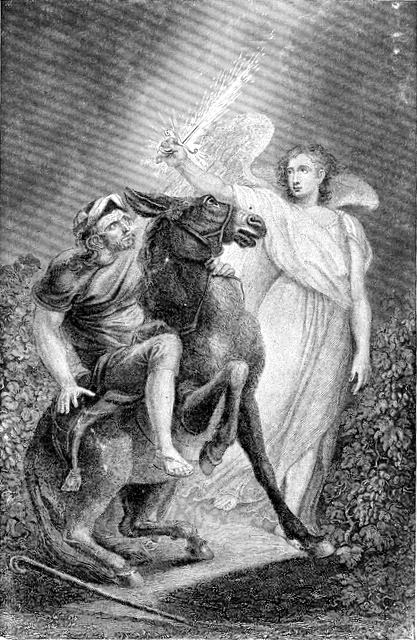
  • Balaam, on his way to “curse” Israel for Balak had his eyes opened to the angel that was blocking his donkey’s path - Numbers 22:31.
  • Elisha’s servant had his eyes opened to the surrounding “horses and chariots of fire”—the Lord’s army—after Elisha prayed - 2 Kings 6:17.

It brings to mind the question, why are some eyes spiritually closed, some open?

  • Disobedience is one reason for spiritual blindness:
For the Lord has poured out on you
The spirit of deep sleep,
And has closed your eyes” - Isaiah 29:10.

  • So is failure to acknowledge God’s existence and glorify and thank Him: “ For since the creation of the world His invisible attributes are clearly seen, being understood by the things that are made, even His eternal power and Godhead, so that they are without excuse,  because, although they knew God, they did not glorify Him as God, nor were thankful, but became futile in their thoughts, and their foolish hearts were darkened” Romans 1:20,21.

  • But “'Blessed are the pure in heart, / For they shall see God’” - Matthew 5:8.

The beautiful thing is, spiritual sight is available and possible.
  •  It came to the man born blind whose eyes Jesus healed with mud and Siloam water, so he could exclaim: “‘One thing I know: that though I was blind, now I see’” - John 9:25. Jesus later made sure that He also addressed the man's spiritual sight issue - John 9:35-38.
  • And it came to Saul/Paul on the Damascus Road. I love the parallel of physical and spiritual sight in his story. For it was after Ananias prayed for him that “scales” fell from his light-blinded eyes so that he regained his physical sight (Acts 9:17,18), while at the same time embarking on a new life path that God showed him - Acts 9:16.

Let’s make the psalmist’s prayer our own as we seek spiritual sight and insight for our lives from the Bible.

PRAYER: Dear Father, “Open my eyes that I may see wondrous things from Your law.” Amen.

 *********
Unless otherwise noted all Scripture quotations are taken from the New King James Version®. Copyright © 1982 by Thomas Nelson, Inc. Used by permission. All rights reserved.


Wednesday, September 02, 2015

Enticing desires

Twisted ladder-like structure
Photo from RGBStock.com
TODAY'S SPECIAL: James 1:1-18

TO CHEW ON: "But each one is tempted when he is drawn away by his own desires and enticed." James 1:14


In North America's new-world climate of celebrating practices the Bible condemns, one thing bothers me especially: the young age at which these proclivities apparently manifest themselves. When people say they knew at age five or six that they are the wrong sex—when little elementary school boys and girls say they feel they should really be little girls and vice versa, I find myself asking—weren't they born this way? They don't really have a choice, do they?

James answers these questions in today's reading.

Yes, they were born that way. We were all born twisted by a sinful nature. Each one of us has our set of "own desires" by which we are easily enticed to stray from God's revealed ways—that is, enticed to sin.

The enticements we give in to may be less socially controversial—like the desire to be noticed (pride) or to have lots of stuff (covetousness), etc. But their end is just as much sin  as sexual rebellion.

But yes also to the choice question. We do have a choice as to whether we give mental assent and eventually outward expression to those sin-enticing desires. My Bible's study notes explain it this way:

"When inner desires respond to outward enticement, sin is spawned. James does not mention Satan's role in temptation. His purpose is not to discuss the origin of sin but to explain that enticement to evil is not from God. In stressing the outward nature of temptation, James leaves sinners no excuse. Satan is indeed the external source of temptation, but no one can blame him for the roots of sinful deeds, which lie within the individual. See Mark 7:1-23" - John Mark Ruthven, study notes on James, New Spirit-Filled Life Bible, p. 1751.

So as we consider the society in which we live, let's pause for a personal reality check. We're in the same boat—born sin-twisted, not by the same enticements perhaps, but needing God's grace as much as anyone.

PRAYER: Dear God, please help me to see myself as someone needing Your grace, even as I attempt to uphold standards of morality given in the Bible within a society that flaunts breaking them. Amen.

 *********
Unless otherwise noted all Scripture quotations are taken from the New King James Version®. Copyright © 1982 by Thomas Nelson, Inc. Used by permission. All rights reserved.


Wednesday, August 05, 2015

Given over to lewdness

TODAY'S SPECIAL: Ephesians 4:17-5:2

TO CHEW ON: "...you should no longer walk as the rest of the Gentiles walk, in the futility of their mind, having their understanding darkened, being alienated from the life of God because of the ignorance that is in them, because of the blindness of their heart; who being past feeling have given themselves over to lewdness, to work all uncleanness with greediness." Ephesians 4:17-19

Michael Leehan was mad at  God. After a difficult childhood and a painful divorce he made a decision:

"One Saturday afternoon as I sat on my red corduroy couch, my heart filled with anger toward a God who seemed distant even cruel. My tiny snatches of knowledge about this God of the Bible had built the picture of a tyrant in my mind's eye: a God who is never satisfied, just waiting for one of His followers to step out of line ....

Hadn't God created a fear-based system with the threat of hell that forced people to bend their knees to Him, not out of love, but out of self-preservation? What did free will mean in all this? I was consumed by my tortured thoughts.

Finally, I said, 'God, I will not serve You. I will not serve a God of fear and punishment who forces His victims into submission. I will serve the dark side.' And I blurted out, 'Satan, come into my life. You are now my god. Use me, have me, and control me for your purposes.' ....

Immediately, a power swept over me"
- Michael Leehan, Ascent From Darkness, Kindle Location 486.

Leehan tells that story and what followed in his memoir Ascent From Darkness. His activities included multiple affairs, cutting (as in self-mutilation), and performing animal sacrifice. He particularly had it in for Christians and would do things like join Bible studies or attend church singles groups with the intention of sowing doctrinal confusion and seducing women.

Admittedly Michael Leehan is an extreme example of someone given over to lewdness.* But as I read his story, I got more than one 'Aha' moment as I saw traces of what he was and did reflected in the behaviors of unbelievers I know—indeed in my own behavior during the years I was backslidden.

Let's keep in mind the fact that Satan is still behind such rebellious attitudes and actions in whomever they occur. Let's not give ourselves over to any of them. And let's pray more fervently for our unsaved family members, friends and acquaintances, that they will be free to "learn Christ" - Ephesians 4:20, to "put off ... the old man" - Ephesians 4:22, and to "...put on the new nature (the regenerate self) created in God’s image, [Godlike] in true righteousness and holiness" - Ephesians 4:24, Amplified.

PRAYER: Dear God, it is easy to rationalize rebellious attitudes in myself and others as a natural human response to authority. Help me to recognize its roots in the enemy Satan. Please continually renew my mind. Amen.

MORE: Lewdness
[*Lewdness - aselgeia means "Total debauchery, unashamed indecency, unbridled lust, unrestrained depravity. The person with this characteristic has an insolent defiance of public opinion, sinning in broad daylight with arrogance and contempt" - Dick Mills, Word Wealth, New Spirit-filled Life Bible, p. 1768.]
*********
Unless otherwise noted all Scripture quotations are taken from the New King James Version®. Copyright © 1982 by Thomas Nelson, Inc. Used by permission. All rights reserved.

Bible Drive-Thru


Saturday, June 27, 2015

Bad choices and a bad end

Saul's Final Battle - Artist unknown
TODAY'S SPECIAL: 1 Samuel 31:1-13

TO CHEW ON: "So Saul, his three sons, his armor bearer, and all his men died together that same day." 1 Samuel 31:6

Here we read of Saul's death. How did he come to this humiliating end?

He began well. Samuel chose Saul and assured him of God's presence and help: " Then the Spirit of the Lord will come upon you, and you will prophesy with them and be turned into another man." - 1 Samuel 10:6.

After only two years of being king, though, the trouble started. At war with the Philistines, Saul assembled an army then waited at Gilgal for Samuel to come and make an offering before they went into battle. He waited seven days and still no Samuel. When the army began to scatter, he took matters into his own hands and performed the sacrifice himself. No sooner had he finished than Samuel appeared and there were fireworks:
Samuel: ““You have done foolishly. You have not kept the commandment of the Lord your God, which He commanded you. For now the Lord would have established your kingdom over Israel forever.  But now your kingdom shall not continue. The Lord has sought for Himself a man after His own heart, and the Lord has commanded him to be commander over His people, because you have not kept what the Lord commanded you.”" - 1 Samuel 13:13,14.

Sometime later, Samuel told him to fight the Amalekites. His instructions were "Now go and attack Amalek, and utterly destroy all that they have, and do not spare them" 1 Samuel 15:3. However, Saul obeyed only partially (1 Samuel 15:9), claiming he had spared the livestock as offerings. Then God sent Samuel to Saul with the another message:

“Has the Lord as great delight in burnt offerings and sacrifices,
As in obeying the voice of the Lord?
Behold, to obey is better than sacrifice,
And to heed than the fat of rams.
For rebellion is as the sin of witchcraft,
And stubbornness is as iniquity and idolatry.
Because you have rejected the word of the Lord,He also has rejected you from being king”
- 1 Samuel 15:22,23
Saul did have a long reign. Bible scholars believe he was around 20 years old when he was crowned and he reigned 40 years. But his time as king was overshadowed by the consequences of his impatience, lack of faith, disobedience, and rebellion. After God told him that the kingly succession would leave his family, suspicion and jealousy ruled his life (1 Samuel 20:30). Finally, after Samuel's death when he no longer heard from God at all, he was full of fear - 1 Samuel 28:8-20.

The sins for which Saul are known are hardly foreign to us. Who of us hasn't been tempted, perhaps gone through with enacting our own plans when God seemed slow to answer and our impatience got the best of us? Similarly, we are not strangers to disobedience, rebellion, suspicion, jealous, and fear.

There's no question that God was with Saul, and yet he ended so badly because he gave in to his natural tendency to do things on his own. May we learn from his life that such choices on our part will also have their consequences.


PRAYER: Dear God, help me to consistently exercise faith and choose to obey. Amen.
 
 *********
Unless otherwise noted all Scripture quotations are taken from the New King James Version®. Copyright © 1982 by Thomas Nelson, Inc. Used by permission. All rights reserved.


Thursday, April 16, 2015

Is sin just an opinion?

Truth spelled in Scrabble letters
TODAY'S SPECIAL: 1 John 3:1-10

TO CHEW ON: "Whoever commits sin also commits lawlessness, and sin is lawlessness." 1 John 3:4

More and more our society is losing its connection to moral absolutes. Justin P. McBrayer (a Colorado professor of philosophy) writes recently in the Opinionator column of the New York Times: "What would you say if you found out that our public schools were teaching children it is not true to say that it's wrong to kill people for fun or cheat on tests? Would you be surprised?"

He goes on to describe his visit to his son's Grade 2 classroom where two definitions hung over the bulletin board:

"Fact: Something that is true about a subject and can be tested or proven.
Opinion: What someone thinks, feels or believes."

These two definitions, he points out, leave no room for things that are true even if no once can prove them and things that we believe which can also be proven, like historical facts. He found assignments where kids were asked to categorize statements as facts or opinions. When sorting statements such as  "Copying homework assignments is wrong" and "Cursing in school is inappropriate behaviour" the correct answer was that they were opinions. His conclusion:

"In summary, our public schools teach students that all claims are either facts or opinions and that all value and moral claims fall into the latter camp. The punchline: there are no moral facts. And if there are no moral facts, then there are no moral truths" - reported by Dr. Albert Mohler in "The Briefing 03-20-15," original article:  "Why Our Children Don't Think There Are Moral Facts").

This, of course, is a far cry from what the Bible teaches. Today's reading from 1 John 3 repeats the word "sin" in various forms ten times. Sin, by its very definition, assumes that moral facts (truths) exist:

[Sin - hamartia: to miss the mark; to err, be mistaken; to wander from the law of Gd; violate God's law.]

What is sin, according to the Bible?
  • The verse we're focusing on defines sin as lawlessness or rebellion against God's law - 1 John 3:4.
  • Unrestrained talk and foolishness are both called sin - Proverbs 10:19; 24:9.
  • Contempt for others is sin - Proverbs 14:21.
  • Whatever is not done from faith is sin - Romans 14:23.
  • Failing to do something good when we have the ability/opportunity to do it is sin - James 4:17.
  • All unrighteousness is sin - 1 John 5:17.

Though governing our lives by these standards may put us increasingly out of step with a world that insists God's standards are mere opinions, I'd rather find myself in the company that John describes at the beginning of the chapter: "called children of God," "like Him," full of the "hope" of seeing Him. As a result I need to line up my life with His standards of purity (1 John 3:1-3) no matter what others think of them.

PRAYER: Dear God, help me grow in my sensitivity and abhorrence to the things You consider sin and to live for the day I see You. Amen.

 *********
Unless otherwise noted all Scripture quotations are taken from the New King James Version®. Copyright © 1982 by Thomas Nelson, Inc. Used by permission. All rights reserved.


Saturday, March 14, 2015

A way God calls "perverse"

"Balaam's Eyes Were Opened" 
Artist Unknown 
From Treasures of the Bible (Moses)

"Balaam's Eyes Were Opened"   Artist Unknown
"Balaam's Eyes Were Opened"
TODAY'S SPECIAL: Numbers 22:22-40

TO CHEW ON:
"And the Angel of the Lord said to him, 'Why have you struck your donkey these three times? Behold I have come out to stand against you, because your way is perverse before Me.' " Numbers 22:32


Balaam really does want to go with Balak's men. His hastily acquired permission (Numbers 22:20) means that the morning after the second delegation arrives, he is on his way back to Balak with them (though there is no record that God's condition: "'If the men come to call you…'" is ever met).

What happens next on the road—the donkey crushing Balaam's foot, lying down, refusing to go further and actually speaking to Balaam—is a familiar Sunday School story. The Angel of the LORD's words (God's words) to Balaam are sobering (Numbers 22:32-33). He describes Balaam's way as "perverse."

[Perverse - yarat means to precipitate, to be precipitate, to push headlong, drive recklessly.]

The use of that word gives us the sense that Balaam's decision to go with Balak's men is impulsive, reckless, and headstrong. Peter gives us a clue about his motivation. He really did want all that stuff, that attention, that honor:
 "They (Peter, referring here to false teachers) have forsaken the right way and gone astray, following the way of Balaam the son of Beor, who loved the wages of unrighteousness…" - 2 Peter 2:15.

In Balaam's reaction we see a flashing caution light for ourselves and our own tendencies to impetuously push ahead with what we want to do. I like how Priscilla Shirer expresses it:

"I am learning that God will use the appropriate means to reveal His will in His timing. … If you feel an overwhelming urge to act spontaneously, pull in the reins" - Priscilla Shirer, Discerning the Voice of God, pp. 92,93

PRAYER: Dear God, please help me to be aware of my own tendency to act on my own, rashly, spontaneously, and recklessly. Help me, instead, to wait for Your clear timing and direction before I move ahead with plans and projects. Amen.

 *********
Unless otherwise noted all Scripture quotations are taken from the New King James Version®. Copyright © 1982 by Thomas Nelson, Inc. Used by permission. All rights reserved.


Monday, March 09, 2015

Color trouble good

girl looking distressedTODAY’S SPECIAL: Psalm 107:1-22

TO CHEW ON: “Oh that men would give thanks to the Lord for His goodness,

And for His wonderful works to the children of men.” Psalm 107:8,15,21

When we take today’s verse (a refrain that is occurs three times in this psalm) out of its context, we could assume the psalmist is drawing our attention to God’s general character of goodness and His amazing creation. But when we pay attention to the verses around we see the writer is looking at quite a different side of God’s goodness. Each repetition of the refrain comes after the memory of a nasty situation.

1. A time of loss and homeless (Psalm 107:2-7)
The Israelites wandered around in the wilderness after Egypt, hungry, discouraged, lost and homeless. But this bad scene became good when it caused them to look to God for direction. Then He settled them in a land they could call home.

2. A time of rebellion (Psalm 107:10-14)
Israel was often in a state of rebellion. God’s remedy – hard labor – didn’t look like a blessing on the surface. But it was, because it sent them running back to God for help.

3. A time of foolishness (Psalm 107:17-20)
The picture here is of trouble brought on oneself because of dissipation, addiction, or any kind of self-destructive behavior. Not a good thing. But again it is, when such a thing draws us to God.

Looking back, perhaps we can see evidences of trouble, or rebellion, or foolishness in our lives. Did they draw us closer to God? Let's take a few minutes today to review how God has turned trouble into blessing in our live. We could personalize our thankfulness to God.

PRAYER: I thank You, God, for Your goodness in ___________(name the bad situation), and for Your wonderful works to me. Amen.

************
Unless otherwise noted all Scripture quotations are taken from the New King James Version®. Copyright © 1982 by Thomas Nelson, Inc. Used by permission. All rights reserved.

Sunday, September 28, 2014

Complaining about the food

"And thou shalt smite on the rocks..." 
Lithograph by Marc Chagall

TODAY'S SPECIAL: Psalm 78:1-20

TO CHEW ON: "He also brought streams out of the rock, and caused waters to run down like rivers. But they sinned even more against Him by rebelling against the Most High in the wilderness" - Psalm 78:16,17

I identify with Carolyn Arends when she writes in Theology in Aisle Seven:

"I was making my way through Exodus, feeling a little jealous of my spiritual ancestors. It seemed they never had to wonder if God was there. They had only to follow pillars of cloud and fire, gathering up the manna served fresh daily from God's kitchen .... I wondered why the present-day actions of the immutable God sometimes seem so muted in contrast to the God of Moses. I wouldn't mind a pillar of cloud or fire when I need direction, or some manna on my front lawn when I pray for provision" - Carolyn Arends, Theology in Aisle Seven, Kindle Location 507.

But Asaph, the writer of today's psalm, reminds us that despite that luminous GPS, six-day-a-week meal service, and all the other tangible evidences of God's presence, the Israelites still struggled with bad attitudes of discontent, grumbling, and rebellion. Why?

Perhaps verse 18 holds a key to their problem: "They tested God in their heart..."

[Test—nasah—means to put to the test, try, prove, tempt. It's the thing that God does to us through life, not we to Him. As the Word Wealth writer of my Bible's notes concludes: "In this reference, the wilderness generation insulted and grieved the Lord by tempting and limiting Him as if to test His patience or His power" - Dick Mills, Word Wealth, New Spirit-Filled Life Bible, p. 747.]

Note the place those discontented complaints and rebellions originated: "their heart." It was an inner thing first before an outer action. Really as simple as choosing to see life's glass half empty instead of half full.

And so you and I too have a choice to make. Do we focus on what's wrong with life, the things we wish were different, what we would like more of, and so in effect test God, telling Him He's not doing a good enough job in our circumstances? Or do we, in our hearts, focus on gratitude, thankfulness, what's right with life? For it's as easy for us to test God as it was for the Israelites—as easy as complaining about the food!


PRAYER: Dear God, please help me to live with gratitude every day, choosing to see life in a positive, not negative light, choosing not to test You in my heart. Amen.

MORE: Ingratitude—the catalyst of all my sins?

"From all our beginnings, we keep reliving the Garden story.

Satan, he wanted more. More power, more glory. Ultimately, in his essence Satan is an ingrate. And he sinks his venom into the heart of Eden. Satan's sin becomes the first sin of all humanity: the sin of ingratitude. Adam and Eve are, simply, painfully, ungrateful for what God gave.

Isn't that the catalyst of all my sins?"


- Ann Voskamp, One Thousand Gifts, p. 15.

*********
Unless otherwise noted all Scripture quotations are taken from the New King James Version®. Copyright © 1982 by Thomas Nelson, Inc. Used by permission. All rights reserved.


Bookmark and Share


Related Posts Plugin for WordPress, Blogger...