Showing posts with label communication. Show all posts

Monday, April 09, 2018

God's questions

God Speaks to Elijah - Treasures of the Bible collection.

TODAY'S SPECIAL: 1 Kings 17-19; Psalm 99

TO CHEW ON:
"'What are you doing here, Elijah?'" 1 Kings 19:9,13

God often communicates with us humans through questions. God asked:

  • Adam and Eve in Eden: "'Where are you?'" and "'What is this you have done?'" - Genesis 3:9,13.
  • Job: "'Where were you when I laid the foundations of the earth?'" - Job 38:4.
  • Abraham: "'Is anything too hard for the Lord?'" - Genesis 18:14.
  • Moses: "'What is that in your hand?'" and "'Who made man's mouth?'" - Exodus 4:2,11.
  • Solomon: "'Ask! What shall I give you?'" - 1 Kings 3:5.
  • And Elijah: "'What are you doing here?'" - 1 Kings 19:9,13.

God knows everything so the questions He asks and the answers they draw from  people can't be for His benefit. They must be for the benefit of the ones questioned. There are at least three things I notice about His questions that may give us clues to understanding their purpose.


1. God's questions were situation-specific.
From our knowledge of the stories, above, we know how well each question fit the questioned one and the place he or she was. When God asked a question it was related to something the person needed to notice about him- or herself and their current situation or state of mind.

2. God's questions probed.
They were great at helping the questioner get to the root of something—the enormity of what they'd just done, perhaps (Adam and Eve), or what they really knew and understood (Job), or who they trusted in (Abraham, Moses), or what they wanted above everything else (Solomon), or where they were and why (Adam and Eve, and Elijah).
3. God's questions often led to understanding the next step the questioner needed to take.
For Elijah, God's question, '"What are you doing here?'" forced him to look at where his lapse of faith had taken him. In that place he felt a complete failure. But God didn't want him to stay in isolation and discouragement. He had more assignments for Elijah—dangerous ones: a king to anoint (treason!) and a successor to commission. He wasn't going to be able to stay "here" if those things were to get done.

Does God ever ask you questions? One He often asks me, especially when I'm tempted to envy the accomplishments of others is, "Did I ask you to do that?" (a personal application of the conversation between Peter and Jesus in John 21:20-22).

* What does God ask you? 

* What insight does it give you about yourself and your situation? 

* What root does it pull at? 

* What does it reveal to you about the next step?

PRAYER: Dear Father, Your questions are gentle, yet compelling. Help me to be quiet  enough in my spirit to hear them and self-aware enough to answer them honestly. Amen.
 
PSALM TO PRAY: Psalm 99

*********
Unless otherwise noted all Scripture quotations are taken from the New King James Version®. Copyright © 1982 by Thomas Nelson, Inc. Used by permission. All rights reserved.


Friday, March 09, 2018

Company of proclaimers

magnifying glass focuses on 'communication'
TODAY'S SPECIAL: Numbers 13-21; Psalm 68

TO CHEW ON: "The Lord gave the word;
Great was the company of those who proclaimed it." Psalm 68:11


Some verses in the Bible remind me of icebergs—relatively small and seemingly simple. But below the surface they are huge. Psalm 68:11 is one such verse.

It seems a little out of place, sandwiched between words of praise to God and a poetic description of battle. It feels almost like David's thoughts in parenthesis—an aside: 

"The Lord gave the word; Great was the company of those who proclaimed it."

What word?

We may think of creation. The Genesis account is that—God creating with words: "Then God said 'Let there be light …' Then God said, 'Let there be a firmament…' Then God said, 'Let the waters under the heavens be gathered…'" Genesis 1 3,6,9.

Paul writes to the Romans about how this creation communicates or spreads the word about God: "For since the creation of the world His invisible attributes are clearly seen, being understood by the things that are made, even His eternal power and God head" - Romans 1:20.

But there's more. For word also brings to mind the beautiful passage in John 1 that links creation with Jesus God's Son: "In the beginning was the Word, and the Word was with God. … All things were made through Him. … And the Word became flesh and dwelt among us" - John 1:1,3,14.

So aspects of word are God's creation and Jesus (including all that He did and is)—two ways we come to know God. They are proclaimed by a company.

Who is that company?

  • It is the hosts of heaven—the stars, planets, black holes, galaxies, nebulae - Psalm 33:6.
  • It is the hosts of earth - Genesis 2:1.
  • It was Israel's leaders like Moses - Numbers 11:24.
  • It was individuals like the prophets and apostles - Ezekiel 2:7; Acts 18:9.
  • It was a couple of disciples set free from prison by angels - Acts 5:20.
  • It was bands of persecuted Christians - Acts 8:4; 1 Peter 4:9.10.
  • It was ministers in training - Titus 2:15
  • Someday it will be the armies of heaven - Revelation 19:11-14.
  • And today it is us, communicating the gospel using the written word (Bible) and our words - Matthew 28:18-20; Mark 16:14; Acts 1:8.

I ask myself, am I being faithful as part of that company of proclaimers? Are you?

PRAYER: Dear God, thank You for the word—Your creative power, Jesus the Word come in the flesh, the words of good news that His life accomplished as recorded in the Bible. Help me to be faithful as part of the company who proclaims this word. Amen. 

PSALM TO PRAY: Psalm 68

*********
Unless otherwise noted all Scripture quotations are taken from the New King James Version®. Copyright © 1982 by Thomas Nelson, Inc. Used by permission. All rights reserved.

Friday, January 19, 2018

Articulate creation

Fives in starfish, fruit core, flowers
 Creation's Fives 
(Photos & collage by V. Nesdoly)

TODAY'S SPECIAL:  Exodus 7-9 and Psalm 19

TO CHEW ON: "
The heavens declare the glory of God;
And the firmament shows His handiwork." - Psalm 19:1


In this beautiful psalm, David points out two ways God reveals Himself—through NATURE (Psalm 19:1-6) and through HIS WORD (Psalm 19:7-14). Today let's focus on the NATURE message.

Here are some things Bible writers say we can learn about God through creation:

He is a wise and powerful provider
  • Job, speaking of God's wisdom and power in nature, challenges his listeners to learn about God from the beasts, the earth, and the sea creatures - Job 12:7-10.
  • Later in Job, Elihu praises God in a similar way, illustrating his point with a description of the water cycle - Job 36:24-33.
  • Jesus too points out this aspect of creation when He instructs, " 'Consider the lilies…' " drawing our attention to their care-less and beautiful existence -  Luke 12:27.

He is a judge
  • Psalm 50:6
  • Psalm 97:6.
One can easily see how people could get a judgment message from a sky that crackles with lightning, rattles with thunder, and drops hail and snow.

God is big. We are tiny
  • Isaiah describes God: "He sits above the circle of the earth"… while we are the "grasshoppers" on it - Isaiah 40:21,22.

In creation we have enough evidence to believe that there is a God and to know some things about Him.
  • Paul and Barnabas waste no time turning the attention of the crowd at Lystra—who want to crown them gods after Paul heals a man—to the God of creation whose witness, Paul says, is the rain and fruitful seasons - Acts 14:15-17.
  • Paul speaks clearly about creation's evidence of God in Romans 1:20: "For since the creation of the world His invisible attributes are clearly seen, being understood by the things that are made, even His eternal power and Godhead, so that they are without excuse."
I love how Paul says we can deduce things about God by what is "seen" and "the things that are made." Isn't it true! Our study of natural things—creatures, plants, elements, atoms, our own bodies—shows how wisely and creaatively God has designed them all. Design elements, that repeat across created things (like the five-pointed star shape in fish, flowers, and the core of fruits), show creation's unity—the signature of the same creator.

Man's observation of creation leaves him with no excuse before God

  • Paul, in answering his own question in Romans 10:14 ("How then shall they call on Him in whom they have not believed? And how shall they believe in Him of whom they have not heard?") says they actually have heard: "But I say, have they not heard? Yes indeed." Then he quotes Scripture:  " 'Their sound has gone out to all the earth and their words to the end of the world' " - Romans 10:18. Who is Paul quoting here? Psalm 19:4 (part of our today's reading) that speaks of the fact of God's existence going  "... to the ends of the world." 

Let's look for God and enjoy Him in creation today!

PRAYER: Dear God, I am amazed at Your wisdom, creativity, care, and majesty evidenced in creation. Thank You, however, that you didn't leave us with only that, but also gave us Your Word and Yourself in Jesus. Amen. 

PSALM TO PRAY: Psalm 19

The Bible Project VIDEO: Heaven and Earth (Theme Series)


*********
Unless otherwise noted all Scripture quotations are taken from the New King James Version®. Copyright © 1982 by Thomas Nelson, Inc. Used by permission. All rights reserved.


Saturday, July 08, 2017

The language of jewelry

Image: Pixabay
TODAY’S SPECIAL: Genesis 24:28-48

TO CHEW ON:
“Then I asked her and said, ‘Whose daughter are you?’ And she said, ‘The daughter of Bethuel, Nahor’s son, whom Milcah bore to him.’ So I put the nose ring on her nose and bracelets on her wrists.” Genesis 24:47

Jewelry appears often in the Bible and says many things.
  • For Judah and Tamar it was a pledge to render full payment later for sexual services rendered - Genesis 38:18.
  • For an Amalekite warrior and David it was Saul’s I.D. - 2 Samuel 1:10.
  • For the Israelites plundering the Egyptians it was payment for years of slavery,  payment that was later used in the making of the Tabernacle - Exodus 3:22; 35:22.
  • For the prophet it was a metaphor of God’s care for His people - Ezekiel 16:11.
  • For the prodigal son it was “Welcome home—You are still my son” - Luke 15:22.

Abraham’s servant made a great impression on Rebekah’s family when they saw their daughter / sister decked out in rich jewels. Brother Laban took note and immediately became all gush and hospitality - Genesis 24:29-31. The rich sparkling rings and bracelets now on Rebekah asked a question and made a promise.
  • Question: Will Rebekah marry my master’s son?
  • Promise: She will be well cared for.

Warren Wiersbe’s BE Commentary makes a wonderful comparison of Rebekah’s story to the church:

“But the chapter goes beyond history into theology. It gives us a picture of the heavenly Father getting a bride for His Son (Matt. 22:1-14). The church is compared to a bride (2 Cor. 11:2-3; Eph. 5:22-33), and during this present age, the Holy Spirit is calling people to trust Christ and be “married to … him” (Rom. 7:4). The elements involved in the marriage of Isaac and Rebekah are also involved in the marriage of Christ and His church” - Warren Wiersbe Commentary accessed through Bible Gateway.com.

Isaiah helps us, as part of the church, to express thanks for this adornment:
“I will greatly rejoice in the LORD,
My soul shall be joyful in my God;
For He has clothed me with the garments of salvation.
He has covered me with the robe of righteousness.
As a bridegroom decks himself with ornaments
And as a bride adorns herself with her jewels
” - Isaiah 61:10 (emphasis added).

Let's remind ourselves of this wonderful promissory, salvation, Bride-of-Christ message of jewelry as we put on our trinkets today.

PRAYER:
Dear Father, thank You for choosing the church as Your bride. Help me to live as one You have chosen and adorned today. Amen.

 *********
Unless otherwise noted all Scripture quotations are taken from the New King James Version®. Copyright © 1982 by Thomas Nelson, Inc. Used by permission. All rights reserved.


Thursday, May 18, 2017

Letters old and new

Image: Pixabay
TODAY’S SPECIAL: Acts 15:22-35

TO CHEW ON:
“So when they were sent off, they came to Antioch; and when they had gathered the multitude together, they delivered the letter.
When they read it, they rejoiced over its encouragement.” Acts 15:30,31


In these days of instant messaging across the world, it’s interesting to try to put ourselves in the place of these early Gentile Christians. Their missionaries had gone to Jerusalem to get a verdict from church leaders (the Apostles) on how they were to conduct themselves in this new life. Now Paul, Barnabas, and a delegation had returned with the Apostles' decision in a letter. What would the letter say?

Letters played an important role in Bible times.


Sometimes letters sealed a fate.
  • Uriah carried his own death sentence letter from David to Joab at the battlefront - 2 Samuel 11:14.
  • Jezebel (King Ahab’s wife) sent letters to Israel’s leaders with a plot to kill Naboth so Ahab could take his garden - 1 Kings 21:8.

Kings sent threatening letters to their rivals and enemies.
  • The king of Assyria sent one such to Hezekiah, prompting a panicked prayer meeting and divine help - 2 Kings 19:14.

Sometimes kings sent letters on behalf of their subjects.
  • The king of Syria asked the king of Israel to heal Naaman of leprosy - 2 Kings 5:5.
  • King Artaxerxes sent letters on behalf of Nehemiah asking for safe passage  for him through territory and wood for rebuilding Jerusalem - Nehemiah 2:7-8.

The book of Esther is full of letters.

  • The king sent letters mandating male authority in the home - Esther 1:22.
  • Haman’s plan to annihilate the Jews was spread by letter - Esther 3:13.
  • Mordecai’s victory allowing the Jews to defend themselves was spread by letter as was the establishment of a holiday to remember this event - Esther 8:10; 9:20.

Of course we know how the New Testament is largely made up of letters
—missives that, thankfully, do more than threaten or carry evil plots. The letter in our reading today is one such. We discover that the reading of it brought joy and encouragement (Acts 15:31), as did most of the letters of Paul, John, Peter, and James (along with teaching, reproof, and training in righteousness, delivered with large amounts of love).

Do you still write letters? I suppose emails and even text messages could be considered modern letters.

What can we moderns do with letters?
  • Send information about plans and events.
  • Think through and discuss ideas about anything—how to garden, to faith in God
  • Express gratitude and appreciation.
  • Assure the recipient of our care, concern, and prayers.
  • Tell someone we’re remembering them on a special day (birthday, anniversary etc) 
  • Encourage and cheer.

Let’s continue to use this old-to-new way of communicating for good today!


PRAYER: Dear Father thank You for distance communication that has survived the centuries. Help me to use the amazing modern communication resources at my fingertips for good today. Amen.

 *********
Unless otherwise noted all Scripture quotations are taken from the New King James Version®. Copyright © 1982 by Thomas Nelson, Inc. Used by permission. All rights reserved.


Thursday, January 19, 2017

Word's power

TODAY’S SPECIAL: Revelation 1:1-20

TO CHEW ON:
“He had in His right hand seven stars, out of His mouth went a sharp two-edged sword, and His countenance was like the sun shining in its strength.” Revelation 1:16

This first chapter of Revelation has so many imagination-stirring images, it’s hard to pick just one. I’m going with what immediately jumped off the page at me on first reading this morning—John’s image of “One like the Son of Man,” focusing on what comes from His mouth.

It’s a two-edged sword - Revelation 1:16.

Where have we seen that before?
“For the word of God is living and powerful and sharper than any two-edged sword, piercing even to the division of soul and spirit and of the joints and marrow, and is a discerner of the thoughts and intents of the heart” - Hebrews 4:12.

In this verse I’m snagged by another word: “word,” which brings to mind:
“In he beginning was the Word and the Word was with God and the Word was God. And the Word became flesh and dwelt among us, and we beheld His glory, the glory as of the only begotten of the Father full of grace and truth” - John 1:14.

So we’ve come full-circle back to Jesus, the word and glory of God (John 1:14 compared with Revelation 1:16).

Other Bible verses that elaborate on the God's word show us that it is:
- Like fire
- Jeremiah 5:14; 23:29.
- Life-bringing - Ezekiel 37:7.
- Prevailing and victorious - Acts 19:20.
- Salvation bringing - Romans 1:16.
- Our spiritual weapon - Ephesians 6:17.
- The implement God will use to enforce His rule on the nations - Revelation 19:15.

How exciting to have access to something so powerful! But also, what a privilege and responsibility to accept and respond to that word sword’s piercing, dividing, thought-and-intention-discerning work on us now, in this age of grace.

PRAYER: Dear Jesus, please make me sensitive to Your piercing, probing, and discerning word on my thoughts, motivations, and actions. Amen.

 *********
Unless otherwise noted all Scripture quotations are taken from the New King James Version®. Copyright © 1982 by Thomas Nelson, Inc. Used by permission. All rights reserved.


Friday, July 01, 2016

God's prescient word

TODAY'S SPECIAL: Acts 15:3-21

TO CHEW ON:
"'Known to God from eternity are all His works.'" Acts 15:18


Much of today's reading is the "minutes" of the Jerusalem Council. It was the gathering of the first century apostles and elders to discuss what should be their official position on Gentiles and circumcision.

Luke reports "much dispute." Then Peter takes the floor. He gives his pro-Gentile point-of-view, concluding with, "'So God ... made no distinction between us and them, purifying their hearts by faith'" Acts 15:8,9.

Barnabas and Paul speak next, "… declaring how many miracles and wonders God had worked through them among the Gentiles" - Acts 15:12.

Then James gets up. He recalls a scripture that may have puzzled him in the past. It's God, speaking through the prophet Amos and seems to say that the Almighty Himself accepts the Gentiles: "'… Even all the Gentiles who are called by My name...'" (Acts 15:16,17 emphasis added, compare Amos 9:11,12).

After quoting the scripture, James makes this profound statement: "'Known to God from eternity are all His works'" - Acts 15:18.

It's like he's saying, God foresaw all this. The proof that His plan is to accept the Gentiles is found in this prophetic passage which, up to now we didn't know what to do with, but at last understand. ("'God said it and now he's doing it. It's no afterthought; he's always known he would do this!'" - Acts 15:18 MSG).

I believe that through the centuries God's word remains a truthful, reliable witness to His works, though sometimes outside the realm of that day's experience.
  • I wonder, for example, what those students of scripture did with Isaiah 40:22 ("It is He who sits above the circle of earth…") when everyone knew the earth was flat. 
  • Or how did those reading Revelation before the invention of modern mass communication imagine passages like Revelation 11:9 ("Then those from the peoples, tribes, tongues, and nations will see their dead bodies…") ever being possible? 
  • Yet now we know that the Bible is accurate in describing the world as round, and that worldwide viewing of current events is not only possible but happens all the time.

And so I believe God's word will, finally, prove itself trustworthy in every category, even the passages which we don't now understand and for which there is not a current "scientific" explanation. For the omniscience of God is reflected in His prescient word.

PRAYER: Dear Father, thank You for Your word, which has proven itself trustworthy again and again and which I believe reflects truth and reality. Amen.

 *********
Unless otherwise noted all Scripture quotations are taken from the New King James Version®. Copyright © 1982 by Thomas Nelson, Inc. Used by permission. All rights reserved.
Scripture quotations marked MSG are taken from The Message. Copyright © 1993, 1994, 1995, 1996, 2000, 2001, 2002. Used by permission of NavPress Publishing Group.

Sunday, May 15, 2016

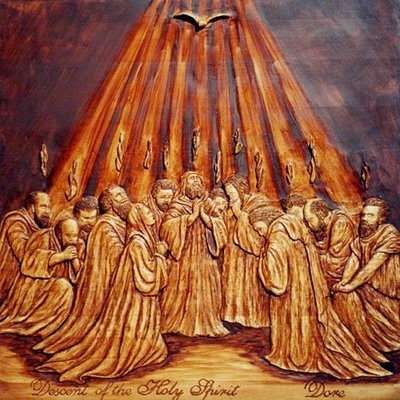
Wind, Fire, Words of the Spirit

Descent of the Holy Spirit - Dore
TODAY'S SPECIAL: Acts 2:1-21

TO CHEW ON: "And suddenly there came a sound from heaven as of a rushing mighty wind, and it filled the whole house where they were sitting. There appeared to them divided tongues of fire and one sat upon each of them. And they were all filled with the Holy Spirit and began to speak with other tongues as the Spirit gave them utterance." Acts 2:2-4

Three elements jump out at me as I read this thrilling passage of the Holy Spirit's coming on the day of Pentecost:

Wind

Wind was the sound of the Spirit's coming. Wind is that invisible unpredictable force of nature we all know. It is associated with the Spirit in other places in the Bible.
  • Think back of creation where "The Spirit of God was hovering over the face of the waters" (Genesis 1:2). The writer of my Bible's notes on Genesis explains:  "Hovering connotes sweeping or moving rather than staying stationary. The Holy Spirit is the 'executive arm' of the Trinity so He was quite active as God spoke each word" - R. Russell Bixler,  New Spirit-Filled Life Bible, p. 4.
  • Jesus referred to the invisible, unpredictable wind when He spoke to Nicodemus about being born again: " 'The wind blows where it wishes and you can hear the sound of it, but cannot tell where it comes from and where it goes. So is everyone who is born of he Spirit' " John 3:8.

Fire

Fire was the sight of the Spirit's coming. Controlled fire is a friend and powerful tool, but uncontrolled it's dangerous. God's presence is often linked with fire in the Bible.
  • In the Old Testament God spoke to Moses from a fiery bush (Exodus 3:2).
  •  He lingered over Israel in the wilderness in a nighttime cloud that looked like fire (Exodus 13:21,22).
  • And God descended on Mt. Sinai in fire, shielding the Israelites from His presence in a thunderous cloud of smoke (Exodus 19:18). 
  • John the Baptist predicted Jesus would baptize "... with the Holy Spirit and fire" - Matthew 3:11.

Words

Tongues were the shape of the Spirit's flames and the result was everyone present "began to speak with other tongues as the Spirit gave them utterance." The Holy Spirit and words are linked in other places too.
  • When the Spirit came on the seventy elders who were to be Moses' helpers, they prophesied (Numbers 11:25). 
  • Joel predicted, "I will pour out My Spirit on all flesh; Your sons and your daughter shall prophesy…" (Joel 2:28). 
  • Jesus told the disciples to wait for the Spirit who would give them witnessing power (Acts 1:8). 
  • And it is through the Holy Spirit that we have the Bible writings (2 Peter 1:21).

Today is Pentecost Sunday, the day we celebrate the Holy Spirit's coming. As we ponder our own lives relating to the Spirit's presence, let's keep in mind how His empowering and working through us is wind-like. We can't control Him. What He accomplishes through us is done according to His sovereignty.

His presence in our lives is fire-like in its cleansing, powerful, helpful, sometimes dangerous ways.

Its evidence in our lives is words—words of prayer, praise, song, witness, teaching, encouragement, verbally and through all kinds of media.

PRAYER: Dear God thank You for sending the gift of the Holy Spirit who lives in me (1 Corinthians 3:16). May this be supported by the wind, fire, and words that emanate from my life. Amen.

MORE: Day of Pentecost.


Today is the Day of Pentecost or Whitsunday. Here is the Collect that begins the day's liturgy:

O God, who on this day taught the hearts of your faithful people by sending to them the light of your Holy Spirit: Grant us by the same Spirit to have a right judgment in all things, and evermore to rejoice in his holy comfort; through Jesus Christ your Son our Lord, who lives and reigns with you, in the unity of the Holy Spirit, one God, for ever and ever. Amen.

 *********
Unless otherwise noted all Scripture quotations are taken from the New King James Version®. Copyright © 1982 by Thomas Nelson, Inc. Used by permission. All rights reserved.

Tuesday, October 20, 2015

Jesus asks you ...

Healing Blind Bartimaeus by Harold Copping
Healing Blind Bartimaeus - Harold Copping
TODAY'S SPECIAL: Mark 10:46-52

TO CHEW ON: "So Jesus answered and said to him, 'What do you want Me to do for you?' The blind man said to Him, 'Rabboni, that I may receive my sight.'" - Mark 10:51

Why did Jesus ask blind Bartimaeus what he wanted? Couldn't He see that the man was blind? Couldn't He have assumed that a cure for blindness was what Bartimaeus wanted?

It's interesting that here and in other places, Jesus asked questions that required a personal response from those He was talking to.

Sometimes it was a question about faith. When two blind men followed Jesus crying out, "'Son of David, have mercy on us!'" Jesus asked, "'Do you believe that I am able to do this?'" They said "'Yes,'" and Jesus touched their eyes with "'According to your faith let it be to you'" - Mark 9:28-30. Professions of faith were also asked of Peter (Matthew 16:15), the woman with the hemorrhage (Luke 8:45), and Martha (John 11:26).

Sometimes Jesus asked those near to tell Him what was on their minds. One time the disciples  were too embarrassed to answer (Mark 9:33). Another time, the resurrected Jesus asked that question of two grief-absorbed disciples on the way to Emmaus (Luke 24:17).

When Jesus and the disciples were confronted with 5,000 hungry people, Jesus asked Philip for his suggestion on how to fill that need. John tells us later that it was a test question. Do you think Philip passed the test? (John 6:5-7).

Later in John 6 after Jesus said some controversial things about eating His body and drinking His blood, many followers left Him. He asked the twelve about their loyalty in John 6:67.

Then there is that poignant conversation between Jesus and the beaten Peter, when Jesus asked him three times, "'Do you love me?'" (John 21:15-17).

And in John 5:6 as well as in today's reading we have Jesus addressing sick men. He asks the man at the Bethesda pool, sick for 38 years, "'Do you want to be made well?'" And to blind Bartimaeus "What do you want me to do for you?'"

Suppose Jesus came to you and me today? What would He ask us? There is something powerful about thinking through and framing a reply. So, what will we answer to:
- Do you have faith in Me?
- What are you thinking about?
- Do you think I can fill your need?
- Will you stick with Me?
- Do you love Me?
- What do you want me to do for you?


PRAYER:
  Dear Jesus, thank You for understanding our human hearts and the value of us expressing what's in them. Help me to make a habit of being frank and honest with you. Amen. 

*******
Unless otherwise noted all Scripture quotations are taken from the New King James Version®. Copyright © 1982 by Thomas Nelson, Inc. Used by permission. All rights reserved.

Bible Drive-Thru


Thursday, August 20, 2015

Prayer postures

TODAY'S SPECIAL: 1 Kings 8:42-61

TO CHEW ON: "And so it was, when Solomon had finished praying all this prayer and supplication to the Lord, that he arose from before the altar of the Lord, from kneeling on his knees with his hands spread up to heaven." 1 Kings 8:54

"I can't really get into praying until I'm on my knees," a friend confided to me. Her words  lingered with me, I began making a practice of kneeling when I prayed in my 'closet,' and I sensed a change, not in God but in myself. It felt right to be in such a posture before Him.

It's interesting to see the posture of Solomon in prayer, described in detail by the writer of 1 Kings. I'm glad he included that description, for it adds a jolt of realization about the relationship between God and us. Solomon, despite his giftedness, his touted wisdom, his unusual success spent part of this momentous day in Israel's history on his knees before God in front of all the people.

The Bible mentions at least four prayer postures.

1. Standing:
  • That is actually how Solomon began his prayer - 1 Kings 8:22.
  • Jesus' instructions about prayer imply that standing was a common stance - Mark 11:25.

2. Bowing
  • Abraham's servant bowed in prayer when he thanked God for answering his prayer about finding a wife for Isaac - Genesis 24:26.
  • The Israelites bowed in worship when Moses returned with signs and a promise that God would free them from their Egyptian masters - Exodus 4:31.

3. Kneeling
  • Sometime during his prayer, Solomon must have sunk to his knees, for that's the posture our writer describes him in at the end of his prayer - 1 Kings 8:54.
  • Jesus is also described as kneeling when He prayed in Gethsemane - Luke 22:41.

4. Prostrate, on the face before God
  • That's how the people of Israel prayed in response to Ezra reading 'the book' to them - Nehemiah 8:6.
  • Jesus was also on His face in Gethsemane - Matthew 26:39.

No prayer posture is prescribed or given more honor than any other. Rather it seems that the posture may indicate the state of our heart, the fervency of our felt neediness, and can become a physical demonstration of our humanity, humbled before deity.

What position do you prefer to be in when you pray? Does it make a difference to you? Have you ever experimented with different ones? Of course the main thing is the posture of my heart and yours.

PRAYER: Dear God, I love the variety of prayer postures seen in Your word. Help me to always have the spiritual posture of humility before You, whatever physical position I'm in. Amen.

MORE: Prayer attitudes

Daniel Henderson in his book Transforming Prayer lists seven prayer attitude positions we do well to put into practice in our prayers:
  1. Pray to seek God's face, NOT just His hand.
  2. Pray with your heart fixed on god's glory, NOT just for personal satisfaction.
  3. Pray from the treasury of God's word, NOT from a list of your own ideas.
  4. Pray according to the Spirit's instruction, NOT only from human reason.
  5. Pray with a heart completely surrendered to His will, NOT  with a hurried personal agenda.
  6. Pray in anticipation of living triumphantly in the war zone, NOT in satisfaction with your comfort zone.
  7. Pray that God would change you, NOT simply change things - Daniel Henderson, Transforming Prayer, pages 157-158. 

*********** 

Unless otherwise noted all Scripture quotations are taken from the New King James Version®. Copyright © 1982 by Thomas Nelson, Inc. Used by permission. All rights reserved.
Bible Drive-Thru


Thursday, May 14, 2015

The Promise—kept!

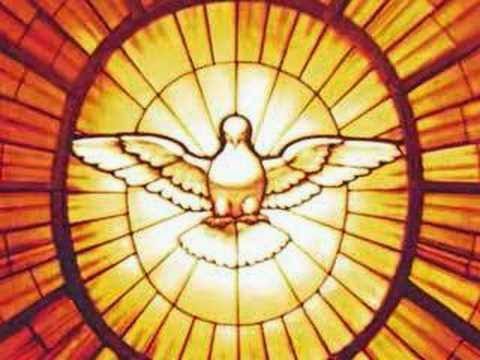
Holy Spirit as a Dove - Artist unknown
TODAY'S SPECIAL: Acts 1:1-11

TO CHEW ON: "And being assembled together with them, He commanded them not to depart from Jerusalem but to wait for the Promise of the Father, 'which,' He said, 'you have heard from Me.' " Acts 1:4

Here Jesus, in His last goodbyes to His disciples, gives them some explicit instructions . They are not to leave Jerusalem but to wait for the "Promise of the Father." What is this "Promise of the Father"?

[The word "promise" here is the Greek word epangalia. It refers to "both a promise and the thing promised, an announcement with a special sense of promise, pledge and offer" - Dick Mills, Word Wealth, New Spirit-Filled Life Bible, p. 1516.]

In the next verse, Jesus tells them what this promise is: the Holy Spirit.

What sort of expectation does this raise in the disciples, who are familiar with the law, psalms and prophets (our Old Testament)? Here are some OT scriptures that may have come to their minds, and the expectations they raised:

Isaiah 32:15 - "Until the Spirit is poured upon us from on high and the wilderness becomes a fruitful field…" = Fruitfulness.

Isaiah 59:21 - "… this is My covenant with them: My Spirit who is upon you…" and the verse continues with a promise = Believing Generations.

Ezekiel 39:29 - "And I will not hide my face from them anymore for I shall have poured out My Spirit…" = a New Intimacy with God.

Joel 2:28 - "I will pour out My Spirit on all flesh and your sons and your daughters shall prophesy, your old men shall dream dreams, your young men shall see visions" = Supernatural Insight and Communication.

Zechariah  12:10 - "And I will pour on the house of David and on the inhabitants of Jerusalem the Spirit of grace and supplication…" = a New Favor with Man and Power with God.

As we look at these OT promises, we see that every one of them is fulfilled at the coming of the Spirit on and beyond the day of Pentecost.

  • Fruitfulness: 3,000 people become believers after Peter's sermon that day and the church only keeps growing from there.
  • Believing Generations: The church that begins on the day of Pentecost continues till today.
  • A New Intimacy: Through the Spirit believers through the centuries have assurance of a vital connection to God as His children. Paul and John express this well in Romans 8:16; Galatians 4:6; and 1 John 4:13.
  • Supernatural Insight and Communication: Peter refers to the passage in Joel in his sermon, interpreting the coming of the Spirit as fulfillment of Joel's prophecy (Acts 1:16-21). The book of Acts continues with many examples of this: Acts 5:1-11; 8:14-23; 9:10-16; all of Acts 10.
  • Favor with People, Power with God: The early church has "favor with all the people" - Acts 2:47 and power when they pray - Acts 4:31.

The wonderful thing is that the same Holy Spirit is still available to us and working in and through Christ-followers all around the world. His presence and activity in our lives is still able to energize us and make us powerful and effective in these ways.

The question becomes: Are we making ourselves available to Him?

PRAYER: Dear Holy Spirit, all of You is available to me but I fear I often don't make all of myself available to You and so I stifle Your activity in my life. Help me to be better at giving myself to You for whatever You would do through me. Amen.

MORE: Ascension Day

Today the church celebrates the day Jesus ascended to heaven--Ascension Day. The day's liturgy begins with this collect:

Almighty God, whose blessed Son our Savior Jesus Christ ascended far above all heavens that he might fill all things: Mercifully give us faith to perceive that, according to his promise, he abides with his Church on earth, even to the end of the ages; through Jesus Christ our Lord, who lives and reigns with you and the Holy Spirit, one God, in glory everlasting. Amen.

 *********
Unless otherwise noted all Scripture quotations are taken from the New King James Version®. Copyright © 1982 by Thomas Nelson, Inc. Used by permission. All rights reserved.

Tuesday, January 13, 2015

The mystery of pain

"Job and his False Friends" by Jean Fouquet (1420-1477/81)
"Job and his False Friends" - Jean Fouquet (1420-1477/81)

TODAY'S SPECIAL: Job 33:1-30

TO CHEW ON:
" ' Behold God works all these things.' " - Job 33:29

It's fascinating to note that in this book that may date back to the time of Abraham (its date and authorship are uncertain), Job and his friends are wrestling with the question "Why does bad stuff happen to us?" in much the same way we do today.

In our reading Elihu, a young man, speaks up after Job's three older friends Eliphaz, Bildad and Zophar have had their say and Job has answered them. Elihu gives his thoughts on why we suffer. Some of his points:
  • We may never know. God isn't obliged to tell us - Job 33:13.
  • "God may speak in one way or in another …. In order to turn man from his deed..." - Job 33:14-17. Elihu mentions some means God may use, like dreams and visions, to deliver His message.
  • These divine communications are meant, in the end, to discipline and humble us. Sometimes, unbeknownst to us, they keep us out of harm's way - Job 33:17-18.
  • Pain and illness chasten us and drive us to God - Job 33:19-24.
  • God heals in response to prayer - Job 33:24-26.
  •  Confession of sin is part of returning to God, in order that we may be saved from an even greater disaster - Job 33:26-28.

All these many years later, we, like Job and his peers, continue to question and seek for answers to pain, sickness, natural disasters, accidents, etc. And like these ancients, we still come to the conclusion that these things are a mystery; we don't understand.

But we can content ourselves with one thing: "God works all these things." Let that fact about the God, who has said about His people: "Behold I have loved you with an everlasting love…" (Jeremiah 31:3), be enough.

PRAYER: Dear God, please help me to trust Your love and good intentions toward me when I think I understand what You are allowing in my life, and when I don't. Amen.

 *********
Unless otherwise noted all Scripture quotations are taken from the New King James Version®. Copyright © 1982 by Thomas Nelson, Inc. Used by permission. All rights reserved.


Friday, March 28, 2014

The aroma of a life

TODAY'S SPECIAL: Ephesians 5:1-20

TO CHEW ON: "And walk in love as Christ also has loved us and given Himself for us as an offering to God for a sweet-smelling aroma." Ephesians 5:2

For someone who loves perfume as much as I do, Ephesians 5:2 resonates. Here Paul calls Jesus' death a "sweet-smelling aroma." This aroma (euodia) metaphor has its roots way back in the Old Testament, and drifts, as smells do, through to the end of the New.

We find God's reaction to Noah's sacrifice after the flood described in terms of smell: "And the Lord smelled a soothing aroma" - Genesis 8:21. In many more places the writers described sacrifices as aromas. A ram offered in Exodus 29:18 was called "a sweet aroma, an offering made of fire." Loaves of bread burned were "..a sweet aroma to the Lord" - Exodus 29:25. (See also Leviticus 1:9, 13, 17; 2:9; 3:5 etc.)

In our reading today Paul hearkens back to this aroma of sacrifice when he says that Jesus is to us "an offering to God for a sweet-smelling aroma" - Ephesians 5:2. In other words, the aroma of Jesus' death as a sacrifice in our stead satisfied God.

In 2 Corinthians Paul extends the aroma metaphor to the way we live our lives. He says the scent we exude (by how we live and what we say) communicates a message to those who have trusted Christ and to those who haven't:
"For we are the sweet fragrance of Christ [which exhales] unto God, [discernible alike] among those who are being saved and among those who are perishing:    
 To the latter it is an aroma [wafted] from death to death [a fatal odor, the smell of doom]; to the former it is an aroma from life to life [a vital fragrance, living and fresh]" 2 Corinthians 2:14-16 - Amp.

This life-aroma picture is pretty powerful, especially if we add to it that Old Testament aroma of sacrifice (bringing to mind, for example, verse like Romans 12:1: "I beseech you therefore, brethren, by the mercies of God, that you present your bodies a living sacrifice, holy, acceptable to God..." - NKJV).

In another place, Paul calls the material gifts of the Christians from Philippi "a fragrant aroma, an acceptable sacrifice, well pleasing to God" (Philippians 4:18).

And finally, in Revelation, the prayers of the saints are compared to incense—the aroma-producing substance burned in celebrations of worship throughout the Bible (Revelation 5:7-9 and 8:3-5).

Whether we love actual perfume, or don't, these pictures of the perfumed life apply to all of us. I ask myself, is my life a fragrant sacrifice which pleases God? Do I spread the aroma of the gospel? Do I pray?

PRAYER: Dear God, I want my life to be a pleasing aroma to You and those around me. Please make me aware of areas in me that are foul smelling. Amen.

MORE: Sense of smell

The ability to smell is a wonderful part of our physical makeup. Here are some facts about this sense:

  • Everyone has his or her own unique odor-identity or "smell fingerprint."
  • A woman's sense of smell is keener than a man's.
  • Our sense of smell is least acute in the morning; our ability to perceive odors increases as the day wears on.

These facts about our sense of smell from the Sense of Smell Institute - Fun Facts with Professor Nosetradamus page (no longer online).

*********
Unless otherwise noted all Scripture quotations are taken from the New King James Version®. Copyright © 1982 by Thomas Nelson, Inc. Used by permission. All rights reserved.


Bookmark and Share

Wednesday, March 20, 2013

Jesus' wisdom

"Consolator" - Carl Heinrich Bloch
TODAY'S SPECIAL: Isaiah 50:4-11

TO CHEW ON: "The Lord God has given Me
The tongue of the learned,
That I should know how to speak
A word in season to him who is weary.
He awakens me morning by morning
He awakens My ear
to hear as the learned." Isaiah 50:6


It's easy to identify the Servant in Isaiah 50 as Jesus. Compare today's focus verse with this bit from yesterday's reading about the 12-year-old Jesus: "And all who heard Him were astonished at His understanding and answers" - Luke 2:47. He  already had 'the tongue of the learned' at 12.  His wisdom  was above and beyond what someone His age would usually have. It was God's wisdom.

Isaiah 50:6 contains at least four aspects of God's wisdom evident in Jesus:

1. His wisdom was from God, a manifestation of deity come in flesh: "The Lord God has given Me / The tongue of the learned…"

2. Jesus' wisdom showed itself in what He communicated - "…That I should know how to speak…"

3. Wise words are words of comfort and encouragement - "… A word in season to him who is weary…"  We can't help but think of Jesus' words: "Come to Me, all you who labor and are heavy laden, and I will give you rest… etc." -  Matthew 11:28-30.

4. Jesus got His wisdom by spending time with His Father
- "…He awakens me morning by morning / He awakens My ear / To hear as the learned." The gospels are full of examples. He met with God early in the morning (Mark 1:35), through the night (Luke 6:12), after a full day (Mark 6:46), off by Himself (Luke 5:26). And I love how He left Himself open to interruption (Luke 9:18).

There is much about godly wisdom here for us to apply:
  • We can ask for wisdom - James 1:5.
  • Whether or not we are wise shows by what we communicate, in word and action - James 3:13-18.
  • We can grow in wisdom as we consistently meet with God, in the same way that Jesus did, having ears that are awake to listen and learn. We do this "morning by morning" (or whenever we schedule that meeting time), assimilating into our lives His "Precept upon precept, precept upon precept, / Line upon line, line upon line, / Here a little, there a little…" - Isaiah 28:13.  

PRAYER:
Dear God, how desperately I need Your wisdom. Help me to really listen and put into practice what You tell me. I especially need the wisdom of tender-heartedness toward the discouraged and broken. Amen.


MORE: Handel's Messiah Alert


Words from Isaiah 50:6 are part of  Chorus 23 from Handel's Messiah. This video includes a graphic modern interpretation of that bloody scene.

He Gave His Back to the Smiters


***********

The Holy Bible, New King James Version Copyright © 1982 by Thomas Nelson, Inc. - Used with permission.
Bible Drive-Thru


Bookmark and Share


Friday, August 20, 2010

Communicate!

TODAY'S SPECIAL: Joshua 22:21-34

TO CHEW ON: "When Phinehas the priest and the leaders of the community—the heads of the clans of the Israelites—heard what Reuben, Gad and Manasseh had to say, they were pleased." Joshua 22:30 (NIV)

Someone heard, and told someone else. Soon the scandalous news was all over the land west of the Jordan River: their Israelite brothers had erected an altar on the east bank.

Because Moses' law forbade worship anywhere but in the tabernacle at Shiloh, the outrage was palpable. This disobedience, this cult, must be stopped! Soon men from across the country had gathered at Shiloh. They would go to war and halt the sacrilege!

Fortunately saner heads won the day. "Maybe we should send someone over there to see what they are thinking..." someone suggested. So before they marched en masse against their kin, they sent Priest Phinehas and ten of their leaders.

Good thing they did! Because when the west-siders met with the folks on the other side, they discovered the motives were not at all what they had thought. The people of Reuben, Gad and Manasseh had built the structure not to offer sacrifices on it, but to act as a reminder. They called the altar "Witness." It was meant to signify to them and their descendants that they were Yahweh worshipers, like their brothers on Jordan's other side.

How easy it is for us too, to attribute motives, to jump to conclusions, to act on half of the information. This little incident teaches us the importance of communication. Before we spread stories, besmirch someone's reputation, launch an all-out war, we do well to seek out and listen to the other side of the matter.

PRAYER: Dear God, please give me wisdom and discretion when I encounter things I don't understand or agree with. Help me, when at all possible, to be a peacemaker. Amen.

MORE: Quotes about communication

"Good communication is as stimulating as black coffee, and just as hard to sleep after." - Anne Morrow Lindbergh

"No one would talk much in society, if he knew how often he misunderstands others." - Johann Wolfgang von Goethe

"Electric communication will never be a substitute for the face of someone who with their soul encourages another person to be brave and true." - Charles Dickens

"To effectively communicate, we must realize that we are all different in the way we perceive the world and use this understanding as a guide to our communication with others." -  Anthony Robbins

"If you start a conversation with the assumption that you are right or that you must win, obviously it is difficult to talk." - Wendell Berry

"You cannot shake hands with a clenched fist." -Indira Gandhi.


Do your 8-12-year-olds have daily devotions? Point them to Bible Drive-Thru.

Related Posts Plugin for WordPress, Blogger...