Showing posts with label Jesus' disciples. Show all posts

Sunday, October 07, 2018

Would people say we've been with Jesus?

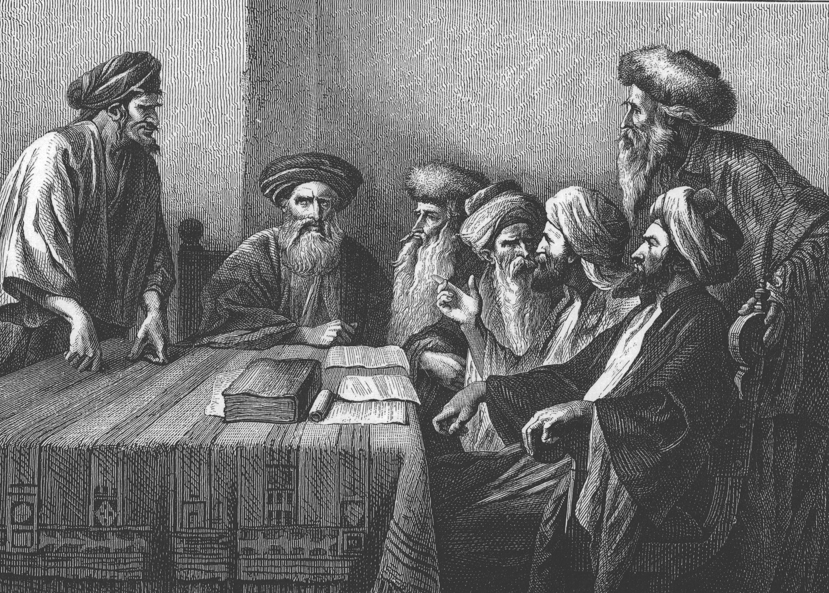
"Peter and John before the Sanhedrin"
- Artist unknown

TODAY'S SPECIAL: Acts 3-4; Psalm 120

TO CHEW ON: "Now when they saw the boldness of Peter and John, and perceived that they were uneducated and untrained men, they marveled. And they realized that they had been with Jesus." Acts 4:13

Peter and John have just got into their first scrap with the Jewish religious leaders. The lame man healed at the temple gate has opened the door to Peter's presentation of Jesus—who He was and is—and the receptivity of the audience galls the temple officials. They arrest Peter and John and, after a night in jail, these two appear before the high priest who asks, "By what power or by what name have you done this?"

Peter, with his post-Pentecost boldness declares, "...by the name of Jesus Christ of Nazareth .... Nor is there salvation in any other, for there is no other name under heaven, given among men, by which we must be saved" - Acts 4:10,12.

It is then these rulers make their telling observation: "... they realized they had been with Jesus." I like how Barnes Notes on the Bible enlarges on this moment:

"It is not said in what way they obtained this evidence, but the connection leads us to suppose it was by the miracle which they had performed, by their firm and bold declaration of the doctrines of Jesus, and perhaps by the irresistible conviction that none would be thus bold who had not been personally with him, and who had not the firmest conviction that he was the Messiah.


They had not been trained in their schools, and their boldness could not be attributed to the arts of rhetoric, but was the native, ingenuous, and manly exhibition of a deep conviction of the truth of what they spoke, and that conviction could have been obtained only by their having been with him..." Barnes Notes on the Bible.
This passage always pricks me, and leaves me with the question: Would people interacting with me, talking to me, reading me, detect that I have been with Jesus? What about you? Do we have that boldness of rock-solid faith in Him who said, "I am the way the truth and the life. No one comes to the Father except through me" (John 14:6)? Is there about our lives the perfume of His presence (2 Corinthians 2:14-16)?.

PRAYER: Dear Jesus, I want people to say of me, She has been with Jesus. Perhaps, in order for that to happen, I need to rearrange my priorities so that I actually spend more time with You. Amen.

PSALM TO PRAY: Psalm 120


The Bible Project VIDEO: The Holy Spirit (Theme Series)


***************
Unless otherwise noted all Scripture quotations are taken from the New King James Version®. Copyright © 1982 by Thomas Nelson, Inc. Used by permission. All rights reserved.

Monday, October 01, 2018

Dsicipleship's costs

Going forth to Calvary - Alexandre Bida
Going forth to Calvary - A. Bida
TODAY'S SPECIAL: Luke 14-16; Psalm 119:1-32


TO CHEW ON: "For which of you, intending to build a tower, does not sit down first and count the cost, whether he has enough to finish it?" Luke 14:28

The tower we're building, the war we're fighting is that of being a disciple—or not. Jesus here names three costs of discipleship. They are things that we should consider before we sign on:

1. The cost in relationships.
A disciple "hates" his family and his own life (Luke 14:26). What? My Bible elaborates:

"A disciple must subordinate all earthly relationships to loyalty to Christ. Jesus' remark is an example of Hebrew hyperbole to emphasize the subject being discussed. To 'hate' one's family is … but a way of expressing the importance of allegiance to Him" - J. Lyle Story, commentary on Luke, New Spirit-Filled Life Bible, p. 1417.

2. The cost in vocation and destiny.
A disciple follows Jesus carrying his cross - Luke 14:27 (not a suitcase, or a ladder, or a sword, or a throne… ).

I see this as Jesus' way of foreshadowing to the disciples how He would die, and telling them that discipleship may well be their death sentence too (as opposed to a means to security, success, power or glory).

3. The cost in possessions.
The disciple forsakes all that he has (Luke 14:33).

This sounds like turning one's back not only on possessions but also dreams, goals and ambitions.

"Discipleship means the total renunciation of all selfish interest for the sake of Jesus. 'Cannot be my disciple' is dealing with issues of total commitment and maximum realization of Christ's purpose for our lives in this life' - Ibid.

As I try to superimpose my North American lifestyle on this stark template of discipleship, I ask, has my discipleship affected my loyalties? Do I view it as a possible death sentence? Is everything in my life (possessions, home, time, plans) subservient to following Jesus? Now that I've looked at the cost, do I wish to carry on?

PRAYER: Dear Jesus, as I compare my life with Your cost, I see that my view of discipleship (at least my way of living it out) may be unrealistic. But with Peter, I say, "To whom shall we go? You have the words of eternal life" - John 6:68.  Help me to be a more realistic disciple. Amen. 

PSALM TO PRAY: Psalm 119:1-32


***********

The Holy Bible, New King James Version Copyright © 1982 by Thomas Nelson, Inc. - Used with permission.

Saturday, September 22, 2018

He put Himself in our hands

Judas guides the soldiers - Alexandre Bida
Judas guides the soldiers - A. Bida
TODAY'S SPECIAL: John 16-18; Psalm 110

TO CHEW ON:
 "Now when He said to them, 'I am He,' they drew back and fell to the ground." - John 18:5

Even in this darkest of moments, when one of Jesus' friends is in the act of betraying Him and another is about to deny Him, flashes of His God-essence come through. Otherwise what was it that caused these soldiers to "fall to the ground"?

"Man was not made to handle the electricity of God" someone once said (or words to that effect; I can't find the exact quote). Which makes what Jesus did when He surrendered Himself up to die for us all the more amazing. He could have immobilized that whole detachment long enough to get away. But instead, a little later when Peter did some damage with his sword in Jesus' defense, Jesus rebuked: "Put your sword into the sheath. Shall I not drink the cup which My Father has given Me?" - John 18:11.

In a few months we'll again celebrate Christmas and Jesus' birth. It's more evidence of how intentionally the God of the universe put Himself in human hands as He took on human flesh and surrendered Himself to the human condition. Let's let the enormity of what He did give depth and breadth to our praise, worship, and thanksgiving.

PRAYER:
Dear Jesus, Your life was not taken from You; You laid it down, and for me. Help me to comprehend just how amazing and wonderful this is. I thank You. Love, V. Amen. 

PSALM TO PRAY: Psalm 110

****************
Unless otherwise noted all Scripture quotations are taken from the New King James Version®. Copyright © 1982 by Thomas Nelson, Inc. Used by permission. All rights reserved.

Thursday, September 21, 2017

Unlikely disciple

"St. Matthew" by Pompeo Batoni

TODAY'S SPECIAL: Matthew 9:1-13


TO CHEW ON: "As Jesus passed on from there, He saw a man named Matthew sitting at the tax office and He said to him, 'Follow me.' So he arose and followed Him." Matthew 9:9


I love Matthew's uncomplicated faith, shown when he dropped everything and followed Jesus. Didn't he have to give this career change some thought? Apparently not. Or maybe he had given it thought, had become increasingly discontented with his job, was aware of Jesus, secretly longed to get to know Him better, and here was his opportunity.

Matthew is an interesting choice as a disciple. The Bible tells us he was a tax collector—one of a class of people who worked for the hated Romans. Tax collectors made their living by charging slightly higher fees than the Romans for general, agricultural, census, and traveler taxes. Licensed tax collectors often hired publicans to do the actual collecting. Publicans, who tacked on additional fees, were usually Jews and doubly despised as tax collectors and traitors.

Matthew was one of these publicans whose booth was beside the road outside Capernaum. In addition to collecting the road tax, he may also have collected taxes from fishermen. Imagine how the career fishermen (Andrew, Peter, James and John) must have felt when this loathed publican joined their band!

However, Jesus knew what He was doing when He chose Matthew. He was probably good with numbers and could read and write. He was well educated in the Scriptures, judging by how much of the Old Testament he had at his fingertips to quote in the Gospel of Matthew.

He also had a missionary bent, shown when he shared his new Rabbi with his friends. Though the book of Matthew doesn't name him as the host of the feast described in our reading, he is named that in Luke 5:29 (actually Luke calls him 'Levi'—another name he went by).

That desire to share Jesus eventually led to his writing of the history of the life of Christ we know as The Gospel According to Matthew. What a legacy!

  • It contains the only account of the wise men visit.
  • Its detailed account of the Jesus' teachings (called the Sermon on the Mount) is three chapters long (Matthew 5:1-7:29) versus Luke's twenty-nine verses (Luke 6:20-49).
  • It contains parables of the Day of Judgment found in no other gospel (Matthew 24)
  • It emphasizes Jesus as the fulfillment of Old Testament prophecy.
  • It stresses that Jesus was Messiah.
  • It depicts Him as King.
What an amazing contribution from someone who came from the most despised category of people, "tax collectors and sinners," whom Jesus Himself characterized as sick: "'Those who are well have no need of a physician but those who are sick'" - Matthew 9:12.

The story of Matthew should give all of us hope. For when Jesus calls us, He sees right through our family and job categories. He is not influenced by the labels others put on us or we put on ourselves. When He says "Follow Me" and we jump up and follow Him, we set out on the road to discover a potential and a destiny we never dreamed possible.

PRAYER: Dear God, thank You for Matthew (Levi), a tax collector who became the writer of a history that has influenced millions. Help me to trust You with my future like he trusted You with his. Amen.

MORE: The Feast of St. Matthew

Today the church celebrates the Feast of St. Matthew. The liturgy for the day begins with the following collect:

"We thank you, heavenly Father, for the witness of your apostle and evangelist Matthew to the Gospel of your Son our Savior; and we pray that, after his example, we may with ready wills and hearts obey the calling of our Lord to follow him; through Jesus Christ our Lord, who lives and reigns with you and the Holy Spirit, one God, now and for ever. Amen."

Sources:
Unless otherwise noted all Scripture quotations are taken from the New King James Version®. Copyright © 1982 by Thomas Nelson, Inc. Used by permission. All rights reserved.


Bible Drive-Thru


Thursday, April 13, 2017

Devilish Judas spirit

Judas before the Sanhedrin - Alexandre Bida
Judas before the Sanhedrin - by Alexandre Bida

TODAY'S SPECIAL: Matthew 27:1-26

TO CHEW ON: "Then Judas, His betrayer, seeing that He had been condemned, was remorseful and brought back the thirty pieces of silver to the chief priests and elders."  Matthew 27:3

I have thought a lot about Judas. What drove him to betray Jesus? What inner need was he giving in to?

Our passage today implies (when it says "…seeing He had been condemned, was remorseful…") that he may have thought his actions of betrayal would force Jesus' hand. Perhaps he thought that Jesus would again slip out of the grasp of the scribes and Pharisees as He had at other times. And this time, He would assert Himself as Messiah and show Himself to be the human King of the Jews.

We know that the other disciples had co-ruler ambitions. The mother of James and John asked that her sons have special positions in Jesus' kingdom. How much more Judas, who handled the money and already dipped into their common purse for his own use? In other words. I believe Judas thought his relationship with Jesus was a means to improve his own fortunes.

Are we so different? Don't we also often think of ourselves as the privileged chosen who, because of our relationship with Jesus will escape sickness and money problems, will have good families and successful businesses? What happens when things don't turn out the way we expect? Might we also be tempted to try to manipulate Him to follow our agenda? (You didn't hold up your end of the bargain, so I'll turn my back on You. Pout, pout.)

But Jesus had told them that following Him would include more than blessing and well-being:

"'Assuredly I say to you, there is no one who has left house or brothers or sisters of father or mother or wife or children or lands for My sake and the gospel's who shall not receive a hundredfold now in this time—house and brothers and sisters and mothers and children and lands, with persecutions—and in the age to come, eternal life'" - Mark 10:29,30 (emphasis added).

Let's be watchful over our own motivations, careful to recognize and deal with any selfish ambition that might, if left to grow, sabotage our loyalty to Him when His plans for us turn out to be entirely different than we had imagined.

(Jesus' description of Judas is strong: "…one of you is a devil" - John 6:70.)

PRAYER: Dear Jesus, please help me to love and follow You, not for selfish gain but because You are truth and life (John 6:67,68). Amen.

MORE: Maundy Thursday

Today is Maundy Thursday, the church feast that commemorates the Last Supper Jesus celebrated with His disciples. Here is the Collect that begins the day's liturgy.

Almighty Father, whose dear Son, on the night before he suffered, instituted the Sacrament of his Body and Blood: Mercifully grant that we may receive it thankfully in remembrance of Jesus Christ our Lord, who in these holy mysteries gives us a pledge of eternal life; and who now lives and reigns with you and the Holy Spirit, one God, for ever and ever. Amen.

 *********
Unless otherwise noted all Scripture quotations are taken from the New King James Version®. Copyright © 1982 by Thomas Nelson, Inc. Used by permission. All rights reserved.

Sunday, February 19, 2017

The love gene

Image: Pixabay
TODAY’S SPECIAL: Matthew 5:38-48

TO CHEW ON: ‘But I say to you, love your enemies, bless those who curse you, do good to those who hate you, and pray for those who spitefully use you and persecute you that you may be sons of your Father in heaven.'”  Matthew 5:44,45


The list of do’s and don’ts in our passage today reminds us a lot of yesterday’s list from Leviticus 19. There is even the same motivation: love (Leviticus 19:18; Matthew 5:44).

However, Jesus goes further than the command to love one’s neighbor (hard enough) to say that disciples—we—should love even our enemies.

How can He expect this of us?

He showed us how by His example

  • By what He said: John 3:16; Matthew 5:44
  • Through His life:
 * He had compassion on the crowds, whatever their beliefs (Matthew 9:36; 14:14).

* He cried over Jerusalem whose citizens were rejecting Him (Matthew 9:36).

* He healed the ear of one of the soldiers who came to arrest Him and prayed for forgiveness of those who mocked Him while on the cross (Luke 22:41; 23:34).

  • In His death: 
* It’s how His followers (here Paul) understood His death: “ For when we were still without strength, in due time Christ died for the ungodly. For scarcely for a righteous man will one die; yet perhaps for a good man someone would even dare to die. But God demonstrates His own love toward us, in that while we were still sinners, Christ died for us”  Romans 5:6-8.

The Holy Spirit gives us this heart transplant. 
It is only through the Holy Spirit that we become carriers of this family love gene.


* “'But you shall receive power when the Holy Spirit has come upon you; and you shall be witnesses to Me in Jerusalem, and in all Judea and Samaria, and to the end of the earth'” - Acts 1:8

*“Now hope does not disappoint, because the love of God has been poured out in our hearts by the Holy Spirit who was given to us.” Romans 5:5.

*“But the fruit of the Spirit is love…” Galatians 5:22


*“Since you have purified your souls in obeying the truth through the Spirit in sincere love of the brethren, love one another fervently with a pure heart, 1 Peter 1:22.

Perhaps the extent to which we do (or don’t) love our neighbors and our enemies says something about how much of our lives the Holy Spirit has access to.

PRAYER: Dear Jesus, the command to display this family trait of love, even when it feels entirely unnatural, is a wake-up call to me to allow Your Spirit greater control of my life. Please help me in this. Amen.

 *********
Unless otherwise noted all Scripture quotations are taken from the New King James Version®. Copyright © 1982 by Thomas Nelson, Inc. Used by permission. All rights reserved.


Thursday, May 05, 2016

Forty-day seminar

"Jesus appears to His disciples" - Alexandre Bida

TODAY'S SPECIAL: Acts 1:1-11


TO CHEW ON: "…to whom He also presented Himself alive after His suffering by many infallible proofs, being seen by them during forty days and speaking of the things pertaining to the kingdom of God." Acts 1:3

How I would love to have been present in the room with the disciples during Jesus' post-resurrection teaching sessions!

Matthew describes the disciples meeting with Jesus on the mountain in Galilee. He left them with the assignment we call the Great Commission (Matthew 28:18-20).

Mark describes Jesus meeting the eleven disciples for a meal when he rebuked them for not believing the word of previous eye-witnesses. Mark ends His gospel with another version of the Jesus' Great Commission - Mark 16:15-18.

Luke's gospel has the story of the disciples on the road to Emmaus where Jesus says to the two (after they have told Him their tale of grief over Jesus' death and disappointment over dashed hopes that He would have redeemed Israel): "'O foolish ones … Ought not the Christ to have suffered these things and to enter into His glory?'" And beginning at Moses and all the Prophets, He expounded to them an all the Scriptures the things concerning Himself" - Luke 24:25-27.

When these same two disciples hurried back to Jerusalem to tell the others, Jesus appeared among them and again ended up teaching: "He opened their understanding that they might comprehend the Scriptures" - Luke 24:45.

And here in Acts, author Luke talks of Jesus "speaking of the things pertaining to the kingdom of God."

Even so, some didn't get it. For they ask, "'Lord, will You at this time restore the kingdom to Israel?'" Jesus' answer gently turns their attention away from immediate national concerns to the next step. It's not your business to know what God has planned, he tells them, but you will receive Holy Spirit power to witness to Me everywhere (Acts 1:7,8).


Jesus' teaching does eventually sink in. I know of no record in the New Testament or tradition that tells of any of the eleven disciples defecting from faith because the political scene didn't change.Their protegé Paul, who wrote many of the New Testament books, was clear on the place of Jesus in the continuum of God's plan and explained it explicitly. So it's obvious that these disciples came to understand what Jesus was talking about. Still, it  would have been wonderful to hear Jesus explain it firsthand.

The challenge to us is, do we believe the rich body of evidence we have? Do we take advantage of the many resources that help us coordinate the Jesus of history with the Jesus of prophecy? Do we understand our place in history? Or would Jesus' rebuke of some His disciples of having hard, unbelieving hearts, way too often fit us?


PRAYER: Dear God, thank You for Your rich word—the story of Your plan to save humankind from sin. Help me to understand  it, believe it, and myself become part of the story of the kingdom of God. Amen.

MORE: Ascension Day

Today the church celebrates the ascension of Christ into heaven. The Ascension Day liturgy begins with this collect:

Almighty God, whose blessed Son our Savior Jesus Christ ascended far above all heavens that he might fill all things: Mercifully give us faith to perceive that, according to his promise, he abides with his Church on earth, even to the end of the ages; through Jesus Christ our Lord, who lives and reigns with you and the Holy Spirit, one God, in glory everlasting. Amen.

*********
Unless otherwise noted all Scripture quotations are taken from the New King James Version®. Copyright © 1982 by Thomas Nelson, Inc. Used by permission. All rights reserved.

Monday, August 10, 2015

Offended, turned off, turning back

"Jesus Preaching In the Temple"
-Pierre Louis Van Schuppen

Jesus Preaching in the Temple by Pierre Louis Van Schuppen
TODAY'S SPECIAL: John 6:52-71

TO CHEW ON: "Therefore many of His disciples, when they heard this said, 'This is a hard saying; who can understand it?' .... From that time many of His disciples went back and walked with Him no more." John 6:60,66

The disciples' offense arose out of Jesus' controversial statements about eating His flesh and drinking His blood. They couldn't understand it and it turned them off Jesus - John 6:53-59.

We are not immune from being offended by Jesus and what the Bible teaches. Though it may be a different set of concepts that give offense, people are turned off and turn back as much as ever. Even us so-called believers.

Who of us, for example, hasn't felt a twinge of offense when we envision Jesus' teachings fleshed out in our lives in the areas of:
- non-resistance to an evil person - Matthew 5:39-42.
- loving our enemies - Matthew 5:44.
- the exclusivity of "the way" - Matthew 7:13-14.

Jesus' clear teaching about hell, a place of eternal torment (Matthew 18:9, 25:30; Luke 16:24) is in disfavor among some Christians these days.

So is the Bible's stance on some issues of morality. I recently became aware of the Episcopal Church's rejection of the English Standard Version of the Bible because of its plain speech condemning homosexuality in 1 Corinthians 6:9. (Trouble is, they've already approved the RSV, NIV, CEV and other versions where the language is just as clear - article here)

Jesus' reported words and the teachings of the early church's apostles leave lots of room for faith and trust in areas that we can't make sense of with our minds or that don't fit with our current culture. Let's not let a lack of cerebral understanding or the fear of being politically incorrect cause us to go back and walk with Him no more, as it did some of Jesus' first century disciples.

PRAYER: Dear God, please develop in me spiritual understanding that is not offended by things I must take by faith. Amen. 

**********
Unless otherwise noted all Scripture quotations are taken from the New King James Version®. Copyright © 1982 by Thomas Nelson, Inc. Used by permission. All rights reserved.

Bible Drive-Thru


Wednesday, July 22, 2015

Do we hear but not hear?

Pisidian Antioch - Illustration from Thomas Lewin's Life of Paul
Pisidian Antioch - Illustrations from Thomas Lewin's Life of Paul

TODAY'S SPECIAL: Acts 13:13-35

TO CHEW ON: "'For those who dwell in Jerusalem, and their rulers, because they did not know Him, nor even the voices of the Prophets which are read every Sabbath, have fulfilled them in condemning Him'" - Acts 13:27

Here Paul is preaching in the Antioch synagogue. In his talk he tells the story of his people and God's dealings with them. He mentions their enslavement in Egypt, their wilderness wanderings, their conquest of Canaan, their rule by judges, their first kings Saul and David. That latter was to be father of Messiah. Then Paul identifies Him—Messiah—as Jesus and describes how their own rulers put Him to death.

What's chilling in the way he tells it is that these leaders should have known better. Because of their exposure to the Prophets "which are read every Sabbath" they should have recognized how Jesus fulfilled prophecies spoken in Isaiah 7:14, 11:1; Micah 5:2; Daniel 9:25; Zechariah 9:9 and elsewhere. But they didn't. What an irony when they ended up fulfilling more of those very prophecies as they condemned Jesus to death: Psalm 69:21; Isaiah 53:1-9.

We too can hear and not hear. Jesus describes such deaf hearing in His parable of the sower. He diagnoses it three ways:
  • People hear but the devil comes and takes away the word out of their hearts - Luke 8:12.
  • People hear and respond but the response is superficial. Temptation pulls up their shallow-rooted new life - Luke 8:13.
  • People hear but immediately crowd out any chance that the word will germinate with other things: cares, riches, and pleasures - Luke 8:14 (Facebook, Twitter, Pinterest, the news, TV?).

Perhaps their closed-ear reaction is one reason Paul says one verse earlier: "Men and brethren, sons of the family of Abraham, and those among you who fear God, to you the word of salvation has been sent" - Acts 13:26 (emphasis added)

We too can prove that this "word of salvation" has been sent to us by fearing God and really hearing and taking His word—about us, our sinful state, how we need a Savior, and how our life will change as we become His disciples—seriously.

PRAYER: Dear God, I don't want to be one of the people exposed to truth but unresponsive to it. Please help me to listen, hear, and 'fear.' Amen.

***********

The Holy Bible, New King James Version Copyright © 1982 by Thomas Nelson, Inc. - Used with permission.

Bible Drive-Thru


Wednesday, May 06, 2015

Are you one of God's favourites?

TODAY'S SPECIAL: John 21:15-25

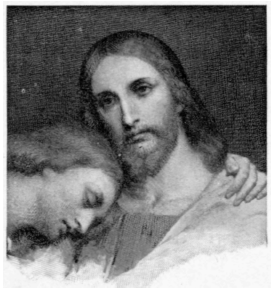
TO CHEW ON: "Then Peter turning around, saw the disciple whom Jesus loved following, who also had leaned on His breast at the supper, and said, 'Lord, who is the one who betrays you?'" John 21:20

John, one of Jesus' first followers who later wrote the Gospel of John, the three letters 1, 2 and 3 John, and Revelation, also had his flaws. The Bible writers show him to be:

  • Explosive: He, along with his brother James, were known as "Sons of Thunder" - Mark 3:17.
  • Intolerant: He stopped someone who wasn't part of their group from casting out demons in Jesus name. Jesus set him straight - Mark 9:38-39.
  • Vindictive: When Jesus and His disciples passed through Samaria and the locals didn't welcome Him, James and John (those Sons of Thunder) asked, "Lord, do you want us to command fire to come down from heaven and consume them?" Jesus' reply was scathing: "You do not know what manner of spirit you are of..."- Luke 9:51-55.
  • Ambitious: In company with his brother James, he asked to be seated beside Jesus when He set up His kingdom. Again Jesus put the boys firmly in their place: "You do not know what you ask!" In fact, their ambition threatened to divide the disciples until Jesus turned their request into a lesson about true greatness - Mark 10:35-40.

Yet, in spite of all the times John messed up and Jesus scolded him, he sensed that he was uniquely loved. Numerous times he refers to himself as "The disciple whom Jesus loved" (John 13:23; 19:26; 20:2; 21:20).

Though we may have felt, if we were one of the disciples, that John's claim was abrasive ('You mean He loves you more than the rest of us?') I can't help but think it warmed Jesus' heart. Just as we want our kids, friends, and the people with whom we do life to sense that we love them, I believe Jesus saw the love response of John's heart toward His love, and was honored and blessed by it.

Do you and I have such an intimate and trusting relationship with Jesus that we could say we are the ones Jesus loves--indeed, the ones He loves best? I believe that's what He wants. Look how He prayed for us:

"And I have declared to them Your name and will declare it that the love with which You loved Me may be in them, and I in them" - John 17:26

PRAYER: Dear Jesus, help me to sense my special place in Your heart without making a competition of it. Please teach me about the love You prayed I would have. Amen.

********
Unless otherwise noted all Scripture quotations are taken from the New King James Version®. Copyright © 1982 by Thomas Nelson, Inc. Used by permission. All rights reserved.

Bible Drive-Thru


Saturday, April 04, 2015

Secret disciple

"Joseph of Arimathea" 
by James Tissot

Joseph of Arimathea by James Tissot
TODAY'S SPECIAL: Mark 15:40-47


TO CHEW ON: "Joseph of Arimathea, a prominent council member who was himself waiting for the kingdom of God, coming and taking courage, went to Pilate and asked for the body of Jesus." Mark 15:43

Joseph of Arimathea is an interesting character in the story of Jesus' passion. Our focus verse tells us five things about him.

1. "Joseph of Arimathea"
His name and address. Matthew also mentions that he was rich (Matthew 27:57) and Luke describes him as a "good and just man" (Luke 23:50).

2. He was "a prominent council member."
This is the council that Mark mentions several times in his account. After Jesus' arrest, the soldiers delivered him to the council who "sought testimony against Jesus to put him to death but found none" - Mark 14:55. It was in the council meeting that the beatings began (Mark 14:65). And it was the council that the chief priests, elders, and scribes consulted before they led Jesus to Pilate (Mark 15:1).

3. He "was himself waiting for the kingdom of God."
Matthew says more particularly "who himself had become a disciple of Jesus" (Matthew 27:57). John sheds even more light when he describes Joseph as a secret disciple "for fear of the Jews" (John 19:38).

4. "...coming and taking courage..."
Despite his wealth, prominence, and reputation, asking Pilate for Jesus' body demanded courage from Joseph. John's mention of Joseph's fear of the Jews makes us suspect he also needed courage to face them when he finally showed himself loyal to Jesus in this way. He wasn't alone, though. Nicodemus, another secret disciple, joined him in caring for Jesus' body (John 19:38-42).

5. He "asked for the body of Jesus."
He procured Jesus' body and then used his own resources to prepare and bury it in a new tomb, never used, but that he had prepared for himself (Mark 15:45-46; Matthew 27:59-60; Luke 23:53).


Some thoughts about Joseph of Arimathea and us:

1. Even the council had its disciples.  

Still today God has "spies" in the most unusual places.

2. One can only imagine the anguish Joseph went through as he listened to the council discuss Jesus' case. Should he stand up for Jesus or not? What would happen to him if he did? Then, when Jesus was crucified and died, how he must have berated himself. Maybe if he had spoken up, he could have made a difference. 

Are we ever secret disciples? Have we considered what that means in terms of regret, guilt, and final consequence (Mark 8:38; 2 Timothy 2:12)?

3. I love how Joseph finally gave the best that he had, even though it appeared to be too late. He filled a practical need by caring for Jesus with his resources.

His act makes me ask, how can I help? It may be in ways that don't appear remotely spiritual.


PRAYER: Dear Jesus, Joseph of Arimathea is a sobering character to me. Help me to be a public, not a secret disciple. Amen.

MORE: Joseph of Arimathea - a poem

John Piper has written a lengthy and imaginative poem about Joseph of Arimathea.

Here is one stanza from Part 2, where we see Joseph removing Jesus from the cross:

Then Joseph stood and raised his plain

And heavy ladder high, and placed

It on the bloody beam, and braced

It just above the Savior's pale

Gray arm. He bound with rope the frail,

Limp body of the Lord on beam

And post. And then, against a scream

From Jesus' mother, stifled in

Her hand, he slowly cut through skin

And ligament beside the spikes

With heads made flat by many strikes

From Roman mallets. Then he clenched

The knife between his teeth and wrenched

Each hand of Jesus off its rough

And jagged nail through tendons tough,

But careful not to break a bone.

- By John Piper. © Desiring God. Website: desiringGod.org

Read entire: Joseph of Arimathea - Part 1 | Joseph of Arimathea - Part 2

***********
Unless otherwise noted all Scripture quotations are taken from the New King James Version®. Copyright © 1982 by Thomas Nelson, Inc. Used by permission. All rights reserved.

Bible Drive-Thru


Wednesday, November 26, 2014

Discipleship's costs

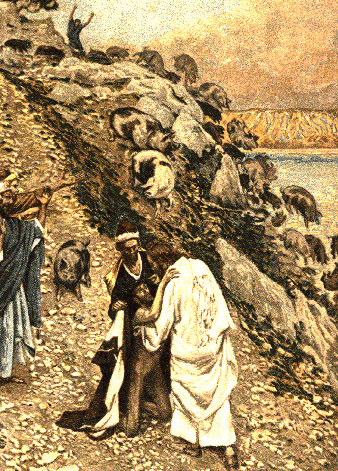
Jesus heals the demoniacs - Artist unknown
TODAY'S SPECIAL: Matthew 8:18-34

TO CHEW ON: "Then a certain scribe came and said to Him, 'Teacher, I will follow You wherever You go.' And Jesus said to him, 'Foxes have holes and birds of the air have nests but the Son of Man has nowhere to lay His head.' " Matthew 8:20

Yesterday we saw Jesus the mentor/rabbi pouring Himself into crowds and individuals, Jews and Gentiles, strangers and friends, untouchables and undiagnosables. I'm sure His disciples were getting the idea—this teacher is a challenge to emulate!

In our reading today He outright says some things about the cost of discipleship that probably left no doubt in His disciples' minds that they had embarked on a humanly impossible life.

Translated into today-speak for us:

1. Discipleship may cost some of the things to which we think we're entitled
—like a home address (Matthew 8:19-20).

2. Discipleship will impinge on relationships and obligations
—like family responsibilities (Matthew 8:21-22).

3. Discipleship may thrust us into situations that feel dangerous and where our faith will be stretched.
In our reading the disciples drift right into a storm. In the tempest-tossed boat, Jesus says to them, " 'Why are you fearful, O you of little faith,' " before He takes care of the storm (Matthew 8:23-26).

4. Discipleship can be thankless.
The people of the Gergesene-area city near where Jesus cast demons from two men have no compassion for the men or gratitude that they've been set free. Rather, they are upset because of the drowned hogs and beg Jesus to leave (Matthew 8:28-34).

I ask myself am I realistic about discipleship's costs? Are you? Or are we caught off-guard when life's hand is out, demanding such payments from us?


PRAYER: Dear Jesus, help me to count the cost of discipleship and choose day by day to continue as Your disciple. Amen.

 *********
Unless otherwise noted all Scripture quotations are taken from the New King James Version®. Copyright © 1982 by Thomas Nelson, Inc. Used by permission. All rights reserved.


Sunday, May 04, 2014

Restrained eyes

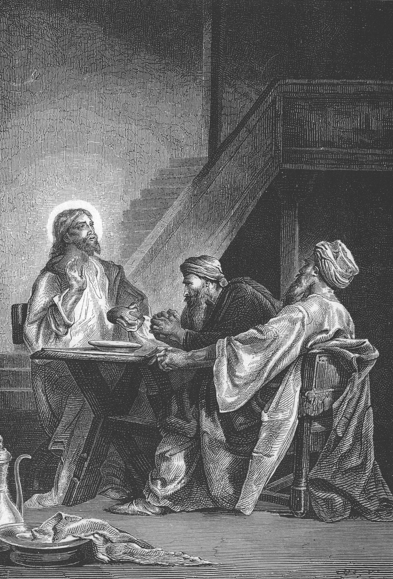
Disciples at Emmaus - Alexandre Bida

TODAY'S SPECIAL: Luke 24:13-35

TO CHEW ON: "But their eyes were restrained, so that they did not know Him." - Luke 24:16

Has this happened to you? There is something you must remember. You remind yourself over and over about the thing. Yet when the time comes to take action, that thing completely slips your mind. When the opportunity for action has passed, you remember it again and mentally (maybe out loud too) beat yourself up for being so forgetful.

Or you lose something. You look high and low for it but it's nowhere to be found. Later you find it in some obvious place.

I think of the two Emmaus disciples when things like the above happen to me. Like them, I have begun to suspect that sometimes my eyes are supernaturally "restrained."

We're often hard on these disciples, saying if they would have listened to Jesus more closely during His ministry and really heard His teaching, then His crucifixion and resurrection would  have been no surprise to them. (Of course that doesn't take into account how the post-resurrection physical appearance of Jesus may have changed.)

But I think God blinded their eyes to Jesus' identity intentionally.

Think of the teaching they would have missed if they had recognized Him right away and returned excitedly to Jerusalem at the beginning of their journey.
"And beginning at Moses and all the Prophets, He expounded to them in all the scriptures the things concerning Himself" - Luke 24:27.

Think of the companionship and sweet fellowship experience of that afternoon walk with their risen Saviour and how this personal interaction with Jesus will give heart and warmth to their testimony.

Think of the last sight they have of Him: "Now it came to pass as He sat at the table with them, that He took bread, blessed and broke it and gave it to them"  (Luke 24:30).  Think how that sight brings back memories, solidifies their connection with Him, and gives them hints about their mission:
"He took the five loves and the two fish and looking up to heaven, He blessed and broke them and gave them to the disciples to set before the multitude" (of 5,000) - Luke 9:16.
"And He took the seven loaves and the fish and gave thanks and broke them and gave them to His disciples; and the disciples gave it to the multitude (of 4,000) - Matthew 15:36.
"And He took bread and gave thanks and broke it and gave it to them saying, 'This is My body, given for you, do this in remembrance of Me'" - Luke 22:19 (emphasis added)

I try now, when I sense my eyes have been restrained, to ask for insight into what I am to learn. For I believe God is in our times of restrained sight as much as in our times of illumination.

PRAYER: Dear Jesus thank You for this tender story that I can relate to so well. Help me to understand that even my apparent mess-ups—forgetting things, losing things—can turn out to be blessings from You. Amen.

 *********
Unless otherwise noted all Scripture quotations are taken from the New King James Version®. Copyright © 1982 by Thomas Nelson, Inc. Used by permission. All rights reserved.


Bookmark and Share


Thursday, May 01, 2014

Die to live

new plant
TODAY'S SPECIAL: 2 Corinthians 4:1-15

TO CHEW ON: "We are hard-pressed on every side, yet not crushed; we are perplexed, but not in despair; persecuted, but not forsaken; struck down, but not destroyed—always carrying about in the body the dying of the Lord Jesus, that the life of Jesus also may be manifested in our body." 2 Corinthians 4:8-10

Life out of death is one of the Bible's recurring themes. We ask, how can it be? Yet at some deep level we grasp its truth.

The principle of life out of death:
  • Is seen in nature: "'… unless a grain of wheat falls into the ground and dies it remains alone, but if it dies, it produces much grain'" - John 12:22 (also 1 Corinthians 15:36).
  • Is demonstrated in believer's baptism - Romans 6:4.
  • Jesus described it as a condition for following Him - Luke 9:24.
  • Becomes personal as we apply verses like Galatians 2:20 ("I have been crucified with Christ; it is no longer I who live but Christ lives in me…")  and Colossians 3:3 ("For you died and your life is hidden in Christ with God").

I suppose this crucifixion or death will mean something slightly different to each one of us. But overall it implies that we give up our rights to ourselves, our agendas, possessions, families, vacations, how we spend our time, always ready to come or go at His beck and call.

Radical? Yes.

Nonsensical? No.

The result is worth if, for if we have "died"  the "… life of Jesus may be manifested in our mortal flesh" (2 Corinthians 4:11); "…the life which I now live in the flesh I live by faith in the Son of God (Galatians 2:20); "… your life is hid with Christ in God (Colossians 3:3); " … you also will appear with Him in glory" (Colossians 3:4).  (Emphasis added.)

PRAYER: Dear God, please help me to know the practical outworking of what it means to lose myself for Your sake, to be crucified and die to myself on this day, not as theory but in actual living. Amen.

MORE: Feast of St. Philip and St. James

Today the church celebrates two of the apostles who followed Jesus in this way: Philip and James. The day's liturgy begins with this collect:

Almighty God, who gave to your apostles Philip and James grace and strength to bear witness to the truth: Grant that we, being mindful of their victory of faith, may glorify in life and death the Name of our Lord Jesus Christ; who lives and reigns with you and the Holy Spirit, one God, now and for ever. Amen.


 *********
Unless otherwise noted all Scripture quotations are taken from the New King James Version®. Copyright © 1982 by Thomas Nelson, Inc. Used by permission. All rights reserved.


Bookmark and Share


Sunday, January 19, 2014

Andrew - bit player

TODAY'S SPECIAL: John 1:29-42

TO CHEW ON: "One of the two who heard John speak and followed him was Andrew, Simon Peter's brother. He first found his own brother Simon and said to him, 'We have found the Messiah' (which is translated the Christ)." John 1:40-41

Andrew is one of those mid-list disciples — not a spotlight one like Peter, John, or Judas, but neither known only by his name, like Bartholomew or Simon the Canaanite.

Here are some things the Bible tells us about Andrew:

1. He was a fisherman and Simon Peter's brother (in fact, his relationship with his brother is usually tagged onto his name, seemingly becoming part of his identity). (Matthew 4:18).

2. He was a seeker. Originally he was a disciple of John the Baptist—apparently one activity he didn't share with his brother (John 1:40).

3. When John pointed out Jesus as the Lamb of God, Andrew left John and followed Jesus, spending a day in His home (John 1:39).

4. That day must have made quite an impression on him, for shortly after he brought his brother Simon to meet Jesus (John 1:42).

5. Later, after John was put in prison and Simon and Andrew were back fishing, Jesus' simple invitation "Follow me, and I will make you fishers of men," prompted the response: "They immediately left their nets and followed Him" (Matthew 4:19-20).

6. It was Andrew who brought the boy with the five barley loaves and two fish to Jesus (John 6:8-9).

7. Andrew was also instrumental in introducing some curious Greek seekers to Jesus (John 12:21-22).

8. He is named with the other disciples as one of those gathered in the upper room after Jesus' ascension, waiting the gift of the Holy Spirit (Acts 1:13).

I like this simple fisherman, keen for truth, with his helpful ways. He was a natural at networking, introducing people to Jesus, taking note of significant details, helping the outsiders, seamlessly playing his part within the body of believers.

Paul likens the part we each play in the church to the variety of parts in our physical bodies (1 Corinthians 12). We can't all be the most prominent ones—the mouths, the feet, the hands. Some of us are parts that are less showy. Andrew seems to have got that. I see him as someone who wasn't at all bothered about not being like his more outspoken and influential brother Peter. He was satisfied to be just who he was. May we all be as content fulfill our roles in Christ's body, whether hidden or high profile.

PRAYER: Dear Lord, thank You for the amazing organism that is the church. Help me to find my place and live it without jealousy or fear. Amen.

**********
Unless otherwise noted all Scripture quotations are taken from the New King James Version®. Copyright © 1982 by Thomas Nelson, Inc. Used by permission. All rights reserved.


Monday, November 18, 2013

Opportunities for testimony

TODAY'S SPECIAL: Luke 21:7-24

TO CHEW ON: "'But it will turn out for you as an occasion for testimony.'" Luke 2:13

As part of His grim prediction of the future, Jesus tells his disciples things will not go well with them. They will be persecuted and brought  before synagogue brass and jailers, kings and other secular rulers. But there is a bright ray in connection with this. Their inquisition will turn out as an occasion for testimony—the declaration of their personal experience with God.

Of course opportunities for testimony aren't limited to times of conflict with the spiritual-belief police.
  • Some lepers in the Old Testament felt compelled to give the good news of the food they had discovered to those starving in the city. This reminds us that we must give our testimony of how we found the spiritual food of salvation to those starving spiritually - 2 Kings 7:9.
  • The psalmist reminds us who have been "redeemed form the hand of the enemy" (Satan) to "say so" - Psalm 107:2.
  • We testify to God's deeds and working in our lives - Isaiah 12:4.
  • We testify with the unceasing alertness of watchmen on city walls - Isaiah 62:6.
  • We testify at home - Mark 6:18, 19.
  • We testify around the world - Acts 1:8.
  • We testify to each other at church - Ephesians 5:19.
  • We testify without embarrassment or shame - 2 Timothy 1:18.
  • We're always ready to explain the reason for the hope that is in us - 1 Peter 3:15.
  • But we shouldn't be overly concerned about what we're going to say, even when brought before the harshest judges. For in this passage Jesus reminds us: "'Therefore settle it in your hearts not to meditate beforehand on what you will answer, for I will give you a mouth and wisdom which all your adversaries will not be able to contradict or resist'" - Luke 21:14,15.

I wonder, what occasion for testimony will come our way today! Let's be alert and sensitive to promptings and opportunities to testify.

PRAYER:
Dear Jesus, please help me to be alert to openings to speak of my experience with You, what You've done for me and Your love and forgiveness available to everyone who trusts You. Amen.

***********

New King James Version (NKJV) Used with permission. The Holy Bible, New King James Version Copyright © 1982 by Thomas Nelson, Inc.

Bible Drive-Thru


Bookmark and Share


Friday, September 21, 2012

Unlikely disciple

"St. Matthew" by Pompeo Batoni

St. Matthew by Pompeo Batoni
TODAY'S SPECIAL: Mark 2:13-22


TO CHEW ON: "As He passed by, He saw Levi the son of Alphaeus sitting at the tax office. And He said to him, 'Follow Me.' So he arose and followed Him." Mark 2:14

I love Levi's (Matthew's) uncomplicated faith, shown when he dropped everything and followed Jesus (here and in Luke, Matthew is called called Levi). Didn't he even have to give this career change some thought? Apparently not. Or maybe he had given it thought, had become increasingly discontented with his job, was aware of Jesus, secretly longed to get to know Him better, and here was his opportunity.

Matthew is an interesting choice as a disciple. The Bible tells us he was a tax collector—one of a class of people who worked for the hated Romans. Tax collectors made their living by charging slightly higher fees than the Romans for general, agricultural, census, and traveler taxes. Licensed tax collectors often hired publicans to do the actual collecting. Publicans, who tacked on additional fees, were usually Jews and doubly despised as tax collectors and traitors.

Matthew was one of these publicans whose booth was beside the road outside Capernaum. In addition to collecting the road tax, he may also have collected taxes from fishermen. Imagine how the career fishermen (Andrew, Peter, James and John) must have felt when this loathed publican joined their band!

However, Jesus knew what He was doing when He chose Matthew. He was probably good with numbers and could read and write. He was well educated in the Scriptures, judging by how much of the Old Testament he had at his fingertips to quote in the Gospel of  Matthew.

He also had a missionary bent, shown when he shared his new Rabbi with his friends. For shortly after accepting Jesus' call, he hosted a dinner for his "tax collector and sinner" friends.

That desire to share Jesus eventually led to his writing of the history of the life of Christ we know as The Gospel According to Matthew. What a legacy!

  • It contains the only account of the wisemen visit.
  • Its detailed account of the Jesus' teachings (called the Sermon on the Mount) is three chapters long (Matthew 5, 6 & 7) versus Luke's 29 verses (Luke 6:20-49).
  • It contains parables of the Day of Judgement found in no other gospel (Matthew 24)
  • It emphasizes Jesus as the fulfillment of Old Testament prophecy.
  • It stresses that Jesus was Messiah.
  • It depicts Him as King.
What an amazing contribution from someone who came from the most despised category of people, "tax collectors and sinners," whom Jesus Himself characterized as sick: "Those who are well have no need of a physician but those who are sick" - Mark 2:17 (and Matthew 9:12).

The story of Matthew should give all of us hope. For when Jesus calls us, He sees right through our family and job categories. He is not influenced by the labels others put on us or we put on ourselves. When He says "Follow Me" and we jump up and follow Him, we set out on the road to discover a potential and a destiny we never dreamed possible.

PRAYER: Dear God, thank You for Matthew (Levi), a tax collector who became the writer of a history that has influenced millions. Help me to trust You with my future like he trusted You with his. Amen.

MORE: The Feast of St. Matthew

Today the church celebrates the Feast of St. Matthew. The liturgy for the day begins with the following collect:

"We thank you, heavenly Father, for the witness of your apostle and evangelist Matthew to the Gospel of your Son our Savior; and we pray that, after his example, we may with ready wills and hearts obey the calling of our Lord to follow him; through Jesus Christ our Lord, who lives and reigns with you and the Holy Spirit, one God, now and for ever. Amen."

Sources:
(From the archives)

***********

Newly released from Word Alive Press: Destiny's Hands.

Order yours today!

Bible Drive-Thru


Bookmark and Share


Wednesday, April 04, 2012

Watch and pray

"The sleep of the disciples"
Alexandre Bida

TODAY'S SPECIAL: Mark 14:32-65

TO CHEW ON: "'Simon, are you sleeping? Could you not watch one hour? Watch and pray lest you enter into temptation. The Spirit indeed is willing but the flesh is weak.'" Mark 14:37-38


Jesus' first request that His inner circle stay awake and watch while He has it out with His Father seems rooted in His need for their spiritual support of Him (Mark 14:34). His second request implies they needed to watch and pray for their own sakes, "...lest you enter into temptation."

Bible writers link sleep with a dangerous spiritual state in other places.
  • Isaiah talks about sleeping watchmen - Isaiah 56:10.
  • Jesus speaks of the master of the house returning to find His servants and doorkeeper asleep, implying that there will be trouble for them if this happens - Mark 13:35-36.
  • Paul warns of the "spirit of stupor" (Romans 11:8) and advises his readers to "awake out of sleep" to become aware of how how time and events are progressing (Romans 13:11). Again, he implores the Thessalonians, "Therefore let us not sleep as others do but let us watch and be sober" - 1 Thessalonians 5:6.

I have a lot of empathy for these sleepy disciples. I have been there—physically falling asleep when I meant to pray. However, this passage alerts me to the even more dangerous possibility of being asleep spiritually, even though I may be awake physically.

How easy it is in our noisy world to take a spiritual nap while we are preoccupied with  many things—family matters, the state of our finances, world events, entertainment, the need to work harder and harder, information and stimuli that bombard us through our electronic tools and gadgets. Then, because of our lack of alertness and prayer, we become ripe for temptation's picking.


PRAYER: Dear God, I confess that I am often in a spiritual stupor. Please help me to stay awake and prayerful as I view all of life through a spiritual lens. Amen.

MORE: Twila Paris - Watch and Pray


Bible Drive-Thru


Bookmark and Share

Related Posts Plugin for WordPress, Blogger...