Monday, October 12, 2015

Thanks to God for what is and what is not yet

Grape vines loaded with purple grapes
"Then the earth shall yield her increase" - Psalm 67:6

TODAY'S SPECIAL: Psalm 67:1-7

TO CHEW ON: "Let the peoples praise You, O God;
Let all the peoples praise You." Psalm 67:3,5


This is Thanksgiving Monday in Canada. We are admonished by many voices to have a thankful attitude. But there is a curious lack in speaking of who to thank.

I suppose that's not surprising. In a society that has largely abandoned a belief in God, or at least in a God who is involved and interested in our personal lives, who or what is there to thank? Our lucky stars, a rabbit foot, the feng shui of our house?

The praise in this psalm is not a peon to capricious good luck, however, but to God—the God of creation, of covenant with forefathers, of story and history, of redemption, salvation, reclamation, and righteous endings. This is the God I too praise and thank.

As I read and re-read Psalm 67 I sense inner affirmation but also tension. Two of the things the psalmist names I can say a big "Yes" to:
- Thanks for salvation (Psalm 67:1,2).
- Thanks for the abundance that fills my life (Psalm 67:5-7).

But the middle item:
"O let the nations be glad and sing for joy!
For You shall judge the people righteously,
And govern the nations on earth."
raises objections. So many nations are not glad or singing for joy. Where is God, the righteous judge, in those places?  What if I lived in one of them? How would I testify to the truth of this?

I suppose we need to focus on the little word "shall" here ("For you shall judge the people righteously…"). It tells us this is something that hasn't happened yet but is still in the future. And so our thanksgiving becomes a matter of praising God not only for what we have, but for what we still look for Him, in faith, to be and do.

PRAYER: Dear God, we thank You that Your actions in the past have given us confidence to put our faith in You for the present and future. Amen.

 *********
Unless otherwise noted all Scripture quotations are taken from the New King James Version®. Copyright © 1982 by Thomas Nelson, Inc. Used by permission. All rights reserved.


Sunday, October 11, 2015

A Thank-You List

 "The valleys also are covered with grain..." Psalm 65:13 
Round bales near Chetwynd B.C. - Photo by V. Nesdoly

TODAY'S SPECIAL: Psalm 65:1-13

TO CHEW ON:
"You crown the year with Your goodness,
And your paths drip with abundance." Psalm 65:11


On this Thanksgiving Sunday (in Canada), Psalm 65 reminds us of how wide-ranging and robust God's goodness to us is.

He has made a way for us to approach Him (Psalm 65:1-4):
  • He hears our prayers.
  • He provides atonement for our transgressions (sins—the times we miss the mark). [Atonemebt = kaphar, which means to cover over, atone for sin, make atonement]
  • He chooses and draws us to Himself (Psalm 65:4 compare to John 6:37).
  • Our worship spot—for David a temple, for most of us a church—has its own set of benefits and goodnesses.

He is responsive to us (Psalm 65:5-8):

  • He answers our prayers in righteous and awesome ways.
  • The storms of nature and human conflict which mystify and frighten us—He has power to still them.
  • Nature's beauty, as in each sunrise and sunset, is a joyful reminder of Him.

He provides for us (Psalm 65:9-13):
  • He sends rain. This summer even our normally rainy corner of B.C. was dry, dry, dry. In late August on the first day of rain in weeks and weeks, I'm sure I heard the ground and plants sigh with relief. This year I particularly thank God for rain.
  • There is abundance—green sprouting in the desert, hills bursting into bloom, sheep dotting the landscape, fields of ripening grain. We might add orchards dropping fruit, vines heavy with reddening tomatoes or sweetening grapes, grocery store shelves so bountifully stocked we have a hard time choosing.

Let's pause with David on this weekend set aside for gratitude, to sincerely thank God for His gifts to us in every department of life!

PRAYER:
Dear God, please forgive me for my often ungrateful and entitled attitude. Thank You for salvation. Thank You for my relationship with You. Thank You for more than enough for my physical well-being and enjoyment. Many, many thanks! Amen.

 *********
Unless otherwise noted all Scripture quotations are taken from the New King James Version®. Copyright © 1982 by Thomas Nelson, Inc. Used by permission. All rights reserved.


Saturday, October 10, 2015

When Love says what we don't want to hear

Jesus and the rich young man - Artist unknown
TODAY'S SPECIAL: Mark 10:17-34

TO CHEW ON: "Then Jesus, looking at him loved him, and said to him, 'One thing you lack: Go your way, sell whatever you have and give to the poor, and you will have treasure in heaven; and come, take up the cross and follow Me.' " Mark 10:21


I wonder what this young man was expecting from Jesus. A compliment, perhaps? Surely reassurance that he was in good shape to "inherit eternal life."

Yet here, just after we read that Jesus looked on him with love, He made a statement that probably didn't sound loving at all—that may have haunted this young man for the rest of his life.

Jesus, whose very life was God's "I love you" to the world, had a habit of doing that—telling the truth, no matter how unloving it sounded at the time.

  • He refused to fudge the history of the woman at the Sychar well, restating her, "'I have no husband,'" truthfully with: " ' … for you have had five husbands and the one whom you now have is not your husband' " John 4:18.
  • He called sin, sin.
* He exposed it as the root of other problems, like the physical paralysis of the man whose friends lowered him through the roof to Jesus - Mark 2:3-12.

* He socialized with those He called " 'sick' " and " 'sinners' " in order to call them to repent - Mark 2:15-1.
* He demonstrated that we are all sinners by defusing the situation between the adulterous woman and her would-be stone throwers - John 8:7,11.
  • He rebuked fear and worry in His disciples during the storm, calling it faithlessness - Mark 4:37-40.
  • He exposed what was satanic in even His closest follower. When Peter contradicted Him about His coming death, He said to Peter, " 'Get behind me Satan. For you are not mindful of the things of God, but of man' " Mark 8:33.
  • He pointed out the danger of the disciples' sloth: " 'Simon, are you sleeping? Could you not watch one hour? Watch and pray lest you enter into temptation.' " Mark 14:37-38.

I could go on but I'm sure we get the idea.

Jesus still confronts us with hard but loving truths about ourselves and our situations. What is He saying to us today? 
  • That our priorities are wrong and we're too attached to earthly things?
  • That the things we euphemize or call mistakes, faults, or weaknesses are really sin and need to be repented of?
  • That our fear and worry are really an inexcusable lack of faith?
  • That Satan has crept into our viewpoint?
  • That our laziness and sloth are weakening us for temptation?
  • Or …?


PRAYER: Dear Jesus, please help me to hear Your hard but loving words of truth to me in my situation, and then to make the appropriate changes in my thoughts, attitudes and actions. Amen.

 *********
Unless otherwise noted all Scripture quotations are taken from the New King James Version®. Copyright © 1982 by Thomas Nelson, Inc. Used by permission. All rights reserved.


Friday, October 09, 2015

Do you eat every day?

Sandwiches with pickles and fruit

TODAY'S SPECIAL: Job 23:1-17

TO CHEW ON:
"I have treasured the words of His mouth
More than my necessary food." - Job 23:12


Because of this blog's foody title and the way daily Bible reading, meditation, and prayer have always seemed like needed spiritual rations to me, it's no wonder that Job's mention of God's word as food caught my attention.

  • Job pictures God's word as treasured and essential food—more important than physical food.

Here are some other benefits of "eating" God's word:
  • It keeps us spiritually alive.
"… man shall not live by bread alone; but man lives by every word that proceeds from the mouth of the Lord" - Deuteronomy 8:3, also Matthew 4:4.

  • It satisfies our desire for what is truly sweet:
"How sweet are Your words to my taste
Also sweeter than honey to my mouth" - Psalm 119:103; Psalm 19:10.


  • It leaves us feeling joyful:
"Your words were found, and I ate them;
And Your word was to me the joy and rejoicing of my heart" - Jeremiah 15:16.

  • It delivers essentials for ministry (a spiritual vitamin pill, if you will):
"Moreover He said to me, 'Son of man, eat what you find, eat this scroll and go, speak to the house of Israel" - Ezekiel 3:1.

  • Drinking and eating it helps us grow:
"As newborn babes desire the pure milk of the word that you may grow thereby" - 1 Peter 2:2; Acts 20:32; Hebrews 5:13.

  • Through ingesting it we remain doctrinally healthy:
"… nourished in the words of faith and of the good doctrine which you have carefully followed" - 1 Timothy 4:6.

  • Biting off and chewing its more complex and difficult portions matures us and sharpens our palette to discern good and evil:
"But solid food belongs to those who are of full age, that is, those who by reason of use have their senses exercised to discern both good and evil" - Hebrews 5:14.

I don't know what form those "words of His mouth" came to Job. An audible voice? A deep heart conviction? Words written on a clay tablet or scroll? However, for us there is no question about this. For us who have the Bible translated in our language and available in dozens of versions, God's word is as available and handy as the pantry or fridge in our house—a banquet book that never runs out. Let's eat it regularly!

PRAYER: Dear God, thank You for the Bible. Help me to read it, understand it, and obey it. Amen. 

 *********
Unless otherwise noted all Scripture quotations are taken from the New King James Version®. Copyright © 1982 by Thomas Nelson, Inc. Used by permission. All rights reserved.


Thursday, October 08, 2015

Job's comforters

Job is visited by his three friends
"Job Is Visited by His Three Friends" - Artist Unknown

TODAY'S SPECIAL: Job 2:1-13

TO CHEW ON: "So they (Job's three friends) sat down with him on the ground seven days and seven nights and no one spoke a word to him for they saw that his grief was very great." Job 2:13

Life is full of bad news. We're always glad when that bad news isn't ours and we can comfort instead of grieve. How should we respond to someone who has lost a loved one through death, suffered a life-changing accident, or got the worst diagnosis?

We actually have two responses here:
  • Job's wife advised him to give up. "Curse God and die!" she said (Job 2:9). Having just listened in on the conversation between Satan and God, where Satan said, "But now, stretch out Your hand ... and he will surely curse You to Your face" (Job 1:11) the source of Job's wife's idea becomes clear. It was part of Satan's test, inspired by the father of lies and destruction himself. Job's answer was a definite 'no '(Job 2:10) and it was probably therapeutic for Job to hear himself put into words his faith in God in the face of all that had happened.
  • Job's friends also came to commiserate with him. These are the three men whose later attempts to comfort fell so flat people have coined the phrase "Job's comforter" to describe a person whose attempts to comfort hurt more than they help. But I would say that in today's reading, they did at least two things right:
- They came to be with Job.
- For one week they sat in silent empathy with him.
What are some other right things to do to comfort someone who is grieving. Rebecca's husband died of cancer in the prime of his life so she has had experience with grief. In an article called "What to do when someone you know dies," she gives ten suggestions of actions we can take after someone's death:


1. Send a card or letter.
2. Send flowers.
3. Give food.
4. Give to a good cause in the deceased person's name.
5. Visit.
6. Tell them your memories of their loved one.
7. Offer to do something specific for them.
8. Go to the funeral or memorial service.
9. Invite the family over for coffee.
10. Pray for them.
Of course the ways to comfort people going through other tragedies would be slightly different, but some of these items would apply.

Rebecca ends her article with this advice:
"The most important thing to remember is that exactly what you do isn’t as important as that you do something to acknowledge the death. If you’ve procrastinated until you’re afraid it’s too late, take heart; it’s not. A month later or half a year later, your gesture will still be appreciated. Who knows, it might even be more appreciated, because by then the dust has settled and reality has set in." Read entire article...

So before we dump all over Job's friends, let's give credit where it's due. They came and they sat with Job as he grieved the death of his kids and the state of his health. That was a good thing.

PRAYER: Dear God, please help me to have empathy with those who are grieving and to know how to show it in tactful and comforting ways. Amen.

MORE: A passage about comfort

"Blessed be the God and Father of our Lord Jesus Christ, the Father of mercies and God of all comfort, who comforts us in all our tribulation, that we may be able to comfort those who are in any trouble, with the comfort with which we ourselves are comforted by God."- 2 Corinthians 1:3-4
********
Unless otherwise noted all Scripture quotations are taken from the New King James Version®. Copyright © 1982 by Thomas Nelson, Inc. Used by permission. All rights reserved.


Bible Drive-Thru

Wednesday, October 07, 2015

Satan's to-do list

Daily Activities list - photo
TODAY'S SPECIAL: Job 1:1-22

TO CHEW ON: " ' But now, stretch out Your hand and touch all that he has and he will surely curse You to Your face." Job 1:11


What an interesting drama we see playing out in today's reading: Satan intermingling with the good angels as they appear before God (Job 1:6); God singling him out with a question (Job 1:8); and Satan rising to the occasion with a challenge back to God (Job 1:9-11). It appears that one of the tasks he has set for himself is to slander the saints (something he continues to do - Revelation 12:10).

A short stroll through the Bible makes us privy to some of the other nasty things on his to-do list:
  • Tempt people to be disobedient. He was behind Eve's and Adam's sin (Genesis 3:4,5) and he was also behind David's sin of commanding a census when God was not for it (1 Chronicles 21:1).
  • Inflict disease. As we read further on in Job, we see the active role Satan played in Job's case of boils (Job 2:7).
  • Oppose God's ministers—as Zechariah saw in his vision of priest Joshua in the temple (Zechariah 3:1).
  • Tempt Christ (Matthew 4:1,3).
  • Remove truth with falsehood. Jesus, in His parables, shows Satan removing the good seed or truth (Matthew 13:19) and sowing tares or what is false (Matthew 13:38,39).
  • Torture those in his possession. The Bible is full of the mental and physical anguish of the demon-oppressed and possessed (Luke 9:42; 13:16).
  • Lie, lie lie (John 8:44).
  • Instigate sin. This is what he did in the heart of Judas to betray Jesus (John 13:2) and Ananias and Sapphira to lie about their offering (Acts 5:3).
  • Hassle, persecute, and kill Christians. Paul attributed his "thorn in the flesh" as a "messenger of Satan" to "buffet" him (2 Corinthians 12:7). In Revelation, John sees those who have been killed for their faith--who "...overcame him (Satan) by the blood of the Lamb, and by the word of their testimony; and they loved not their lives unto the death" (Revelation 12:11).
  • Hinder Christian activity. Paul blames Satan for keeping him from visiting the church in Thessalonica (1 Thessalonians 2:18).
  • Prey on people. Peter and John clearly alert us to this in 1 Peter 5:8 and Revelation 2:10.

Though we will probably never have as clear a behind-the-scenes clip of Satan at work in our lives as we get in Job, when we review the above list of his activities it's not hard to see his fingerprints all over our circumstances as well. Let's follow Peter's advice to:

"Be well balanced (temperate, sober of mind), be vigilant and cautious at all times; for that enemy of yours, the devil, roams around like a lion roaring [in fierce hunger], seeking someone to seize upon and devour. 
"Withstand him; be firm in faith [against his onset—rooted, established, strong, immovable, and determined], knowing that the same (identical) sufferings are appointed to your brotherhood (the whole body of Christians) throughout the world." - 1 Peter 5:8,9 AMP.

PRAYER: Dear God, thank You that Satan is , through Christ, a defeated enemy. Help me to live alert to his methods and schemes in my life and in the world around me. Amen.

 *********
Unless otherwise noted all Scripture quotations are taken from the New King James Version®. Copyright © 1982 by Thomas Nelson, Inc. Used by permission. All rights reserved.

Scripture quotations marked AMP are taken from the Amplified® Bible,
Copyright © 1954, 1958, 1962, 1964, 1965, 1987 by The Lockman Foundation
Used by permission." (www.Lockman.org)

Tuesday, October 06, 2015

Purim

TODAY'S SPECIAL: Esther 9:20-10:3

TO CHEW ON:

"And Mordecai wrote these things and sent letters to all the Jews, near and far, who were in all the provinces of King Ahasuerus, to establish among them that they should celebrate yearly the fourteenth and fifteenth days of the month of Adar, as the days on which the Jews had rest from their enemies, as the month which was turned from sorrow to joy for them, and from mourning to a holiday; that they should make them days of feasting and joy, of sending presents to one another and gifts to the poor." - Esther 9:20-22

Every time I log onto Facebook I get a little reminder of whom among my friends is celebrating a birthday on this day. Sending people greets and having parties on birthdays is one way we celebrate individuals in our culture.

We also celebrate special days: love on Valentine's Day, all things Irish on St. Patrick's Day, Mothers and Fathers on their respective days, our country on our national holiday...

God is a great believer in celebrations. The Old Testament is full of parties (called "Feasts") that He instituted for the Israelites to celebrate. In some ways they were a lot like our holidays. The Israelites were to take time off work and they often ate special food.

But these feasts were also different. Most of our celebrations are only a day or a weekend long. Some of the Israelites' feasts lasted a whole week or longer. And while our celebrations are often all about us–what gifts we’ll get, what we’ll eat, how much fun we’ll have–the Israelites’ holidays helped them focus on God.

Some of them, like the Passover, helped them remember how God had helped in the past. Others, like the Feast of First fruits, were times they gave God the first things they harvested. The Feast of Purim (instituted by Mordecai here) reminded them of the miraculous turn of events that began when Queen Esther took her life in her hands to approach the king and beg for the life of her people.

In addition to helping the people remember what God had done, celebrations were also one way the Israelites were to fulfill God's command to teach His ways to their children. Moses instructed them on this in Deuteronomy 6. Not only were parents to explain God's laws to their children in the course of everyday life (Deuteronomy 6:6-9) but they were also to explain God's miracle interventions in the context of His testimonies, statutes and judgements (which included observing the special feasts - Deuteronomy 6:20-22).

Perhaps it wouldn't be a bad idea to add some spiritual celebrations to our secular ones—having  parties, for example, commemorating the day we were born again, the day we were baptized, or the day God answered a significant prayer for us or our family. Because we also need to keep these memories strong and pass the stories on to our kids!

PRAYER: Dear God, thank You for reasons to celebrate and times of celebration. Help me to take time to recall and retell the stories of how You have worked in my life and the life of my family. Amen.

MORE: Purim

The Jewish people still celebrate the Feast of Purim. Here are some things they do on that day:


1. They read the story of Esther from the Hegillah (the Scroll). They cheer whenever Esther’s name is mentioned, boo at Haman’s name and wave graggers or noisemakers. They also act out the story in plays.


2. They wear costumes, disguises and masks to remind them of how Esther had to hide the fact that she was Jewish.


3. They send gifts to each other and the poor. They also invite people to join them in a special Purim meal.


4. They make special food. One treat is called Hamantaschen (Haman’s Hat). It is a three-cornered pastry filled with poppy seeds or prunes.

(Adapted from the Bible Drive-Thru devotion "From Sadness to Celebration")

The Feast of Purim is celebrated on the 14th of Adar (Hebrew calendar), which changes from year to year on the secular calendar. 
2015 - March 3 & 4; 
2016 - March 23 & 24; 
2017 - March 9 & 12.

***********

Unless otherwise noted all Scripture quotations are taken from the New King James Version®. Copyright © 1982 by Thomas Nelson, Inc. Used by permission. All rights reserved.

Bible Drive-Thru


Sunday, October 04, 2015

Gentle touch of blessing

"Jesus blesses the Children" from Treasures of the Bible

TODAY'S SPECIAL: Mark 10:1-6

TO CHEW ON: "Then they brought little children to Him that He might touch them … And He took them up in HIs arms, laid His hands on them and blessed them." Mark 10:13,16

What a beautiful picture of God incarnate, interacting with children.

He touches them.


[Touch - hapto means to fasten to a thing, kindle, set of fire. It's the same word that's used often in the gospels of Jesus when He heals people, or they reach out and contact some part of Him.]

Here Jesus' touch delivers a blessing.

He takes the children in His arms and lays His hands on them. It is a picture of gentleness.  Other places in the Bible where we see God or His servants handling people with gentleness:
  • David, when praying a psalm of thanksgiving after the danger of Saul is past says "Your gentleness has made me great" - 2 Samuel 22:36 and also Psalm 18:35.
  • Isaiah prophesies that Messiah will be gentle:
"He will feed His flock like a shepherd . … and gently lead those who are with young" - Isaiah 40:11.
"A bruised reed He will not break
And smoking flax He will not quench" - Isaiah 42:3.
Matthew points out that Jesus is the fulfillment of Isaiah's predictions (Matthew 12:20).
  • Paul speaking to the Christians in Corinth does it with meekness and gentleness - 2 Corinthians 10:1. He reminds the church in Thessalonica that he ministered among them with gentleness: "… just as a nursing mother cherishes her own children" - 1 Thessalonians 2:7.

Let's be challenged today by this beautiful example of Jesus and His servants, to touch things—physically and in ministry and speech—with gentleness, delivering healing and a blessing.

PRAYER: Dear Jesus, as I interact with people today, please bring to mind the picture of You gently touching and holding the children to bless and heal.

 *********
Unless otherwise noted all Scripture quotations are taken from the New King James Version®. Copyright © 1982 by Thomas Nelson, Inc. Used by permission. All rights reserved.


Saturday, October 03, 2015

One secret of self-denial

Jesus' Sermon on the Mount - Artist unknown

TODAY'S SPECIAL: Mark 9:38-50

TO CHEW ON: " ' If your hand causes you to sin, cut it off … And if your foot causes you to sin, cut it off … And if your eye causes you to sin, pluck it out…' " Mark 9:43,45,47.

Yikes, it sounds like Jesus is talking about self-mutilation here! But I don't believe He means for us to actually slice ourselves apart—not, at least, if we take to heart the meaning of His message. He's talking about the need for self-denial that's so important, so necessary, it warrants extreme measures.

I'm reminded of a passage I came across in the last few days in a book I'm reading:
"There is but one check that provides the balance to all appetites. It's the word we'd rather not agree to, at least push as far to the side as we can—'self denial.' But without self-denial, every eater is a glutton, every earner a larcenist, every lover is a rapist. So at the outset of our call to follow Jesus is his entreaty—stern yet beautiful—'If any man will come after me, let him deny himself, and take up his cross daily, and follow me' - Luke 9:23 KJV" - Calvin Miller, Into the Depths of God, Kindle Location (KL) 165.

Miller goes on to elaborate on the challenges of self-denial. One he brings up is the tendency we have to focus on what we have to give up—to quit. It could be a lot of things: that third piece of cake our hand reaches for; that party our feet would take us to; that movie we can't take our eyes away from.

Miller says, "So then, why don't we do it— why don't we deny ourselves? We fail at self-denial for three reasons. First, our focus is usually on the braking system rather than the steering wheel" - KL 169. (And you'll have to get the book to find out what the other two are.)

And here is Miller's solution for that braking vs. steering focus:
"… I needed to quit quitting. Quitting involves a cathexis that is focused on what or what not to quit. Those who focus on Christ rarely have to quit anything because their desire for union with Christ prohibits them from starting anything they might later want to quit" - KL 243.

Now there's a challenge to take up: start to focus on Christ—His excellence, His example, His friendship, the well-being of an intimate relationship with Him … I'm reminded of the words of the old hymn:

"Turn your eyes upon Jesus
Look full in His wonderful face
And the things of earth will grow strangely dim
In the light of His glory and grace." - Helen H. Lemmel 1922 (public domain)


PRAYER:
Dear Jesus, please help me to take my focus off what I need to quit and keep my eyes on You today. Amen.

 *********
Unless otherwise noted all Scripture quotations are taken from the New King James Version®. Copyright © 1982 by Thomas Nelson, Inc. Used by permission. All rights reserved.


Friday, October 02, 2015

Upside down consequences

"Mordecai receives the king's ring" 
Engraving by Bernard Picart & Matthys Pool

Haman receives the king's ring - Bernard Picart & Mathys Pool
TODAY'S SPECIAL: Esther 8:1-17

TO CHEW ON: "Now Esther spoke again to the king, fell down at his feet and implored him with tears to counteract the evil of Haman the Agagite, and the scheme which he had devised against the Jews."  Esther 8:3

Though Haman himself had been put to death, his evil legacy lived on. The law encouraging a day of Jewish slaughter still stood. Esther again took her life in her hands to plead for her people.

The king was sympathetic. But even he couldn't push back circumstances to the way they were before. He  made Mordecai in charge of crafting a new law. It gave the Jewish people power to band together and fight back.

However Haman's vicious decree had seemingly awakened much anti-Semitism for if we read ahead, we discover that the Jews defended themselves against a lot of attackers. They killed 500 in Shushan on the first day, 300 on the second, and in the provinces slaughtered a total of 75,000 enemies (Esther 9:12, 15, 16).

What a lesson in consequences. Even Haman's death couldn't cancel Haman's actions, although the victims of his law were not the people he had planned.

Let's respect the power of consequences in our lives and leave legacies of life not death, love not hate, light not darkness.


PRAYER: Dear God, what a sobering story illustrating the power of choices and actions. Please remind me to consider my choices and actions in the light of the consequences they will bring. Amen.

MORE: Quotes about consequences

"How much more grievous are the consequences of anger than the causes of it." - Marcus Aurelius

"While we are free to choose our actions, we are not free to choose the consequences of our actions." - Steven Covey

"Sooner or later everyone sits down to a banquet of consequences." - Robert Louis Stevenson

Sources:
Consequences quotes
Proverbia.net

************
Unless otherwise noted all Scripture quotations are taken from the New King James Version®. Copyright © 1982 by Thomas Nelson, Inc. Used by permission. All rights reserved.

Bible Drive-Thru


Thursday, October 01, 2015

Boomerang

The Festival of Esther - Edward Armitage
"The Festival of Esther" - Edward Armitage
TODAY'S SPECIAL: Esther 6:14-7:10

TO CHEW ON: "So they hanged Haman on the gallows that he had prepared for Mordecai." Esther 7:10
"The best-laid schemes o' mice an' men 

Gang aft agley, 

An' lea'e us nought but grief an' pain,
 
For promis'd joy!"

That's from Robert Burns' poem "To a Mouse." Haman would certainly agree! The irony of his demise on the gallows he himself had built was not lost on the writer of Esther.

My Bible has an encouraging sidebar article highlighting God's brilliance at turning the enemy's devices back on himself:
"Scripture often affirms that the devices of our Adversary come down upon his own head (Psalm 7:16; 35:8; 37:14-15; Proverbs 26:27). The prime example of this truth is seen in the crucifixion of Jesus. Meant by Satan to undo the plan of God, the cross instead stripped the devil of all power and authority and brought about our deliverance (1 Corinthians 2:8; Colossians 2:14,15).... When great adversity is met with courageous intercession (Esther 4:16) the Lord will confound the enemy, redeem every trial, and deliver His people from bondage (see Romans 8:28)" - Christopher Hayward, "Caught in his own trap," New Spirit-Filled Life Bible, p. 640 (emphasis added).
I especially like that last bit about the part we can play in bringing down Satan's devices and schemes. Let's begin to view the gallows and traps he sets as opportunities for God to triumph and intercede along those lines.

PRAYER: Dear God, thank You that You are never surprised or caught off-guard by Satan's schemes. Please grow my faith in Your ability to turn around any bad situation, making it a force for good. Amen.

**********
Unless otherwise noted all Scripture quotations are taken from the New King James Version®. Copyright © 1982 by Thomas Nelson, Inc. Used by permission. All rights reserved

Bible Drive-Thru


Wednesday, September 30, 2015

God kept him awake

The chronicles are read to King Ahasuerus - James Tissot
"The chronicles are read to King Ahasuerus" - James Tissot

TODAY'S SPECIAL: Esther 6:1-13

TO CHEW ON: "That night the king could not sleep. So one was commanded to bring the book of the records of the chronicles; and they were read before the king." Esther 6:1

Insomnia probably feels to you and me more like an annoyance than an evidence of God's sovereignty. Yet here God used the king's insomnia to put in motion a train of events that showed the Jewish people He was very much in charge. It started with Haman required to lead Mordecai, mounted on the king's horse) around the streets of Susa shouting, "Thus shall it be done to the man whom the king delights to honor!"

For superstitious Haman and his wife Zaresh, the meaning of Mordecai's honor at Haman's hands was also clear. Zaresh: "If Mordecai, before whom you have begun to fall, is of Jewish descent, you will not prevail against him but fall before him" - Esther 6:13.

The Bible assures us of God's sovereignty in all of human affairs in other places.
Job speaks of it in his repentance prayer:
"I know that You can do everything
And that no purpose of Yours can be withheld from You" - Job 42:2.

David buoys up his faith with this fact when he's running from Saul:
"I will cry out to God Most High,
To God who performs all things for me" - Psalm 57:2.

Do you believe that God still works for His children in such mundane ways as waking people or keeping them awake? I do. For example, I'm sure you've heard stories of people waking suddenly with the sense that someone they know is in trouble or need,  spending the night hours praying for him or her, and discovering later that their wake-up call came at precisely the time the person they prayed for needed their prayers.

Let's acknowledge God's sovereignty in all the events of life—even bouts of insomnia, the need to turn back and get something we've forgotten, the wrong turn we make in the road, the rainy day that was supposed to be sunny...

PRAYER:
Dear God, thank You for this example of You working through King Ahasuerus's sleeplessness. Help me to see the details of my life through eyes of faith, knowing that You put everything together with divine precision and foreknowledge. Amen.

MORE: Got Any Rivers?


An old camp chorus popped into my head as I was thinking about God's abilities  this morning. Did you sing it when you were a kid?

"Got any rivers you think are uncrossable?
Got any mountains you can't tunnel through?
God specializes in things thought impossible
And does the things that others cannot do."
*********
Unless otherwise noted all Scripture quotations are taken from the New King James Version®. Copyright © 1982 by Thomas Nelson, Inc. Used by permission. All rights reserved.

Bible Drive-Thru


Monday, September 28, 2015

Which Zeresh traits do you have?

Haman, Zeresh and friends - Artist unknown
TODAY'S SPECIAL: Esther 5:1-14

TO CHEW ON: "Then his wife Zeresh and all his friends said to him, 'Let a gallows be made fifty cubits high, and in the morning suggest to the king that Mordecai be hanged on it; then go merrily with the king to the banquet.' And the thing pleased Haman; so he had the gallows made." Esther 5:14

All Haman's honors amount to nothing in the face of Mordecai's continued disdain for him. Haman can't seem to get the better of that little man and it rankles him beyond all the feel-good emotions aroused by the king's and queen's honors.

At such a time, there's nothing like a sympathetic, imaginative—and ruthless—wife. Zeresh is such a one. She is the first person Haman wants to see on arriving home (Esther 5:10). He knows she'll salve his hurt ego.

She does more. Proposes he build a gallows of 50 cubits (75 feet) on which to hang Mordecai. This will ensure that his death is a public spectacle.

But then, as we read on, we see that events turn against Haman. Zeresh sees it too. She can read the tide as well as anyone and tells it like it is (Esther 6:13).

Zeresh is an example of a great wife in several ways. The fact that she is the first one Haman wants to see on coming home with hurt feelings tells us that she is a sympathetic and supportive mate. He knows she is on his side. Later when things start to go sideways, she is honest about what she sees—another good trait in a wife.

However, she uses her influence to encourage Haman to do evil—more evil than he has planned. She feeds his base emotion of envy with fantasies and then concrete plans of revenge, which eventually come back to bite him (Esther 5:14; 7:9-10).

As partners and friends, let's learn from Zeresh. Like her we should be supportive and honest. But unlike her we can resist the urge to ramp up evil, instead influencing our spouse or friends toward good— that is toward love and forgiveness and away from hatred and revenge.

PRAYER: Dear God, please help me to be a partner and friend who spurs others on to love and good deeds (not hatred and evil). Amen.

MORE:  "And let us consider how we may spur one another on toward love and good deeds" - Hebrews 10:24 NIV

 *********
Unless otherwise noted all Scripture quotations are taken from the New King James Version®. Copyright © 1982 by Thomas Nelson, Inc. Used by permission. All rights reserved.

Scripture quotations marked NIV are taken from THE HOLY BIBLE, NEW INTERNATIONAL VERSION®, NIV® Copyright © 1973, 1978, 1984, 2011 by Biblica, Inc.® Used by permission. All rights reserved worldwide.


Sunday, September 27, 2015

Faith that flings itself on God

Mordecai warns Esther - Felix Joseph Barrias
Mordecai Warns Esther - F. J. Barrias
TODAY'S SPECIAL: Esther 4:1-17

TO CHEW ON: "'Go, gather all the Jews who are present in Shushan and fast for me; neither eat nor drink for three days night or day. My maids and I will fast likewise. And so I will go to the king, which is against the law; and if I perish, I perish!'" Esther 4:16

Esther didn't take much convincing to act on behalf of her people. A little back-and-forth with Mordecai and she realized how serious the situation was and had made a plan of action.

I love how her plan included first God and then others. Her first thought was not some kind of political manipulation, but prayer. Prayer and fasting actually—serious fasting with no food or drink.

She involved not only the Jewish people but her Persian maids, who may have had little knowledge of God. (I've  often wondered what affect this incident had on them; did they begin to believe in God for themselves after they saw what happened as a result of their prayers joined with Esther's?)

I also love Esther's hands-off attitude about the outcome. She knew that death might be the result of uninvited appearance before the king, and she was prepared for that.

I see a couple things in Esther's approach that I'd like to apply to my own life. What about you?

1. We could acknowledge God's presence and working in the governing of our land as much as we do in our own lives. Instead of throwing up our hands in despair when things don't go well, we could pray and fast (alone and with others) in faith that God has the power to change the situation.

2. Instead of sticking with our preconceived notion of how God will answer, we need more of Esther's "If I perish, I perish," attitude that leaves the results in God's hands. We need to realize that God's ways may involve bigger issues, more time, and more steps than we perceive. As we let Him be God, we can stop stressing about the outcome and simply trust that He will work things out (both personally and in our nation) in His own time and way.

PRAYER: Dear God, please help me to have the simple faith of Esther, who brought her big problem to You and prefaced her action with prayer and fasting. Amen.

MORE: "Whatever Comes" by Brian Doerksen

********
Unless otherwise noted all Scripture quotations are taken from the New King James Version®. Copyright © 1982 by Thomas Nelson, Inc. Used by permission. All rights reserved.


Bible Drive-Thru


Saturday, September 26, 2015

To whom do we pay homage?

"Mordecai Scorns Haman" - Ernest Normand
"Mordecai Scorns Haman" by Ernest Normand

TODAY'S SPECIAL: Esther 3:1-15

TO CHEW ON: "And all the king's servants who were within the king's gate bowed and paid homage to Haman, for so the king had commanded concerning him. But Mordecai would not bow or pay homage." Esther 3:2

The author of Esther doesn't spell out why Mordecai wouldn't bow to Haman—only that he refused to pay homage because he was a Jew. I think we can assume that in this he was taking God very seriously in obeying especially the first of the ten commandments:

"You shall have no other gods before Me. You shall not make for yourself a carved image .... you shall not bow down to them or serve them" Exodus 20:3-5.

The pressure mounted as his fellow servants questioned, then reported him, and finally King Ahasuerus, under the influence of Haman, passed a decree to kill not just him, but all the Jewish people. We can only imagine the soul searching Mordecai went through as he faced this horrible consequence of his actions to not only him but thousands of people. Yet he never wavered in his resolve.

Most of us will never face such an ultimatum for giving God first place in our lives. But we will come across the temptation to stray from it along other lines. Josh McDowell, for example, tells how he planned to become a lawyer. Yet one day God came to him and impressed on him that he was to spend his life witnessing to young people. McDowell says in the Epilogue to his autobiography:

"I never saw my early dream of becoming a lawyer come true. Instead I am still fulfilling the call to ministry that I answered more than fifty years ago .... I am in constant awe of what God has done in my life" - Josh McDowell, Undaunted, p. 245.

Mordecai's unshakable resolve and McDowell's modern example prompt me to ask myself, am I refusing to bow to anything but God and His will for my life? Or do I "pay homage" in one way or another, to things like success, personal ambition, money, comfort...? What about you?

PRAYER:
Dear God, I have a lot to learn from Mordecai and his determination to give You first place, no matter what it cost. Help me to understand how to do this in my circumstances and then do it. Amen.

MORE: I'd Rather Have Jesus - George Beverley Shea

"'I’d Rather Have Jesus' is a song written by Rhea F. Miller with the tune written by George Beverly Shea. This poem, written in 1922, was left on a piano in the Shea home by Bev Shea who wanted her son to find it and change the course of his life. 


The words, I’d rather have Jesus, moved George so much and spoke to him about his own aims and ambitions in life. He sat down at the piano and began singing them with a tune that seemed to fit the words. Shea’s mom heard him singing it and asked him to sing it at church the next day. 

George’s life direction did change. 

He was offered a popular music career with NBC, but a few years later chose to become associated with evangelist Billy Graham and sang this hymn around the world."   (Read the entire article including the lyrics to "I'd Rather Have Jesus.")

********
Unless otherwise noted all Scripture quotations are taken from the New King James Version®. Copyright © 1982 by Thomas Nelson, Inc. Used by permission. All rights reserved.


Bible Drive-Thru


Thursday, September 24, 2015

Responsibility of influence

Vashti's defiance - Alexandre Cabanel
"Vashti's Defiance" - Alexandre Cabanel
TODAY'S SPECIAL: Esther 1:1-22

TO CHEW ON: "But Queen Vashti refused to come at the king's command brought by his eunuchs therefore the king was furious and his anger burned within him." Esther 1:12

Do we blame Queen Vashti for refusing to come before the drunken King Ahasuerus and his male guests to show off her beauty? I can think of several reasons for her refusal. Maybe such a debauch had happened before and been uncomfortable for her. Maybe it was a bad time for her to leave her own party. Or perhaps she had an independent streak that simply resisted being ordered around.

Whatever it was, her refusal ended badly. The king wasn't too drunk to ask for the input of others. His coterie of male advisors told him to be decisive with her for fear her attitude would spread to other women in the realm—and that would never do in their male-dominant culture.

It's easy for us, looking at this event through our western civilization lenses, to sympathize with Queen Vashti. And yet the king and his advisors had a point. My Bible's notes contain this observation on Vashti's actions:

"Leadership involves both responsibilities and influence. In her rebellion Vashti ignores her responsibility to her authority King Ahasuerus" - A. Joy Dawson, notes on Esther, New Spirit-Filled Life Bible, p. 634.

We can take away at least two lessons from these opening scenes of Esther:
1. When we are in positions of leadership our actions have the potential to affect and influence others, and we need to carefully consider their effect.

2. If we feel civil disobedience is really warranted, we should be prepared for consequences.

PRAYER: Dear God, please give me the wisdom to know when defying civil authority is warranted. At all other times help me to have a compliant spirit that acknowledges Your will and design in placing over me the rulers of Your choice. Amen.

MORE: More about Esther, the book
We will be reading all of the book of Esther in the coming days so here are a few facts about this little book.
  • The author is unknown. But it was a Jew, familiar with Persian words and customs. Mordecai or Ezra may have been the author.
  • It was written shortly after 465 B.C. and the story takes place over four years starting with the third year of King Ahasuerus (also called Xerxes') reign.
  • A unique feature of the book is that the name of God is never mentioned.
*******
 Unless otherwise noted all Scripture quotations are taken from the New King James Version®. Copyright © 1982 by Thomas Nelson, Inc. Used by permission. All rights reserved.

Bible Drive-Thru


Wednesday, September 23, 2015

Two essentials for healthy church life

Photo courtesy RGBStock.com
TODAY'S SPECIAL: James 5:7-20

TO CHEW ON:
"Confess to one another therefore your faults—your slips, your false steps, your offenses, your sins; and pray [also] for one another, that you may be healed and restored—to a spiritual tone of mind and heart. The earnest (heartfelt, continued) prayer of a righteous man makes tremendous power available in its working." James 5:16 AMP

What a lot this verse has to say about healthy body life. It focuses on two necessary things.

Confession

I quoted the Amplified version of James 5:16 because it shows the breadth of openness we're to have with each other as Christ's disciples. We're to be open about the tiniest to the biggest sins, the tongue-slip of a momentary lapse to the sinful habits that ensnare us (Hebrews 12:1).  Some things this kind of authentic confession does:
  • It helps us see each other realistically and not put people on pedestals.
  • It sharpens our consciousness of our own sin. As we hear our brother or sister confess, say, an angry response or unkind word, memories of our own sins surface and we're prompted to clear them up.
  • Such accountability keeps us from repeating such sins in the future as we realize, the angry word that will make me feel better momentarily will just have to be confessed later. So I'd better keep my mouth shut.
  • It gives us prayer fodder. That's the whole point of James' instructions for these interchanges. People who know each other's weaknesses and temptations can pray effectively and fervently for each other.

Prayer

We discover that restoration may take more than our determination and self discipline. To gain and keep victory, we need the help that comes from God through the prayers of fellow Christians.

The adjectives "effective" and "fervent" (James 5:16 NKJV) catch my attention. Is James saying that some prayers are more likely to be answered than others? My Bible's notes give helpful insight about the phrase "fervent prayer of a righteous man":
"… the basic idea is that of a supplication 'having energy.' Effective prayer is characterized by earnestness, fervency, and energy to release results and is illustrated in the case study* the following verses provide" - Jon Mark Ruthven, study notes on James, New Spirit-Filled Life Bible, p. 1758.  

If we practiced confession to and prayer with and for each other regularly, I think our church life would become much more relevant to real life than the Sunday fantasy oasis it often is when we hide our messy lives behind masks of holiness and self-sufficiency.


PRAYER: Dear God, please help me to hazard and nurture authenticity and prayer with my Christian brothers and sisters. Amen.
* The "case study" mentioned here is Elijah. We can read his story in 1 Kings 17 & 18.

********

Unless otherwise noted all Scripture quotations are taken from the New King James Version®. Copyright © 1982 by Thomas Nelson, Inc. Used by permission. All rights reserved.

Scripture quotations marked AMP are taken from the Amplified® Bible,
Copyright © 1954, 1958, 1962, 1964, 1965, 1987 by The Lockman Foundation
Used by permission." (www.Lockman.org)

Tuesday, September 22, 2015

Is it wrong to plan?

Photo courtesy RGBStock.com
TODAY'S SPECIAL: James 4:11-5:6

TO CHEW ON: "Come now, you who say, 'Today or tomorrow we will go to such and such a city, spend a year there, buy and sell and make a profit,' whereas you do not know what will happen tomorrow. … Instead you ought to say, 'If the Lord wills, we will live and do this and that.' " James 4:13-15

The writer of my Bible's notes makes a startling statement about James 4:13-15:
"A clear characteristic of having an affair with worldliness is making plans without consulting God. Such action is boasting, that is a presumption that oneself, not God is in control of the circumstances of life" - Jon Mark Ruthven, study notes on James, New Spirit-Filled Life Bible, p. 1757.

As I see it, the problem is not with the making of plans. God is in favour of that. He dictated some pretty big plans for Noah's ark and the tabernacle. And Jesus, in an illustration about counting discipleship's cost pointed out the foolishness of the person who set about building a tower or going to war before planning and calculating how much it would cost (Luke 14:28-33). Our error is if we make those plans with the wrong attitude.

One wrong attitude James points out is that we think we control the future, when we don't at all. Some other erroneous presumptions on which we might base our plans:
  • Life will continue on just as it always has - Isaiah 56:12.
  • Trouble is far away - Amos 6:3.
  • We have a long future ahead of us - Luke 12:19.
  • There will always be another opportunity - Acts 24:25.

What then is the attitude we should have when we plan?

  • Our passage suggests one: that we submit all our plans to the Lord ("… If the Lord wills…"). Practically that might mean we delay giving an answer when someone asks us to take on a new commitment in order to pray about it and perhaps get a scripture promise or some affirmation that this is indeed what God wants us to do.

Jesus, in Matthew 24, gives more pointers on the attitude we need as we plan for the future.
  • We're to live with an awareness that He could return at any time. That is, we view all our plans through the lens of Jesus' imminent return (Matthew 24:44). Of course we know that there's a right and a wrong way to do that (In 2 Thessalonians, Paul encourages the people to keep working. Bible scholars believe they had stopped  because they thought the Day of the Lord had already come - 2 Thessalonians 3:10-11).
  • We carry on being faithful in our current assignments (Matthew 24:45-46). And I assume that includes being faithful in planning ahead when that is necessary (in faith, trusting God to interrupt us, change our direction, and convict us if our planning again takes a presumptuous turn).

PRAYER:  Dear God, I know I've made plans without consulting You, but never thought of that as having an affair with worldliness. I'm sorry! Please help me to remember to bring all my plans to You. Amen.

 *********
Unless otherwise noted all Scripture quotations are taken from the New King James Version®. Copyright © 1982 by Thomas Nelson, Inc. Used by permission. All rights reserved.


Monday, September 21, 2015

The unhealthiness of sin

TODAY'S SPECIAL: Mark 2:1-17


TO CHEW ON: "'Which is easier to say to the paralytic, "Your sins are forgiven you," or to say "Arise, take up your bed and walk?"
'But that you may know that the Son of Man has power on earth to forgive sins'—He said to the paralytic, 'I say to you, arise, take up your bed and go to your house.'" Mark 2:9-11

Was Jesus, in this healing, dealing with two separate issues: 1) the man's guilt and sinfulness, and 2) his physical paralysis? Or were they linked? In other words, is personal sin implicated in our physical illnesses?

A brief study of some Bible passages shows us that the two are mentioned together more than just this once.

  • Ananias and Sapphira experienced the ultimate end of sin's physical effects (death) when they lied to the Holy Spirit (Acts 5:1-10).
  • Paul pronounced blindness on the sorcerer Bar Jesus (Elymas) when he tried to dissuade the proconsul Sergius Paulus from putting his faith in Christ (Acts 13:11-12).
  • Paul, in his letter to the Corinthians, links physical sickness and death within the church to taking the Lord's Supper flippantly (1 Corinthians 11:29,30).
  • James reassures those who are sick that the "prayer of faith" prayed over them by church elders will not only bring physical healing but forgiveness of sins too (James 5:14-16).

Though I would never say that all our sicknesses are a direct result of personal sin, neither can we ignore the connection. Matthew Henry says of the two in his comment on our passage:

"Sin is the cause of all our pains and sicknesses. The way to remove the effect, is to take away the cause. Pardon of sin strikes at the root of all diseases. Christ proved his power to forgive sin, by showing his power to cure the man sick of the palsy. And his curing diseases was a figure of his pardoning sin, for sin is the disease of the soul; when it is pardoned, it is healed" Matthew Henry's Commentary.

As we pray for healing for ourselves and others, let's not forget to examine our lives for causative sin in the light of God's word and with the help of the Holy Spirit.

PRAYER: Dear God, help me to live transparently before You. Please convict me of sin which always has the potential to lead to physical repercussions. Amen.

MORE: Breaking it down

The temptation is to stay in the realm of theory when connecting sin and sickness. But a little brainstorming leads to a list of sins and their physical effects that we may find ourselves guilty of. I'm sure you can think of more.

  • Sins of unbelief, unforgiveness, pride etc. can lead to emotional and mental dis-ease.
  • Sins of sensuousness and indulgence can lead to obesity, drunkenness, addictions, and their complications.
  • The sin of sexual looseness can lead to STDs.
  • The sin of anger can lead to impaired judgment resulting in fights and accidents.

Bible Drive-Thru


Sunday, September 20, 2015

God is my helper

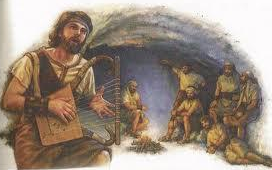
David worships - artist unknown
David worships - Artist unknown
TODAY'S SPECIAL: Psalm 54:1-7

TO CHEW ON: "Behold, God is my helper …" Psalm 54:4

This psalm's little prologue : "A contemplation of David when the Ziphites went and said to Saul, 'Is David not hiding with us?' "  helps us place it in a story.

David is fleeing from King Saul, his father-in-law who is insanely jealous of his popularity and wants to kill him. David has so far been able to trust the territory-savvy locals to keep quiet about where he's hiding. But the Ziphites are different.

Members of this desert tribe go to Saul at Gibeah, tell him they know where David is, and promise to lead Saul to him. Delighted, Saul and his men are soon hot on David's trail. Second Samuel 23:19-28 gives us his  location: "… strongholds in the woods in the hill of Hachilah … in the Wilderness of Maon." We get the picture of Saul and his men creeping ever closer: "Then Saul went on one side of the mountain, and David and his men on the other side of the mountain …Saul and his men were encircling David and his men to take them."

The 2 Samuel 23 context of this psalm tells us another little story too. Before Saul and his men pursue David into the wilds, Saul's son (David's best friend) also pays him a visit. What a contrast. Jonathan easily finds him and we read that Jonathan "… strengthened his hand in God." He encourages his friend David for the future: "… you shall be king in Israel…" and they renew their loyalty to each other in a convenant - 2 Samuel 23:16-18.

Perhaps David shouldn't be surprised, then, that after this up time, his faith is tested. And so with Saul and his army every moment tightening the noose, David vents: "Save me O God by Your name; / And vindicate me by Your strength…" Psalm 54:1.

My guess is that David writes this psalm in stages. For the story isn't over. When all looks lost and capture inevitable, God intervenes: "But a messenger came to Saul, saying, 'Hurry and come, for the Philistines have invaded the land' " 2 Samuel 23:27. And with that Saul and his men are gone.

So David finishes his psalm with "I will freely sacrifice to you; / I will praise Your name, O Lord for it is good" - Psalm 54:6,7.

I see a couple of life lessons in this psalm and its context story.
  • It's not unusual for faith to be tested after encouragement. (For example, Elijah's victory over the prophets of Baal is followed by Queen Jezebel's death threat - 1 Kings 18:20-19:3;  Jesus and the disciples come down from the Mount of Transfiguration to face a demon - Matthew 17:1-18.)
  • God can come through for us, right on time and in ways we never imagined. And He can do it without any manipulation or help from us.

So if you're in a Psalm 54 place today, follow David's example of leaning on God as Your helper, and look forward to what He will do.

PRAYER: Dear God, thank You that no situation can get the better of You. Help me to trust You when trouble presses in (and when things are good too). Amen.

 *********
Unless otherwise noted all Scripture quotations are taken from the New King James Version®. Copyright © 1982 by Thomas Nelson, Inc. Used by permission. All rights reserved.


Saturday, September 19, 2015

"What was it you disputed among yourselves?"

Jesus and the Little Child by James Tissot
"Jesus and the Little Child" by James Tissot

TODAY'S SPECIAL: Mark 9:30-50


TO CHEW ON: "Then He came to Capernaum. And when He was in the house He asked them, 'What was it you disputed among yourselves on the road?'
But they kept silent, for on the road they had disputed among themselves who would be the greatest." - Mark 9:33-34


Jesus obviously knew about the disciples' argument for He addressed it in the very next verse (Mark 9:35). So why did He ask them?

Perhaps it was because He wanted them to confess this petty discussion. The fact that they kept an embarrassed silence tells us they knew it was unworthy. I wonder how many other similar conversations they had had and never thought twice about them. But Jesus' question put the spotlight on this rather ordinary event.

What if we put ourselves there with the disciples and heard Jesus questioning: "What is it you were discussing?" or even more personally "What is it you were discussing with yourself (i.e. thinking)?" If we are hesitant to answer, could it be we're feeling the disciples' guilt over subjects unworthy of a child of God because they are conversations or thoughts of anger, worry, judgment, self-exaltation, unforgiveness, deceit, hatred...?

Maybe after we answer Jesus honestly in confession, He will give us insights about us and our concerns like He did the disciples here. Most certainly we will be aware of and hopefully avoid hopping on these ungodly trains of thought and discussion when they next pull into the station of our minds.

PRAYER:
Dear Jesus, as I think about answering Your question, I am aware of conversations with others and myself unworthy of one of Your children. Help me to admit and confess these symptoms of sin. Please change me at a heart level. Amen.

MORE: Jesus on:

Anger - Matthew 5:21-24
Worry - Matthew 6:25-31
Judgment - Matthew 7:1-5
Self-exaltation - Matthew 6:3-4
Unforgiveness - Matthew 18:21,22
Deceit - Matthew 5:37
Hatred - Matthew 5:43-48


************
Unless otherwise noted all Scripture quotations are taken from the New King James Version®. Copyright © 1982 by Thomas Nelson, Inc. Used by permission. All rights reserved.

Bible Drive-Thru


Related Posts Plugin for WordPress, Blogger...